Agenda-setting intelligence, analysis and advice for the global fashion community.
Agenda-setting intelligence, analysis and advice for the global fashion community.

The question of succession looms large at Saint Laurent following the departure of creative director Anthony Vaccarello after 10 years at the helm. While creative transitions at this scale are not without risk, the house’s future remains a blank page: a history to reclaim.
Yves Saint Laurent’s legacy goes beyond the perfect cut, beyond any palette of brand signatures to be rediscovered and remixed. Saint Laurent is a brand like no other, a cultural platform with deep roots. “A way of living, of moving,” as its founder would say. Not just a signature look, but a way of looking at the world.
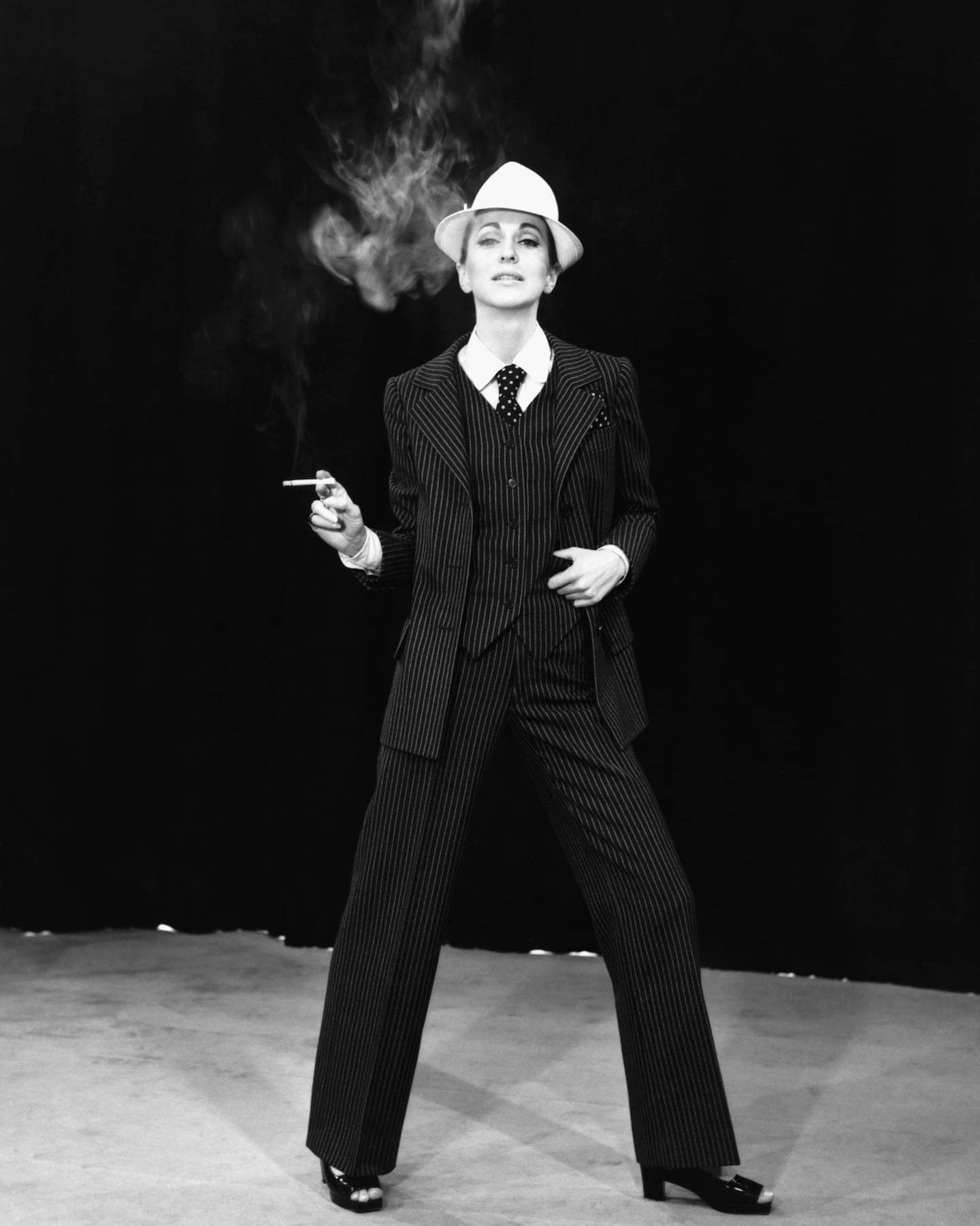
Saint Laurent’s vision went far beyond creating clothes. By repurposing the men’s wardrobe for women, he proved that seduction had no gender. In France, where women faced restrictions on wearing trousers into the late 1960s, he made them essential — although never anonymous — just as, season after season, he reinterpreted the safari jacket, the tuxedo, the trench coat. He fought to say no: to conventions, to prettiness, to constraints, to clichés of eternal youth or the prescriptive chic of the respectable wife. Through refusal he celebrated emancipation.
“Christian Dior dressed the angels; I have only the demons left to dress,” he said in a 1957 letter to his mother Lucienne-Andrée Mathieu Saint Laurent. As Dior’s successor, he was already starting to reveal the theatrical, transgressive character of his ambition. In 1961, he founded his namesake couture house with Pierre Bergé, over which he would preside until 2002, when he announced his retirement and the closing of YSL haute couture. “I am aware of having accomplished my work during these long years with rigour and high standards. Without compromise,” he said during a farewell press conference at 5 Avenue Marceau. “I always held this profession in the highest esteem. It is not exactly an art, but it needs an artist in order to exist.”
ADVERTISEMENT
Yves Saint Laurent is a house of contradictions: one that deals with both dreams and reality, function and imagination, a mixture of simplicity and sophistication. The women on Yves’ catwalk so closely resembled his sketches that one might believe he had conjured them, drawn them into being. Yet it was the women’s presence that inspired him: Yves Saint Laurent believed in revealing personalities through fashion. “Yves Saint Laurent? A certain way of catching the light, of illuminating a woman without turning her into a lighthouse. We let ourselves be infused with this light. It did not absorb us. Women did not shine. They shone from within,” model Violetta Sanchez said. I remember Katoucha Niane signing herself out of hospital early after emergency surgery: There was no question of letting another model wear the dress chosen for her.
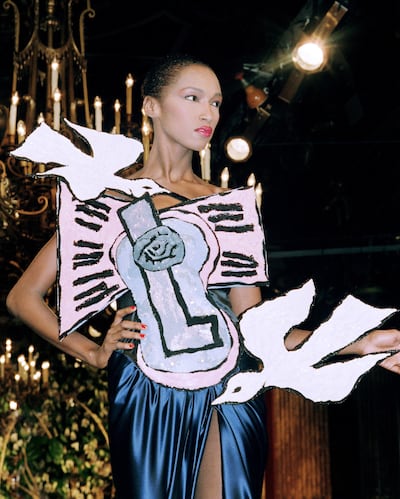
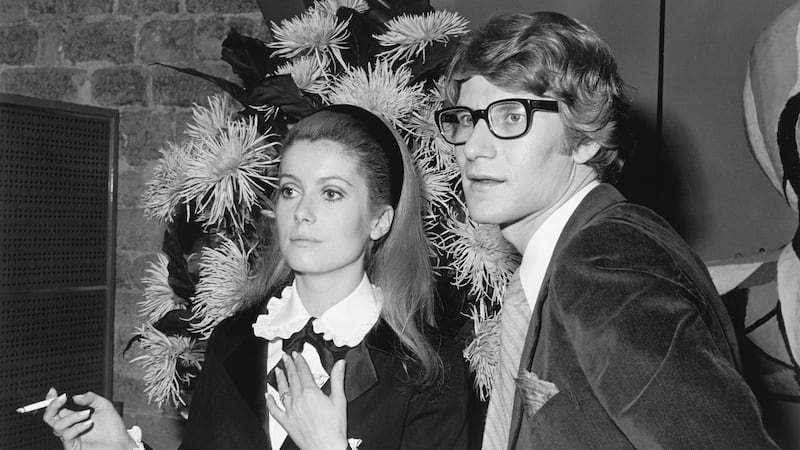
The staging of a fashion show never overshadowed a collection. “Great restraint” was his strength, Catherine Deneuve once confided in me. At the same time there was indulgence, excess. Fashion became a willingly embraced addiction: a way of saying without words the maxim he had embroidered on a patchwork velvet coat in July 1970: “LOVE ME FOREVER OR NEVER.” Yves Saint Laurent turned fashion into an antidote to melancholy. He transformed colour into a cry, a promise of wonder. With incandescent oranges and flaming pinks, he brought the soul into Parisian salons. He treated black, too, as a vivid colour.
His humour was wicked, devastating. When his dog Moujik bit me, the designer who put women’s trousers on the runway quipped: “Moujik hates women in trousers.”
Saint Laurent’s collections may have been nourished by his coups de cœur — from Mondrian in 1965 to his “Opéras Ballets Russes” collection in 1976, to Picasso and Cubism in 1979. But choosing a theme — as Tom Ford did with his China-inspired Autumn/Winter 2004 collection — is not enough. What matters is the allure. Saint Laurent is a beating heart, a club of elective affinities, a shock of the unexpected within classicism, the harmony and audacity of a palette unlike any other: electricity in the air. Alber Elbaz and Hedi Slimane each understood this in their own way.
Like Yves, Vaccarello celebrated powerful women; his shows conjured a dream Paris while his push into cinema via Saint Laurent Productions emphasised the notion of YSL as a cultural force beyond fashion. But the Saint Laurent style is quickly lost amid latex leggings and oversized shoulders. Try too hard to modernise a style and you collide with its very essence. A backless lace dress, a Parisian backdrop and chunky jewellery are not enough: There can be no formula. There must be intentions that transcend the realm of images or sartorial savoir-faire. To signal subversion by endlessly reviving the old femme fatale routine, complete with smoky eyes and Eiffel Tower-like heels, is to miss the point.
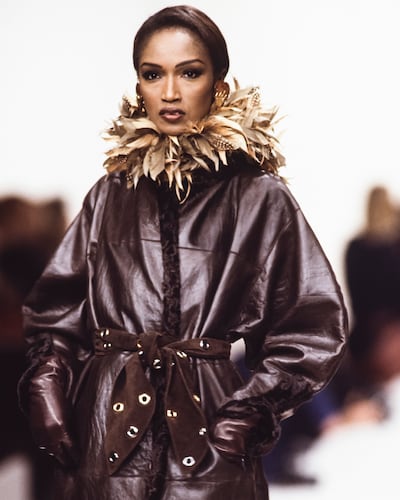
Saint Laurent’s language cannot be reduced to a logo, nor to a collage of aesthetic signatures. Any definition is too reductive. This poses a challenge for running a global fashion brand with nearly $3 billion in annual sales, not to mention its beauty and perfume business of a similar scale, operated by L’Oréal. Where the legacies of Gabrielle Chanel and Christian Dior have been successfully codified over the years, Saint Laurent resists caricature.
This is also a strength: At a time when seemingly everything can be copied by artificial intelligence, Yves Saint Laurent’s legacy eludes capture. Headhunters should ask creative directors what they have read, seen, applauded and loved madly. Especially in the case of Saint Laurent, the right talent is not a matter of numbers or aesthetic affinities, but of shared values.
Yves Saint Laurent is above all a culture to rediscover: cosmopolitan and singular, fire beneath ice, never predictable. An open dialogue between France and the Middle East, Africa and Asia, a play of correspondences between eras. No taboos, no costumes, no posturing. A simplicity that is never minimalist. No certainties — only convictions — and above all a sense of proportion that makes everything possible. It’s a story at once urban and bohemian, where reality and dreams collide in a perpetual “now.” Boldness is not amnesia. Reverence is not parody. The urgent task is not to copy, nor to duplicate, but to reinterpret from within. To listen to a sensibility embodied in style.
Loading recommended reads…
The changes at the leggings maker come after a customer backlash over quality issues.
The UK e-commerce platform, which owns Dermstore and Lookfantastic, forecast 2026 adjusted core profit above market expectations, driven by strong demand for its sports nutrition and supplements brand and favourable whey protein prices.
Luxury giant Richemont and US retailer Signet Jewelers Ltd. are in talks to join a consortium that’s in prime position to buy diamond miner De Beers, according to five people familiar with the matter.
Saint Laurent’s legacy is less a collection of codes than a way of seeing women and the world. Vaccarello’s successor should look beyond iconic images and silhouettes to the convictions that shaped them, argues biographer Laurence Benaïm.