Agenda-setting intelligence, analysis and advice for the global fashion community.
Agenda-setting intelligence, analysis and advice for the global fashion community.

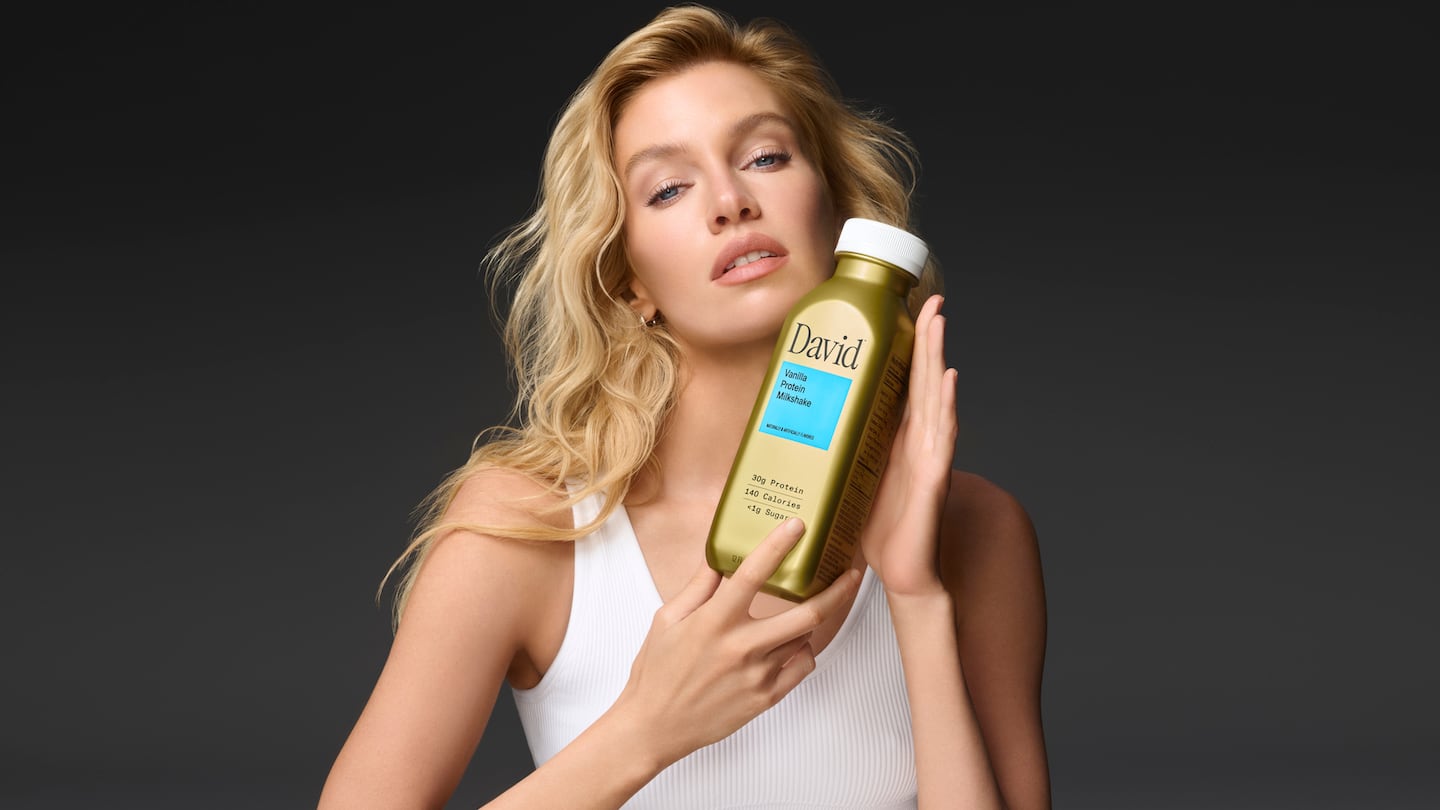
“You want a blonde European woman for that aesthetic of milk,” David Protein co-founder and chief executive Peter Rahal told The Business of Beauty over a video call.
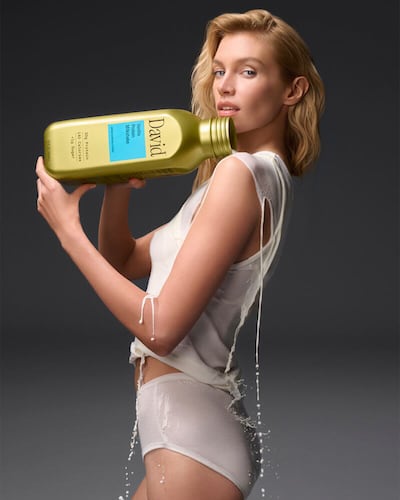
He was describing the campaign concept for the brand’s new protein milkshake, launching Wednesday. In the shoot, Belgian model Stella Maxwell seductively pours the liquid over her body, evoking Irving Penn’s 1996 “Cult Creams” Vogue editorial, or, for a younger audience not indoctrinated with the photographer, Hailey Bieber’s Rhode ads.
“My view on art direction is that it has to be dynamic. You have to rip up the script,” said Rahal, days after his company Medici Brands, parent of David, was valued at $2.25 billion. He added he follows a “doctors and models” marketing strategy when it comes to ads, spokespeople and product placements, tapping names like Maxwell, Bella Hadid and Andrew Huberman. The company has enlisted Justin Campbell, known for international Vogue covers and work with fashion, luxury jewellery and beauty labels like Montblanc and Bulgari, to shoot most of the brand’s campaigns.
“Some of our references were the Got Milk? campaigns from the early 2000s or the Kate Moss Calvin campaigns from the ’90s,” said Campbell.
ADVERTISEMENT
The approach is just one way Rahal has reinvented the protein supplement category since David launched two years ago. Riding a surge of GLP-1 usage, backed by the wellness podcast circuit and boasting a competitive calorie count, the brand has been a leader in the “proteinmaxxing” craze that has spread across the wider wellness world. It has also benefited from the calorie-counting return of “skinny culture.”
David Protein is the leading label from Medici Brands, which also owns low-calorie candy brand Hallpass and forthcoming tortilla chip brand Rowdy. Projected to reach $300 million in revenue this year, the brand’s meteoric growth has coincided with Rahal’s rising profile as an unfiltered founder who has proven immune to controversy.
The company’s new valuation places it among the upper echelons of protein bar startups, such as Clif Bar, which sold to Mondelēz International for $2.9 billion in 2022, and Kind LLC, which was acquired by Mars for $5 billion in 2020. In contrast to its crunchier predecessors, David has opted for attention-grabbing stunts like sending out vibrators to influencers for a Julia Fox-fronted campaign in January. Customers and investors are enchanted. Apart from Rahal’s personal $20 million cash injection, Glossier and Skims backer Imaginary Ventures participated in the recent Series B round, which was co-led by a powerhouse group of tech-focused investors: Valor Equity Partners (backer of Tesla and SpaceX) and Greenoaks, with participation from AI-heavy Iconiq.
“[Peter] is really good at finding new ways to surprise,” said Nick Brown, co-founder and partner at Imaginary Ventures. “He’s very forward-thinking when it comes to brand marketing, and, as a result, people see you more. That is very hard to achieve.”
Rahal is no stranger to the wellness industry. In 2017, he achieved a $600 million exit after his brand RxBar sold to Kellogg. Originally launched out of his parents’ Chicago home for the CrossFit community that he was part of, the edgiest aspect of its branding was a simple list of pronounceable ingredients like cashews and dates with a “No BS” slogan on its labels.
David couldn’t be more different. The brand is able to offer a far higher protein-to-calorie ratio than competitors (at 150 calories for between 20 and 28 grams of protein) due in large part to a proprietary ingredient slightly harder to pronounce than “cashews”: esterified propoxylated glycerol, or EPG. A plant-based fat substitute that yields fewer digestible calories than regular fats, its inventor and sole manufacturer, Epogee, was acquired by Medici Brands in 2025.
According to Rahal, the protein supplement consumer mindset has dramatically shifted over the past decade.
“It’s really performance-oriented,” he said. “You’re going to be more open to prioritising nutrition facts versus ingredient labels that you understand.” He notes that this performance emphasis appears in other health trends, such as the rise of peptide use, especially the most popular one – GLP-1 drugs.
ADVERTISEMENT
David’s 2024 launch occurred as the rise of GLP-1 use was prompting doctors to remind patients to focus on protein more than ever before. Rahal describes the weight-loss medication as the driving force behind the trend.
The brand is particularly focused on people interested in improving their body composition. “They don’t want to be fat. Models, gay men — that world — and then anyone on GLP-1s,” he said.
This ability to pivot with market shifts has attracted investors.
“Peter has an uncanny ability to evolve and to lead and to innovate. He’s an empire builder,” said Brown, adding he is the type of founder who understands that the world changes rapidly. “What may have worked 10 years ago probably doesn’t necessarily correlate to what works today.”
With a brand name inspired by Michelangelo’s chiseled marble abs, it’s no surprise that David is focused on tapping models like Maxwell or Candice Swanepoel, who starred in a beauty-centric campaign for the brand last year.
“Stella Maxwell was an automatic choice because she’s a Victoria’s Secret legacy girl,” said Campbell. The campaign for the brand’s protein milkshake launched with two physical and 75 digital billboards.
Although protein bars often “focus on appetite appeal,” David is “marketed like a beauty brand” through both its ’80s-inspired aesthetic and campaigns, said Rion Harmon, the co-founder of creative firm Day Job, which developed its branding.
The emphasis on protein as a lifestyle taps into a broader market trend. The wellness supplement “used to feel like something mainly for bodybuilders or serious athletes, but now I hear people talking about protein the same way they talk about sleep, steps or hydration,” said Jeff Lindquist, managing director and partner for beauty at Boston Consulting Group.
ADVERTISEMENT
Women, who are more on top of their nutrition than men, according to Rahal, make up 55 percent of the brand’s sales on its direct-to-consumer site. It’s planning to lean even more heavily into this group, with a beauty-focused product being developed for winter 2027. In the US, David products are available at Target, Walmart, Kroger and Costco.
But the male customer is also a sizeable group thanks to top wellness podcasters who have hyped up protein. The most prolific advocate is Dr. Andrew Huberman, who invested in the brand’s seed round and has given it massive reach through his popular health podcast Huberman Lab.
Until recently, the brand also had the public backing of wellness guru Dr. Peter Attia, another seed investor and prominent podcaster who served as David’s chief science officer. He made headlines earlier this year after his emails appeared in the Epstein files. After the news broke, David announced in February that he had stepped down from the role and was no longer operationally associated with the brand. Attia remains on the brand’s cap table.
“The tricky thing is investors have rights, so you can’t kick people out,” said Rahal. “As long as he’s not public-facing, I don’t want to create an enemy.”
The young line has responded aggressively to other controversies. In response to a lawsuit brought by three consumers accusing the brand of misrepresenting its calorie count, it unveiled a satirical ad campaign inspired by a plotline in the film “Mean Girls” in which Regina George is tricked into eating weight-gain bars. The lawsuit was dropped in March 2026. A separate antitrust lawsuit from a group of food brands, who claimed their supply of EPG was cut off when the company acquired Epogee, was dropped by the plaintiffs without prejudice in March as well.
Rahal’s vision to scale his company extends beyond New York It girls and biohacker bros to everyday citizens.
“The old-school marketing stuff really works. We kind of stick to that when it comes to the flyover states,” he said.
And although Maxwell’s campaign is certainly sexy, it might show a wholesome turn – influencers will receive fancy straws with their gifting rather than vibrators. Campbell summed up the campaign’s vibe as “a sense of this all-American product, this classic beauty.”
While the brand is planning to expand internationally, there’s plenty of upside in the US, where it is betting on a classic consumer obsession with weight.
“America is the best market, hands down,” said Rahal.
Sign up to The Business of Beauty newsletter, your complimentary, must-read source for the day’s most important beauty and wellness news and analysis.
The maker of the popular low-calorie, zero-sugar David protein bars raised $250 million in a funding round that values the company at $2.25 billion — three times the valuation last year.
Telemedicine is gearing up for a windfall if the FDA legalises peptides popular with wellness influencers, but long-run brand equity will depend on evidence and efficacy.
We solved the problem of getting men into wellness. Now we have the bigger problem of what we’ve turned them into, writes meditation teacher Manoj Dias.

Liz Flora is a Beauty Correspondent at Business of Fashion. She is based in Los Angeles and covers beauty and wellness.
Loading recommended reads…
In a June court filing, the luxury conglomerate forcefully denied it had ever tried to acquire shares in its rival from founding-family heir Nicolas Puech, who alleges he was fleeced of his 6 percent stake.
Exports in August were buoyed by China and Japan, despite a sharp decline in shipments to the US.
During New York Fashion Week, RaiseFashion’s Felita Harris, Afterpay’s Rachel Helfman and designer Hiywet ‘Mimi’ Girma joined BoF’s Yasmine Dahlberg at The Standard, East Village to discuss how independent designers can turn attention into a lasting business.
This season, many of the over 60 female designers showing at New York Fashion Week played to an inherent strength, designing for the women who will actually wear their clothes.