Agenda-setting intelligence, analysis and advice for the global fashion community.
Agenda-setting intelligence, analysis and advice for the global fashion community.

This was supposed to be the year the beleaguered fashion industry returned to growth. But as the war in the Middle East enters its fourth week, doubts are mounting that the long-awaited rebound will arrive on schedule.
Whether the conflict ends quickly or drags on for months, executives and analysts say the impact on luxury will not be defined by a sudden collapse in local sales. Instead, the greater risk lies in second-order effects: disrupted tourism flows, renewed oil price volatility feeding inflation fears, stock market swings that dent appetite for big-ticket purchases and a broader deterioration in consumer sentiment at a moment when confidence remains fragile.
The Middle East itself accounts for less than 10 percent of annual global luxury spending — small relative to Europe, the US and China, but increasingly important. In recent years, the region has been one of the industry’s few bright spots, helping offset slower growth elsewhere as US shoppers became more cautious and China’s recovery proved uneven.
Organic revenue in the Middle East rose about 7 percent last year, outpacing every other region and standing in sharp contrast to a global luxury market that was otherwise flat, according to Bernstein and Altagamma. That has made the current war particularly uncomfortable for an industry already struggling to regain momentum.
ADVERTISEMENT
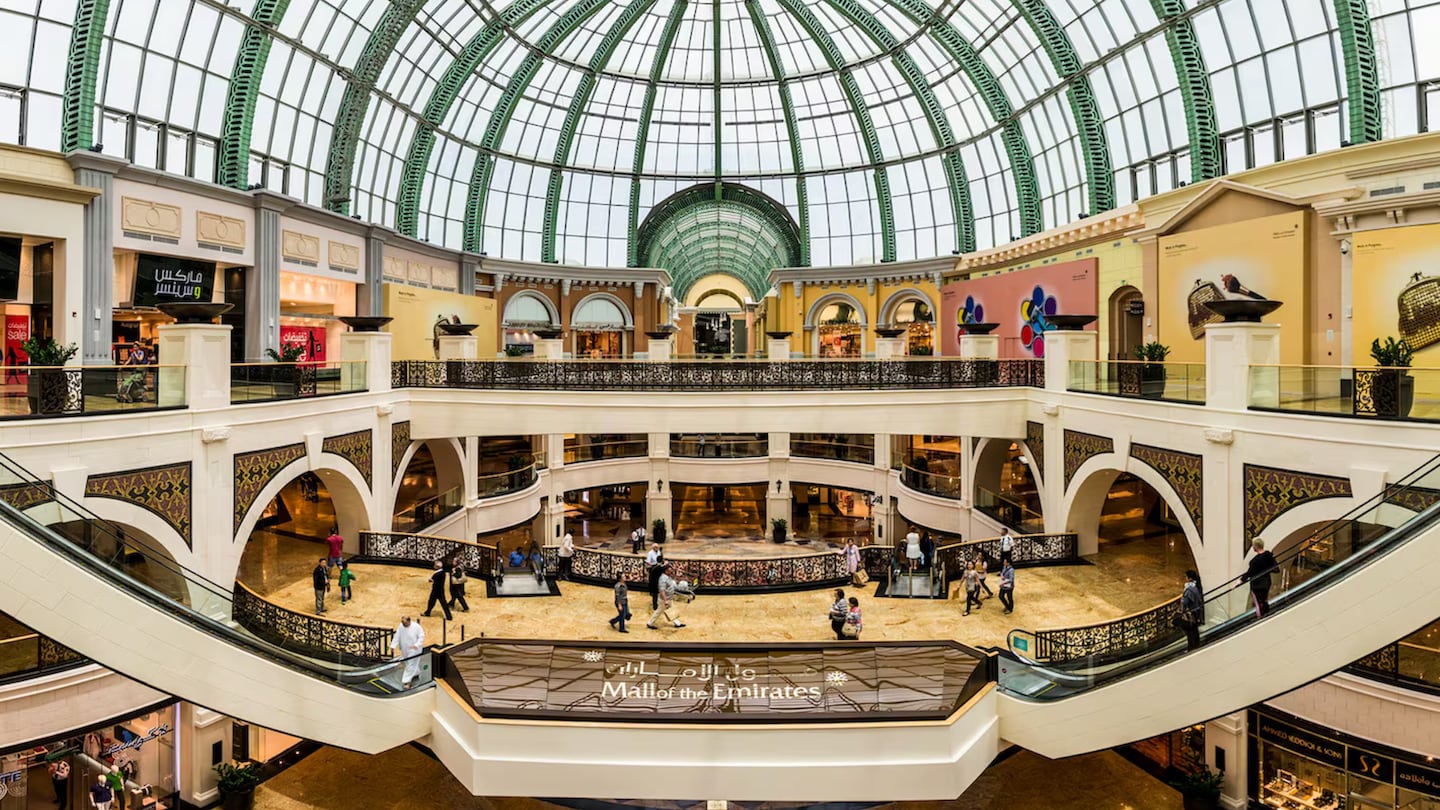
In Gulf retail hubs such as Dubai and Abu Dhabi, the immediate picture is one of continuity, reinforced by a carefully managed veneer of normality. Major shopping districts have remained open and senior government officials have made highly choreographed visits to malls and public venues to signal that daily life and commerce is continuing as usual. That outward calm follows a more jolting start to the conflict, when missiles and debris struck parts of Dubai and other cities, puncturing the region’s long-cultivated image of insulation from regional turmoil.
Large luxury groups that are most exposed to the Middle East, such as LVMH, Kering and Richemont, can manage the tumult because of its relatively small size compared with other regions. The more meaningful threat is macroeconomic spillover that risks compounding pressures in a global luxury market that has yet to fully find its footing.
In other words, the Middle East conflict matters less for what happens inside Gulf malls than for how it shapes the mood and movement of luxury’s most valuable customers worldwide. But predicting how that will play out is proving difficult for brands.
“At this stage, it is difficult to fairly assess the potential of this conflict on results as it will largely depend on the duration and possible implications for the global economic outlook,” Gianluca Tagliabue, chief executive of Ermenegildo Zegna Group, said last week on a call with analysts to discuss financial results.
Markets have been quick to react. Luxury shares fell sharply as the war escalated, reflecting investor unease over geopolitical risk layered onto an already cautious sector outlook. Many analysts have kept their forecasts at 4 to 6 percent revenue growth this year for the luxury industry, an improvement over the declines of the past two years, but below the boom years that preceded the recent downturn.
But some analysts argue that addressing problems the industry itself created — from brand fatigue and aggressive price hikes without corresponding product innovation amid reports of diminished quality — may be more critical to a comeback than macroeconomic factors.
“What hurt the sector for the past three years was not so much macro as self-inflicted pain and what potentially saves the sector this year and beyond is possibly not the macro but addressing those self-inflicted issues,” said HSBC analyst Erwan Rambourg.
Efforts to reconnect with shoppers including the renewal of creative direction will be key, said Caroline Reyl, head of premium brands at Pictet Asset Management in Geneva. “The initiatives undertaken are significant and should bear fruit,” Reyl said.
ADVERTISEMENT
Luxury industry growth is “around the corner,” Rambourg wrote in a report published this week. “Despite the headlines and notably the ongoing conflict in the Middle East, sales growth is bound to rebound this year,” Rambourg and his colleagues added.
The implication is that the current war in the Middle East, and geopolitics more broadly, may influence the contours of the recovery in terms of speed and geographical reach, but will not determine whether it happens at all.
On the ground in Europe’s shopping capitals, early signs suggest the impact of reduced Middle Eastern travel may be at least partially offset. Guglielmo Miani, chairman of MonteNapoleone District, an association representing roughly 150 luxury brands along Milan’s most prestigious shopping streets, said Saudi shoppers account for about 3 percent of foreign visitors in the area, a share he expects to be offset by longer stays from European and North American tourists rerouting trips that would have gone to the Middle East.
Elsewhere, the disruption has been more visible. Tourism into parts of the Gulf slowed abruptly following the escalation, with some brands temporarily closing stores and postponing Ramadan activations. The impact has not been uniform: markets such as the UAE that function as regional travel and retail hubs appear more resilient than smaller Gulf states with narrower tourism bases. While daily life in cities such as Dubai has largely continued, the psychological shock has been harder to contain.
“Wars and political instability are something that the market is factoring in — maybe not the specific event or the timing of it, but for sure there is an overarching instability that is now more the name of the game,” said Claudia D’Arpizio, a senior partner at Bain who leads the firm’s luxury practice.
“There is a symbolic value that is stronger than the war per se because it gives the sensation that you’re not safe anywhere,” D’Arpizio said. “After September 11, the big impact was not the event per se, but rather the fear, the spreading fear regarding traveling and enjoying life and planning your holidays and the trust in the future.”
Luxury consumption is closely tied to mobility and life events such as travel, celebrations and social occasions, meaning prolonged uncertainty can have an outsized effect even if income levels remain intact.
That link between confidence and consumption helps explain why the industry is watching oil markets as closely as footfall data. Sustained energy price increases risk feeding inflation, tightening household budgets and reinforcing the wait-and-see behaviour already evident among aspirational luxury shoppers.
ADVERTISEMENT
For now, most executives appear reluctant to draw firm conclusions. If the conflict ends soon, analysts expect much of the lost spending to be deferred or redirected rather than permanently lost. A prolonged escalation, however, could weigh more heavily on sentiment in Europe and the US, markets that remain critical to luxury’s recovery.
The industry’s path forward is looking less like a clean rebound and more like a period of uneven repair.
The escalating US-Israel conflict with Iran is rattling the aura of stability created by Dubai and the wider region, threatening one of the industry’s few bright spots.

Eric Sylvers is Milan Correspondent at The Business of Fashion. He is based in Milan and leads BoF’s coverage of all things Italian.
Loading recommended reads…
The cosmetics group became France’s most valuable listed company on Tuesday, the first time since 2017 that a non-luxury company has claimed the top spot at the end of a trading day.
The licensor could pursue an IPO as early as the first half of next year.
The industry veteran is joining Latino-focused media platform Avance Global to establish a new lifestyle brand that will span fashion, design, travel, food, culture and entertainment.
The group is hoping the renovated eight-level complex can generate €100 million in annual revenue, chief executive Andrea Guerra told Reuters.