Agenda-setting intelligence, analysis and advice for the global fashion community.
Agenda-setting intelligence, analysis and advice for the global fashion community.

For Gabriele Cerrone’s clients — a who’s who of the world’s top luxury brands — close is no longer good enough. The luxury property investor and developer has seen them shun almost everything but the most prime locations.
“We don’t buy on B+ streets anymore,” said Cerrone from a historic building on Via Montenapoleone, Milan’s premier luxury shopping street. “Those are too hard to rent. The top brands want Montenapoleone and nothing else. Even Via Verri and Via della Spiga are falling out of favour.”
That luxury brands would shun the streets near Via Montenapoleone, accepting them only as a last resort, highlights how picky they have become as they rethink their retail footprints. There are nuances. Via Sant’Andrea, a cross street of Via Montenapoleone, has some pull because of a Chanel flagship that acts as an anchor.
As an industry downturn stretches into its third year, making it difficult to draw in shoppers, brands are closing smaller stores while transforming top locations into mastodons harbouring cafes, bookstores, sprawling VIP spaces and even brand museums. According to Bain, the slowdown has pushed 70 million luxury consumers out of the luxury market, nearly one in five, over the past three years. At the same time, higher interest rates have raised the cost of capital, forcing companies to reassess where and how they deploy investment.
ADVERTISEMENT
Some brands like Prada inaugurated fewer stores in 2025 than in the recent past, while others, like Gucci and Ferragamo, closed more locations than they opened and are planning to do the same this year.
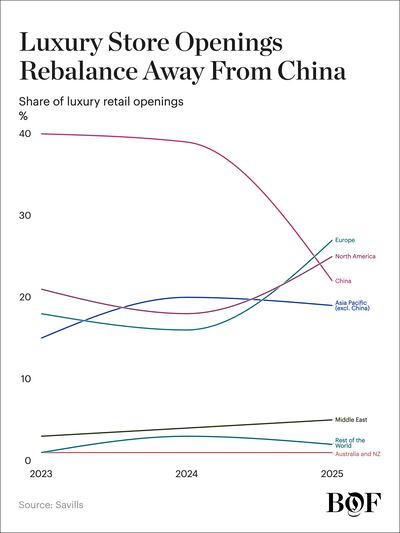
New luxury store openings last year fell to their lowest level since 2020, according to property adviser Savills. More than half of all openings were concentrated in a group of roughly 30 so-called alpha cities — including London, New York, Paris, Dubai, Milan and Los Angeles — the highest share since 2019. The figures underscore brands’ growing focus on a smaller number of cities where they expect the highest returns.
“Brands are deciding to skip the second city they wanted to be in and are concentrating all their resources on one big, perfectly located store,” said Cerrone, chairman of Trophaeum, which owns marquee luxury buildings across Europe, including the Gucci flagship on London’s Bond Street. “So maybe you don’t have a store in Turin anymore, and instead you have a massive store in Milan in your preferred location.”
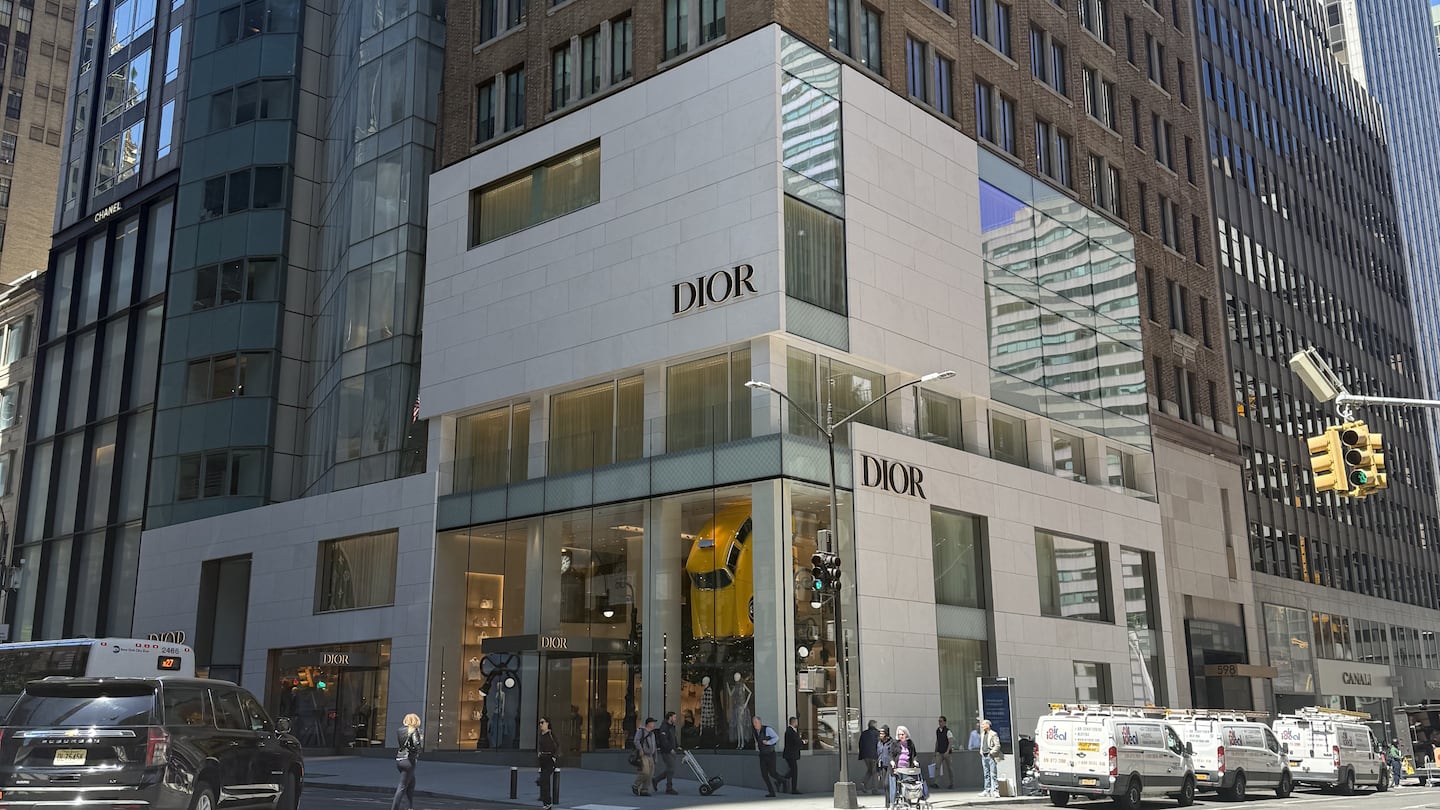
The stores that remain are being upgraded. Renovated flagships are getting larger and offering more experiences. Dior’s expanded New York flagship on the corner of 57th Street and Madison Avenue, for example, now incorporates a spa. New openings are also increasingly designed as destinations. Exhibit A is last year’s debut of Louis Vuitton’s “cruise ship” in Shanghai, a hybrid of retail and hospitality built to maximise spectacle – and social-media appeal.
Experience-led luxury is the defining real estate trend for 2026, according to nearly three-quarters of luxury executives and senior decision-makers polled in Savills’ Global Luxury Retail Report. With new prime locations rarely coming to market, brands are focusing on revamping existing stores, often by including dining, cultural or hospitality elements while also adding private floors where high-spending or celebrity clients can shop discretely. Despite their limited numbers, those clients often drive an outsized portion of revenue.
The shifting real estate priorities are also taking place as luxury brands pull back from wholesale in favour of directly operated stores that, while more expensive to build and run, give brands greater control over merchandising, pricing and the in-store narrative.
“That focus brands are putting on exclusivity, experience, quality of product and craftsmanship, we’re seeing it reflected in their real estate choices,” said Marie Hickey, director of global retail research at Savills. “In London, brands that may have been on Albemarle Street or Dover Street are now looking to be on Bond Street. The challenge is that availability is very constrained.”
While luxury store openings increased slightly in Europe and the US — with New York leading cities globally — Asia’s share of new stores has slipped. The pullback has been most pronounced in tier-two and tier-three cities in China, which for years drove the bulk of global expansion. In 2025, China accounted for just 22 percent of new luxury store openings, down from 40 percent two years earlier.
ADVERTISEMENT
Companies have also rolled back plans for secondary US markets, including Sun Belt cities such as Atlanta and Orlando, as capital is redirected toward top-tier locations.
When prime streets in Europe or the US aren’t available, Savills proposes locations in emerging markets or in smaller destination and resort towns where it is still possible to secure space on the most desirable streets, Hickey said.
For smaller brands that cannot afford top-tier locations, or muscle in where availability is scarce, pop-up stores offer a lower-risk alternative, allowing them to test markets in smaller or unconventional spaces not suited for permanent flagships.
The shift is unfolding alongside broader restructuring efforts across the industry. Retail downsizing has been particularly pronounced at Kering, which is in the midst of a broad overhaul of its biggest brand Gucci. The Italian label recorded a net closure of 75 stores last year and flagged plans to close around 100 more this year, with additional locations under review. Most of the closures have been — and will continue to be — in China, Kering chief executive Luca de Meo said last month, as the group prioritises “high-impact flagships … designed as immersive brand environments which can act as a media, amplifying brand desirability.”
“The industry has been in a tough spot for two years, so management logically has to pull every lever,” said Nick Anderson, an analyst at Berenberg. “We’ve seen changes in creative directors and discussions around pricing architecture. Reassessing stores is very much part of that, whether from a cost perspective or a functionality perspective.”
While some of the retrenchment reflects cyclical pressure, Anderson said there is also a structural shift under way as consumers place greater value on experiences, even when shopping for a handbag or a dress. That has exposed the limits of online retail, which many believed during the pandemic would eclipse physical stores.
“Stores still matter,” Anderson said. “Online works up to a point, but consumers ultimately love the experience. At the lower end, the store can function more as marketing. The consumer might not buy today, but they could be a future customer. It’s a tricky balance.”
Getting that balance right requires constant recalibration. Ferragamo, which has shown signs of emerging from a prolonged downturn, plans to close about 70 stores while opening roughly half that number in better locations. Most of the closures will be in China, with the group increasingly relying on e-commerce to serve demand in smaller cities.
ADVERTISEMENT
For an industry built on confidence and long-term bets, the current moment is proving a stress test that is forcing brands to decide not just where to grow, but what kind of presence is worth having.
“Anybody can sail in good weather,” said Cerrone, the real estate developer. “A good captain knows how to navigate in a storm and get the ship safely into port. That’s what the luxury industry is trying to do right now.”
Loading recommended reads…
CFDA chief executive Steven Kolb has come under fire for an altercation with multiple PETA protestors during the Cos runway show at New York Fashion Week on Sunday.
The livestreaming star’s new fashion line Vivet, debuted in New York on Saturday, owes aesthetic debts to Demna and Ye, but the spirit of community at the project’s core makes him more like Gen-Z’s answer to Virgil Abloh.
McQueen’s return from Paris and Christopher Kane’s Mulberry revamp are set to bring fresh energy to a roster that’s relied too heavily on British stalwart Burberry. Shows kick off Thursday.
The buzzy New York designer joins Imran Amed on The BoF Podcast to discuss leaving menswear at The Row to design for her own body and building a fast-growing womenswear label with no investors and no full-time team.