Agenda-setting intelligence, analysis and advice for the global fashion community.
Agenda-setting intelligence, analysis and advice for the global fashion community.

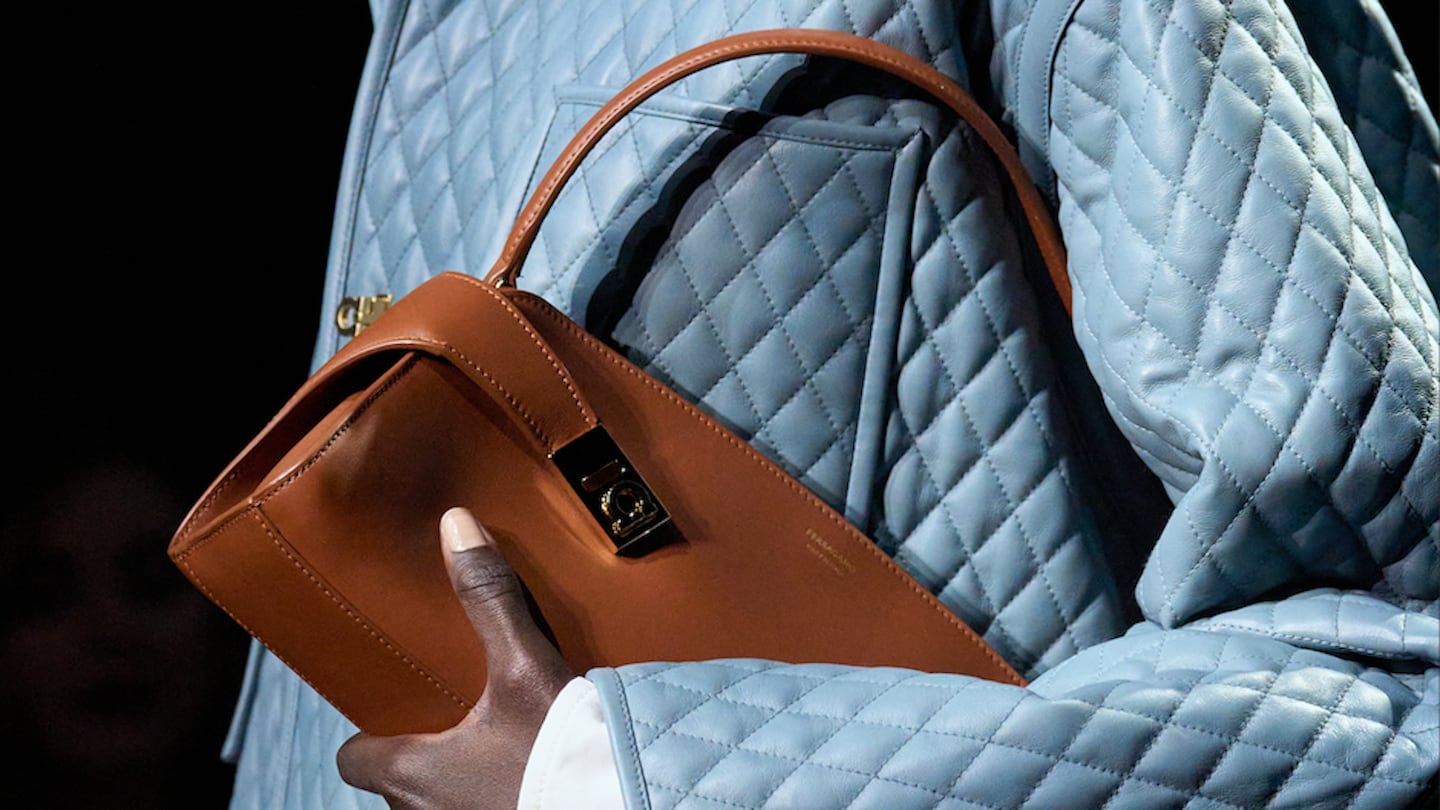
After more than 10 years of false starts and unfulfilled promises, conversations with management and recent results, including double-digit sales growth in the USA, suggest Salvatore Ferragamo is moving in the right direction as it executes on the strategic plan the company set last year: “Timeless Italian Luxury with a Twist.” Indeed, we see the makings of a possible turnaround as Ferragamo tackles shortcomings and benefits from market shifts.
1. The luxury market is buying classics again. Following almost a decade of casualisation, exacerbated by Covid-19, elegance is back — partly due to shifts in pop culture (“Wuthering Heights” anyone?), partly due to economic uncertainty (appearances matter in a tough job market) and partly because consumers’ closets are saturated with athleisure, while their more classic attire hasn’t been replaced in years. This is a direct benefit to Ferragamo, a formalwear brand through and through.
2. Brand positioning, product, merchandising and communication are more aligned. It’s clear from looking at key Ferragamo touchpoints — from store windows to its website — that the management team is aligned on its new strategy of selling “Timeless Italian Luxury with a Twist.” This came with a lot of changes — particularly in merchandising — and there is promise for more to come. The new priorities are women’s shoes and the Hug bag. And it’s comforting to know the brand isn’t planning any further price increases on its core lines because they are priced attractively amid fierce competition from the avalanche of new product from mega-brands.
3. A slimmer assortment has made stores easier to read and more engaging. A big part of Ferragamo’s turnaround plan has been improving collection efficiency by reducing the number of SKUs by up to 25 percent to enhance assortment, improve sell-through and lower inventories. This is still a work in progress, as logistics need to be redesigned, but we are already seeing progress with inventories down 10 percent year-on-year in absolute terms in 2025 with the same level of reduction expected in 2026. One of Ferragamo’s biggest issues was commoditisation. The brand was selling so many products with no clear identity that its stores felt like supermarkets. Now, the stores are a lot easier to read with fewer products, a key point for a company with limited communication resources.
ADVERTISEMENT
4. Cutting and improving stores to drive higher retail space productivity. Management is focused on Ferragamo’s distribution network: closing down stores that are unprofitable or damaging to brand equity. The plan has been to close 70 stores from 2025 to 2026 and reopen half in better locations. Most of the closures will be in China, where the company will leverage e-commerce to reach Tier 2 and Tier 3 cities. New interior design teams are also retouching existing stores, with about 40 percent of the retail network getting improvements to visual merchandising and customer experience. (Meanwhile, the brand is also cleaning up its wholesale distribution, eliminating partners that engage in grey market activities. Sales in the wholesale channel were down 17 percent in 2025 and are expected to remain negative in 2026.)
Ferragamo’s progress recalls relaunches at Prada and Tod’s. Like at Ferragamo, Prada’s progress in the early 20s was evolutionary, not revolutionary. Prada appointed Raf Simons co-creative director in 2020, but he did not bring a new aesthetic to the brand; instead he tweaked core products and combined them with more compelling and better synced marketing execution, adding to its embrace of new communication channels. As a result, Prada reached the top of the Lyst Index of hottest products in Q4 2022, remaining in the top three for two years, without a dramatic brand overhaul.
Ferragamo is following the same blueprint in China. The label opened a new Chengdu flagship store to reflect the brand’s core values and iconic products as part of their 30-year anniversary celebrations last year. Ferragamo also launched smaller versions of their iconic Hug bag to appeal to younger consumers and they expanded the Vara family adding newness to the most popular design for Chinese shoppers. As a result of better retail execution, tweaking core products and more synced marketing, Ferragamo reached the top of our social media rankings in China in Q4 2025.
It’s a miracle that Ferragamo has done all of this without a new CEO. But then again, maybe it is because the brand has yet to appoint a new chief executive (who may feel obliged to steer the business in a different direction) following the exit of Marco Gobetti, that a team of “old hands” who know the company well and agree on where to go (James Ferragamo, Michele Norsa, Ernesto Greco, Christian Foddis) were able to come together and take the business forward. While a new CEO will need to be appointed, lessons seem to have been learned, and the new chief will likely have less freedom to turn the business into a whole new direction as the previous three have tried — and failed — to do.
Luca Solca is head of luxury goods research at Bernstein. Maria Meita is a research analyst covering luxury goods at Bernstein.
Loading recommended reads…
This week, Europe’s leading luxury groups LVMH, Kering, Hermès and Prada will show who’s pulling ahead in the stubbornly choppy environment.
Sales of gems, precious metals and artwork at Japan’s department stores climbed 19 percent in the first half of 2026 from a year earlier to $2 billion.
Though Adidas dressed both teams in the World Cup finals, the global football tournament still presented some bright spots for Nike, writes Bloomberg’s Andrea Felsted.
From our archive, the creator and host of award-winning podcast “Articles of Interest” joins BoF founder, CEO and editor-in-chief Imran Amed to explore what clothing can reveal about identity, culture, labour and the world around us.