Agenda-setting intelligence, analysis and advice for the global fashion community.
Agenda-setting intelligence, analysis and advice for the global fashion community.

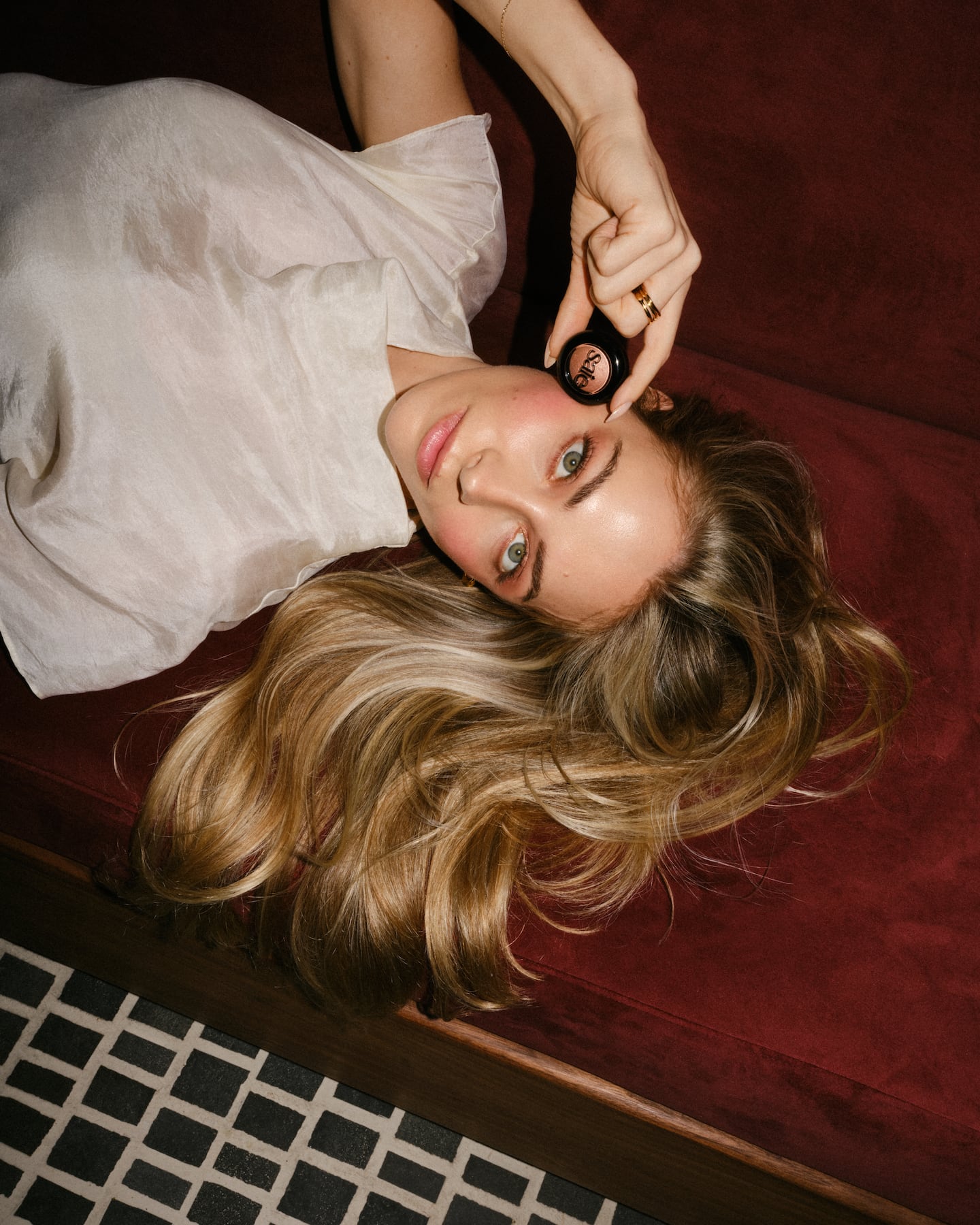
Few creators have given Tom Ford Beauty more airtime than Hannah Chody.
The Austin, Texas-based influencer has spent the last three years chronicling her journey to find a dupe for her favourite eyeshadow — Tom Ford’s Golden Peach — after it was discontinued. By 2024, Chody’s series had become a viral sensation, with each video accumulating millions of views.
But despite trying over 50 different shadows, as of this summer, Chody still couldn’t find a suitable dupe for her self-proclaimed “holy grail” product. Chody said she even met with the Tom Ford Beauty team, but the Golden Peach eyeshadow remained elusive. Meanwhile, comments asking Tom Ford to bring it back began to accumulate. “How has Tom [Ford] not rereleased this after years of these videos?” one commenter wrote in a video posted in August.
Tom Ford’s inaction left room for another brand to swoop in and land their own sell-out moment. Late last week, Saie , the independent beauty line by Estée Lauder alum Laney Crowell, launched a new shade of its SuperSuede eyeshadow in collaboration with Chody, a shimmery pink colour called Bellini meant to capture “the dimension and the like ethereal look of the Tom Ford [original],” she said.
ADVERTISEMENT
For Saie, the launch was a major success. After accumulating a waitlist of over 7,500 names, the $24 Bellini eyeshadow sold out on Sephora’s website in just a few hours, becoming the retailer’s third highest-selling product that day, according to Crowell. (Already, there’s a new waitlist of over 1,300 people.) On launch day, Saie reported it was the most searched-for brand on Sephora’s website; on TikTok Shop, an exclusive gift set that included Bellini set a new record for the highest unit sales of any featured brand to date on the platform.
Saie’s win — and Tom Ford’s loss — is indicative of the wider gulf that exists between digitally native beauty labels and stalwarts, which are losing market share to their competitors in the former camp. Parent company Estée Lauder has seen promising signs of a turnaround, though with sales growth sitting at a modest 6 percent last quarter, it certainly still has a ways to go.
More than that, though, the Saie-Chody partnership lays out a playbook for what makes an effective influencer collaboration today. At at time when followers are more resistant to in-feed #ads, brands are increasingly rolling out product collaborations in the hopes of cutting through the noise and creating something that feels more naturally aligned with an influencer’s content. It’s not always a winning arrangement; the sheer glut of collaborations on the market means they run the risk of feeling like a cash grab.
Crowell said the key isn’t to create the moment out of nothing, but let the right moment find your brand. In this case, when, years into Chody’s video series, it became clear Tom Ford wasn’t responding, followers started tagging Saie — a brand Chody regularly used in other videos — and asking them to create a version themselves, she added.
“In that big corporate mentality, even though someone’s been asking you for something for three years, you don’t respond,” said Crowell. “The future of makeup is not only formulas that are great for your skin, but having a relationship with your customer and listening.”
Chody said it only took a few months into her video series for brands to reach out about a potential collaboration, but she wanted to be patient, in part because she was “holding out hope” that Tom Ford would come around. If it didn’t, she hoped to find a brand that would allow her a greater level of creative freedom.
Saie, Chody said, gave her exactly that. She had a longstanding relationship with the label, dating back to attending a Saie-hosted brand trip in 2024. Earlier this year, she traveled to Saie’s manufacturer in Italy with Crowell and the label’s head of product development, where they “added tiny bits of bronze to the formula until it was exactly what I was looking for.” Chody also named the shade and helped conceptualise the product’s launch campaign, in addition to starring in it.
That end-to-end involvement, she said, is why it’s been such a success.
ADVERTISEMENT
“I was truly an integral part of [the entire process] and it feels so organic,” she said. “It doesn’t feel like they made a product and said ‘Here’s our pink eyeshadow, Hannah. Do you want to be the face of it?’”
For Saie, finding those pockets of unmet demand has become the primary driver behind the brand’s marketing strategy. Earlier this year, the label became the official beauty partner of the New York Knicks — the first brand to ever hold that title — which included running ads on the Madison Square Garden jumbotrons during games as well as providing makeup for the Knicks City Dancers and the players’ wives. That position paid off when the Knicks took home their first NBA championship in over 50 years. That idea came to Crowell, she said, because she saw that the vast majority of the brands advertising at Madison Square Garden were targeting men.
The same principle, she said, applied here.
“[Chody] was trying to find something to replace her beloved Tom Ford shadow, and no brand was answering this problem for her,” said Crowell. “In those opportunities, where there’s white space and demand, that’s always what my north star is.”
Luxury labels exert meticulous control over their image, reluctant to let outsiders play a role in shaping it. But today, the conversation is happening whether brands want to engage with it or not.
“Tom [Ford] could never,” one wrote on Chody’s Instagram post announcing the collaboration.
Perhaps in the future, it should.
Loading recommended reads…
The maker of Pantene shampoo was helped by strong personal care demand, but expects higher commodity costs to reduce profit by about $1.4 billion this year.
Haus Labs executive Angela Simpson and Carolyne Rapp have joined as chief marketing officer and vice president of creative respectively as the brand readies for further global expansion.
The luxury group’s results reflect a wider industry slowdown marked by subdued demand in Mainland China.
The French leather goods powerhouse reported no sales growth in Asia-Pacific excluding Japan, its biggest market, last quarter.