Mike Ashley’s Frasers Says It’s Taken Control of Hugo Boss
The British retail group has pushed its stake in the German apparel brand above 50 percent in a move that will turn Hugo Boss into a subsidiary of Frasers.


The deadline for every fashion item sold in the EU to have its own digital identity is inching closer. Brands need to get ready.

BoF highlights 17 AI-powered startups that have raised more than $400 million in the last five years by offering design, operation and shopping services that promise to help brands and retailers reduce costs and increase innovation.

Technology was forced to prove its worth this year as businesses sought practical use cases for AI and data analytics amid a tough consumer environment that brought a few high-profile businesses crashing back down to earth.

New regulations from the European Commission will require fashion and other consumer goods to be fitted with unique digital product passports as early as 2026. At BoF’s VOICES 2023, the CEO of Arianee demystifies the future of digital product passports and their ability to reimagine fashion brands’ revenue stream.
ADVERTISEMENT

When Russia invaded early last year, the Kyiv-based brand — known for its viral feathered party pyjamas — was forced into survival mode. Now, founders Asya Varetsa and Kate Zubarieva are ready to speed up growth and introduce a new Sleeper, starting with a fresh logo.

One of the world’s most popular types of rough diamonds has plunged into a pricing free fall, as an increasing number of Americans choose engagement rings made from lab-grown stones instead.

Walmart and Centric Brands are investigating their supply chains in Cambodia over allegations that inmates at the country’s largest women’s prison were illegally employed to produce garments for export.

Transferring dye to fabric is incredibly carbon-intensive. Newer sustainable techniques, including colouring with carbon dioxide, may help.
ADVERTISEMENT
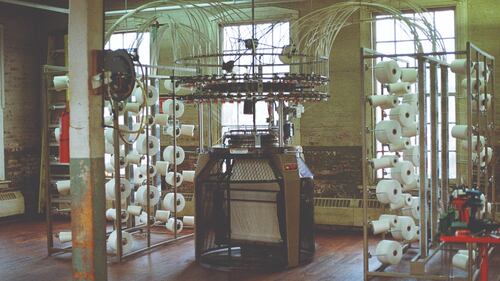
Some digitally native start-ups are buying or building factories to cut production times and control quality. But not every company is built to handle manufacturing themselves.

How a unique approach to supply chain, design, communications and retail has powered blockbuster demand for iconic bags like the Birkin and Kelly, enabling the French leather goods house to face down rivals and become a global megabrand with a market capitalisation greater than Nike’s.

Fast-growing womenswear maker Reformation will be the next big test of whether a brand pitching sustainability can win over a wider audience and deliver on environmental promises.

Japanese sportswear group Goldwin and biotech start-up Spiber are set to test the market for lab-grown materials with collections for brands including North Face and Woolrich this fall.
The British retail group has pushed its stake in the German apparel brand above 50 percent in a move that will turn Hugo Boss into a subsidiary of Frasers.
The settlement, equivalent to 44 percent of the ultra fast-fashion company’s second-quarter profit, is the latest blow amid regulatory and tax crackdowns in Europe and the US that have hampered Shein’s growth.
The recovery long promised by luxury brands seems nowhere in sight, as the expansion of war in the Middle East, along with China’s tax crackdown on the wealthy, piled further pressure on the world’s biggest luxury conglomerates in the third quarter, and executives buckled in for a tough winter.
Sales fell in September as above-average temperatures hit demand for autumn clothing.
Hitting newsstands in October, the magazine marks Elle’s 51st international edition, published under licence by the Geomedia group.
Pearl, a subsidiary of David’s Bridal, will own David’s Bridal and license its intellectual property back to the bridalwear brand. David’s Bridal CEO Kelly Cook will serve as Pearl’s CEO.
The French giant handily beat expectations on strong demand for hair products at salons and premium skincare from its dermatological division.
The maker of Pantene shampoo was helped by strong personal care demand, but expects higher commodity costs to reduce profit by about $1.4 billion this year.