Record Global Fibre Production Pushes Fashion’s Environmental Footprint Higher
Planet-warming emissions associated with the raw materials used to make fashion, footwear and home textiles have risen 30 percent since 2019, according to a new report.


The climate crisis, Covid-19 and recent anti-racism protests have forced the fashion industry to recognise how it is failing to live up to its environmental and social responsibilities. Global experts at The BoF Professional Summit weighed in on where we go from here.

The exploitation of Asia by western businesses is as widespread today as it was when the British ruled India and Gandhi and Charlie Chaplin discussed the subject in a brief encounter in 1931, argues Bandana Tewari.

As retailers around the world cancel orders, factory owners in Myanmar, Bangladesh and Cambodia shut down thousands of factories and sent home workers with little or no pay.

In the latest special edition of the BoF Podcast, Kalpona Akter, founder and executive director of the Bangladesh Centre for Worker Solidarity, joins BoF’s Imran Amed to discuss the impact of Covid-19 on the millions of garment workers left destitute as the world's largest retailers cancel orders.
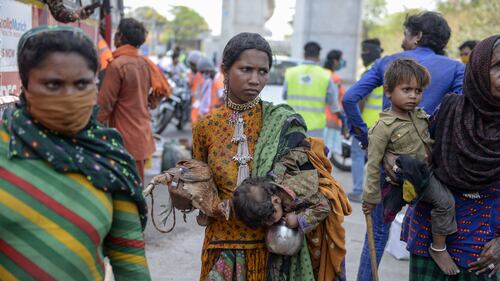
By cancelling orders with Indian suppliers during the country’s chaotic lockdown, global brands are making impoverished workers even more vulnerable in a market where 60 million people depend on the fashion industry for their livelihood.
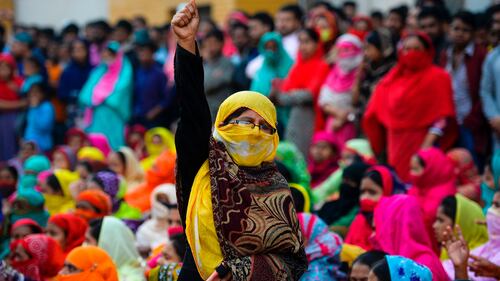
The country is set to lose export revenue of about $6 billion this year due to cancellations from retailers and vendors.

Major brands including H&M and Adidas are working with the International Labour Organisation to commit to paying factories for finished goods.

The government launched a $588 million package to help companies in the garments sector pay staff, but manufacturers have said it is not enough.

Under severe economic pressure, it’s tempting to see social responsibility as dispensable, but it’s as essential as ever to long-term strategy, argues Clare Press.

In the latest special edition of the BoF Podcast, Indian journalist and author Rana Ayyub joins BoF’s Editor-in-Chief Imran Amed to discuss the impact of Covid-19 on the lives thousands of migrant labourers, many of whom work in India's now-shuttered textile industry.
The second-largest apparel producer after China is set to lose $6 billion in export revenue as the world's largest retailers cancel orders, jeopardising millions of jobs in the poor South Asian nation.

They are joined by global brands including Puma and Levi Strauss, which have all signed a letter urging the country to amend trade union law.
Planet-warming emissions associated with the raw materials used to make fashion, footwear and home textiles have risen 30 percent since 2019, according to a new report.
The maker of Ozempic and Wegovy seeks to expand its direct-to-consumer pharmaceutical business as rival Eli Lilly outpaces in weight-loss drugs.
The Swiss brand revealed its plan to keep up its momentum with new products in sports such as golf and its Mbappé-supported entry into football ahead of its investor day Tuesday.
The event runs from Oct. 22 to 25 and will mix participants from art, fashion, music and technology as part of the festival’s tradition of a ‘radical and unhinged exchange of ideas,’ said Mumi Haiati, founder of the event’s organiser Reference Studios.
The e-commerce giant prohibits other companies from deploying automated tools to shop its site and started blocking Meta’s Muse on Sunday night.
The LVMH-owned megabrand will show its Cruise 2028 line in the Chinese fashion capital on May 14, 2027.
The smart ring maker plans to market 50 million shares for $40 to $44 each, according to filings, which could value the company as high as $14.1 billion.
Known for its premium beauty clients including Glossier and Hermès Beauty, the agency’s new division combines influencer marketing and AI insights.