Vidhura Ralapanawe
Executive Vice President, Innovation & Sustainability, Epic Group
The climate researcher and manufacturing executive has emerged as a sustainability leader, opening one of the earliest examples of a fully net-zero garment factory in Odisha, India.

Vidhura Ralapanawe is executive vice president for innovation and sustainability at Epic Group, one of Asia’s largest garment manufacturers. He is one of the industry’s most consequential voices on climate.
Ralapanawe’s advocacy for environmental action in the fashion industry stretches back two decades. He helped lead the push for low-carbon, “green” factories while working at Sri Lanka-based manufacturing giant MAS Holdings, before joining Hong Kong-based Epic.
More recently, his approach has shifted to focus more on the urgent need to adapt fashion’s supply chains for increasingly extreme weather. He has been at the forefront of calls for the industry to tackle the growing problem of heat stress, arguing that the impact of rising temperatures on worker health and productivity could severely damage fashion’s supply chains.
He’s also pioneered solutions. In 2026, Epic opened a net-zero garment factory in Odisha, India. The facility was designed with extreme weather risk as a core consideration. The one-of-a-kind factory is built with thermal insulation, efficient cooling and resilience to disasters, like flooding. It’s intended as a blueprint for future-proofed factory design.
Prior to entering the apparel industry in 2006, Ralapanawe was a climate researcher. He holds degrees in engineering and sustainability and a doctorate in organisational change. He is an active participant in cross-industry initiatives to address climate challenges. He is a founder of producer-led sustainability think tank, Fashion Producer Collective, and has played key roles influencing multi-stakeholder initiatives like Cascale and the UN Fashion Charter.
VITAL STATISTICS
Find out more
Latest News & Analysis
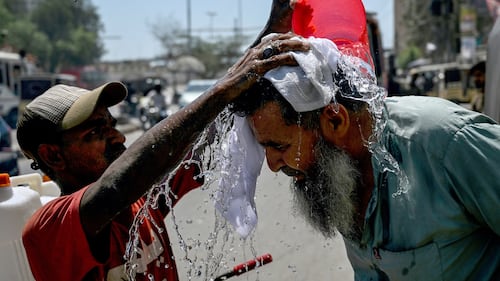
How to Fight Extreme Heat in Fashion’s Supply Chain
Record-breaking temperatures are threatening worker health and disrupting production, but there are simple, cost-effective steps the industry can take to adapt.


What is The BoF 500?
The people shaping the global fashion industry, curated by the editors of The Business of Fashion, based on nominations and on-the-ground intelligence from around the world.