Agenda-setting intelligence, analysis and advice for the global fashion community.
Agenda-setting intelligence, analysis and advice for the global fashion community.

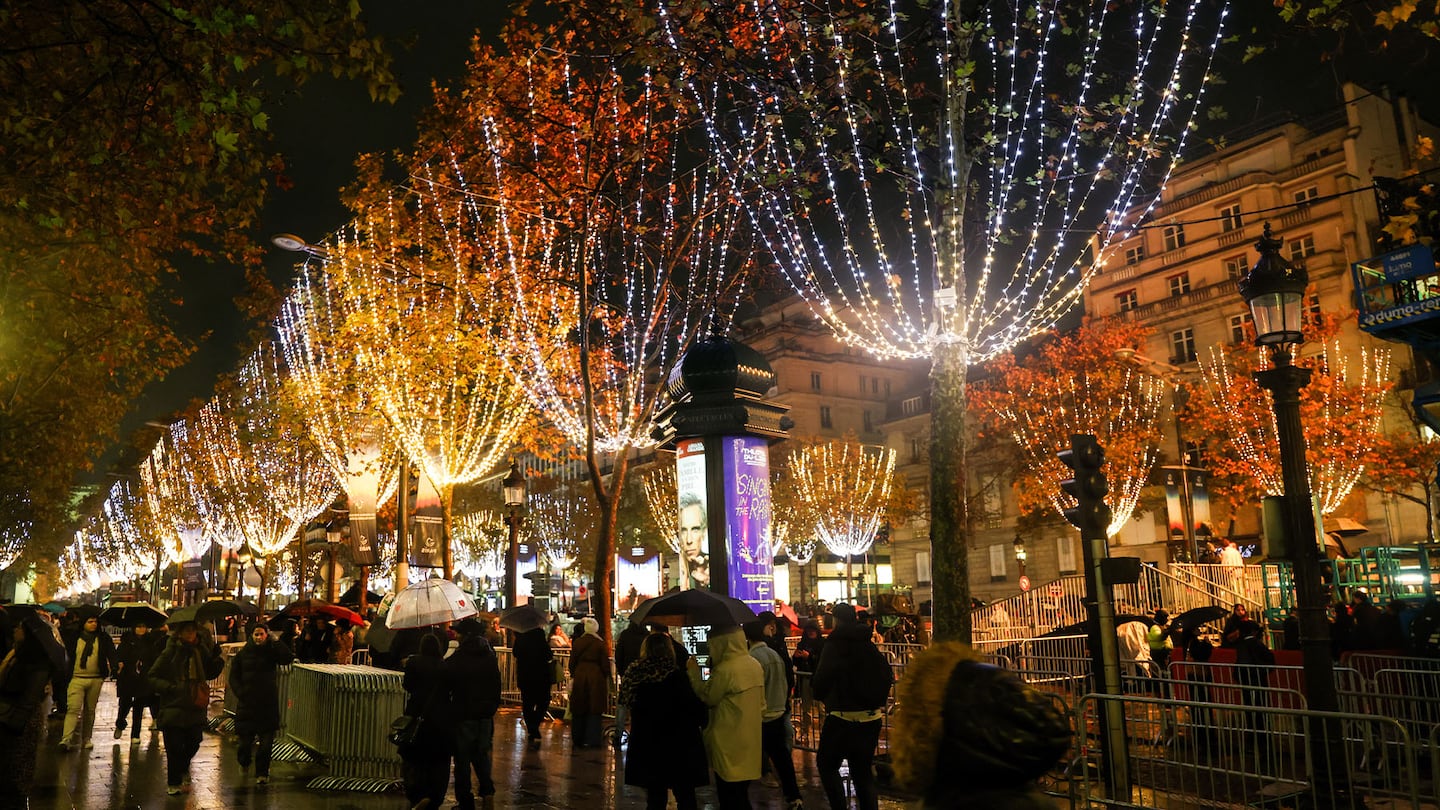
Six weeks after a wave of violent protests swept across France, tourist visits to Paris are down and the boarded-up windows on some of the city’s most prestigious shopping streets have become a reminder of an unsettling period for the luxury industry just as the crucial holiday shopping season picks up speed.
There is also a risk social tensions in Paris could flare up in the coming months as France heads into a presidential election in April and May, with candidates from the far right and far left expected to play major roles in a highly polarised campaign.
Luxury brands are particularly dependent on key cities around the world that soak up the bulk of global spending on high-end goods – and Paris figures highly.
The top 25 cities have almost 40 percent of all luxury stores in the world, according to a 2023 report from Bernstein. Paris is third on the list, with Tokyo and Seoul taking the top two spots. The French capital alone accounted for 3.8 percent of global spending on personal luxury goods last year, preceded only by New York and London, according to consultancy Bain.
ADVERTISEMENT
While the immediate disruption has faded, the images of looted boutiques on the shopping avenues of the city of light have cast a shadow on the city’s appeal to deep-pocketed visitors. The timing could hardly have been worse, bringing further troubles to an industry already struggling to restore growth after several difficult years.
“Paris is more exposed than most cities in the short term because its luxury market is closely tied to international visitors who come for the city and the flagships as much as for the products,” said Chiara Piancatelli, a professor of luxury marketing at the SDA Bocconi School of Management. “When travellers hesitate, Paris feels it straight away,” she added.
Hotel occupancy in Paris dropped by about 10 percent in November, year-on-year, breaking a run of growth, according to CoStar, a global provider of real estate data. Occupancy rates this year had risen each month before, with a particularly strong August to October.
Assuming no further large-scale protests in the near term, analysts at Bernstein estimate that the unrest will have reduced Hermès’ tourist-related revenue by 10 percent in October and 20 percent in November. They expect tourist spending to be flat in December.
Isabel Bazzani, a fashion sourcing concierge for high-net-worth private shoppers, said many of her foreign clients cancelled trips to Paris and opted instead to go to London or Milan.
“Even now with things a little calmer, clients still check to ask how the city is and whether it has settled since the height of the protests,” Bazzani said.
Brands have reacted, she said, by bringing their services to clients, through private appointments at their hotels or residences or by sending pieces directly to them on consignment. The city’s image hasn’t been irreparably damaged, in her view, and clients still want to visit the French capital, she said.
If the situation remains calm, “I don’t think there will be a major impact,” said Olivier Abtan, a managing director at Alix Partners who leads the French practice. “Most people aren’t going to say, ‘I’m not going to Paris for Christmas because there were riots two months ago.’”
ADVERTISEMENT
While the immediate question is how quickly tourism and shopping recover, the unrest also throws the focus on larger questions around conspicuous wealth at a time when the rising cost of living has become a source of heightened tension.
The luxury industry lost another 15 million consumers this year, bringing the total lost over the past five years to 85 million consumers, according to estimates from Bain, as middle class shoppers tighten their purse strings.
“The deeper effect of the riots is on the aspirational shopper, who was already under pressure,” said Piancatelli. “The cost-of-living concerns at the centre of the protests are the same ones that have been squeezing this shopper over the last few years. Images of looted boutiques add another question – does this feel right at the moment – to a purchase they were already reconsidering.”
Paris has weathered similar challenges before. The Yellow Vest movement, which was sparked by planned increases in fuel taxes brought disruption in 2018 and 2019. In Paris, where demonstrations regularly turned violent, luxury boutiques, restaurants and banks were targeted and some high end brands saw sales drop by more than a third. But by the summer of 2019 tourism had bounced back.
Despite the bouts of unrest and looming political uncertainty, however, luxury brands have forged ahead with retail investments in the French capital. New and renovated flagships, such as Gucci’s new store on Avenue Montaigne, remain central to brand strategies, reflecting the importance of Paris as a showcase for the industry.
“The riots challenge one of the strongest trends of recent years, that is retail as a destination,” said Piancatelli. “Brands invested in open, experiential flagships with cafés, exhibitions and restaurants that are designed to be visited as much as shopped. Boarded windows and visible security send the opposite message. The challenge is protecting the store without losing the sense of welcome that makes it worth visiting.”
This week in Paris, some stores that were vandalised and looted during the first wave of protests remain boarded up, as repairs continue. Others removed their plywood protections as civil unrest cooled — only to board back up in subsequent weekends in fear that protests might again lead to violence.
On Avenue Montaigne, the Christmas decorations are up — stars, clovers and toy soldiers at Dior, white lights and greenery in the shape of a giant YSL at Saint Laurent.
ADVERTISEMENT
But the boutiques are hardly at capacity; it’s rare to see shoppers waiting behind the velvet rope.
Paris already faces stiff competition from other cities like London and Milan. Milan – which was also hit with violent protests last month, on a smaller scale than France – has strengthened its position as a luxury shopping destination with a flurry of new flagship openings recently. The city has also attracted wealthy expats taking advantage of a low flat-tax regime.
Paris will always be Paris: one of the cultural capitals of the world and a prominent stage for high end consumption. But it may be some time before headwinds pass and the crowds of globetrotting shoppers return in full force.
Additional reporting by Robert Williams.
Read more:
Luxury Exposed to Paris-Like Attacks
Dependent on purchases by travellers in a limited number of global cities, luxury goods companies are susceptible to the impact of terror attacks.
In Paris, Security Fears Threaten Luxury Sales
Can the French authorities counteract the growing sentiment that the City of Light is not as safe as it once was?

Eric Sylvers is Milan Correspondent at The Business of Fashion. He is based in Milan and leads BoF’s coverage of all things Italian.
Loading recommended reads…
Workers rights campaigners said the case was a landmark victory, advancing efforts to establish greater corporate accountability in fashion’s supply chains.
Stretched US consumers are heading into Black Friday with strategies to spend less, but higher prices and earlier-than-usual deals mean many of them are likely to spend more this year.
Retailers including Zara and H&M shifted nearly a tenth of their monthly orders from Bangladesh to other Asian hubs, as protests disrupted production and rising costs eroded the country’s competitive edge.
The eventual ruling could set a precedent amid growing public backlash, venue bans and regulatory warnings that the glasses violate privacy by allowing wearers to film people without their knowledge.