Agenda-setting intelligence, analysis and advice for the global fashion community.
Agenda-setting intelligence, analysis and advice for the global fashion community.

What's up, down and making news this week in the fashion and beauty businesses.
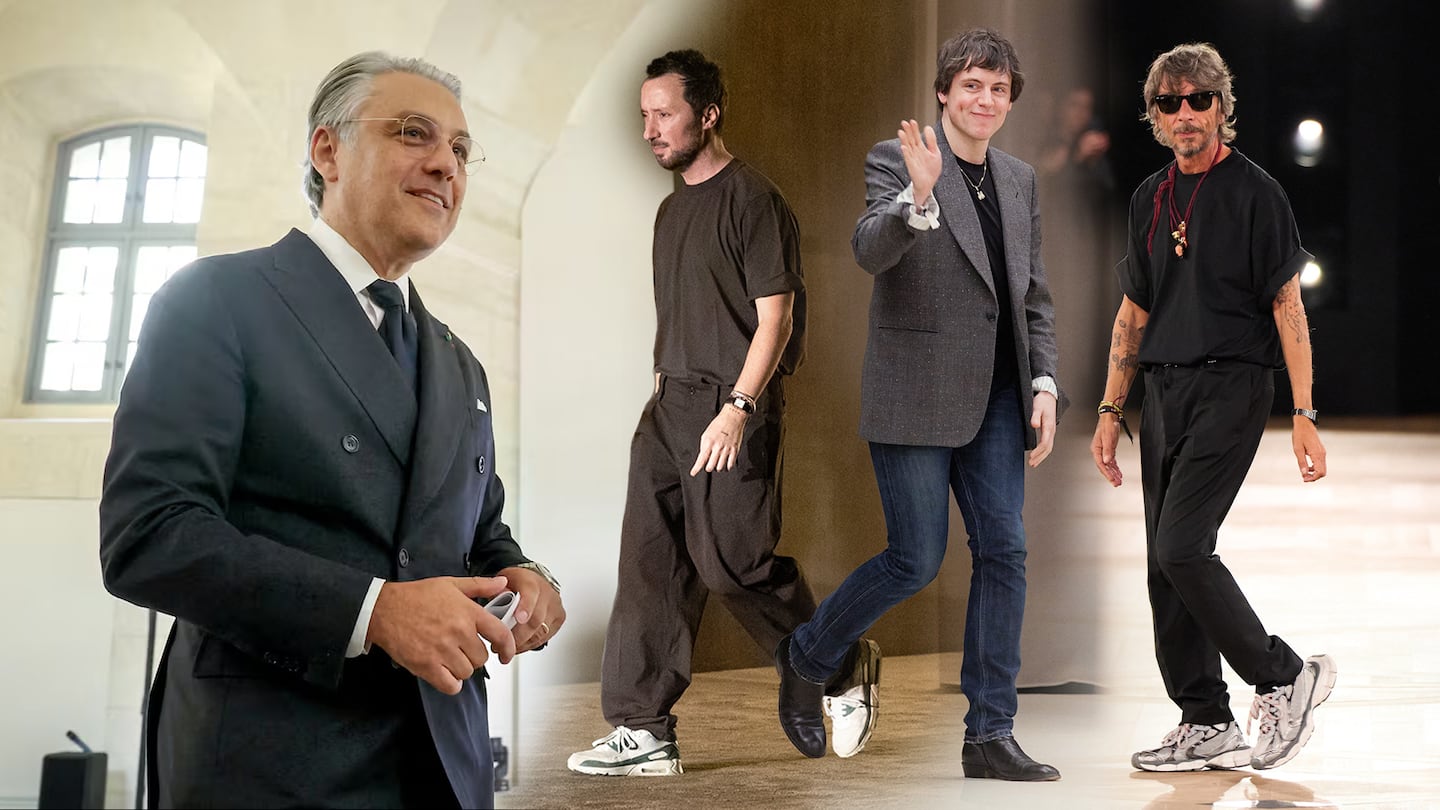
This week, Kering announced designer Seán McGirr would leave Alexander McQueen after three years as the brand’s creative director.
The announcement hardly comes as a surprise: The designer struggled to find his footing at McQueen after a looser, grittier debut failed to resonate with buyers. Subsequent collections were more sharply executed, but often lacked the drama and transgression people look for at a house whose founder Lee’s groundbreaking shows remain top of mind.
Add McQueen to the list of Kering brands undergoing a creative transition — now most of the French fashion group’s portfolio. Anthony Vaccarello’s departure from Saint Laurent was announced last week. Industry sources say Pierpaolo Piccioli is on his way out at Balenciaga after less than two years. Brioni is also forgoing a creative director, having elevated its head merchandiser to the post of “chief product officer” following designer Norbert Stumpfl’s December departure. Meanwhile, new designers are still settling in at Gucci and Bottega Veneta.
In theory, this is all part of the plan: Under new chief executive Luca de Meo, Kering is meant to move quickly to “reset” its financial, operational and creative structures in 2026, “establishing solid foundations for long-term performance.”
ADVERTISEMENT
But a creative director change also tends to reset the clock: First there’s the search for a successor, then the debut show, then the trickle of products into stores — all of which will delay the verdict on Kering’s turnaround efforts.
De Meo believes Kering has been “too dependent on designer-led steering,” and the group’s designers and brand CEOs need to make decisions within a clearer framework going forward, he said in an April strategy presentation. It was a three-hour presentation during which de Meo did the talking: Creative directors and brand CEOs sat in the congregation alongside analysts and press, driving home the message that even star designers would need to get on board or get out. “For me, the org chart is always written in pencil,” de Meo said.
But replacing creative directors across Kering’s brands may ultimately reinforce the role’s importance: Recruiting the right marquee design talents has once again become management’s top priority.
The question of whether de Meo can successfully select and integrate new creative directors also risks dominating the company narrative in financial markets, where Kering’s shares have fallen 70 percent from their 2021 peak.
Despite longstanding efforts by management to get investors to focus on longer-term initiatives, analysts continue to parse the consumer reaction to Gucci’s output collection by collection, launch by launch. There’s a risk investors will start to take a similarly granular view of Saint Laurent, which now accounts for one-third of group operating profit.
De Meo’s approach stands in contrast to Burberry’s turnaround effort under CEO Joshua Schulman, who since his arrival in 2024 has managed to restore momentum at the British brand by tweaking its marketing message, product assortment and pricing while keeping creative director Daniel Lee in place. If Burberry decides to appoint a new creative director when Lee’s contract ends, it will do so as a more confident and focused organisation — one where accountability for financial performance sits clearly with management, not creatives.
Still, there’s a case for making tough casting decisions promptly, and without undue handwringing. Enthusiasm for McGirr’s work at McQueen never bounced back after a rocky start.
A similar situation occurred at PVH’s Calvin Klein, where creative director Veronica Leoni’s departure was also announced this week. After an unsteady start for Leoni, Calvin Klein never made much space for its revived runway line in its marketing message or stores.
ADVERTISEMENT
These cases suggest that giving Piccioli more time may do little to get his tenure at Balenciaga on track. His romantic sensibility and humanist message have clashed with customer expectations for Balenciaga from day one. Trying to retain Demna’s streetwear client by mixing in graphic hoodies and workout gear only underscored the awkward fit. His couture-inflected vision also feels misaligned with de Meo’s intended focus for Balenciaga, which is to connect with Gen Z.
By clearing out Kering’s existing creative ranks — all of whom were hired before his arrival — de Meo is making space for designers who are aligned with his vision for the group. How he integrates new designers to Kering will be just as important as whom he appoints. A big fan of sports metaphors, De Meo says Kering’s brands should treat the creative director like the star player on a football team — the captain, perhaps, but not the coach.
Kering reports third-quarter sales after market on Thursday, Oct. 22.
Loading recommended reads…
The move, which was facilitated by Jean Arnault, comes as Hublot undergoes a repositioning in a bid to reignite sales.
LVMH’s sales dropped in China while Luca de Meo clears out Kering’s creative ranks. Plus, Kim Jones' new venture.
In the third instalment of The BoF Podcast’s Ask Me Anything series, Imran Amed takes on listener questions about Gucci’s unresolved turnaround, why brand-measurement metrics deserve more scrutiny, and what AI can — and can’t — replace in fashion.
Vuori’s new womenswear edit features vintage denim, cashmere sweater tops and suave outerwear pieces, moving the brand beyond its activewear roots. We’re seeing this trend more and more across the fashion spectrum.