Agenda-setting intelligence, analysis and advice for the global fashion community.
Agenda-setting intelligence, analysis and advice for the global fashion community.
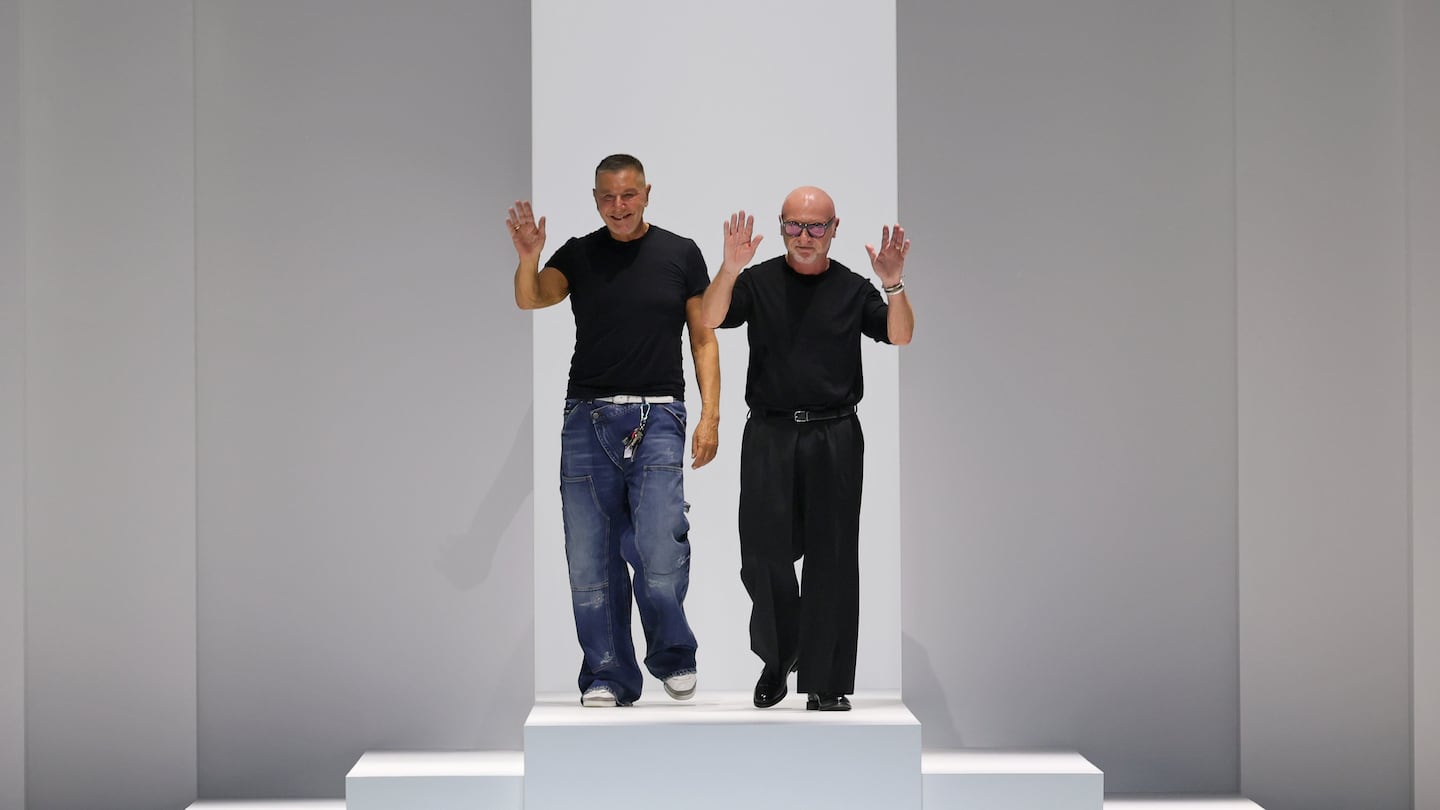
Dolce & Gabbana has long defended its independence by borrowing. That strategy is now colliding with a market that’s turned harsher.
Rather than selling equity or joining a larger group, the Milan-based fashion house relied on debt to finance expansion into capital-intensive businesses such as beauty and hospitality, preserving founder control while building scale. It was an approach that worked well when demand was strong, interest rates were low and lenders were eager to back globally recognised brands with predictable cash flows.
But higher interest rates and a multi-year luxury slowdown have made debt servicing more onerous. And what once looked like an effective defence of independence is now testing the limits of a debt-led model in a less forgiving environment.
Dolce & Gabbana’s lenders are seeking up to €150 million ($177 million) in fresh funds as part of a broader refinancing of €450 million of debt, Bloomberg reported without citing sources. The company may sell real estate and renew licenses to raise capital, the news agency said.
ADVERTISEMENT
That pressure helps explain a series of recent moves that, together, point to a major recalibration at the company. Stefano Gabbana stepped down as chairman in December and the company has appointed long-time luxury executive Stefano Cantino as co-chief executive. Gabbana is considering selling his roughly 40 percent stake in the company ahead of negotiations with lenders, according to reports
Individually, these developments don’t signal an imminent sale, but together they suggest a business reassessing how much financial strain it can absorb and whether the approach that worked during the boom years can still hold as borrowing costs rise and demand cools.
For decades, Dolce & Gabbana thrived on a kind of high-octane energy that paired baroque excess with the fierce independence of two founders who placed themselves at the centre of everything. That approach, once a defiant alternative to the conglomerate model, is now under strain as the economics of luxury grow more challenging.
In some ways, Dolce & Gabbana finds itself at a familiar crossroads for Italian luxury. As global fashion has consolidated, many of the country’s most storied houses, from Gucci to Fendi to Loro Piana and Bottega Veneta, have been absorbed into larger, often French-owned groups, trading autonomy for capital, scale and operational discipline. The question hovering over Milan is whether Dolce & Gabbana can continue to chart a different course or whether its debt-heavy defence of independence has drawn it into the same gravitational field it long resisted.
“When you see management reshuffles, founders stepping back and conversations about new capital, it often means a company is trying to make itself easier to understand and evaluate from the outside,” said Alessandro Dubini, a partner and co-head of corporate M&A at Dentons’ Milan office. “That is typically what happens when a business is at least considering a sale or the entry of a new strategic investor.”
While the moves don’t necessarily signal a transaction is imminent, they do reflect the structural pressures facing large, independent luxury houses as scale, supply-chain control and marketing become more capital intensive, said Dubini.
Dolce & Gabbana declined to comment.
Those constraints often first surface in commercial strategy as independent brands look for ways to generate cash without surrendering control.
ADVERTISEMENT
Concetta Lanciaux, a former LVMH executive who worked closely with Bernard Arnault and now advises luxury companies said that while Dolce & Gabbana’s underlying equity remains intact, its commercial strategy has drifted under mounting financial pressure as short-term monetisation takes hold in the face of liquidity concerns.
“About eight or nine years ago they started lending their name to too many products and that doesn’t add anything to the brand,” said Lanciaux. “It’s really just a way of making a bit of money in the short term.”
That dynamic is visible in the brand’s increasingly broad lifestyle offer, from homeware to food-related products, including items such as tins of nougat and branded pasta. While commercially marginal in the context of the group’s overall business, the extensions underscore the tension created by the heavy debt load and the need to extract incremental cash without giving up control.
Set against the short-term monetisation strategy is a more ambitious bet on beauty, which Dolce & Gabbana has said is central to preserving its independence.
By bringing the beauty business in-house in 2022, Dolce & Gabbana gained control over a key growth engine — it is targeting €1 billion in beauty sales by the end of the 2027 financial year — but also absorbed higher fixed costs and execution risk. Beauty can be highly lucrative, but it is capital intensive and can be difficult to manage when momentum slips. Combined with the costs of maintaining an expansive retail network and global marketing visibility, pressure on cash flow and rising debt can quickly spiral out of control.
The pressures are now coming to a head as discussions continue with lenders and asset sales are considered to stabilise the company’s finances. Last month, Dolce & Gabbana also extended its license agreement for the development, production and distribution of prescription frames and sunglasses with EssilorLuxottica to 2050.
Dolce & Gabbana’s future now turns on whether a model built on leverage can be rebalanced without undermining the creative and organisational autonomy it was designed to protect. Whether the reset produces a more sustainable version of independence or simply postpones more fundamental change will resonate beyond Dolce & Gabbana, offering a test case for Italy’s remaining independent fashion houses under financial strain.
The recruitment of the former Gucci, Louis Vuitton and Prada executive follows the resignation of Stefano Gabbana as chairman in December.
The company confirmed the resignation, saying it had ‘no impact whatsoever on the creative activities carried out by Stefano Gabbana.’ According to sources, the mogul is considering options for his roughly 40-percent stake in the Italian fashion brand ahead of negotiations with creditors.
The Italian company has been squeezed by an ongoing slowdown in the luxury goods sector, compounded recently by uncertainties from the war in Iran.

Eric Sylvers is Milan Correspondent at The Business of Fashion. He is based in Milan and leads BoF’s coverage of all things Italian.
Loading recommended reads…
The global collective has brought film studio Smuggler under its umbrella to bolster its entertainment capabilities.
An altercation between CFDA president Steven Kolb and PETA protesters has become the week’s biggest news. Behind the scandal is a wider debate about why a material many view as a sustainability hero should be so controversial.
Lynn Yaegar reports on New York Fashion Week, including Ralph Lauren, Khaite, Calvin Klein and more.
The cosmetics group became France’s most valuable listed company on Tuesday, the first time since 2017 that a non-luxury company has claimed the top spot at the end of a trading day.