Agenda-setting intelligence, analysis and advice for the global fashion community.
Agenda-setting intelligence, analysis and advice for the global fashion community.

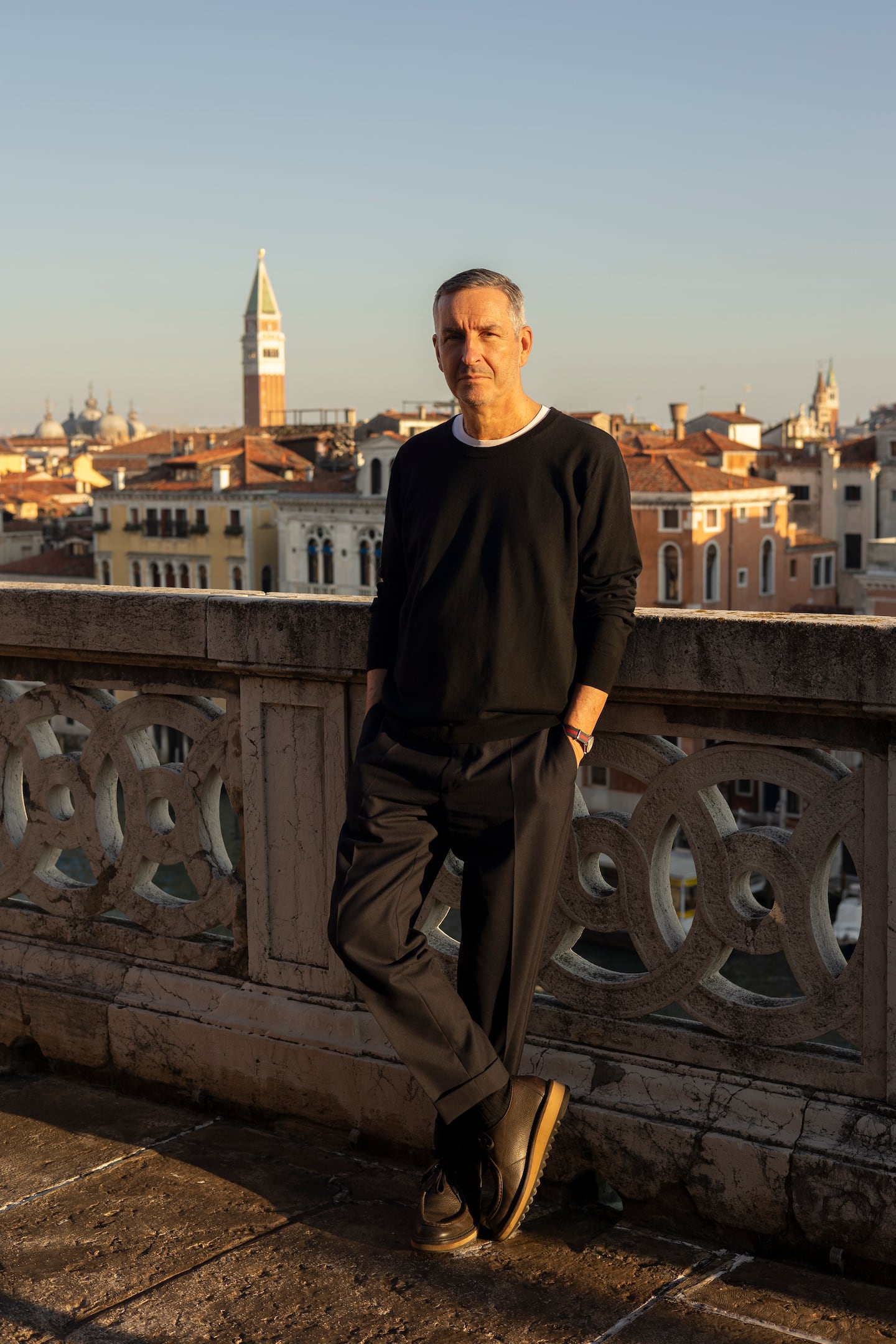
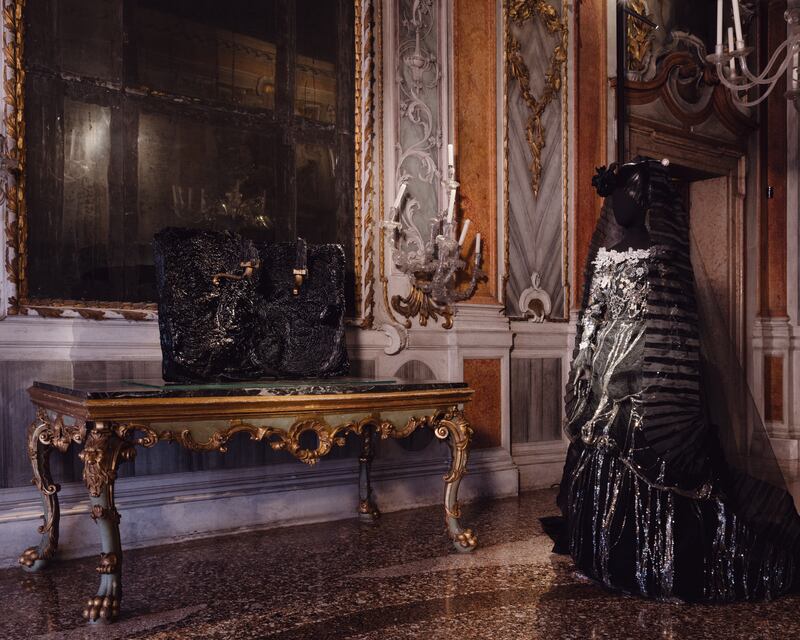
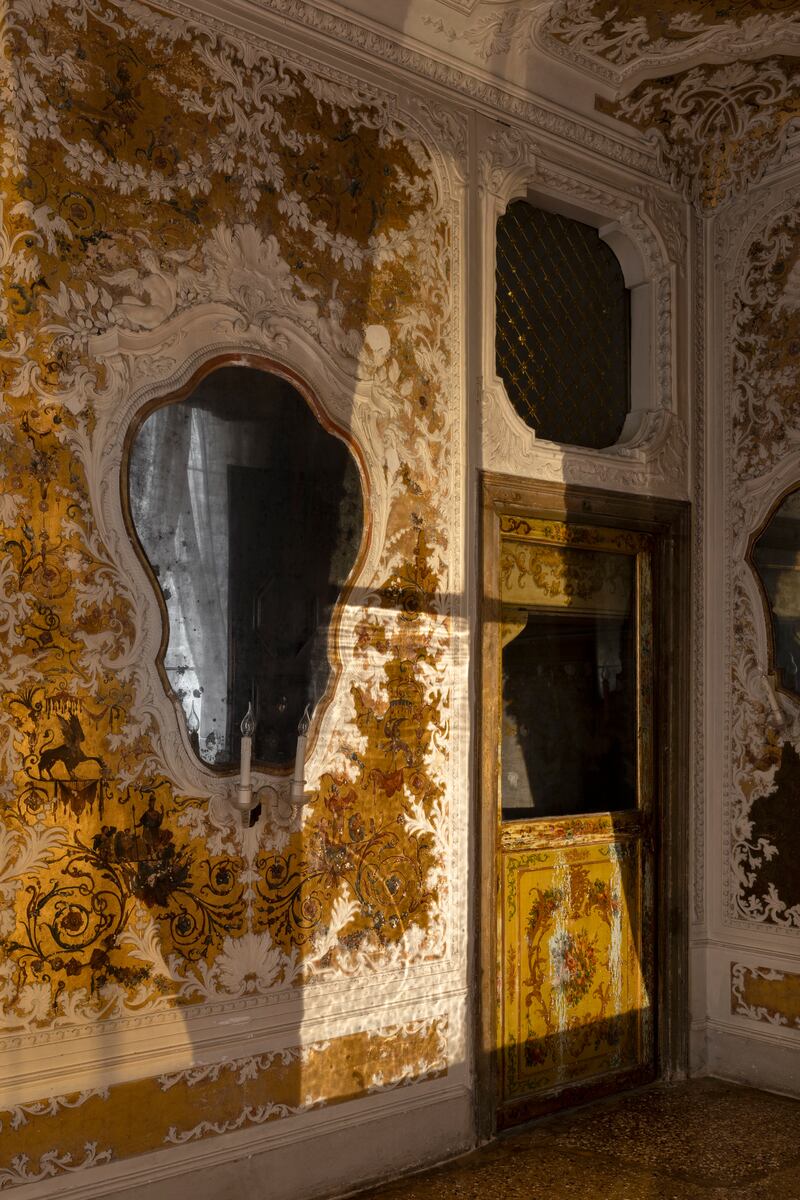
I want to be Dries Van Noten when I grow up. After four decades as fashion’s favourite icon of independence, he has embarked on an enviable next act by establishing his own art foundation in a 15th century palazzo on the Grand Canal in Venice. The Fondazione Dries Van Noten opened its first exhibition last week. He’s called it “The Only True Protest Is Beauty” and he mounts a convincing case for that proposal across more than 200 pieces of art, craft and fashion, all displayed against the imposing backdrop of the palazzo itself with ceilings that stretch to 6.5-metres high. Van Noten is podding from a room on the third floor where the ceiling is a mere four meters away, and I’m mesmerised by the wall behind him. Vines and flowers trail across an ice-creamy base. I took it for wallpaper. It’s actually original stucco, as fresh-looking as the day it was made three hundred years ago and it’s just one of the hundreds of surprises the building has in store for visitors this summer.
Conveniently, the summer exhibition in MoMu, the fashion museum in Van Noten’s hometown in Belgium, is devoted to the Antwerp Six, the vehicle which launched him, along with Walter Van Beirendonck, Ann Demeulemeester, Dirk Van Saene, Dirk Bikkembergs and the late Marina Yee, on an unsuspecting world in 1985. The show is an emotional reminder of a unique moment in fashion, given added poignancy by Yee’s recent death. Van Noten acknowledges it would have been easy to wax nostalgic. “You could say, this is all over and it was fantastic and we were so much younger and so much more handsome, and daring to do things.” Instead, he insists he was happy to see his career in fashion wrapped up so succinctly, as happy as he is to see his brand moving forward under the stewardship of Julian Klausner. “It gives me the kind of okay to concentrate on something else in a very positive way,” Van Noten adds. “And that’s what we’re doing now.”
The exhibition’s title is a quote by songwriter Phil Ochs, a contemporary of Bob Dylan’s in the Sixties: “In such an ugly time, the only true protest is beauty.” No coincidence obviously, although Van Noten thought when he originally chose Och’s words 18 months ago, the state of global affairs would surely have improved by the time the show opened. Instead, it has substantially worsened, so the “ugly time” reference has been dropped. “I think everybody knows it’s an ugly time, and I’m a positive person, I don’t want to say, ‘Poor us, look where we are, the world is so bad.’ No, we have to look forward.” For him, negativity is ugliness. But his commitment to positivity doesn’t mean Van Noten is a Pollyanna.
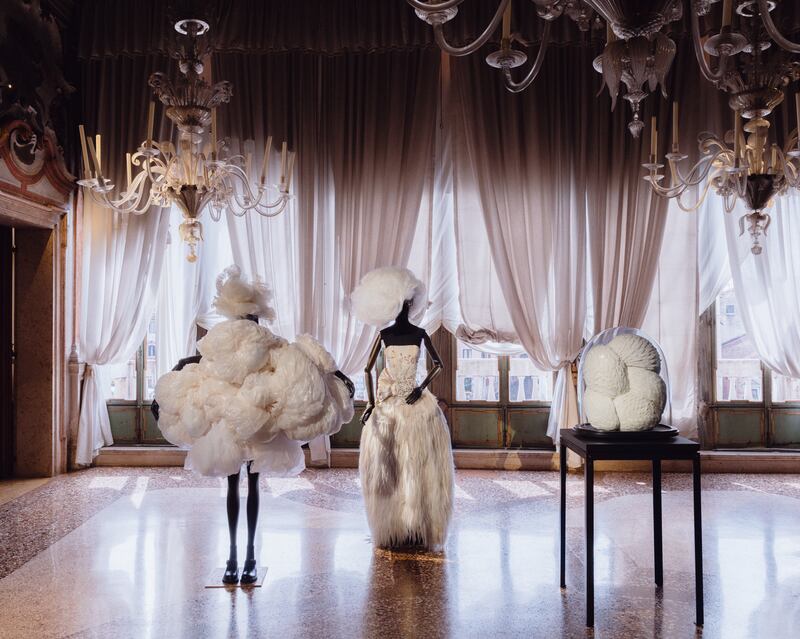
As much as they have always surrendered to his visions of beauty, Dries devotees have also appreciated his acquaintance with the dark side. One thing that is immediately riveting about “The Only True Protest Is Beauty” is how it poses beauty as a question, not an answer. Tension, not resolution. Engagement, not escape. Fashion is represented by polar opposites Rei Kawakubo and Van Noten’s erstwhile collaborator Christian Lacroix, but there is also 26-year-old Palestinian designer Ayham Hassan who grew up in Ramallah on the West Bank. He embodies the notion that protest is also hope. “I saw the things that Ayham did and especially also what he was writing and talking about — that you can’t only mourn, you have to be able to dream, to see beauty to survive — and that for me was a little bit like the symbol of so many things I wanted to say with this presentation.”
ADVERTISEMENT
The fact that Hassan’s presence creates a broader context for the fashion element in the exhibition is a reminder of the industry’s ongoing quest for relevance in this “ugly time.” It’s deliberate on Van Noten’s part. “I think fashion has to be relevant to survive because otherwise it just becomes product. For me, fashion is too noble to reduce it only to product and profit. That is really not the importance of fashion. Fashion still stays as a way to communicate and to express yourself.” That applies equally to the people who design it and the people who wear it.
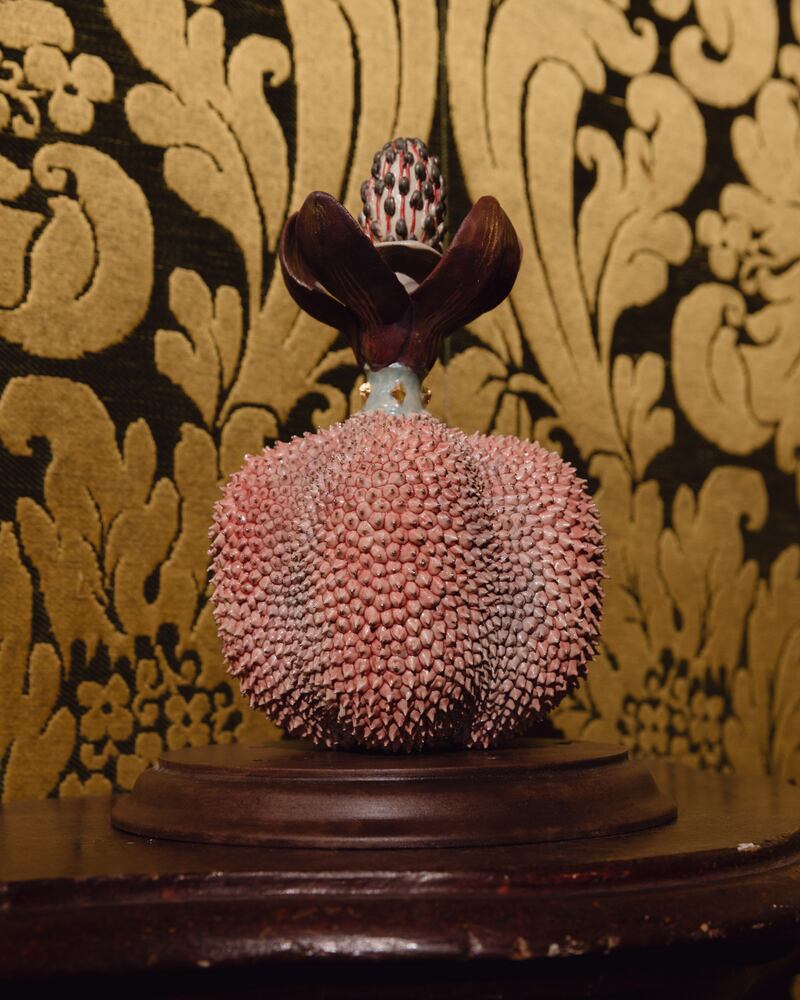
The belief in craft is strong in Van Noten’s foundation. “Thinking with one’s hands” is a line that jumped out at me from the promo material. “When you make something with your soul, there is a place for intuition, there is a place for creativity, there’s a place for coincidence,” Van Noten suggests. “The best artworks and the best creations often happen when you are making something and you stop because you realise you’ve already reached what you want to say. And you’re only halfway through the total process. Those for me are the interesting things.” That interest was the partial motivation behind the 32 videos of makers, artists, artisans that the exhibition highlights. No AI, no ChatGPT, just pure, gorgeous humanity.
There’s a palpable sense of liberation in what he’s doing here. Retirement was never on the cards. Dries is famously obsessed with his garden at home, but the thought of spending the rest of his life talking to fellow 70-year olds about pruning and plant fertiliser made him blanch. And God forbid frittering away his last years on Earth on a beach somewhere, even though he and his partner Patrick Vangheluwe do own a lovely situation on the Amalfi Coast. No, their firm decision was that craftsmanship had given them so much it was time to give something back. “And here we are.”
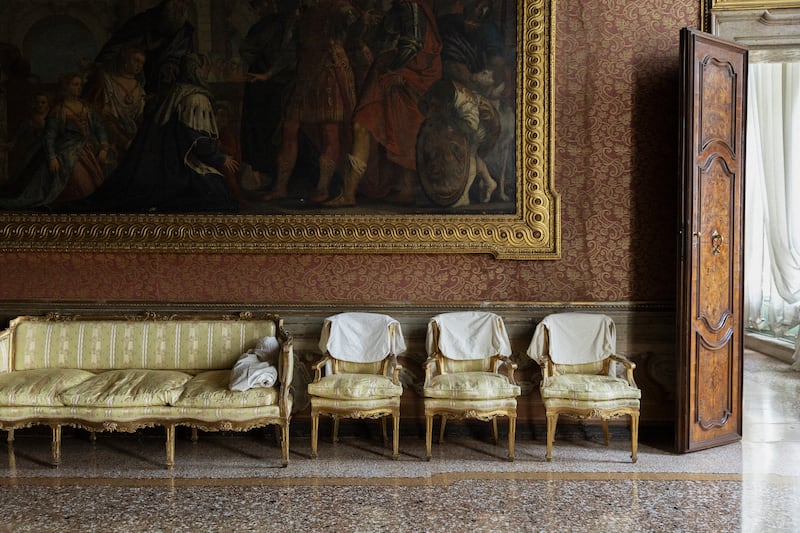
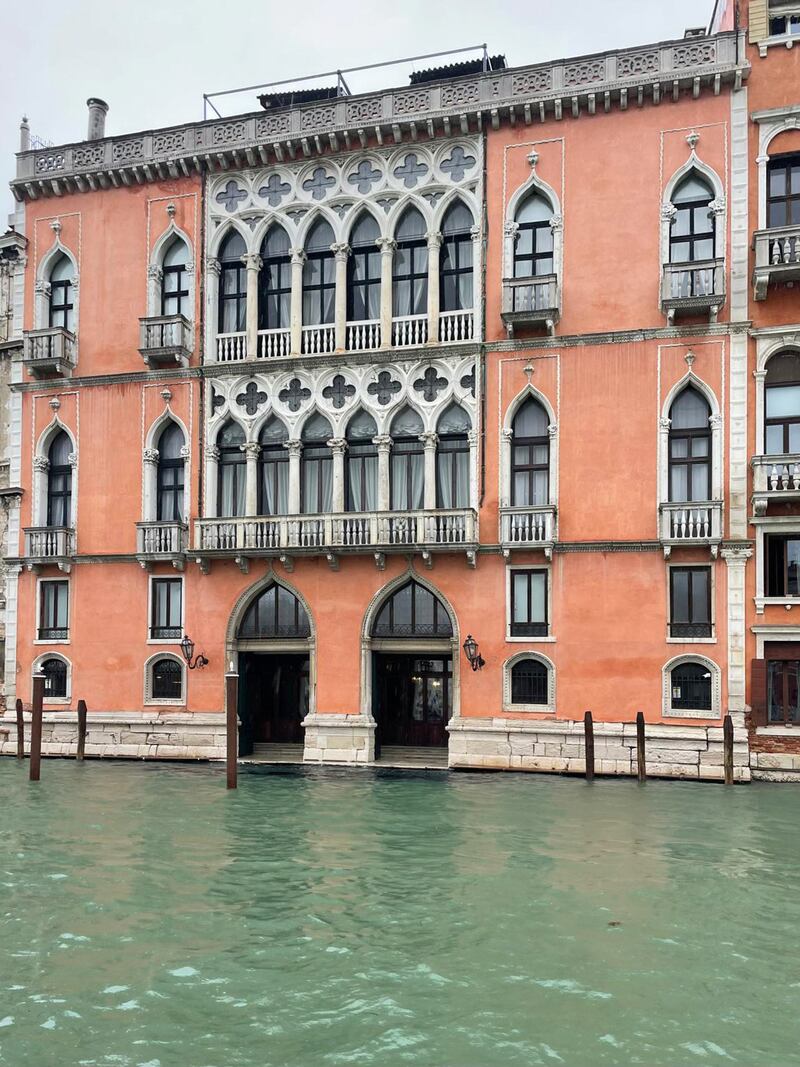
“Here” is the Palazzo Pisani Moretta. The first time the couple saw it, Van Noten claims it was “everything we weren’t looking for.” Too big, too complicated, too needy. Though the palazzo was originally constructed in the 15th century, it was Chiara Pisani’s massive renovation in the 18th century, using the very best Venetian craftspeople, that gave it the appearance, inside and out, it has today. The most recent owner Maurizio Sammartini had maintained it immaculately. Van Noten and Vangheluwe fell under its spell. “We understood that the palazzo is really a place where the 1730s craftsmanship is still all there, so it was a unique possibility to combine all that skill and knowledge from the past with things from now.” There is still stuff to do — a new elevator, aircon, revamped heating, and there’s almost no electricity on the first floor — and after the inaugural show, the palazzo will close for 15 months to bring it up to 21st century scratch.
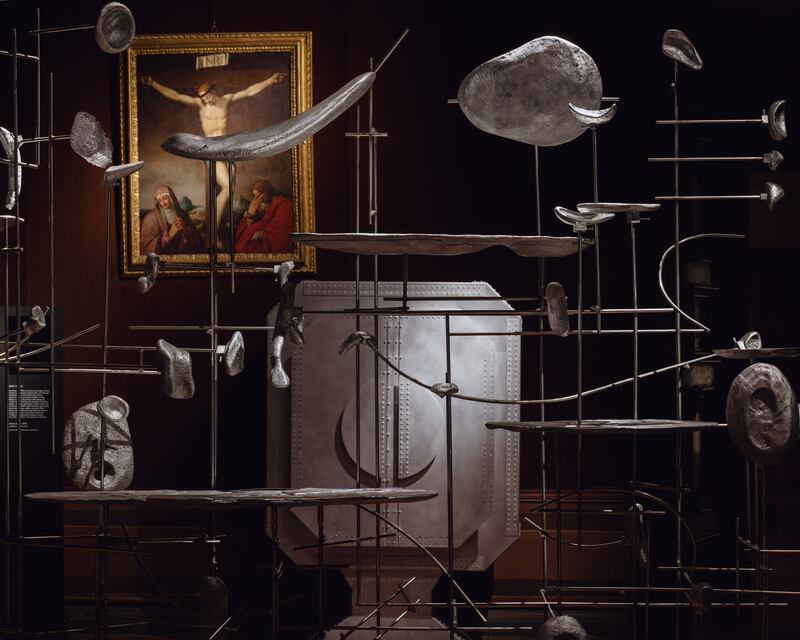
But what continues to amaze Van Noten is that, for all the Rococo grandeur, there is a real human scale to the building. “There is something really tender in it,” he muses. “I think it’s that balance, the grandness, but also the charm. Everybody who comes in says, ‘Okay, even though the ceilings are so high, I can imagine that somebody lives here.’ Of course we’re not going to live in those rooms, but I think that gives them a different dimension.” Maybe not those rooms, but the couple hopes that the third floor will eventually become their living quarters. When I ask if there’s ever been a moment when he’s stepped back and wondered, “Oh my God, what have we done?” his reply is instant. “Every day! But then, luckily enough, you go to another floor, you see the light falling in a certain way, or you see a single candle burning somewhere, and you think ‘It’s good that we did this.’”
The Fondazione Dries Van Noten has opened within weeks of the 2026 Venice Biennale, when the palazzi owned by Miuccia Prada and François Pinault inevitably host huge thought-provoking exhibitions. He vehemently insists it’s not his goal to operate on the level of those huge foundations. His budget is scarcely comparable, for one thing. “But let’s compare it with food, you have maybe the three-star restaurants and then maybe the one-star restaurant that can also do very exciting things and maybe speak to other people.” I think Dries is being much too humble. His plans for the foundation are ambitious: educational outreach, satellite projects, residencies, even though they’re expensive. He’d really like to stage a small music festival on the third weekend of October, during the Biennale Musica. “We still have a second space we can move to when the palazzo closes.”
He agrees that life in Venice has already changed him a lot. “It’s a different rhythm. Fashion is very demanding and of course it dictates the rhythm. Here, nobody dictates what we have to do.” Dries and Patrick have surprised themselves by becoming social animals. It helps that the supremely social Diane Von Furstenberg is a neighbour. “And Venetians are also very, very social,” Dries adds. They invite you casually just for an aperitif and it’s really fun.” And there’s never a need for a designated gondolier. Home is just a walk away, wherever you are. Ain’t life grand.
Loading recommended reads…
Investors are looking for sportswear’s next hit product as the Adidas Samba craze loses steam. Adidas, Puma and Vans-owner VF Corp will have a chance to sell them on what’s next during their respective earnings calls this week.
The British retail group has pushed its stake in the German apparel brand above 50 percent in a move that will turn Hugo Boss into a subsidiary of Frasers.
The settlement, equivalent to 44 percent of the ultra fast-fashion company’s second-quarter profit, is the latest blow amid regulatory and tax crackdowns in Europe and the US that have hampered Shein’s growth.
Among the takeaways from the latest round of quarterly reports from European luxury groups: China’s hurting, industry growth in the US has slowed and quiet luxury is having a moment.