Agenda-setting intelligence, analysis and advice for the global fashion community.
Agenda-setting intelligence, analysis and advice for the global fashion community.

MILAN — Skirts are in the news in Italy after right-wing foreign minister Antonio Tajani last Friday resorted to that most tiresome of equations: that the length of a woman’s skirt is a measure of her moral standing. The mini, needless to say, came out badly.
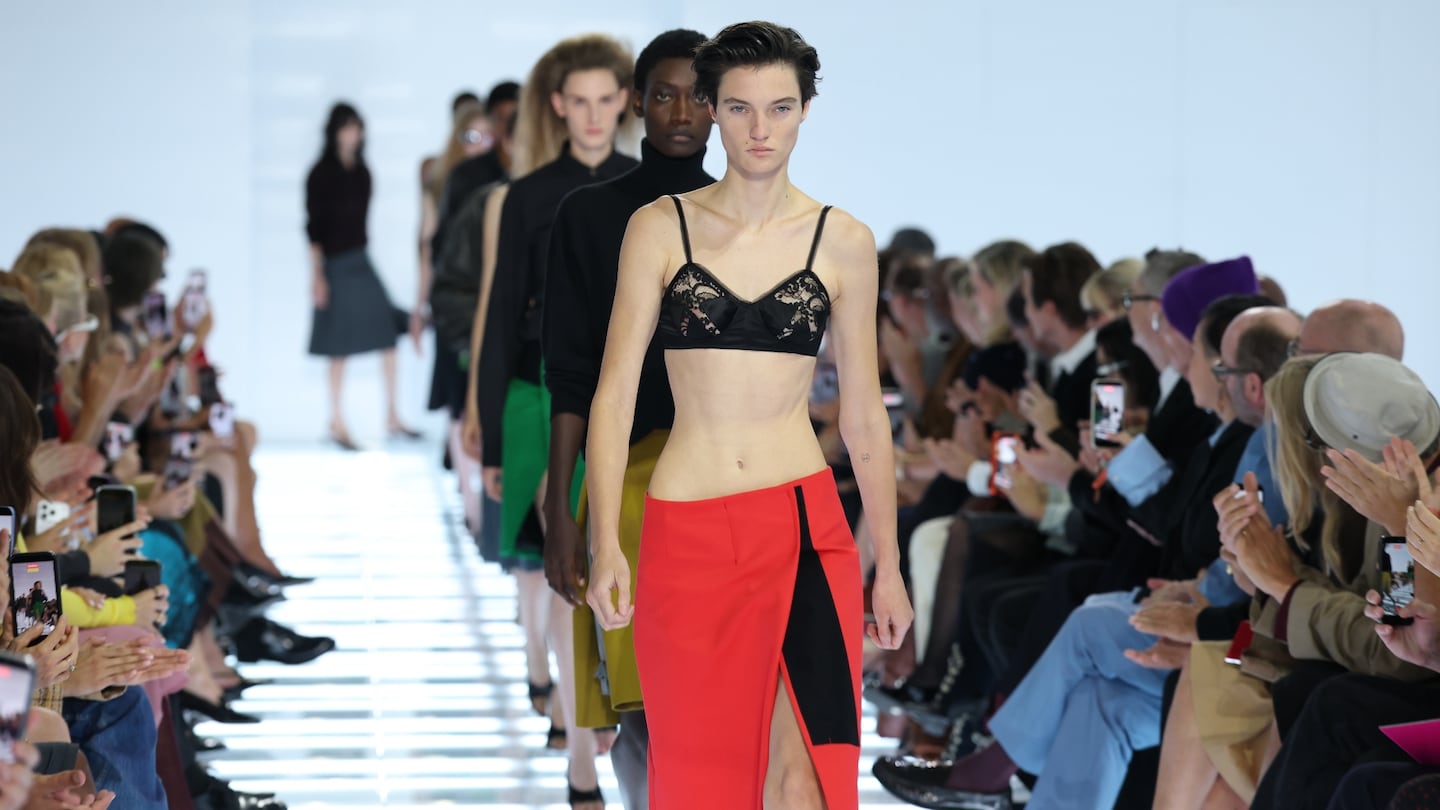
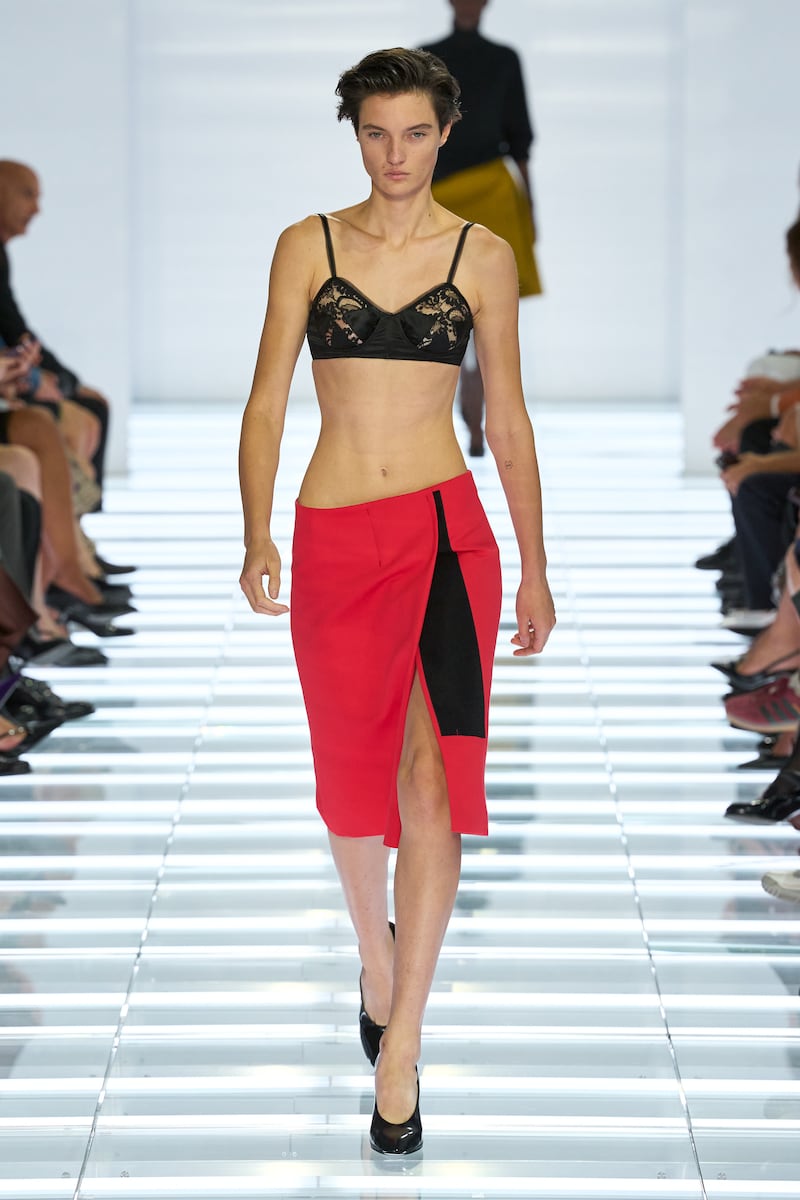
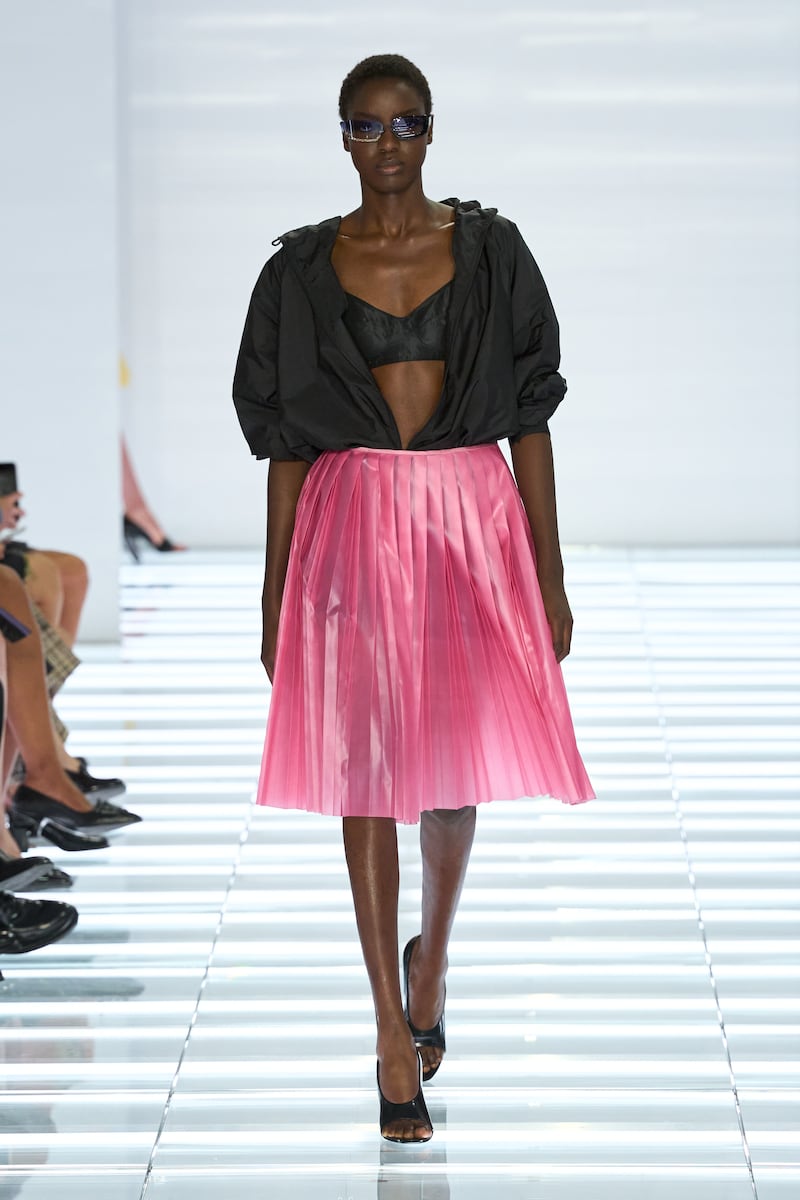
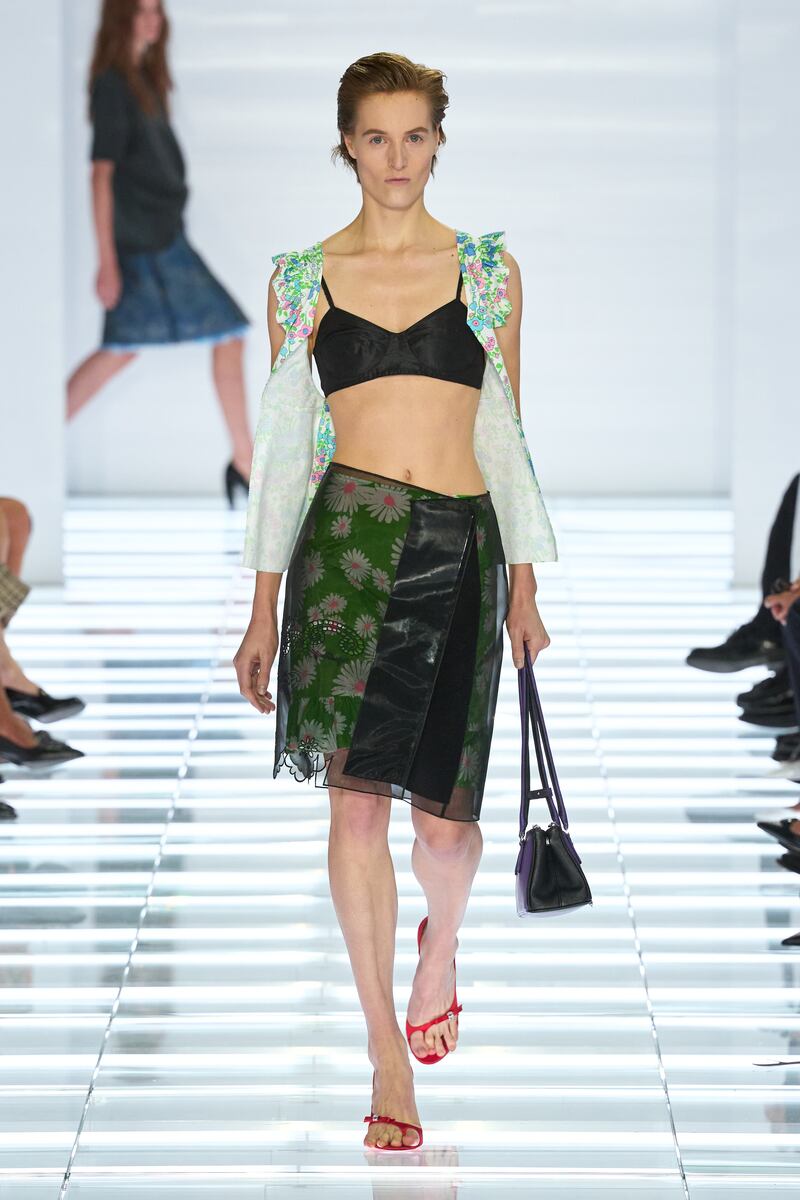
By coincidence, the Prada show that kicked off Milan Fashion Week was a showcase of 63 skirts. Most of them wrap-around, fastened with outsized Velcro straps, and hovering around the knee. Yet respectability was hardly the point. Rather, most of the Prada skirts looked ready to fall, sitting perilously on the hips, undone, crumpled, imperfect.
There was no connection to Tajani’s comments, of course. Miuccia Prada offered a smile and a shrug at the suggestion. But the timing was simply delicious.
A tight brief is a classic Prada device: reduce the perimeter and see how much innovation can soar within it. The brand’s lace collection from 2008 immediately sprang to mind. This time, Mrs Prada and co-creative director Raf Simons focused on the skirt, an item so paradigmatic in the label’s vocabulary that she devoted a 2004 exhibition to it.
ADVERTISEMENT
This was restriction as a way to free the imagination. One object, endlessly reconsidered — like the humble anecdote Raymond Queneau rewrote ninety-nine ways in Exercises in Style. And there was plenty of material experimentation to prove the point: Velcro became ground for crystal embroidery; crinoline became decoration or shell; industrial ciré and recycled nylon were pleated; cotton impersonated leather and suede. The top half of the look often seemed deliberately drained so everything happened below the waist.
But in the end, the theory was more exciting than the practical results. For all the frantic experimentation, the collection felt oddly retrospective, even formulaic: creatively safe. There was an unmistakable pleasure in surveying Prada through that single garment, displayed like a box of candies, but also the feeling of watching Prada expertly perform Prada-ness. At times, it looked like a collection put together by those who keep copying Prada.
The house is at its most potent when it shakes the status quo, when it turns something familiar into something difficult, awkward, vaguely wrong. Truth be told, that hasn’t happened in a while. Today, the wrongness felt controlled, packaged, polished and way too familiar.
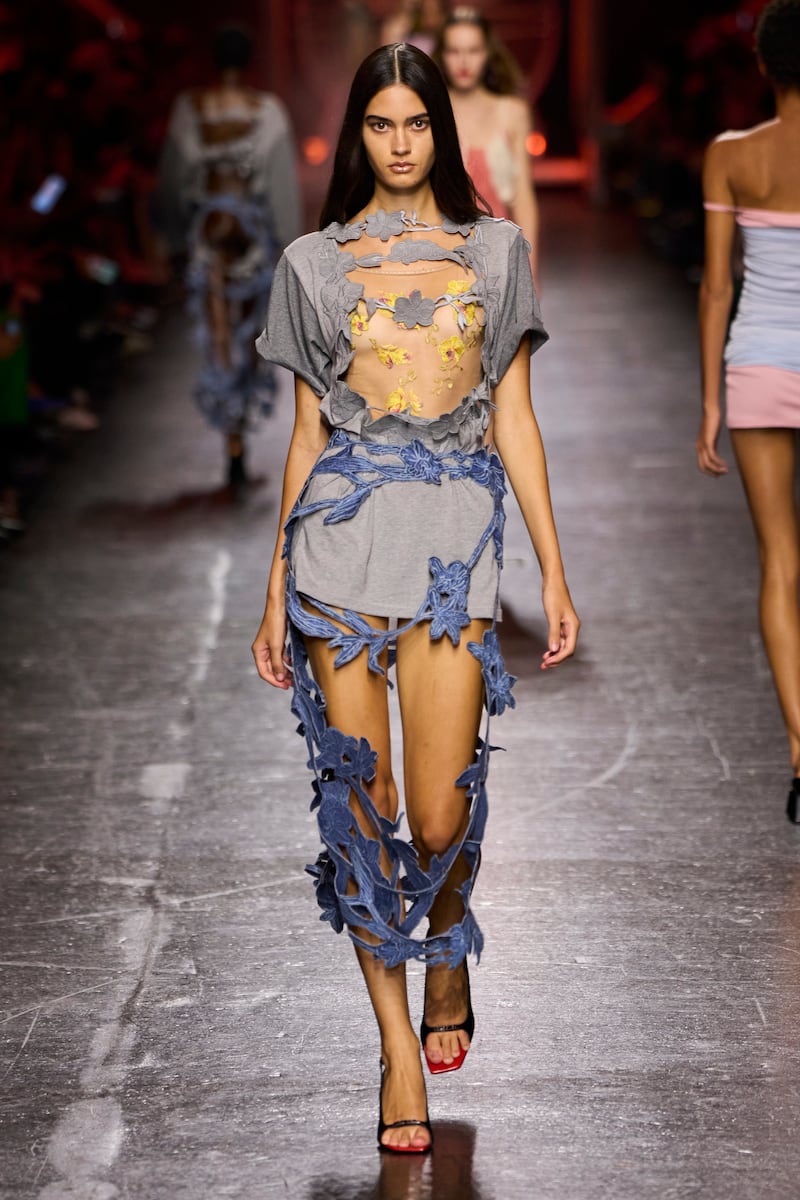
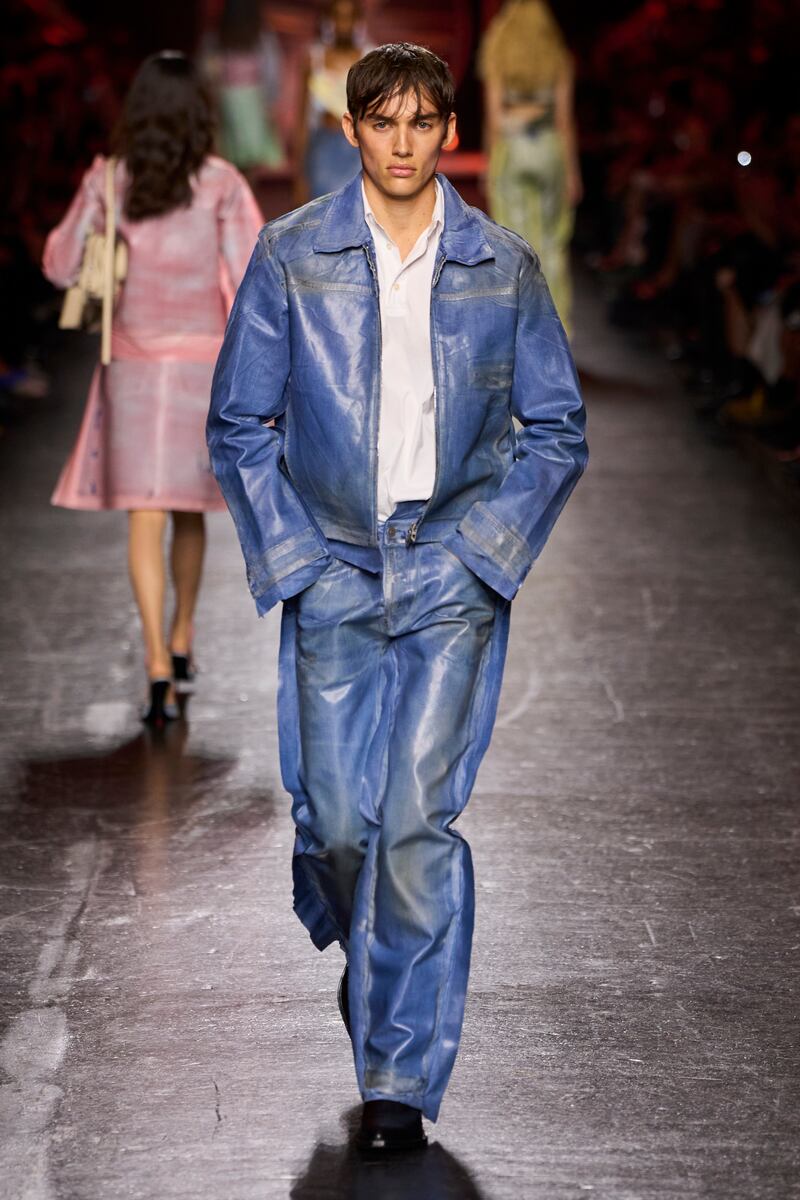
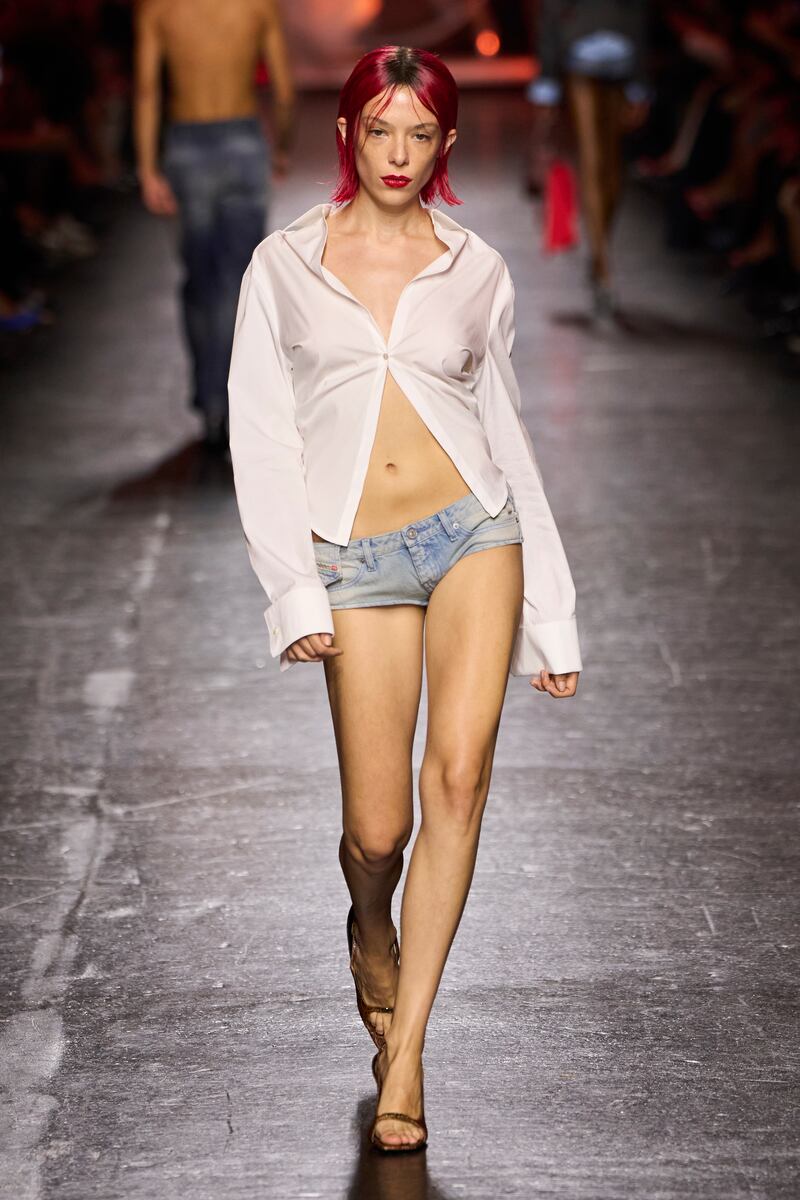
Formula was also at work at Diesel, although Glenn Martens had no interest in disguising it. His final collection for the denim label before making OTB stablemate Maison Margiela his sole focus was essentially a greatest-hits compilation of all the abrasions, crumpling, tearing and perfect imperfections he devised at Diesel, resulting in garments that were merging into one another or fused with lingerie, as if they were ready to peel away or put on after a hookup.
It was as if Martens took the vocabulary he built at Diesel and turned up the volume for one last ride. If it was a little formulaic, it was also lively. Let’s not forget the French contemporary dance collective (LA)HORDE, who turned the sidelines of the catwalk into soft porn. It was gross but catchy in a very Diesel way, complete with Donna Summer’s “Love to Love You Baby.”
And with that, Marten’s chapter at Diesel ended with a bang.
Meanwhile, at Vivetta Ponti’s new label Venerdì Pomeriggio, launched last February, things went in a very different direction with what looked like a childish fantasy of gardening and romanticism complete with puff sleeves and frilly trims. Ponti has her own formula, of course, but with her new project she’s scaled things down, and all the better for it.
The Belgian designer’s last collection for the denim brand will be presented next week in Milan.
Loading recommended reads…
The New York Times photographer and style columnist joins Imran Amed on The BoF Podcast to discuss why practice makes permanent, the blind spot he had to admit to himself and why the style he looks for is meant to feel within reach.
In Panipat, 1 million tons of used clothing a year are turned into products for global brands, but dangerous machinery and few safeguards mean life-changing injuries are common
The struggles of Nanushka and Coperni expose the challenges of turning a promising label into a sustainable business, even after successfully building a global customer base and distinctive visual identity.
What to keep and what to change when a brand changes designers? Pierpaolo Piccioli’s brief stint at Balenciaga and Kering’s effort to course correct by bringing in Martine Rose offers learnings for houses seeking creative renewal.