Agenda-setting intelligence, analysis and advice for the global fashion community.
Agenda-setting intelligence, analysis and advice for the global fashion community.

MILAN — Finding one’s own voice within the parameters of a brand’s backstory is the core challenge facing designers these days. Most work at the service of something larger than themselves: creative directors working for houses whose identities were forged long before they arrived and will likely survive long after they’re gone.
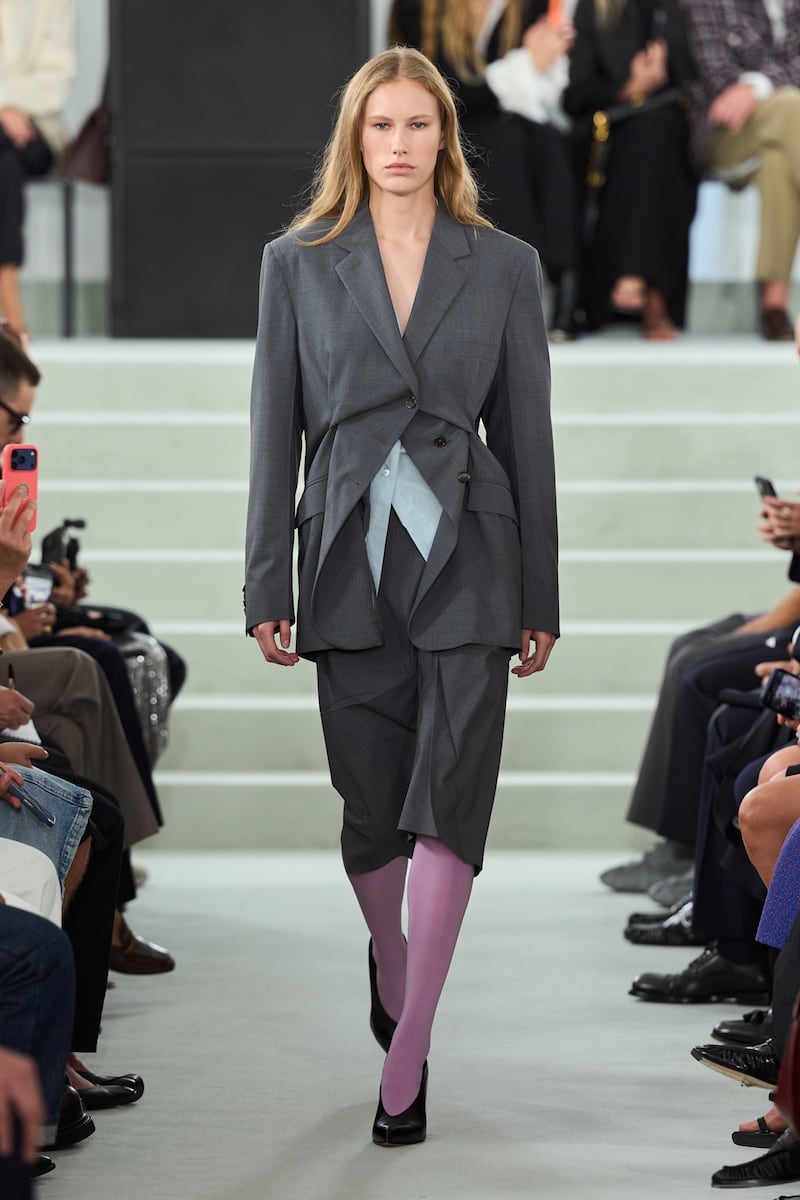
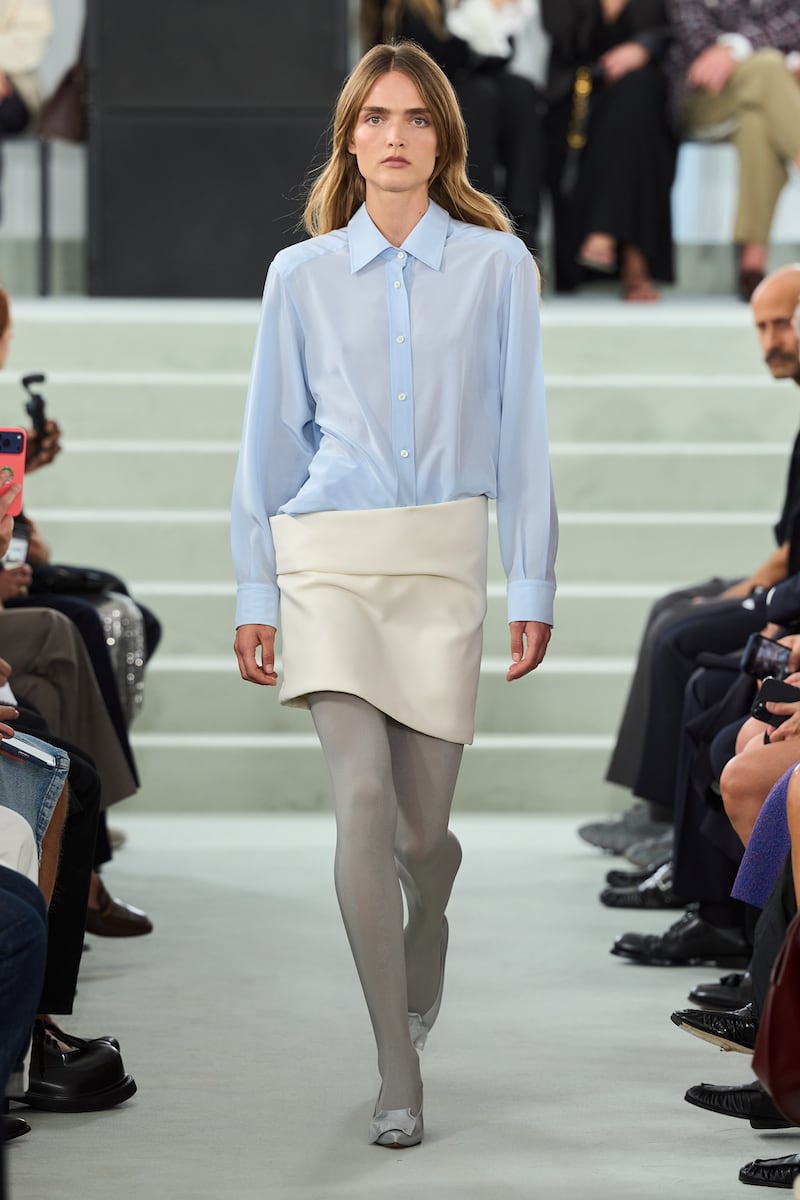
At Jil Sander, Simone Bellotti found a fitting metaphor to describe the design process. “Creating a collection is like going to therapy,” he said backstage. “You take things apart to understand what you want to keep. Then you put them back together.”
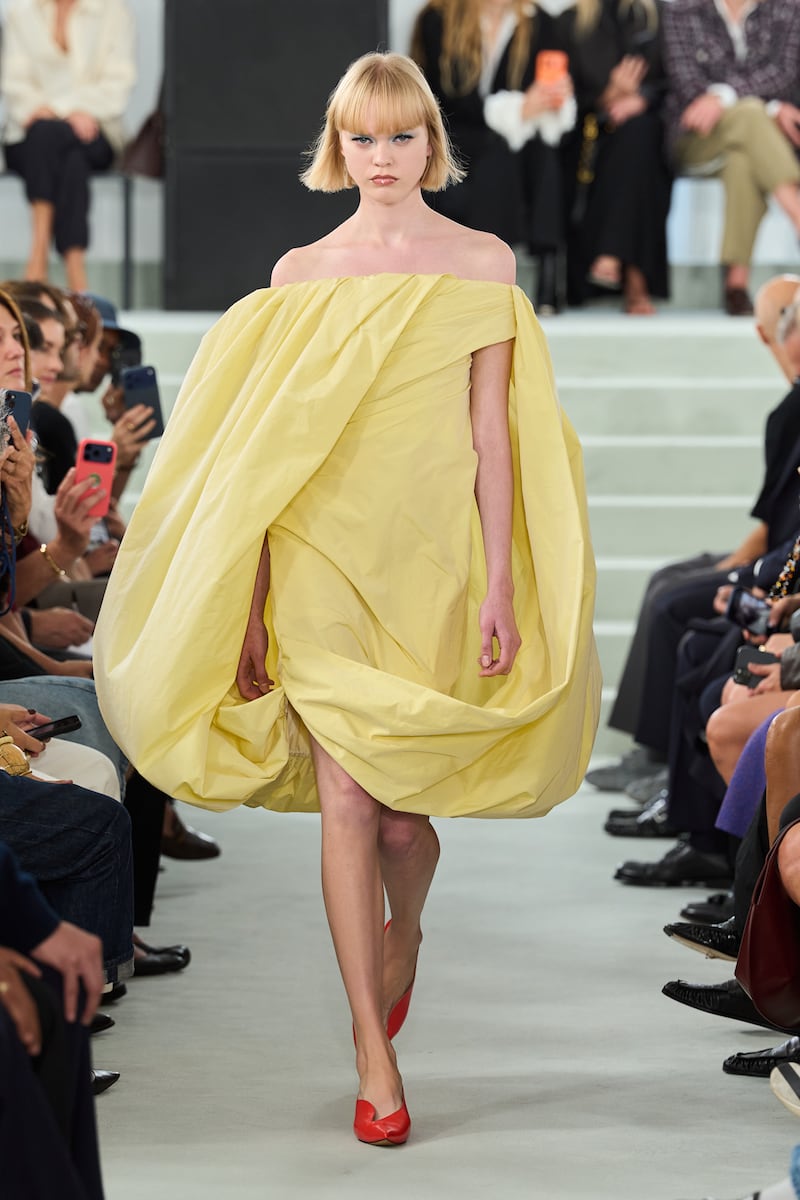
This was Bellotti’s third outing for the house that Jil built, where precision and rigour are a must and subtraction is, paradoxically, additive. It was also the first in which his respectful, almost zealous gaze finally began to disarticulate the Jil Sander system. It was not total disruption, but a seditious whisper could finally be heard.
The show took place in its usual venue, except that the seating had been crammed into narrow aisles, pushing the audience unusually close to the clothes. It began with a long stretch of reverence: dry, dark, puritanical tailoring. The uniform, that great Jil Sander archetype of order and control, stayed intact… until it didn’t.
ADVERTISEMENT
Things began to crumble. Lines shifted. Knits crumpled. Dresses wrinkled, gathered and ballooned away from the body. Colours became faint; forms fluttered, twisted and wrapped around the body. Eventually order returned, but the creases remained. Jil Sander’s rigour now has a glitch. Long may it last.
It was exciting to follow Bellotti on his path of deconstruction and reconstruction, taking away the perfection of the uniform to find strength in fragility without ever letting things fall apart completely. Not every shape was easy or immediate, but there was energy throughout. More importantly, his thought process was embedded in the clothes, without him having to resort to anything needlessly conceptual, and it was a relief.
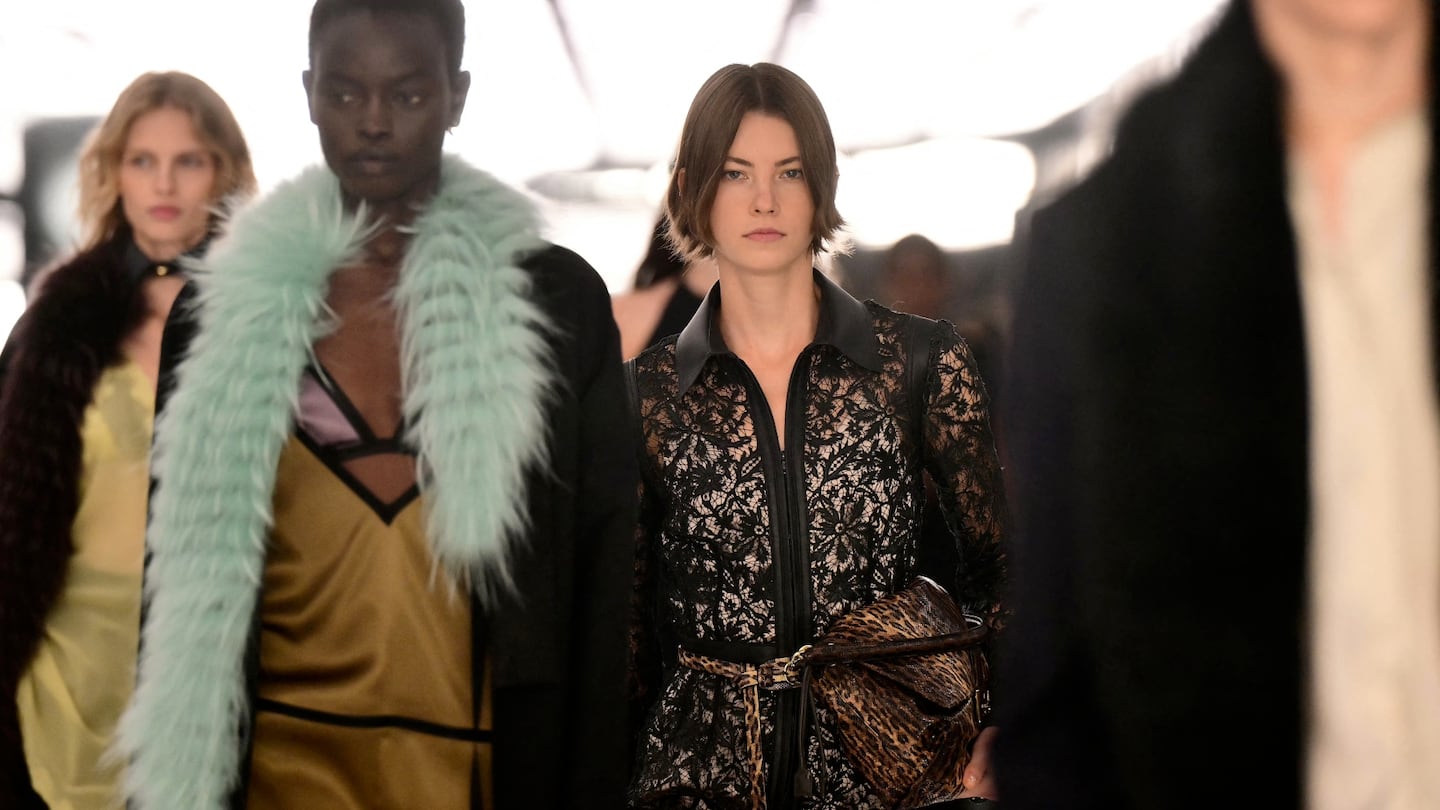
Maria Grazia Chiuri is engaged in a dialogue of her own at Fendi, although the results still feel more unsettled. The negotiation here is between her personal vocabulary — dry, severe, at times giving fashion nun, convent girl or simply a woman who favours the masculine — and Fendi’s Roman unruliness and exuberance with materials.
Last season, for her debut at the house, severity won. Black, unexpectedly, dominated the proceedings and that remains the case today. But this time Chiuri started with the body and, consequently, underwear and underpinning became the base of the wardrobe she proposed. The shift brought a welcome sensuality, deeply soaked in the debauchery of the 1970s without resorting to the usual clichés of sexual liberation.
Lingerie moved outwards; lace, embroidery and sheer layers exposed and concealed. Dressing gowns escaped into the street. Silk met animal print, velvet met parchment. The results felt focused and assured. It didn’t soar, but neither did it sprawl.
Raffaella Carrà and Adriano Celentano — genuine liberators of Italian social mores — hovered over proceedings without being reduced to caricature. Carrà in particular offered Chiuri a useful image of sexuality as independence rather than display.
There was, however, a delicious contradiction. For a collection so insistently physical, the show was staged amid reflections inspired by Luciano Fabro’s Cubo di specchi, conceived as a confrontation between self and multitude. Bodies multiplied, images refracted, reality dissolved somewhere between trippy hallucination and the pulverisation of existence into a digital aura. In short, you couldn’t see a thing!
ADVERTISEMENT
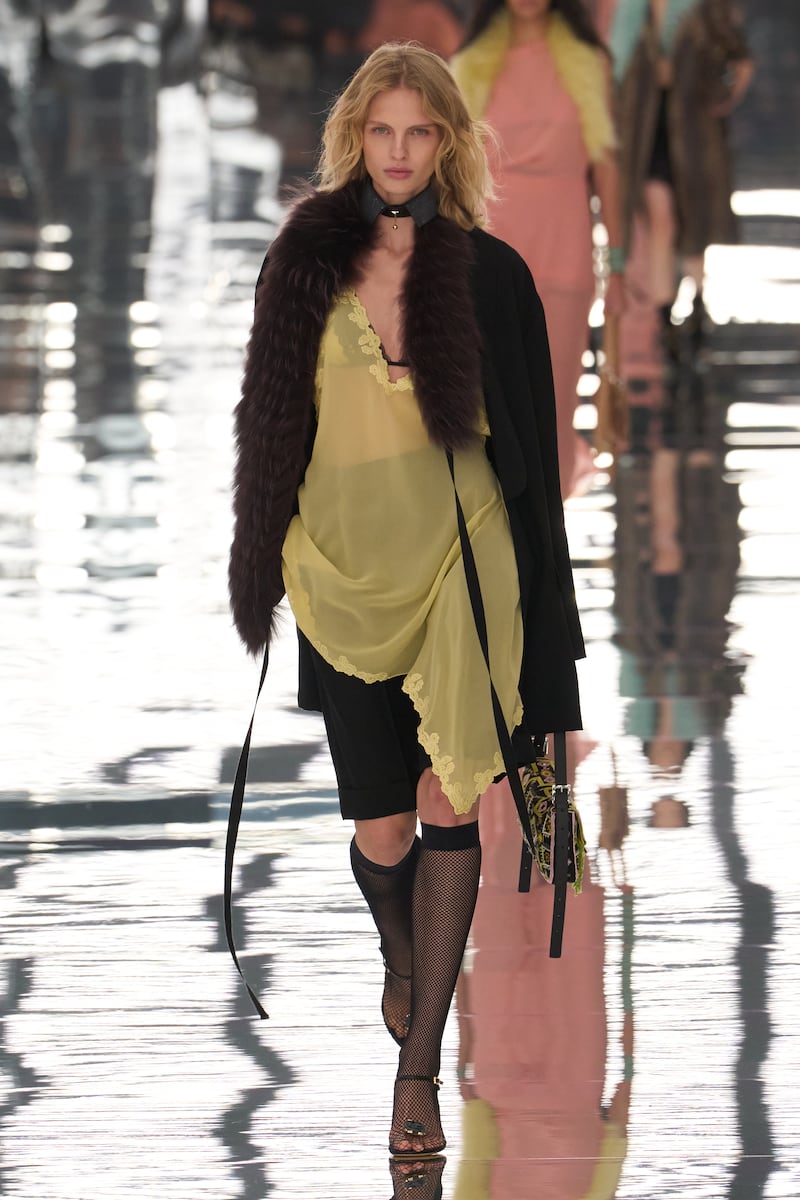
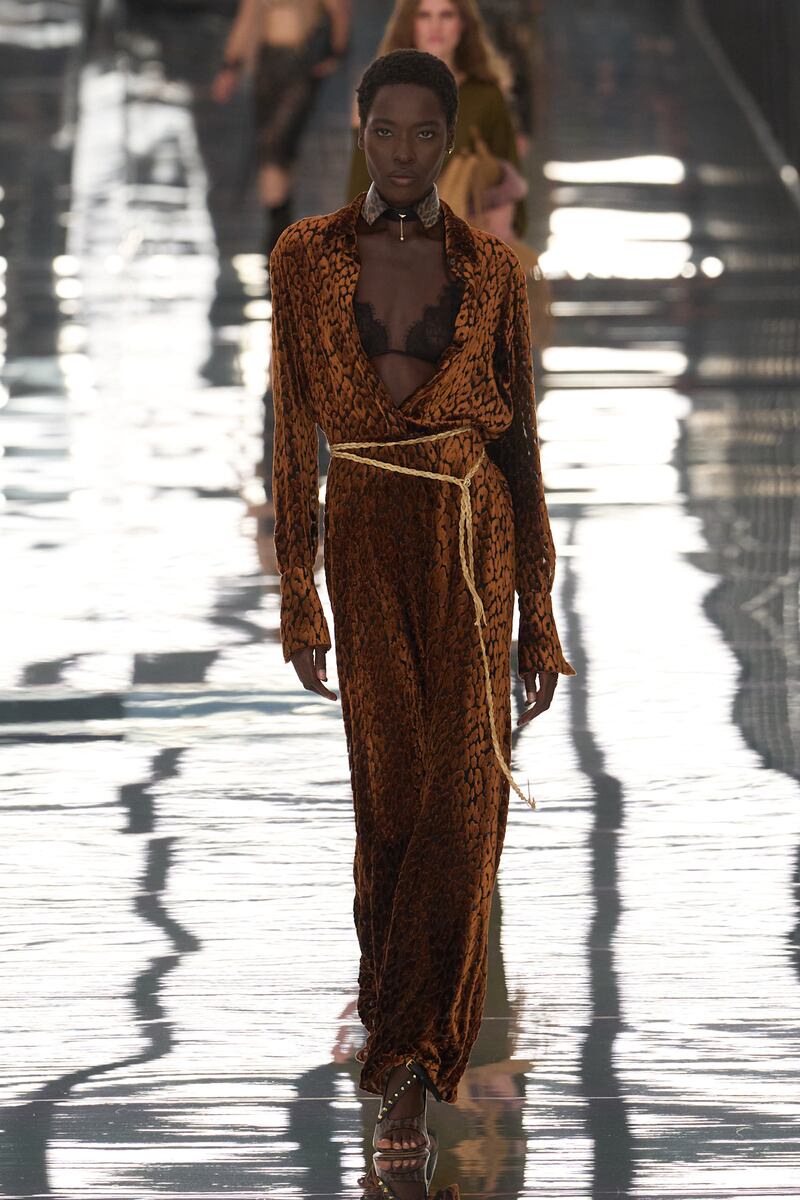
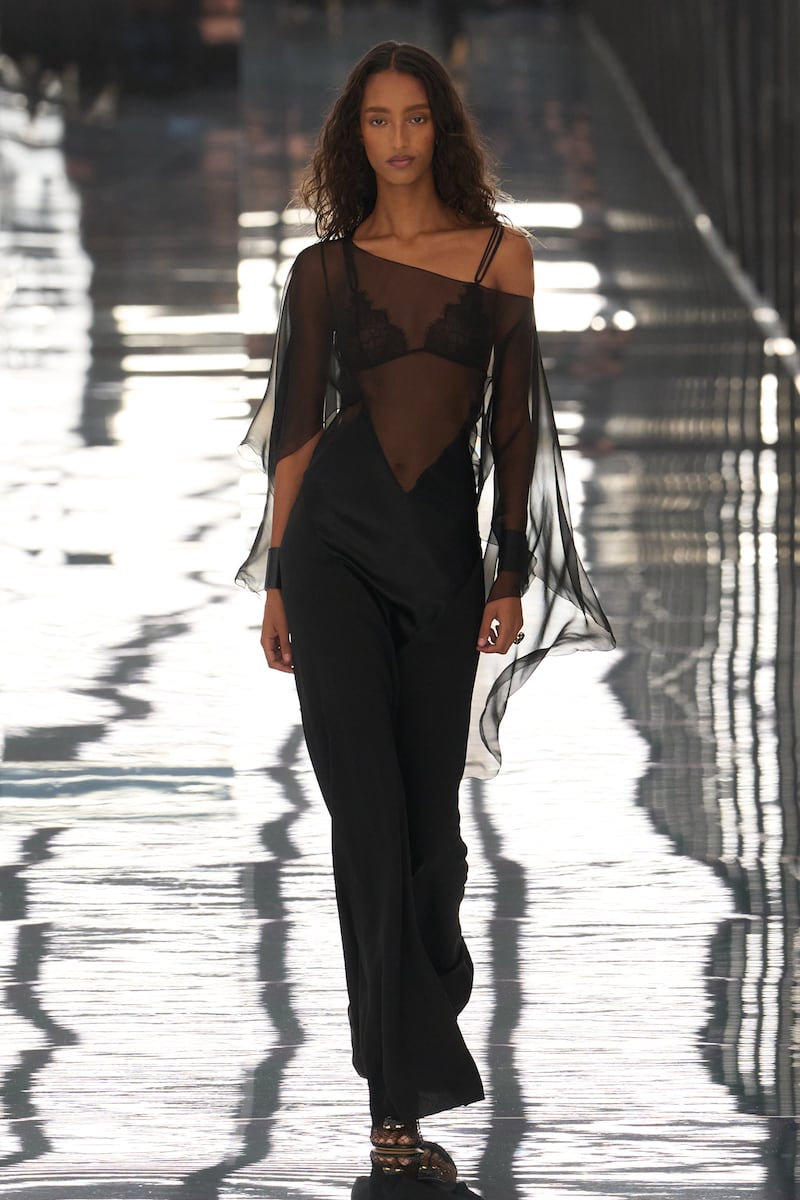
Elsewhere in Milan, matter was allowed to speak in broad daylight.
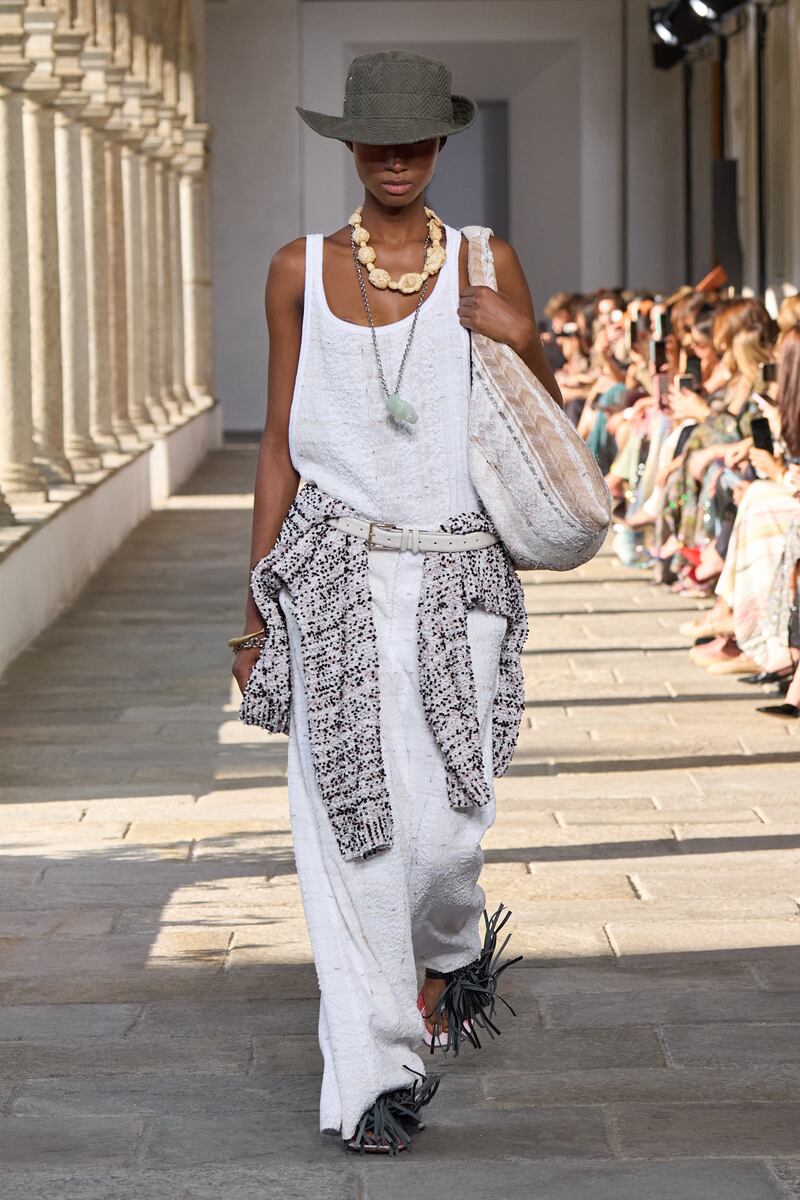
At Missoni, Alberto Caliri sent his women travelling through what felt like sun-drenched territories, piling things on as they went along. Long fluid shapes, wide trousers, little cardigans and deliberately mismatched accessories; knits loosened and frayed, while metallic threads and sequins brought flashes of glamour to something rougher and more lived-in. The formula was familiar, but the movement kept it alive. And yet, for this being Missoni, there was something a bit poor in the materials, as though Caliri had been working on too tight a budget. The rustic lavishness of Missoni was nowhere to be felt.
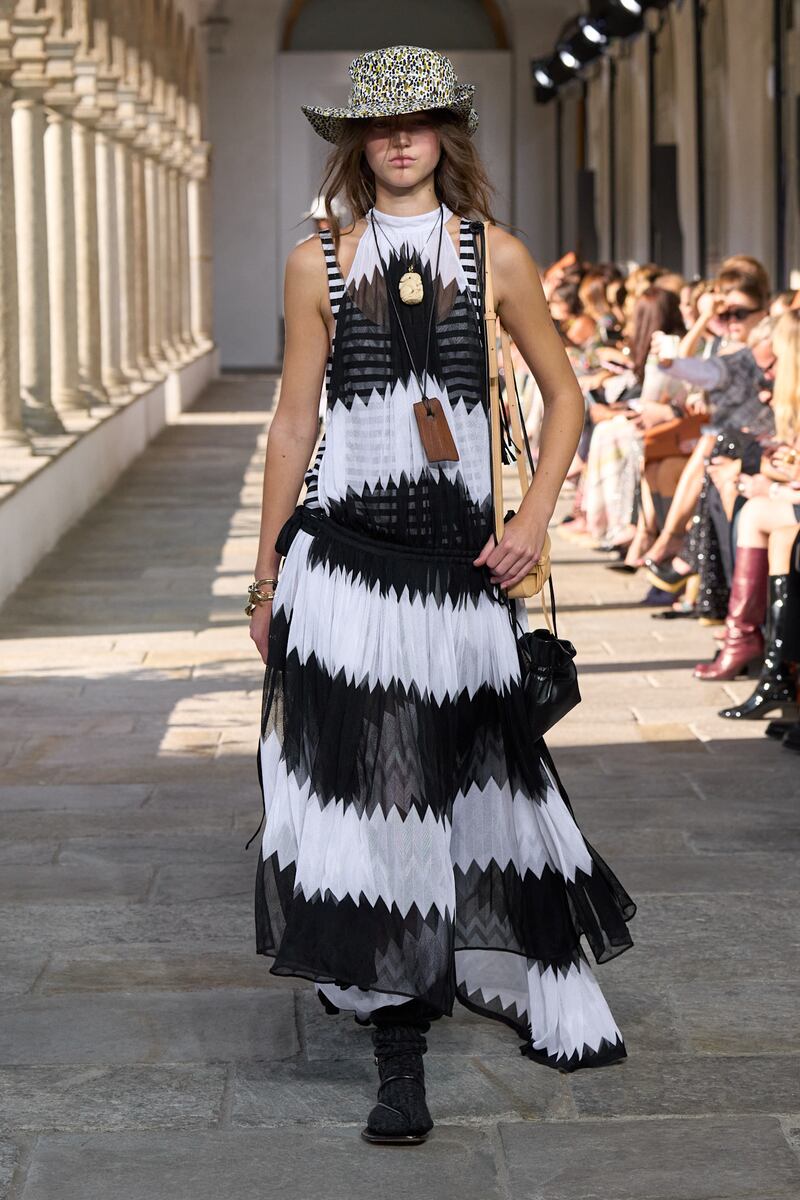
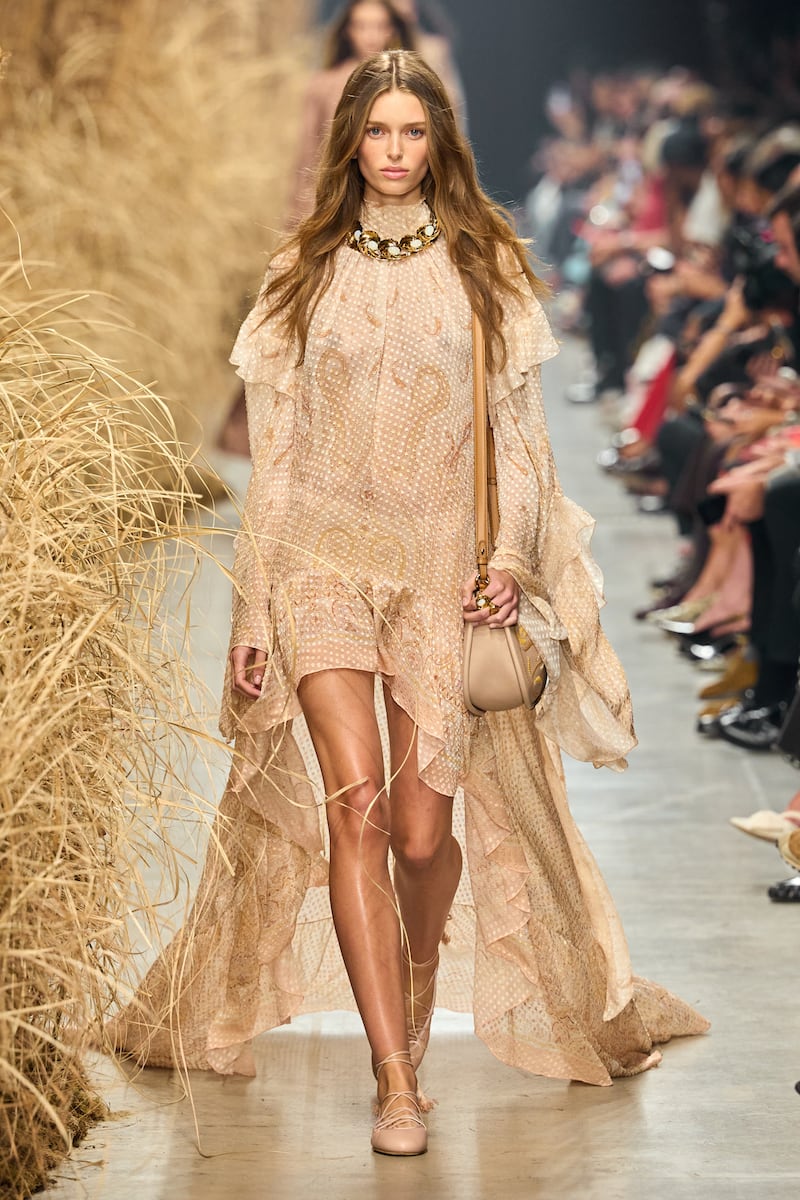
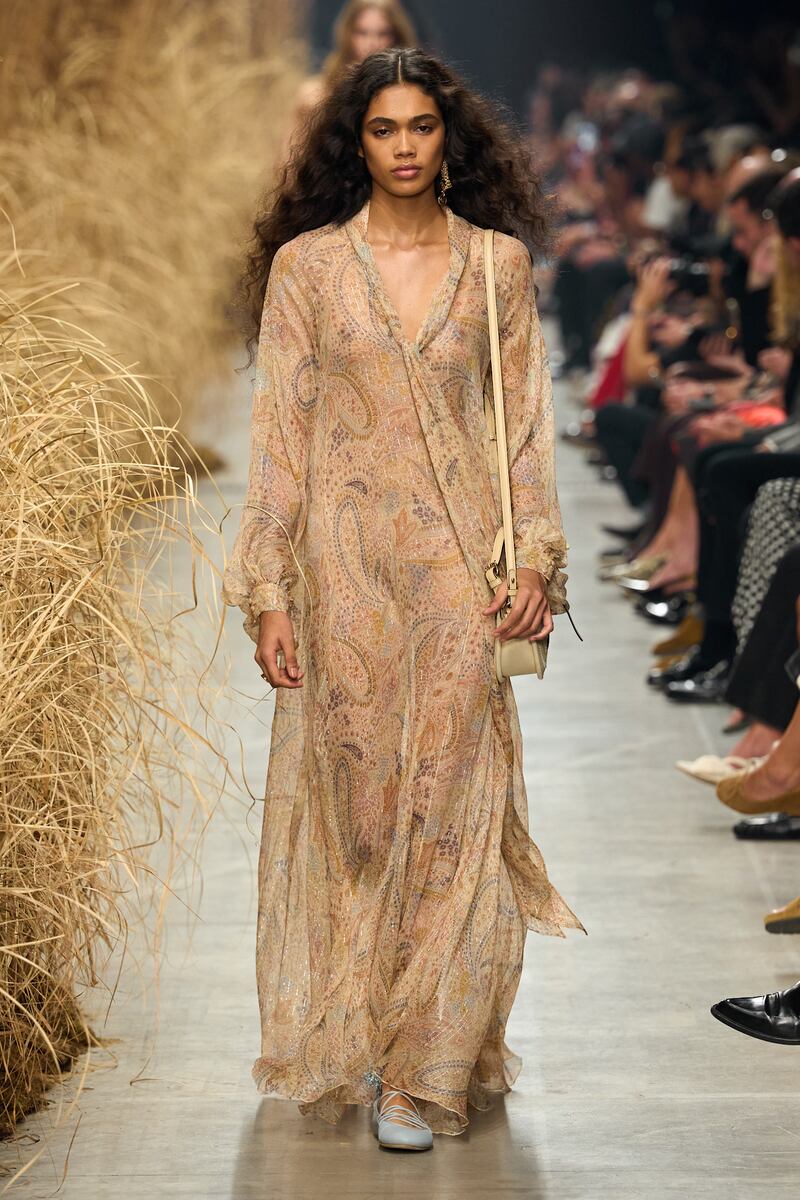
Etro, currently operating without a creative director, simply continued being Etro under the guidance of its design team: bourgeois bohemia steeped in the libertarian afterglow of the late 1960s. This season the proposition was particularly light, literally and otherwise. Paisleys dissolved, prints looked sun-faded, transparent dresses floated around the body and precise flashes of tailoring occasionally interrupted the haze. There was no attempt to reinvent the identity. It had simply lost some weight. The results felt a little forgettable and in danger of steering too close to Chloé.
At MM6 Maison Margiela, finally, interrogation became deadpan humour. The proposition was almost stupidly simple: clothes remained what they were, but migrated to the wrong part of the body. A shirt became a skirt. A V-neck top was worn as a bottom. Collars and button plackets slid sideways. It was an obtuse joke for sure, but more than a gimmick: an opening of possibilities — in a formulaic Margiela way, to be sure, but that’s another story.
Condé Nast is leaning into livestreamed events underwritten by fashion-adjacent sponsors as it looks to move its media brands into the digital age.
The Milan shows kicked off with 63 skirts at Prada and Glenn Martens’ greatest hits at Diesel, reports Angelo Flaccavento.
A year after the designer’s debut, his third runway show for the Italian fashion house will offer an update on his creative revamp — and clues about how well it is working. Plus, Fendi, Bottega Veneta, Moschino and more at Milan Fashion Week.
Loading recommended reads…
In this week’s High Margin, a search for images that cut through our visual fatigue — with leads from M/M Paris, Ferdinando Verderi and stylist Emilie Kareh. Plus: Tod’s designer exit; Burberry’s resilient sales.
The producer price index rose 6.5% from October 2025, an acceleration from the prior month, according to Bureau of Labor Statistics data out Friday. On a monthly basis, the PPI increased 0.3%.
The creative director and strategist joins Imran Amed on The BoF Podcast to discuss the evolution of his career, the realities of shaping artist narratives and why long-term collaboration outperforms short-term marketing.
The former Nvidia CEO was central to an AI boom that has propelled the US stock market and fueled the country’s unmatched luxury spending. After his exit, nobody is sure what happens next.