Agenda-setting intelligence, analysis and advice for the global fashion community.
Agenda-setting intelligence, analysis and advice for the global fashion community.
PARIS — There’s something poignant about a moon that is just past fullness, still beautiful but paling into the end of a cycle. Anthony Vaccarello has always been able to orchestrate the environment for his Saint Laurent shows. It occasionally felt like the illuminations of the Eiffel Tower, which stood sentinel at the end of his catwalk in the Trocadero, danced to his tune. That moon, hanging low and heavy in the sky, was another reminder of Vaccarello’s peculiar magic. These past few weeks have been alive with speculation about his future at Saint Laurent. I’m saying nothing. But maybe the moon knew.
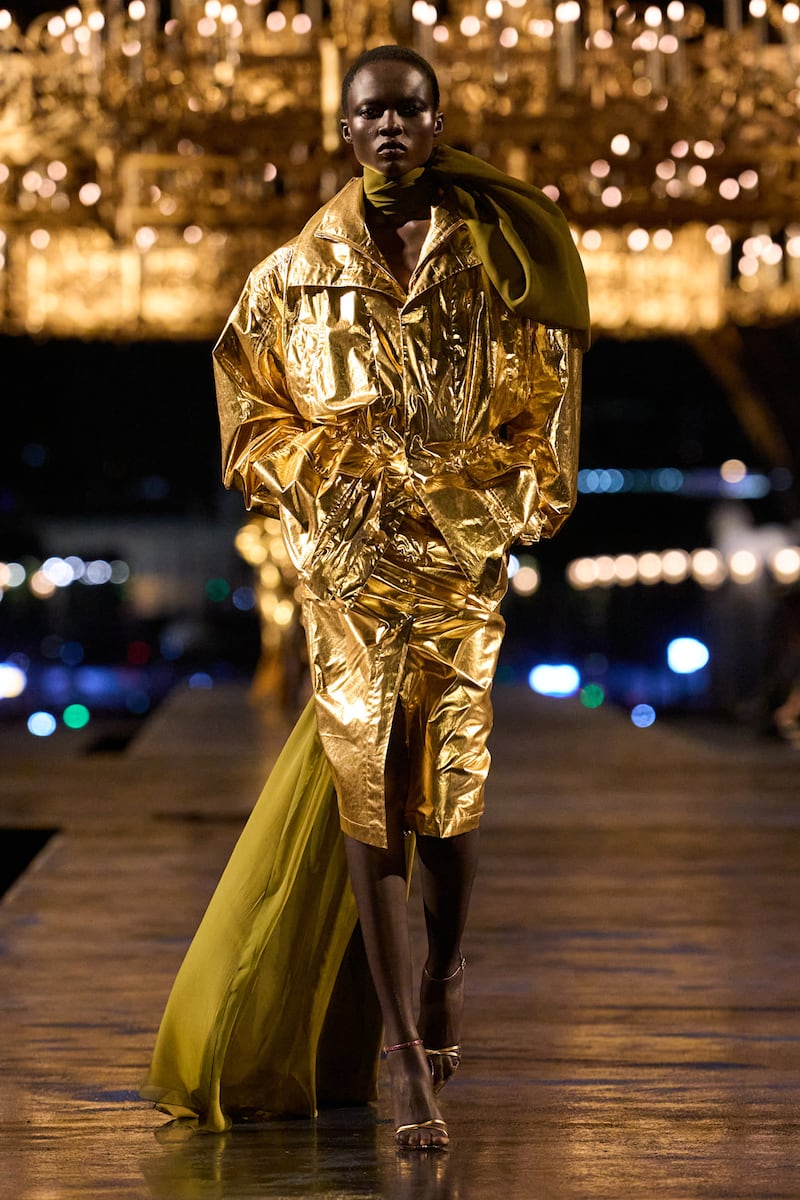
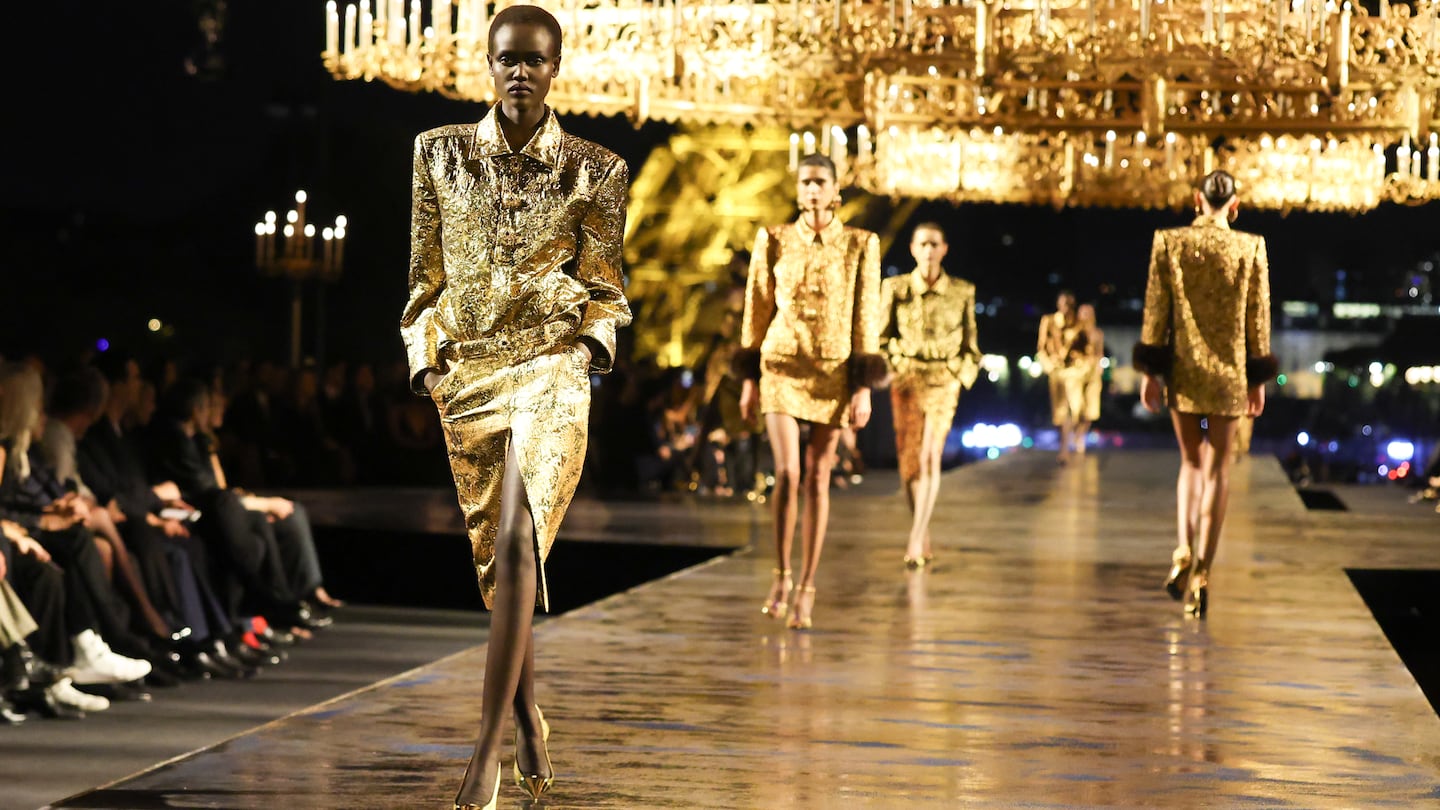
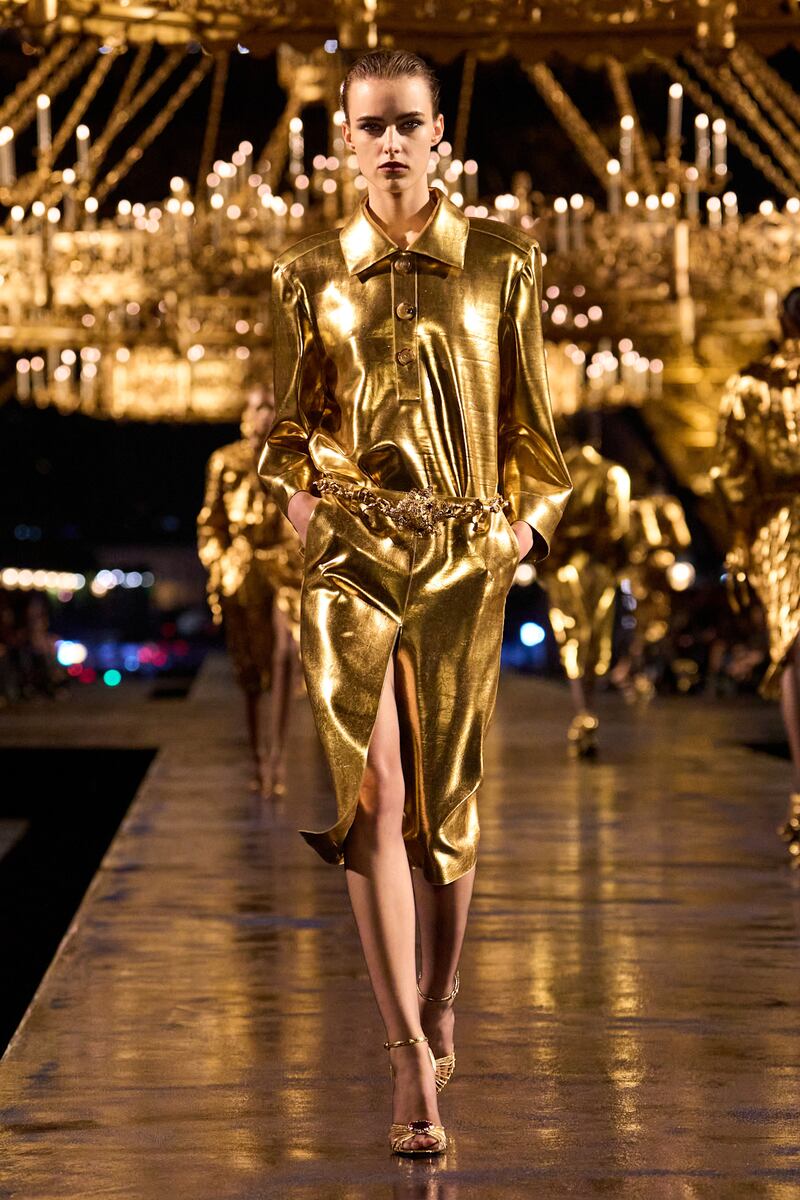
It was a collection as single-minded as anything Vaccarello has ever shown. Everything gold. He would call it “the power of repetition,” but gold is infinite in its variety. Yves Saint Laurent himself compared it to the colour of the sun. Transcendent. Vaccarello’s translation of transcendence spanned fabrics from leopard-spotted lamé to latex coated in gold leaf, and tones from glittering byzantine to metallic brutalist, gilded renaissance to muted art deco. His vehicles were items as fundamental to the house as the saharienne jacket, the trench coat, the suit with the generously shouldered jacket and the sharp little skirt.
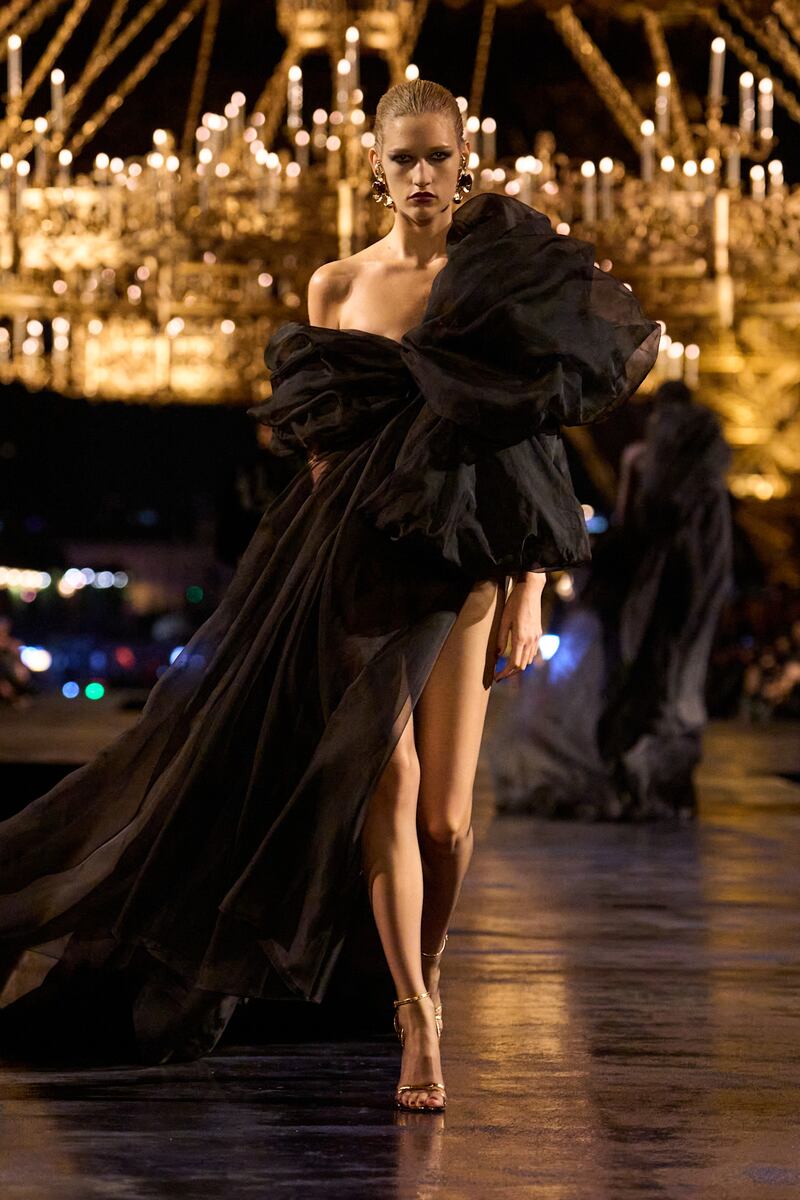
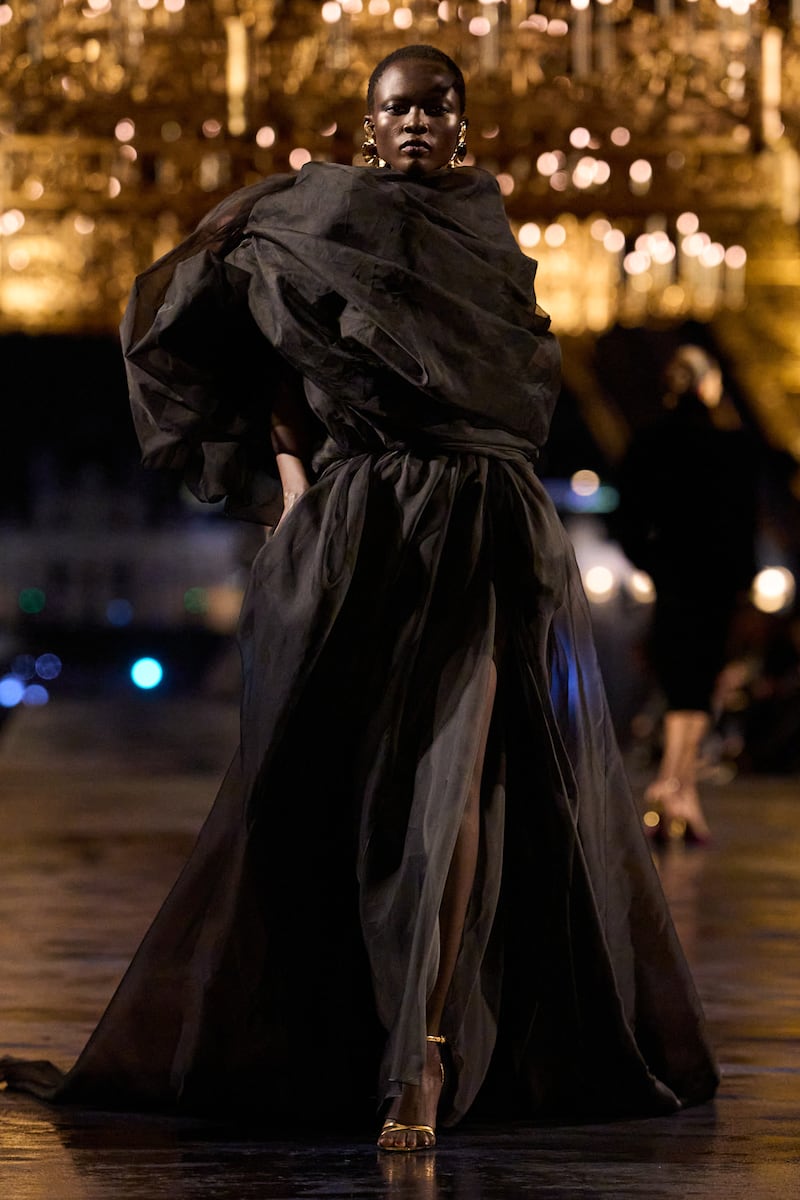
And when he felt he’d exhausted the possibilities of gold, Vaccarello closed the show with a handful of pieces in irrefutable black led by his erstwhile muse, the imperial Polish model Anja Rubik, in a black velvet suit. That moment felt like the quintessential fusion of Saint Laurent and Vaccarello. It was followed by billowing clouds of shadowy organza, night following the golden day.
ADVERTISEMENT
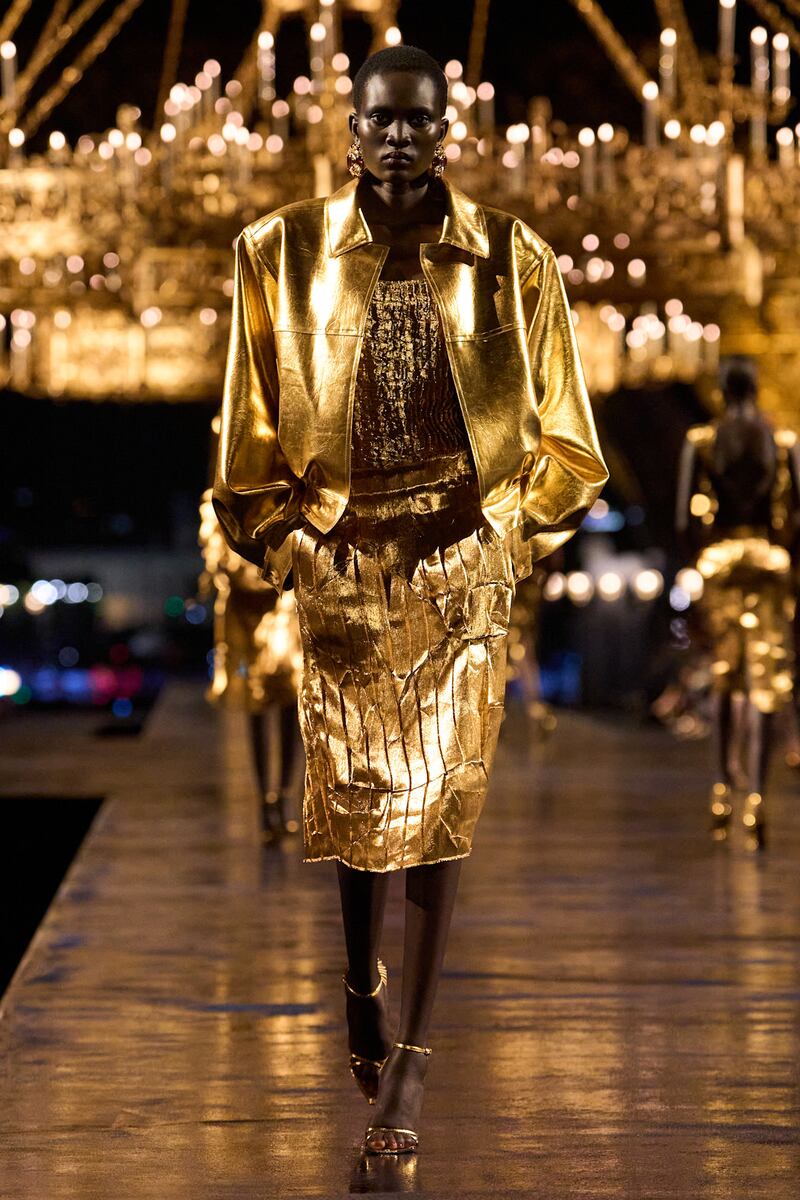
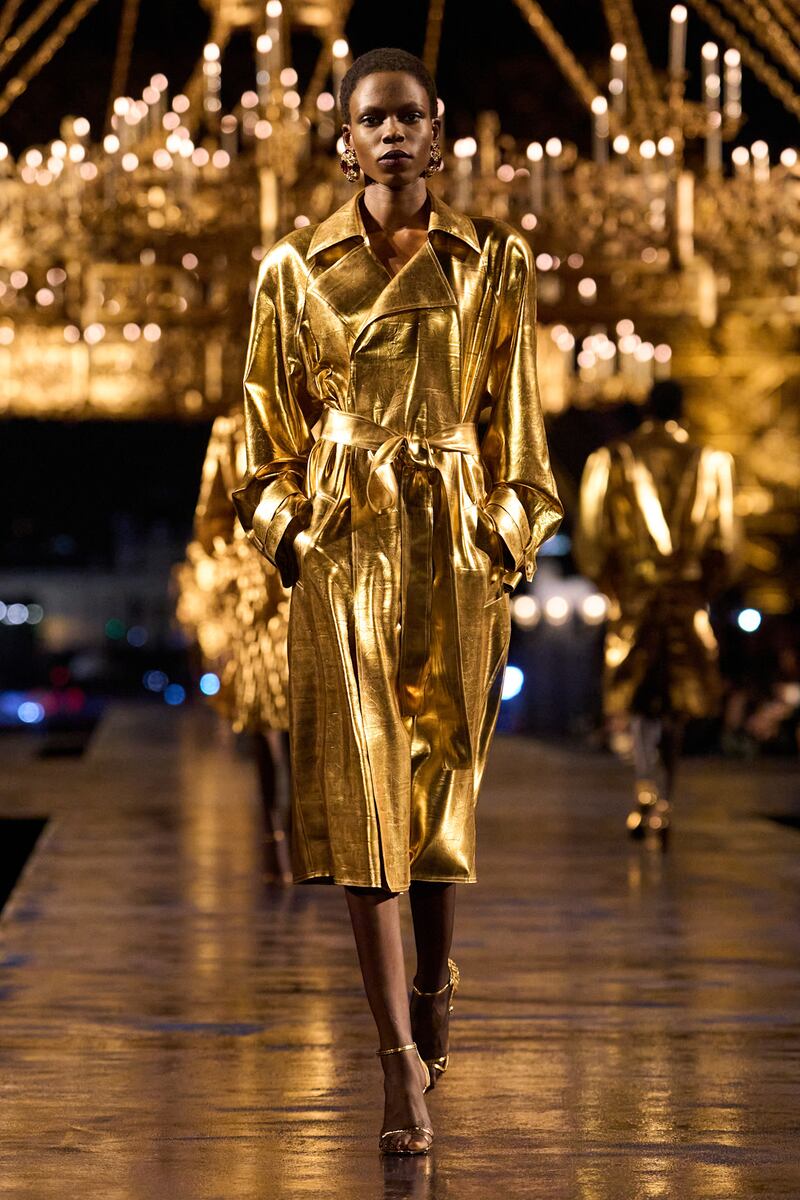
As has always been the case with Vaccarello, you could step back from the single-mindedness and appreciate that there were things here that were simply irresistible. But, in light of the fashion bush telegraph’s agitated discourse over the last little while, you could also appreciate that this collection meant something more to the designer. Kate Moss, Post Malone and everyone in between came out to see, under massive golden chandeliers and candelabra. It was an “end of empire” moment. Vaccarello wasn’t talking to press or wellwishers after the show, but the final words on his press notes spoke volumes: “What passes sometimes leaves more light than what remains.” All I can say to that is, “Good luck, girl.”
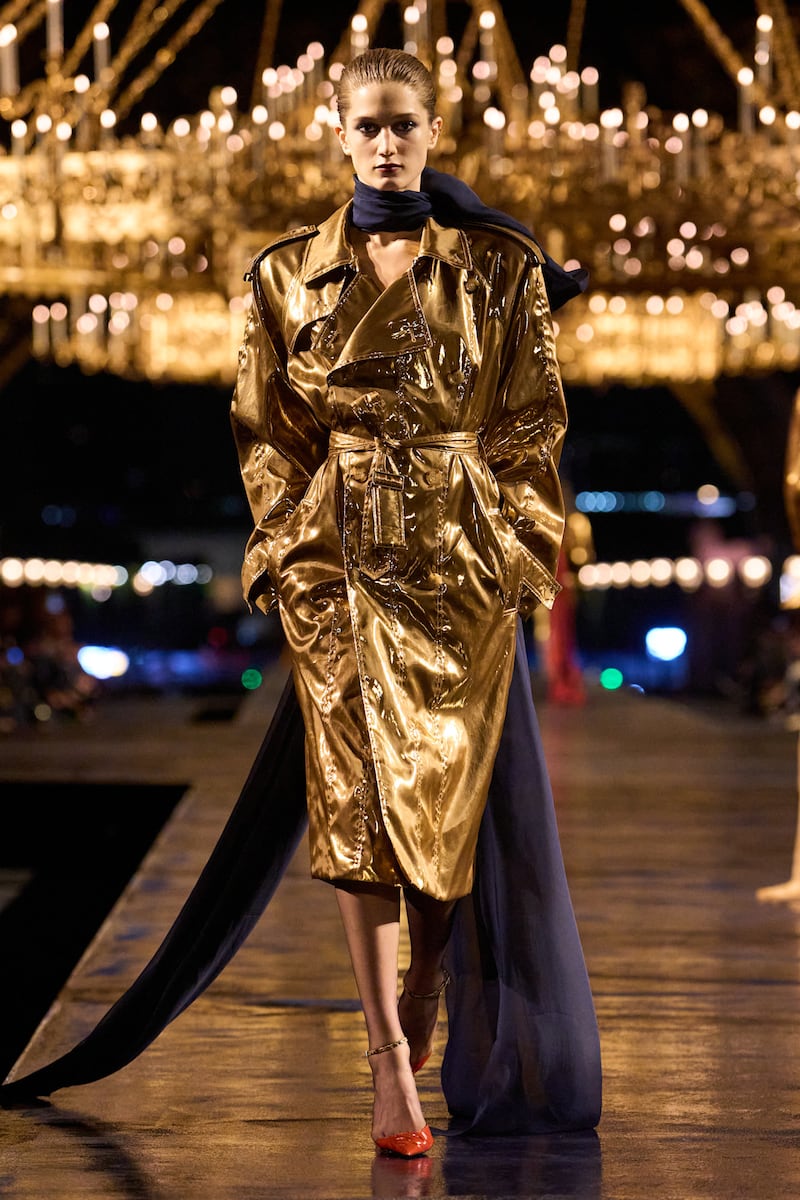
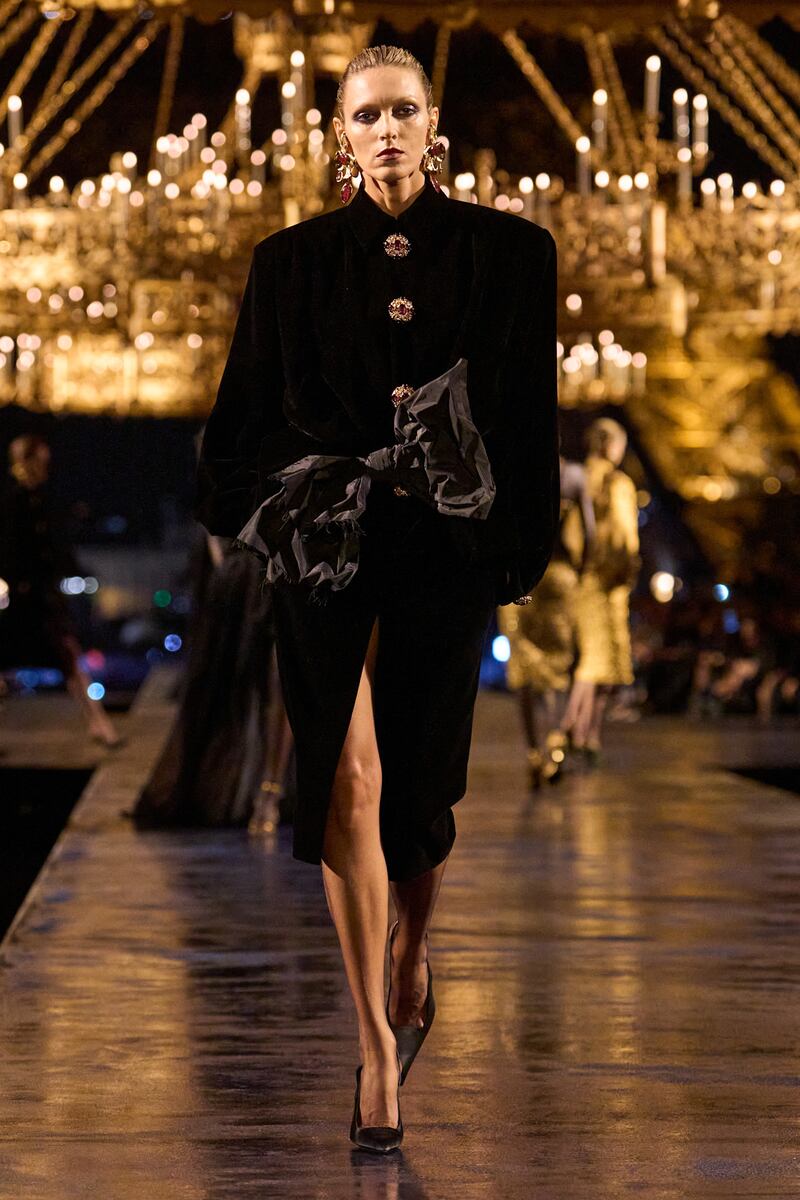
So let’s assume the twilight of Anthony Vaccarello at Saint Laurent. But Jonathan Anderson is still in the first flush of his dawn at Dior. He was feeling very relaxed before his latest show, which was an odd sensation for him. He usually likes a little tension. His invitation arrived as a pair of walnuts in a box. Press notes suggested they were wénwán walnuts, talismanic to the Chinese, tumbled in a pocket until they were worn smooth by time. The chairs we sat on had the air of Chinese antiques, the set was trees surrounded by water, shrouded in mist, like a Chinese watercolour. And the same blurry watercolour effect was translated into the clothes.
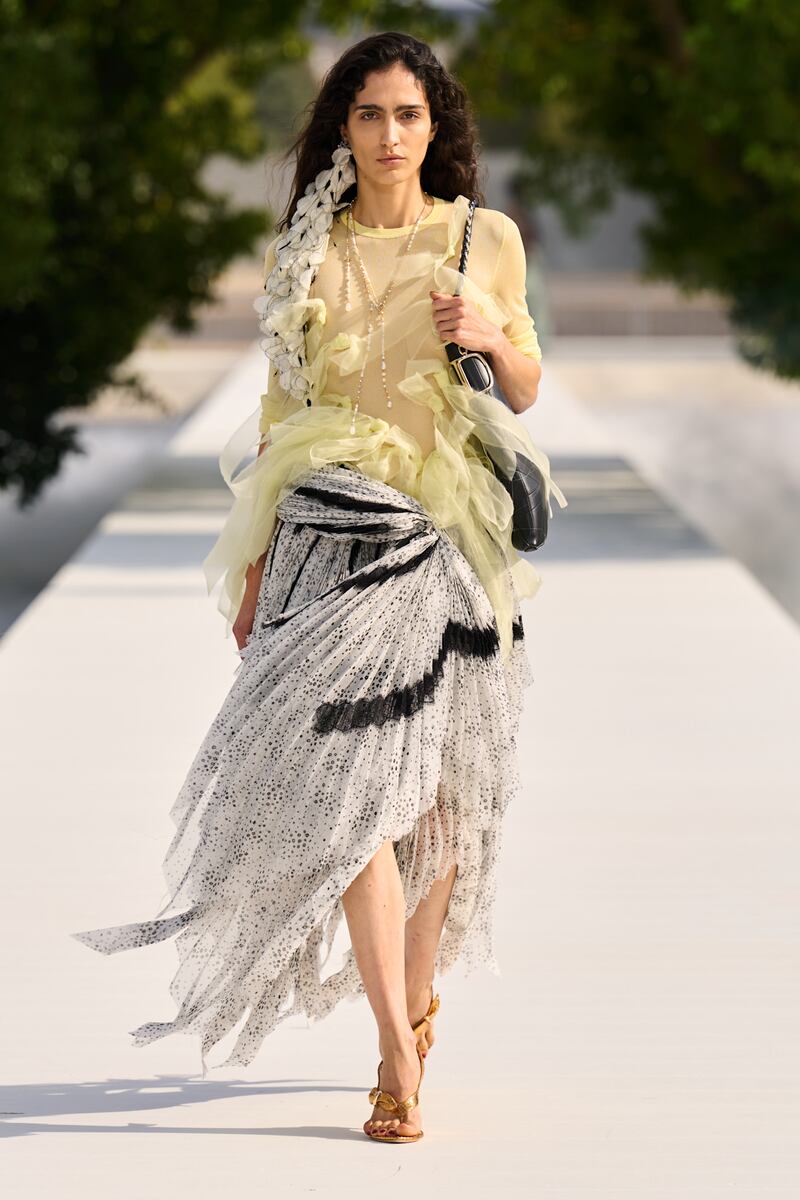
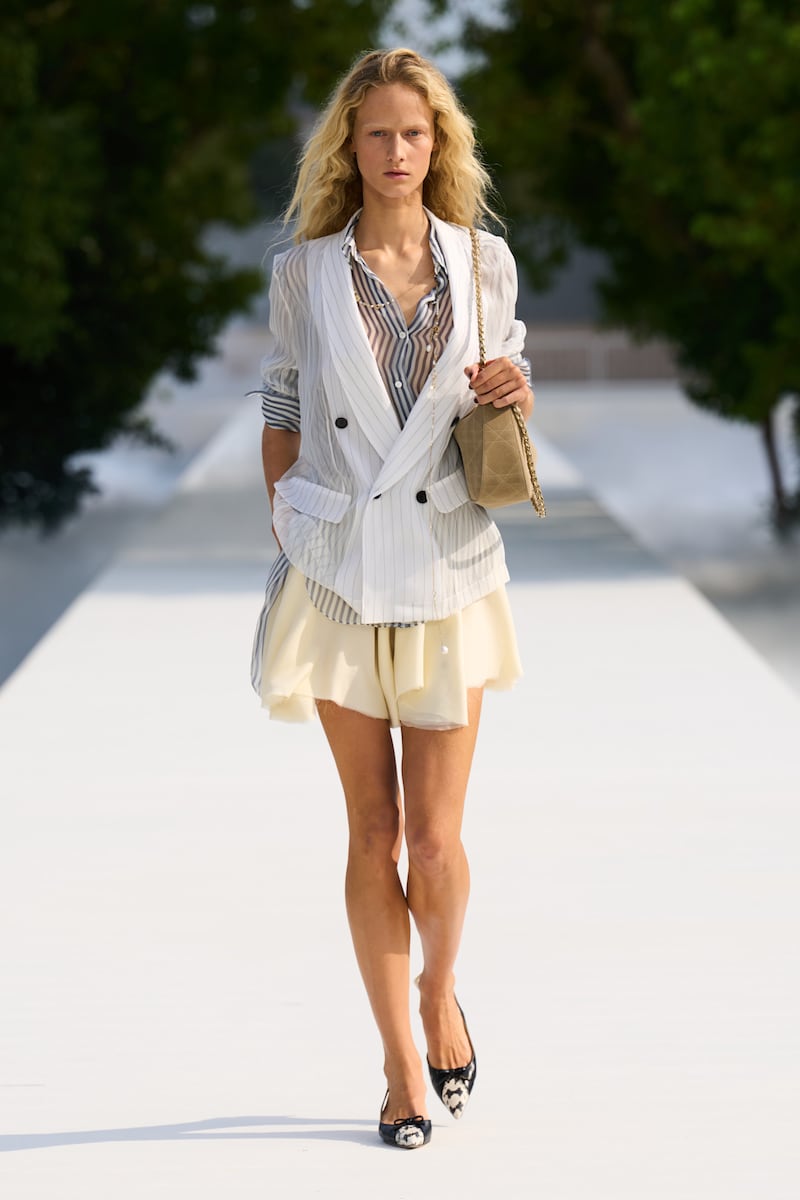
It was something that Anderson carried over from his men’s collection. “How light can a garment be?” he wondered. Answer: VERY. The opening jackets, the shirts that underpinned them, the circle skirts that accompanied them layered light on light, with the colours bleeding into each other. (The skirts were actually 20 layers of chiffon.) They were a prelude to endless petalled prettiness. Classic padded Dior silhouettes were completely deconstructed.
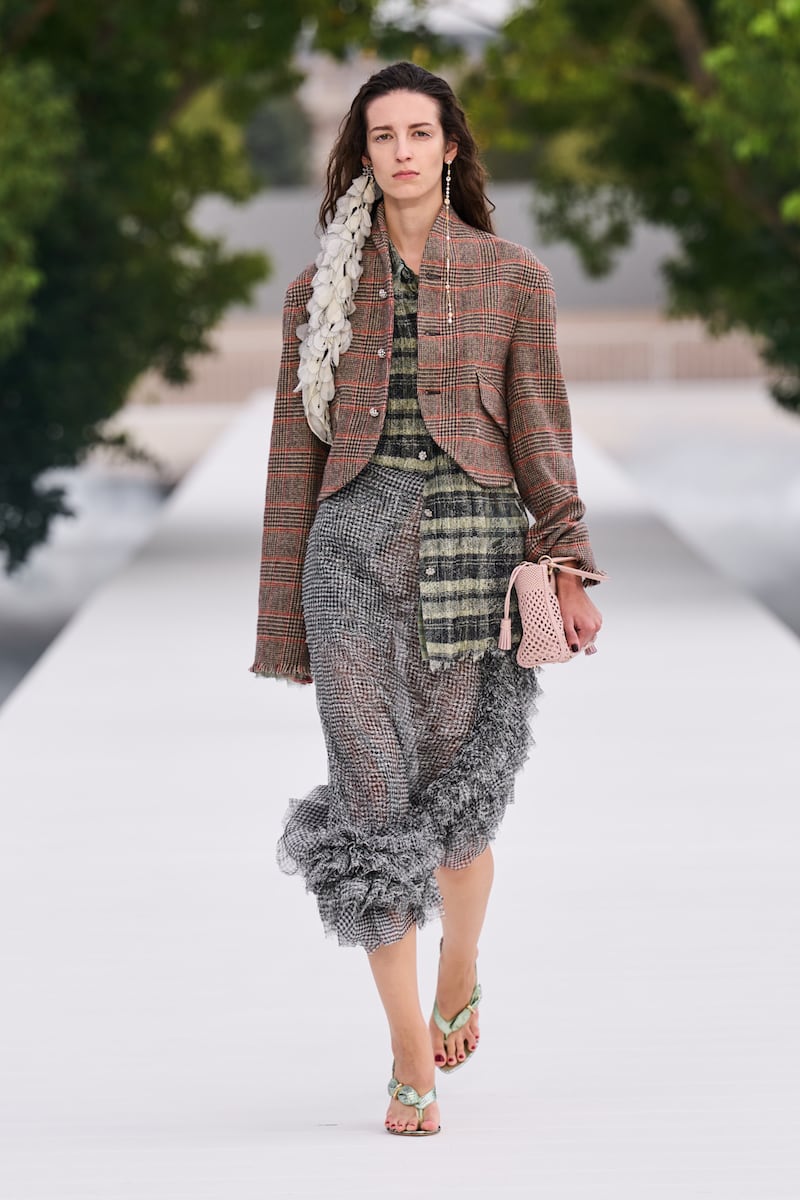
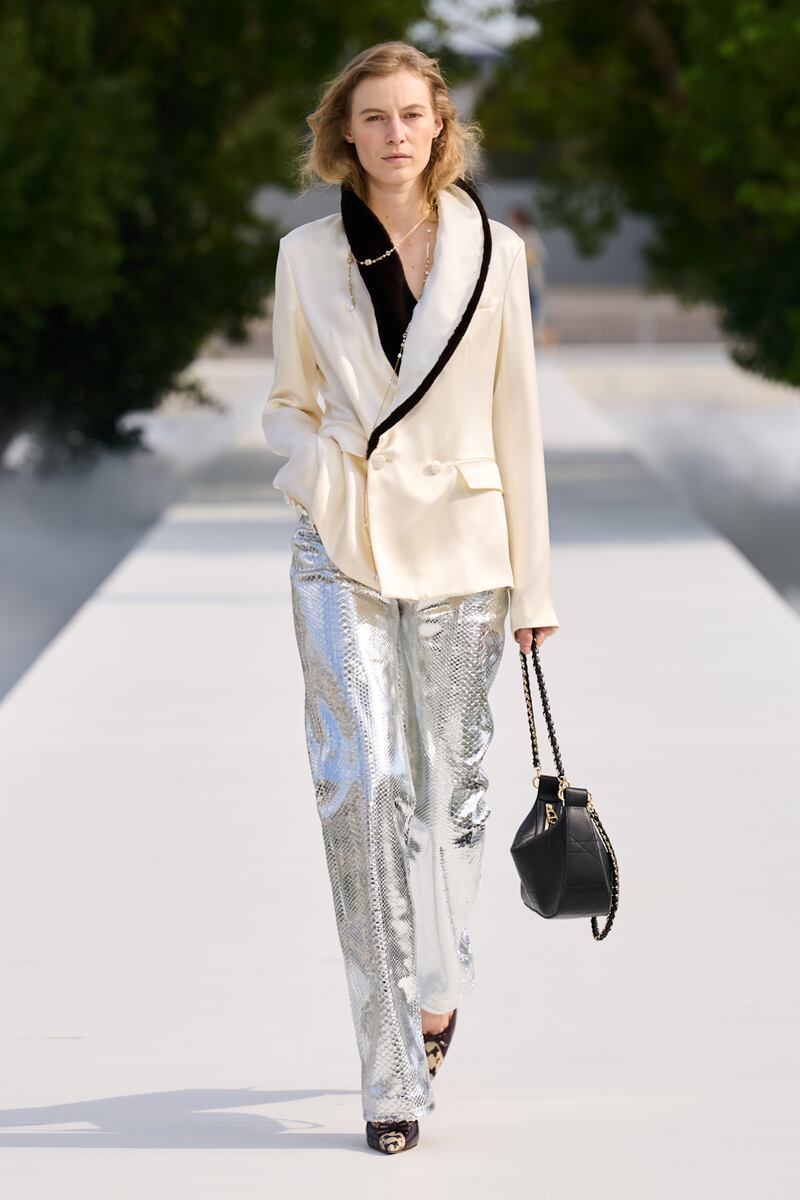
“Watercolour in the rain” was a Dior press note and a line from Al Stewart’s “Year of the Cat,” which soundtracked the show’s finale. That reference is the kind of wondrous grab-bag that has always characterised Anderson’s own work. Aficionados could feel it filtering into his new Dior collection. The trumpet flower buttons on a cardigan, the same trumpet flower silhouette on pants. (“Charo!” they screamed.)
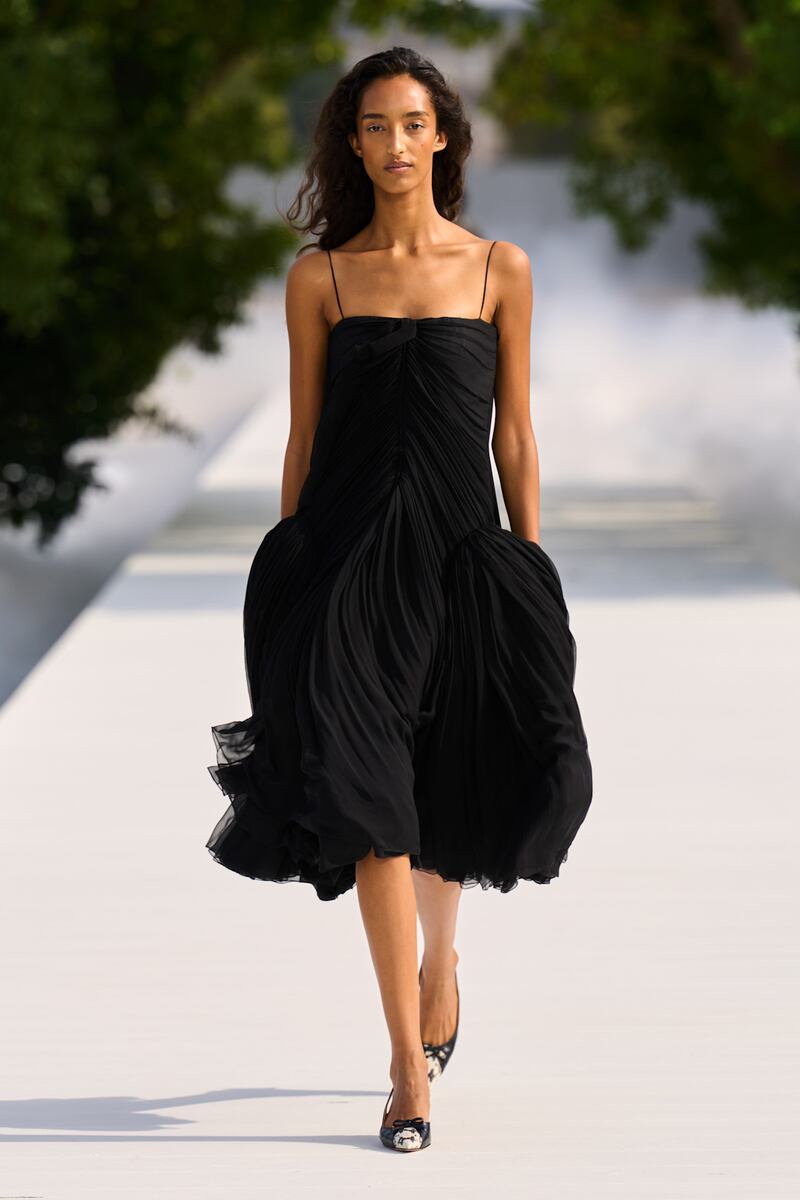
Like those walnuts, it was partly about Anderson’s romance with nature. But there was also another undercurrent which feels equally true. He’s very attracted to fashion’s fetishistic undertow. That attraction is hugely valuable for a designer whose business is contingent on shoes and bags. In this collection, they were sensational. Like the purse carved from a patent leather so moss green it looked like licorice. Or the shoes, also patent, printed with garish florals he’d photographed at Houghton Hall, where his own-brand honey comes from. (The lady of that particular manor is Rose Lambton, who is the very embodiment of everything that Anderson finds stylish in a woman.) Or the other shoes stitched from zippers that he’d found in an old Galliano collection. Or my personal favourites, the gardening shoes, twill uppers, rubber soles, in a Mary Jane configuration.
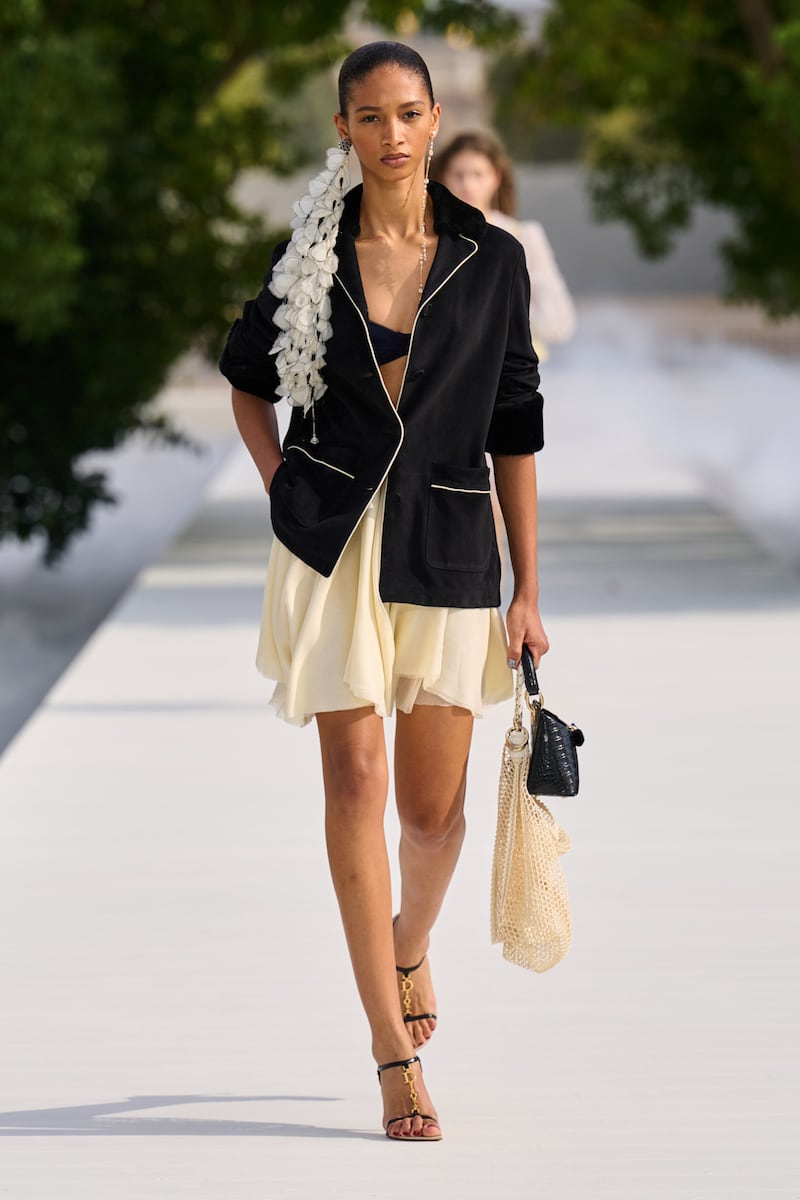
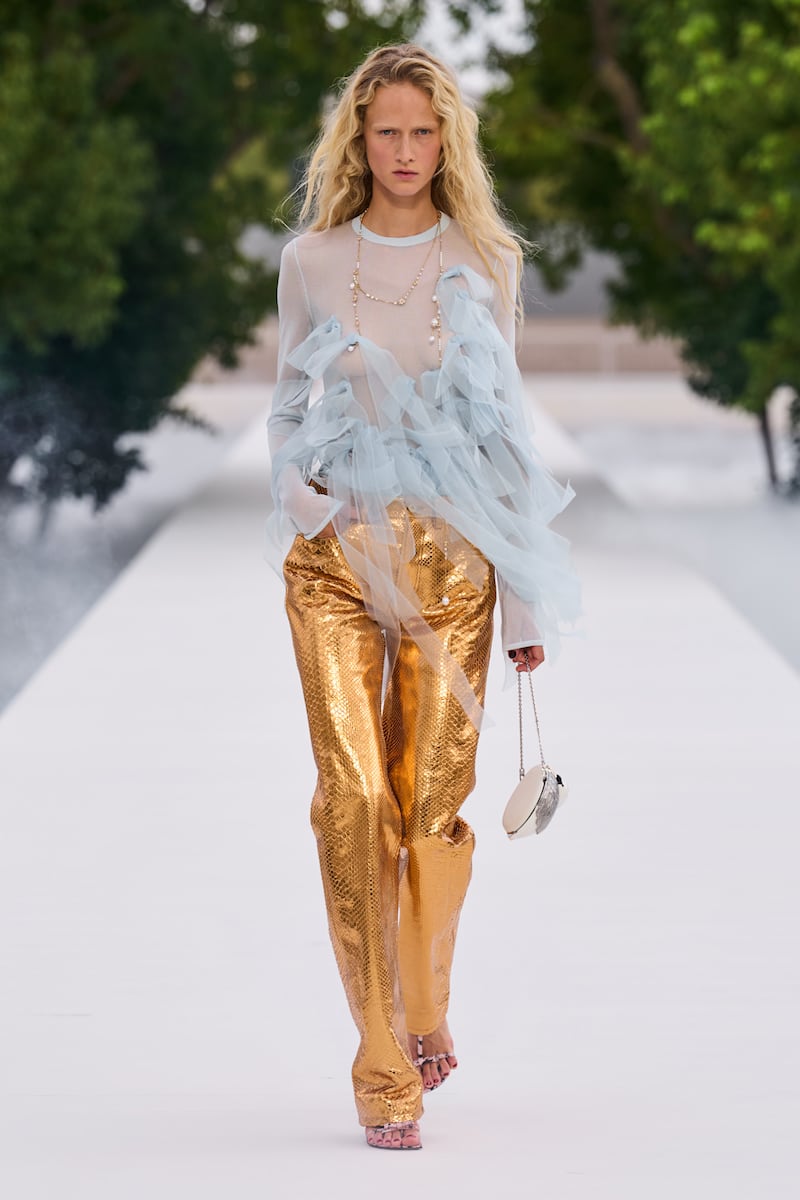
This is not necessarily the grandeur of Dior as it lives in fashion memory. The plissé organdy skirts with their lace intarsia, the swirly scarf-hemmed dresses, the foiled python pants all suggested people simply enjoying life, just like Anderson’s early collections for Loewe. He wanted to be those people, he said as we roamed round the collection. It’s the purest entrepreneurial instinct. And that’s where he seems to be taking Dior. “You can’t boil a lobster, you’ve got to slowly bring it up, lull it,” he added. How’s that for a business strategy?
Just this week, Glenn Martens detached himself from his design duties at Diesel to focus fully on Maison Margiela. Maybe that’s a measure of how much the name Margiela means in fashion. But it also offers Martens the opportunity to fully exercise his own peculiar, entrancing proclivities. And there they were on Tuesday, in their full what-the-fuck-ness.
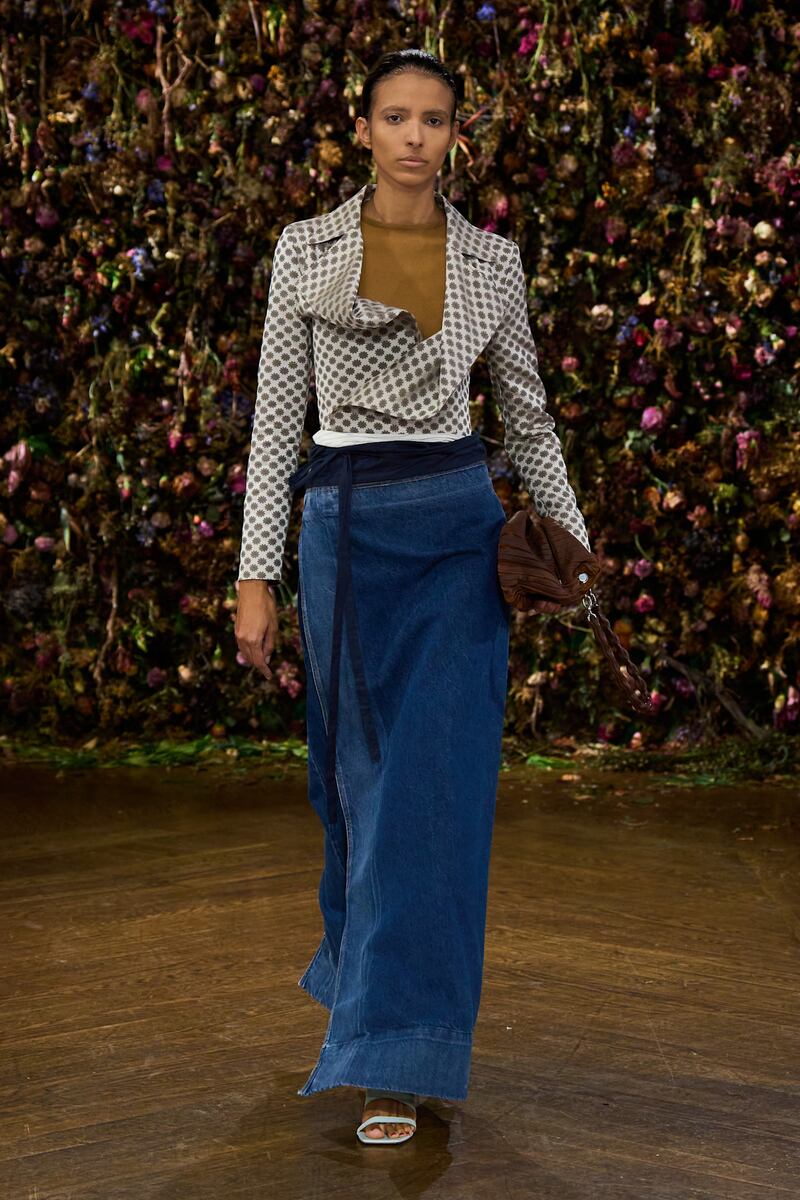
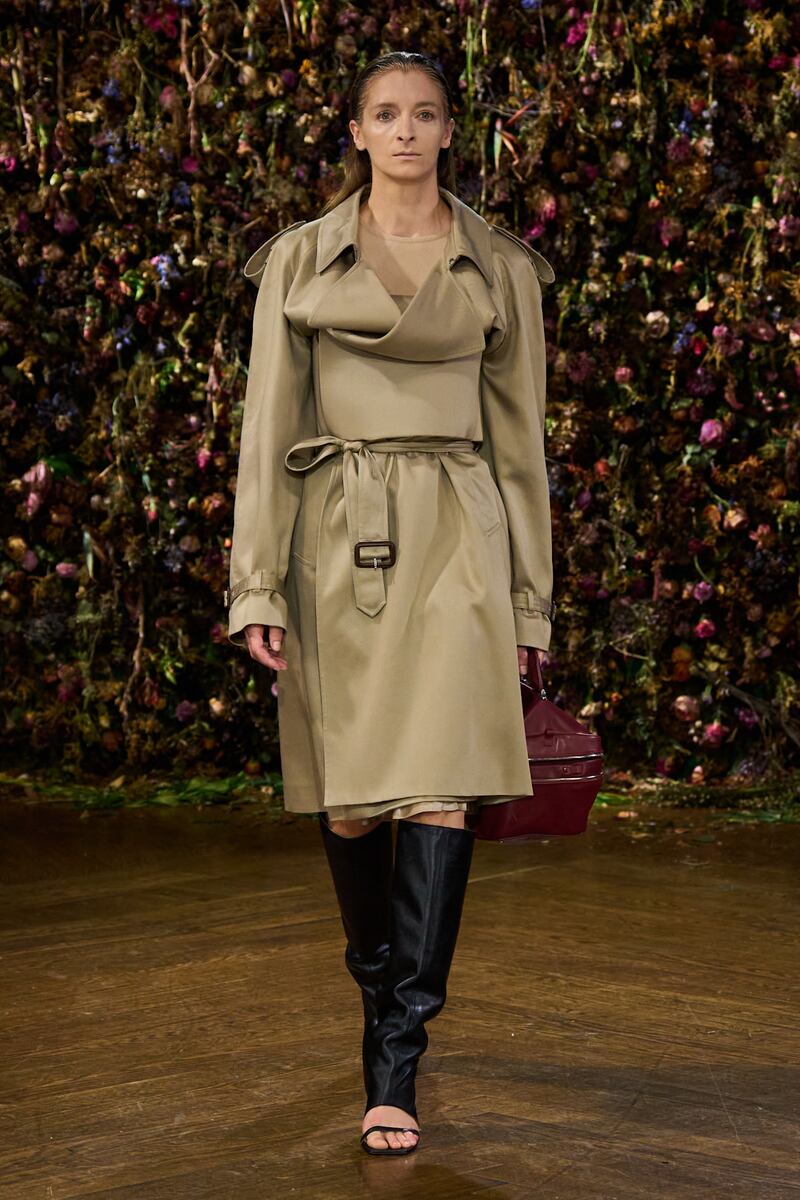
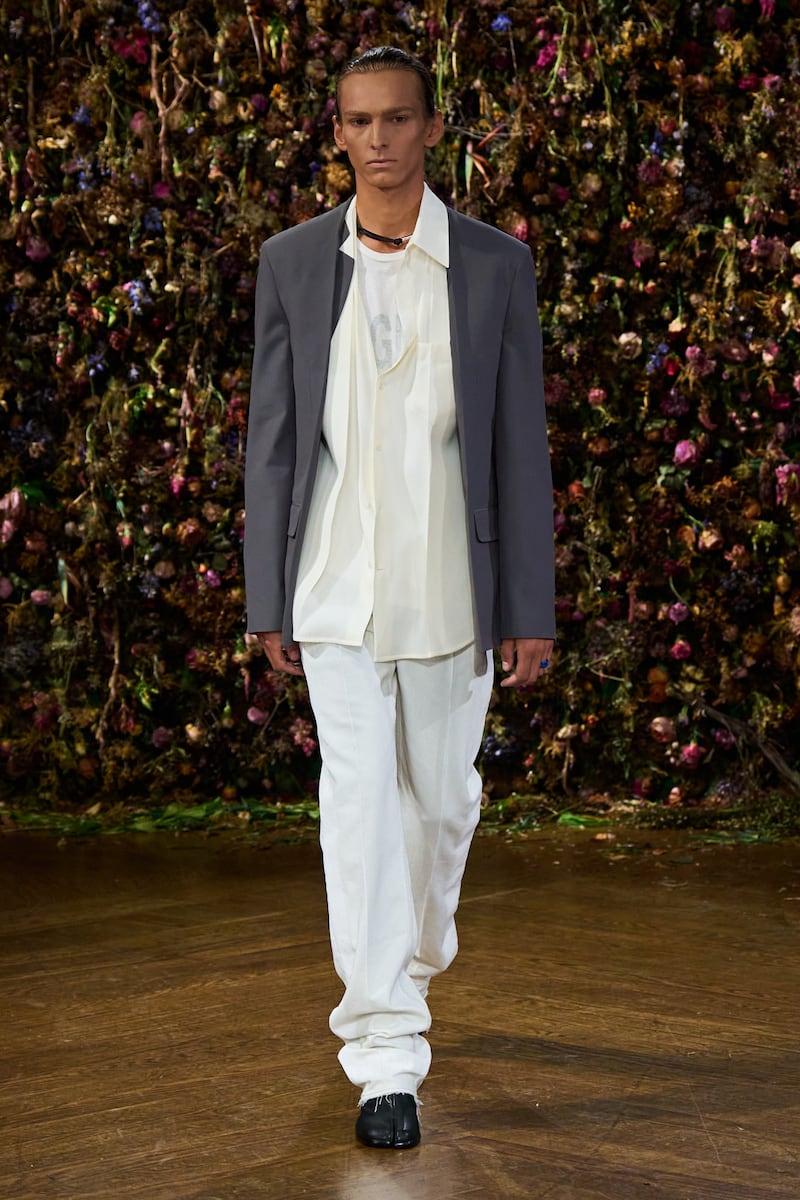
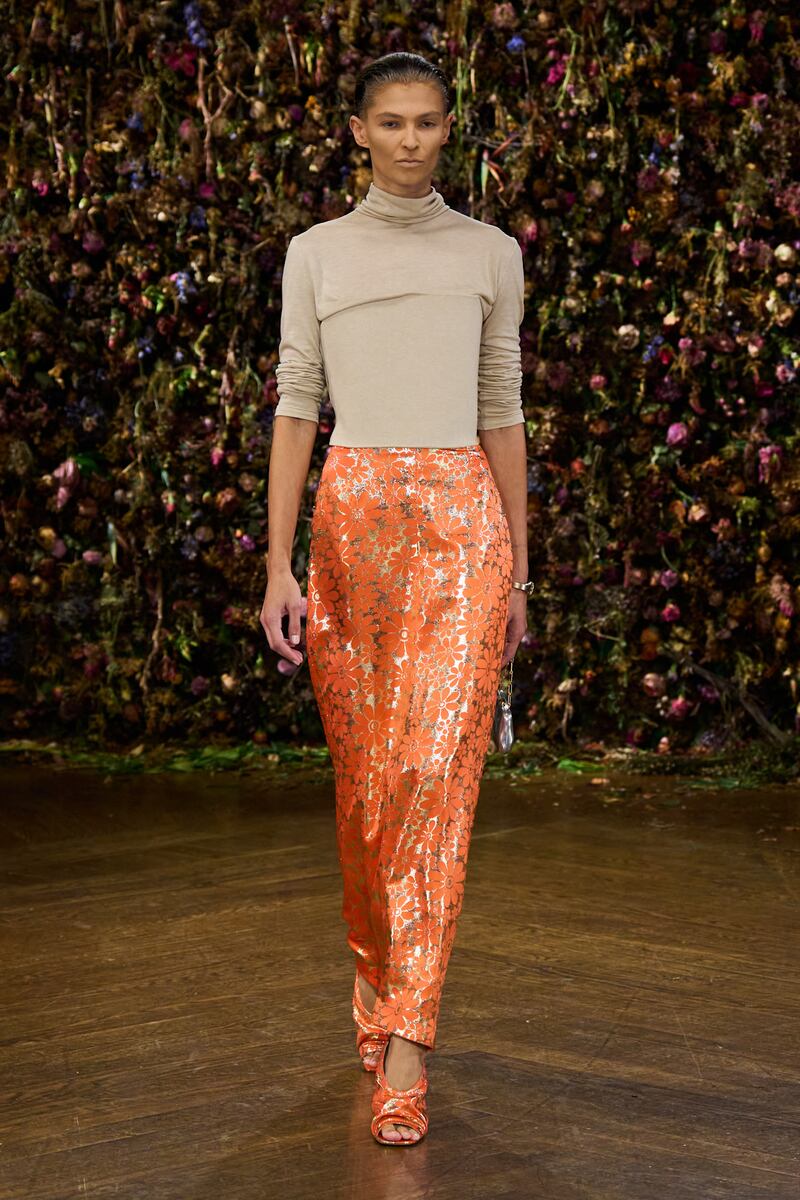
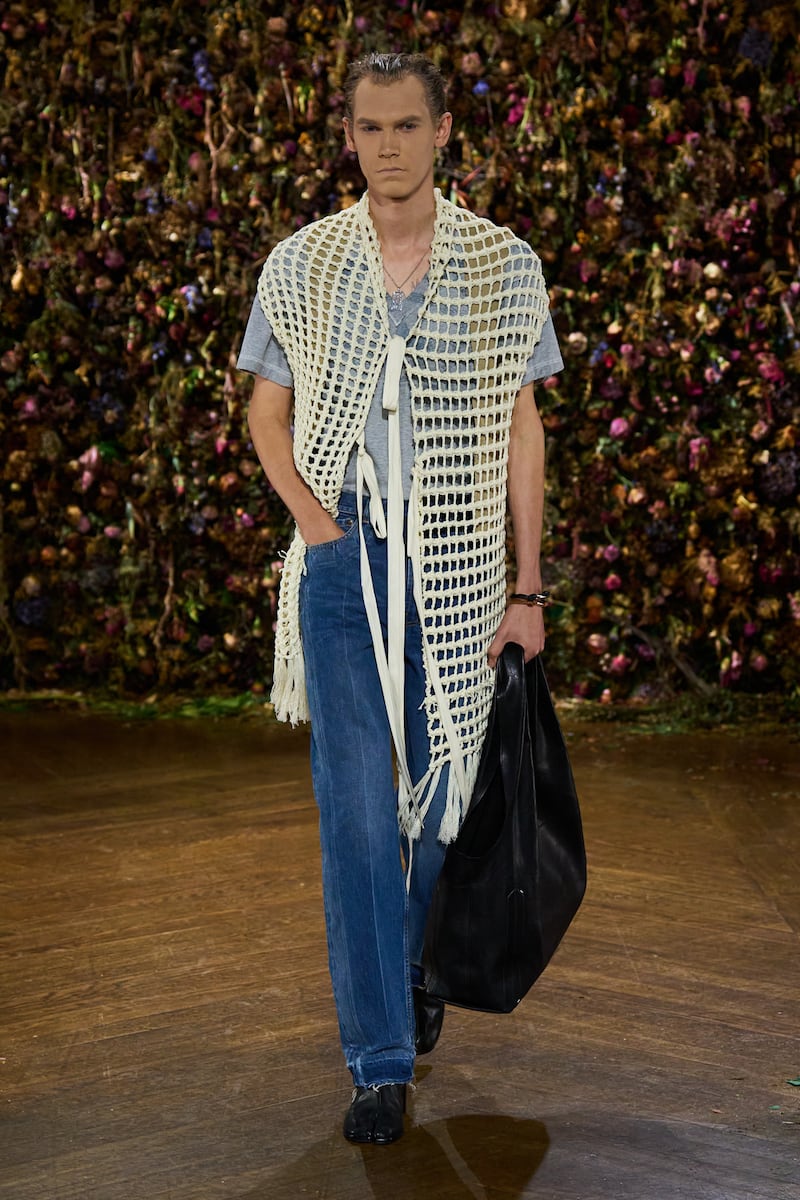
His models paraded in full foundation makeup, faded clumsily into their hairline. Fresh from the funeral parlour, like a macabre transmutation of the classic Margiela mask. The walls of the labyrinthine show venue were ceiling-to-floor flowers, like the setting of Raf Simons’ debut for Jil Sander, except that Martens’ flowers were dead. On the soundtrack, Courtney Love screamed over and over, “Go on, take everything, take everything, I want you to…”
ADVERTISEMENT
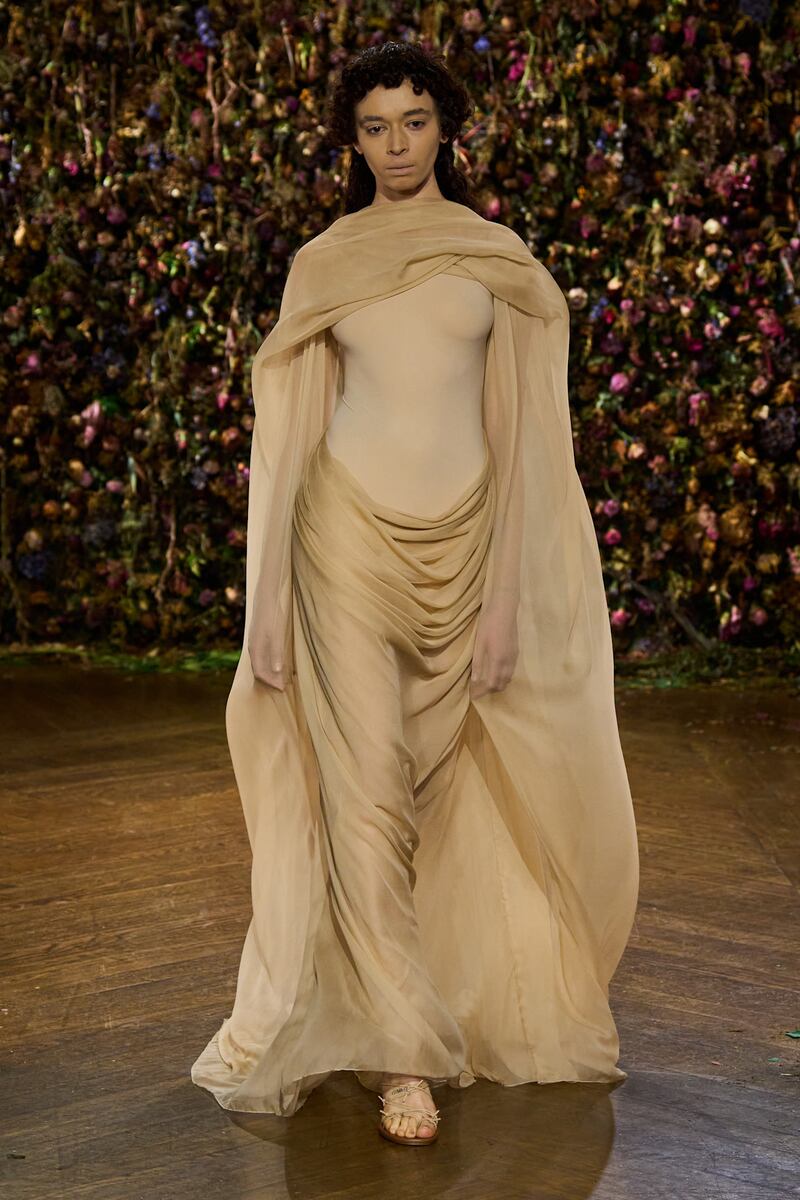
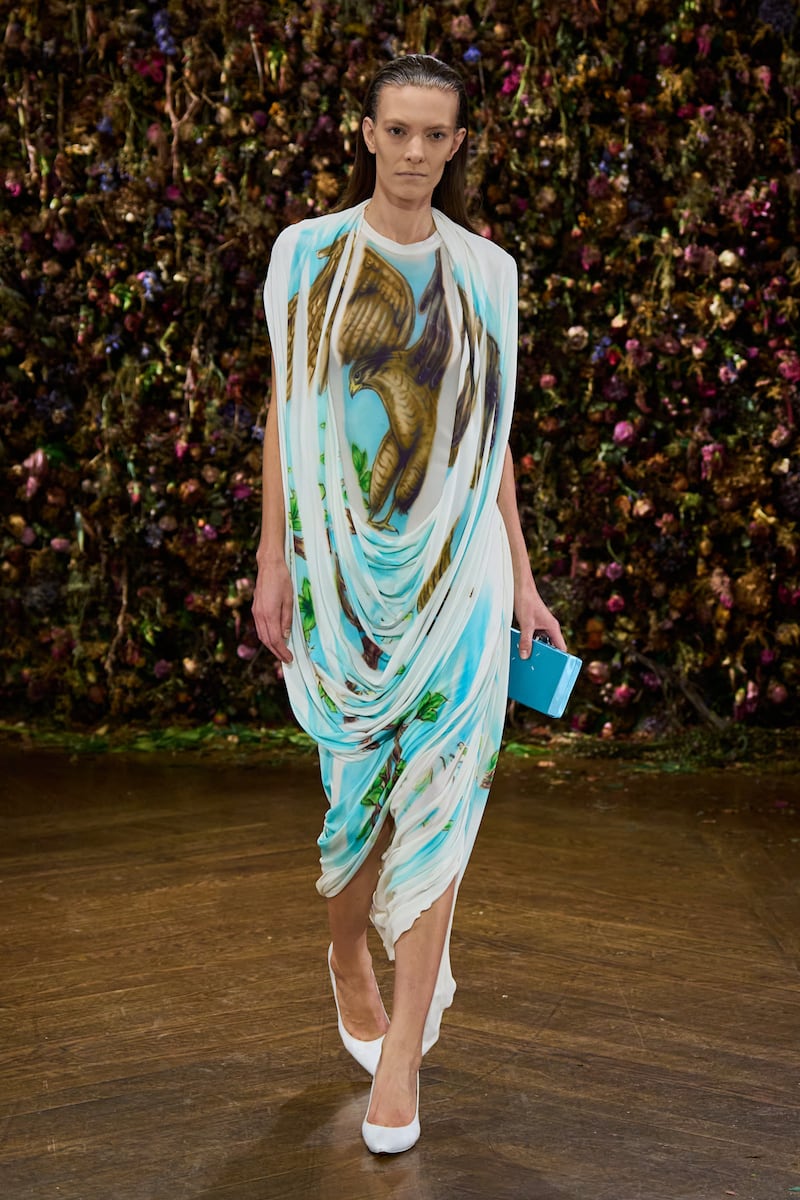
It all felt like something was very much over, except, in Martens’ case, it’s very much beginning. The clothes he showed were recognisably Margiela: the skewed normality, the perverse classicism, the art, the craft, the designer as ineffable alien. The décolleté filled with flesh-toned panels? The Grecian drape handpainted with a triumphant eagle? The housecoat clumsily torn open to reveal a hammered silver interior? The heart of the robot revealed.
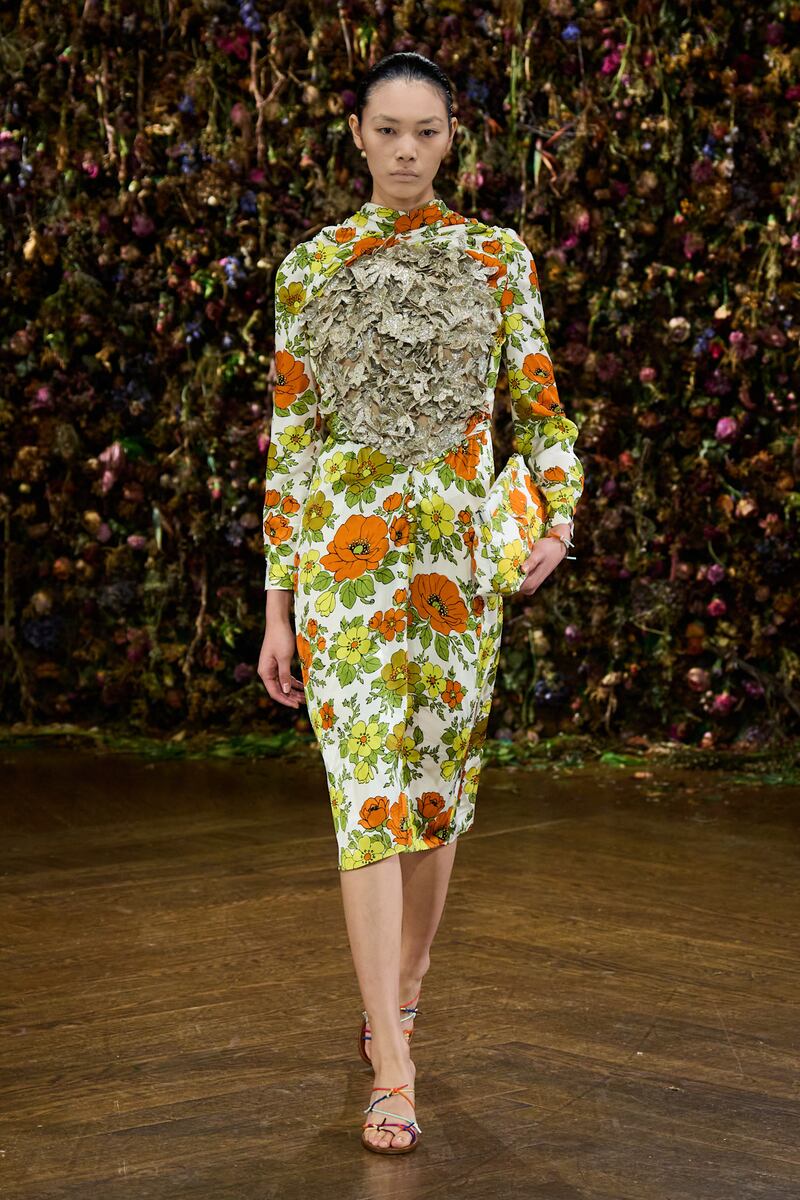
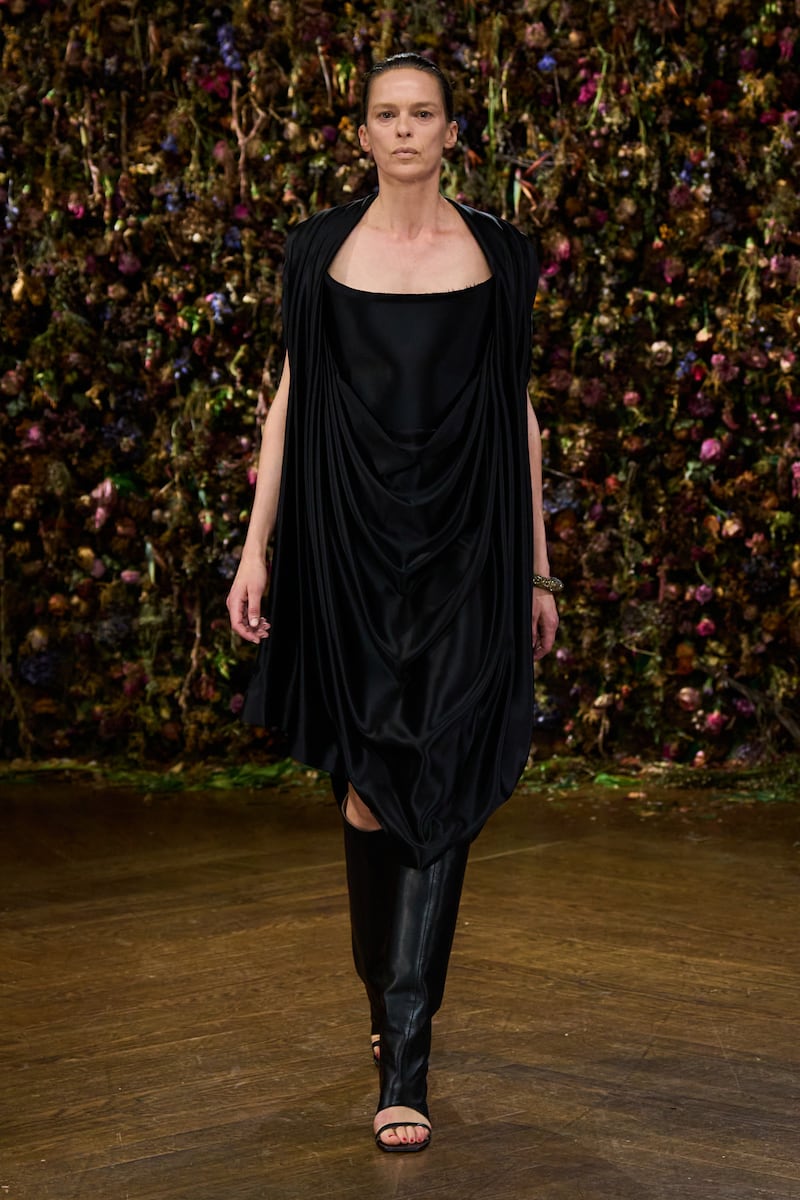
Martens gleefully pushes buttons. He’s in the right place to do that. If this collection felt dark, furious and a little lost, maybe that’s because a lot of us feel that way right now.
Loading recommended reads…
Fenty Beauty’s first 12-hour online shopping event, featuring Rihanna, shows how a new generation of brands are embracing the practised art of live selling.
The policy bars ads from ByteDance, which remains in charge of key parts of TikTok, and extends to third-party advertisers running campaigns that link to TikTok.
The departure of Athleta’s CEO for Lululemon is a chance to ‘reimagine the brand’s path forward,’ Gap Inc. CEO Richard Dickson wrote in an internal memo viewed by Bloomberg.
Opening in Q4 2026 on Saadiyat Island — at the heart of Abu Dhabi’s cultural district — Saadiyat Grove brings together luxury retail, hospitality, residential living and culture in one of the emirate’s most ambitious new developments. BoF speaks to Jonathan Emery, chief executive officer of Aldar Development, about the strategic vision behind the project.