Agenda-setting intelligence, analysis and advice for the global fashion community.
Agenda-setting intelligence, analysis and advice for the global fashion community.

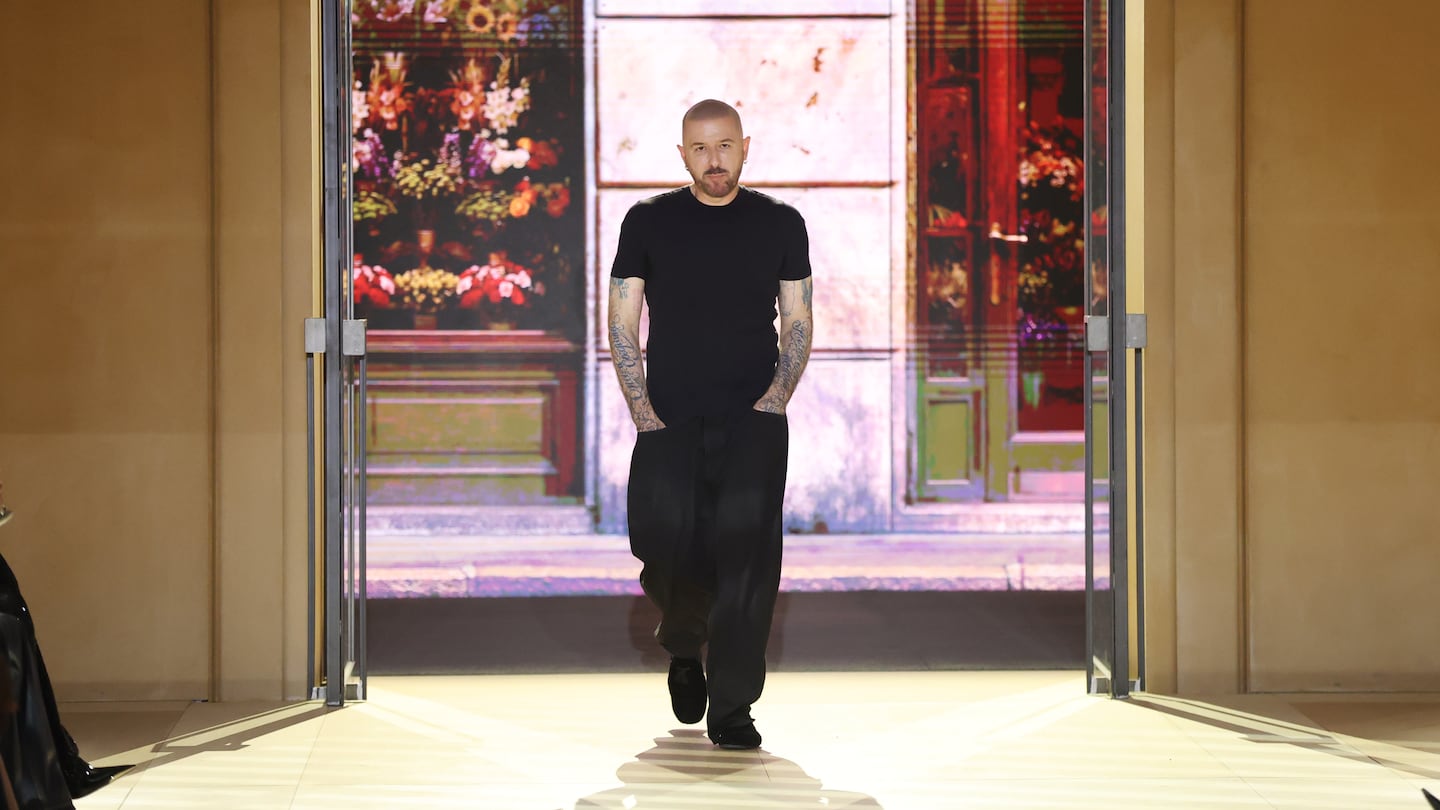
MILAN — Demna and I are back in his office in the Gucci Hub in Milan, the space with the unbitten Apple at one end of the room, and the massive blow-up of Alex Consani in a look from the December ‘25 Gucci Gen capsule at the other. Last time we were here was in the lead-up to last February’s aggressively sexual, cosmetically heightened show, the one he called Primavera, the one he, in his own drama queen phrase, was “massacred” for. Though he hastens to add that it wasn’t his crowd who felt that way, it was just everyone else. (He also clarifies that his fashion crowd is distinctly different from all the other fashion crowds.)
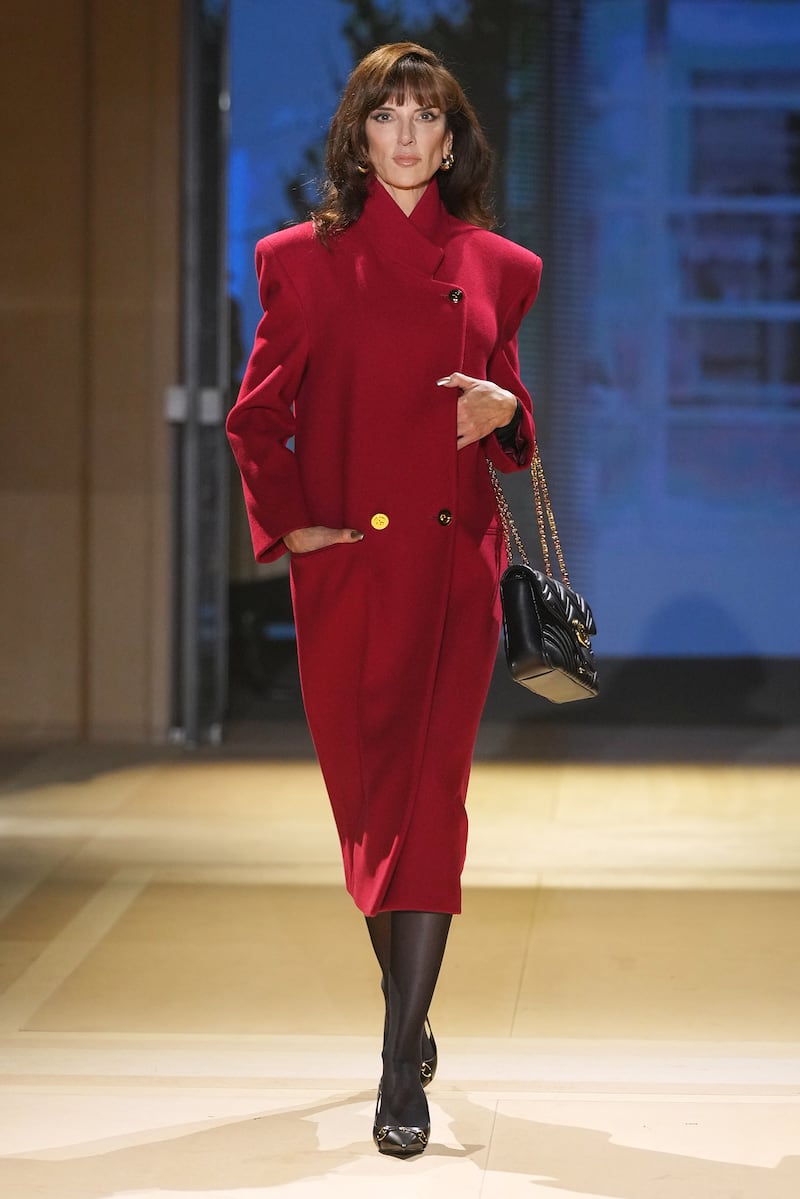
Maybe he’d lulled the world into a false sense of security with La Famiglia, the 37 character studies with which he launched his Gucci career a year ago. “A lot of people that usually hate my work were like, ‘Oh, wow, you can do a red coat.’ Yeah. And then my crowd were like, ‘Fuck! What are we gonna wear from him at Gucci?’ I literally had people texting me that.”
There has been one other major Demna/Gucci projection since that call and response. The Cruise 2027 collection set sail in Times Square last May. He called that one GucciCore. “It was really a wardrobe study for more of a classic customer, someone who just needs a peacoat or a shirt. I realised we didn’t have that in store.” This time, it was the fashion crowd squawking. Or at least, his fashion-forward design studio. “They don’t want just another nice trench coat. It’s not enough for them. So a lot of my people here in the teams were like, ‘Are you gonna push it more after GucciCore?’”
Which brings Demna and me back to his office in the Gucci Hub, anticipating his latest collection for Spring/Summer 2027. And I’m thinking that Demna, whose high school education in the Soviet satellite Georgia included lessons in the philosophy of Karl Marx, might appreciate the Marxist dialectic when it is applied to fashion: thesis/antithesis/synthesis. Except I’m being a smartypants and it was actually Hegel, not Marx, who came up with that concept. Still, the notion that one proposal is countered by another and then both are combined in an irresistible hybrid does seem to be the essence of Gucci’s new collection.
ADVERTISEMENT
“After February, I realised I needed to really understand what my Gucci identity is,” Demna is saying. “You know, Tom was something like porno chic, Frida had her own kind of bourgeois, Alessandro was kind of eccentric, queer. That was their thing, and I was like, ‘What is mine?’ And mine is a snobby bourgeois eccentric. I mean, there is sex appeal for sure, but it’s not just that. I think my aesthetic at Gucci is more snobby than sexy. It’s actually pre-Tom Ford, pre-Dawn Mello, pre-fashion. It was not so much about clothes back then, it was about what Gucci represented, the kind of snobbish bourgeoisie that it came from, even though the family themselves actually weren’t. I needed to do the Famiglia and Gucci Gen and Primavera, I needed to take apart all of the layers of this messy mille-feuille to understand what the ingredients are and to come up with my own recipe.”
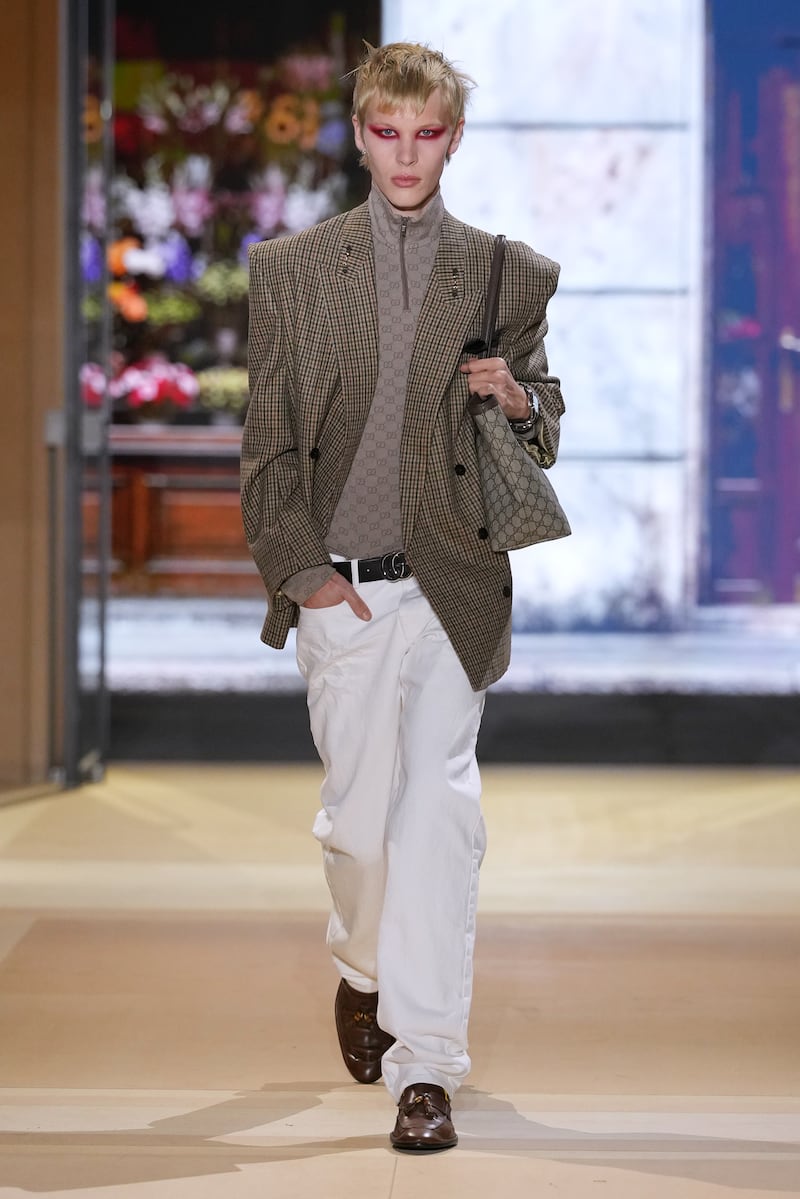
“Since last February, a lot of people have asked, ‘What is going to be your Gucci silhouette?’” he adds. “It’s a very one-dimensional question actually. It would be a very limiting thing for me to do just one silhouette. It doesn’t work at Gucci because this brand has multiple personality disorder. It’s not one thing or another, it’s a couple of things, and I try to understand what they are, because I can say I don’t want to play with this character thing anymore. But I needed to understand what the identities of Gucci are on which I base my vision. So it’s the aristocrat, the snob, and the eccentric, and I kind of have to put them all together because otherwise it’s not Gucci. So I needed to find that balance between the three and create one identity through it.”
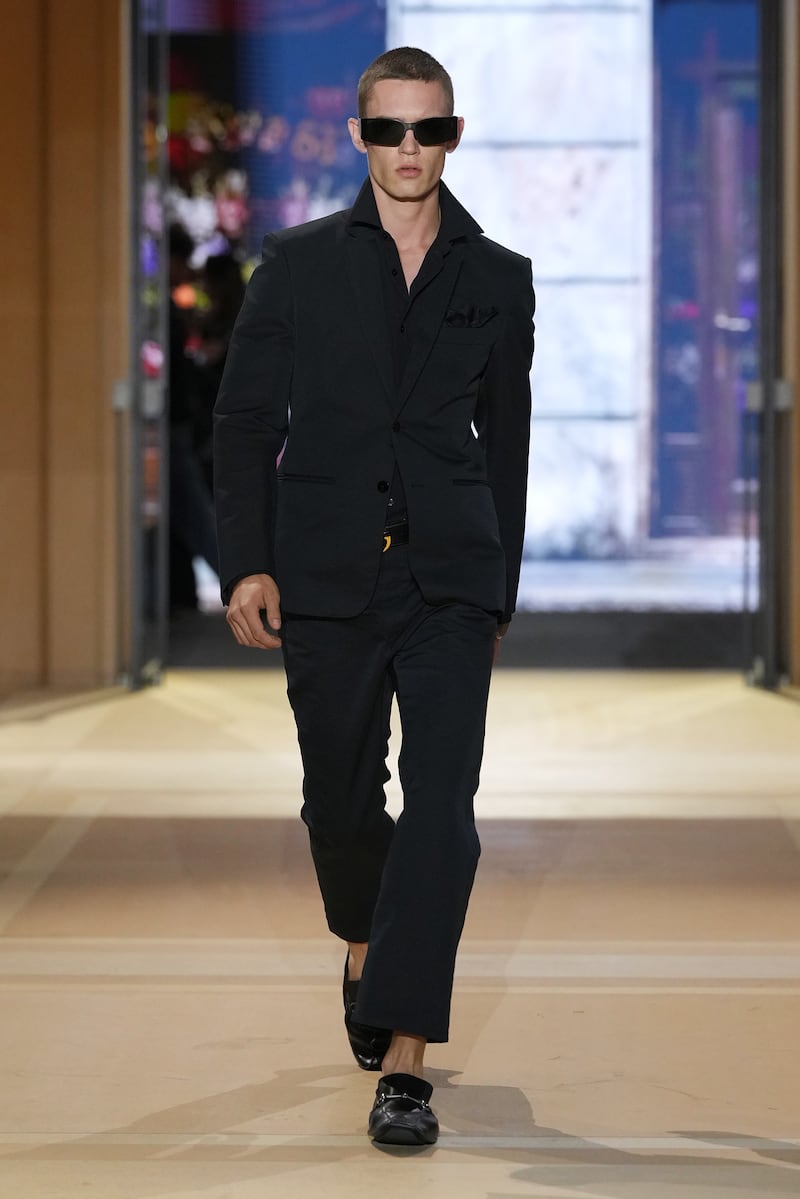
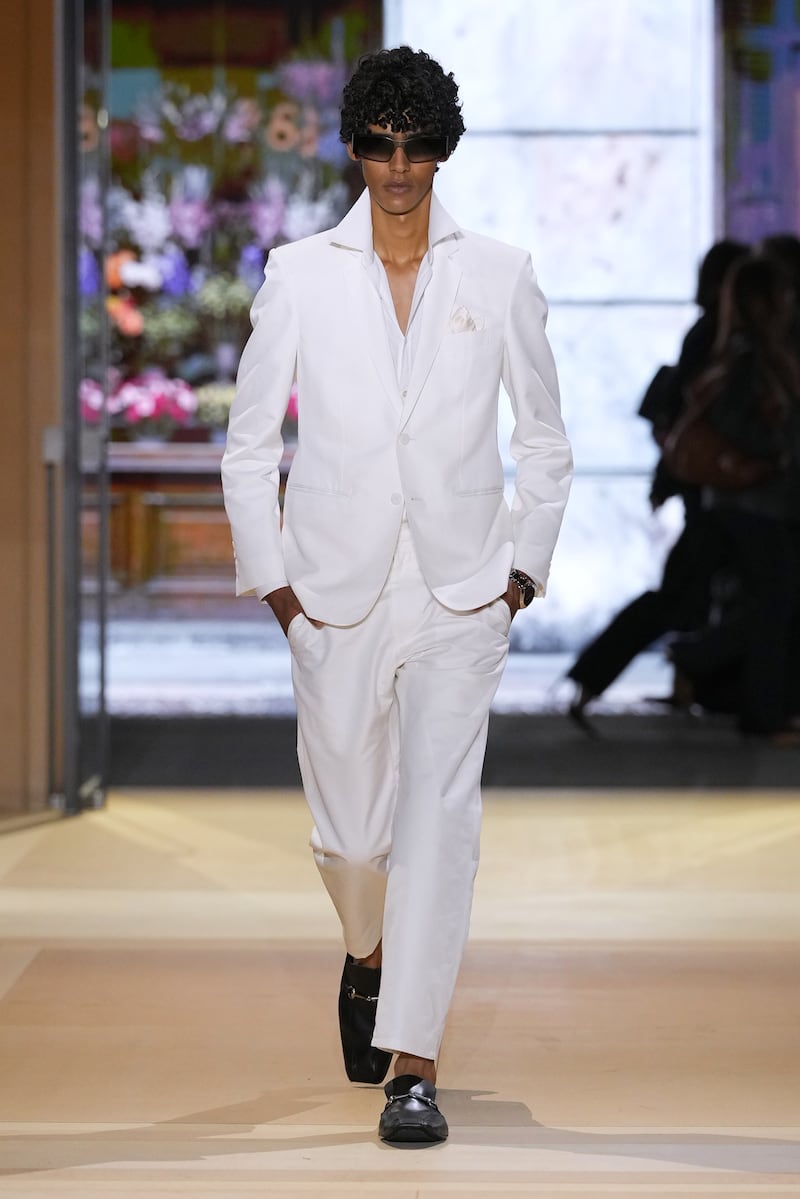
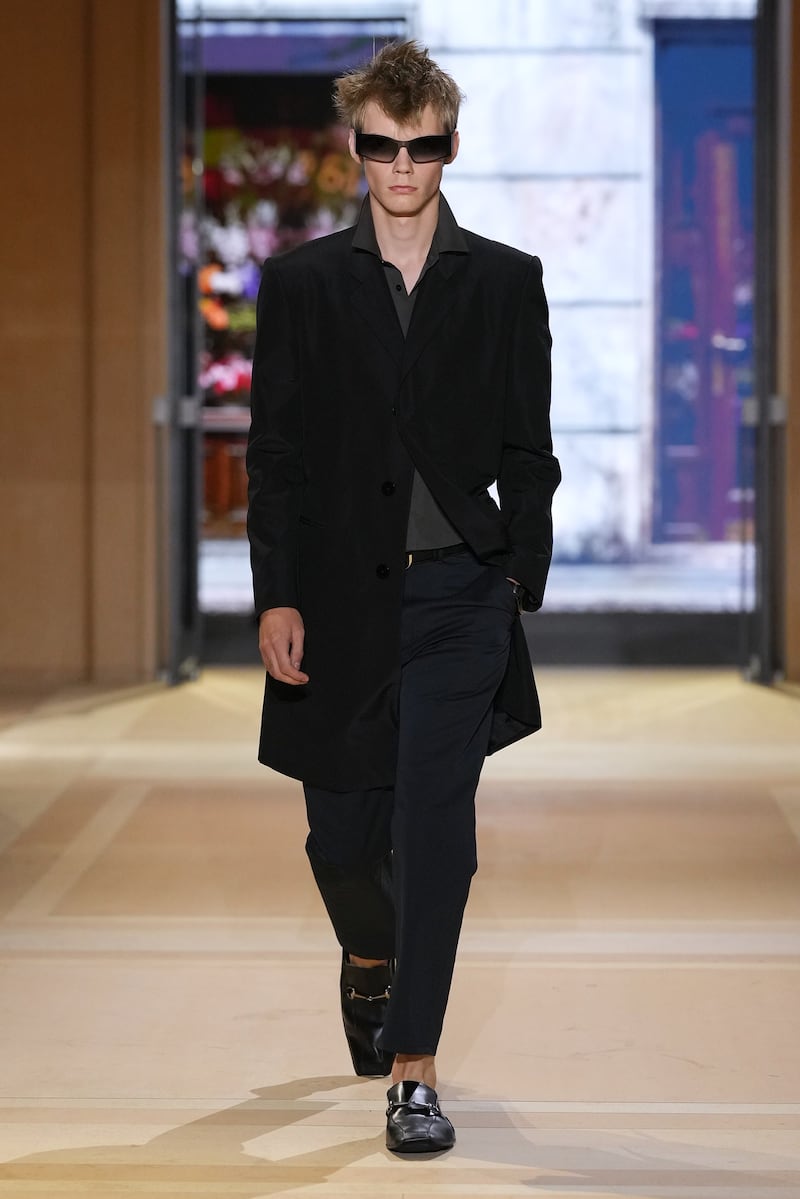
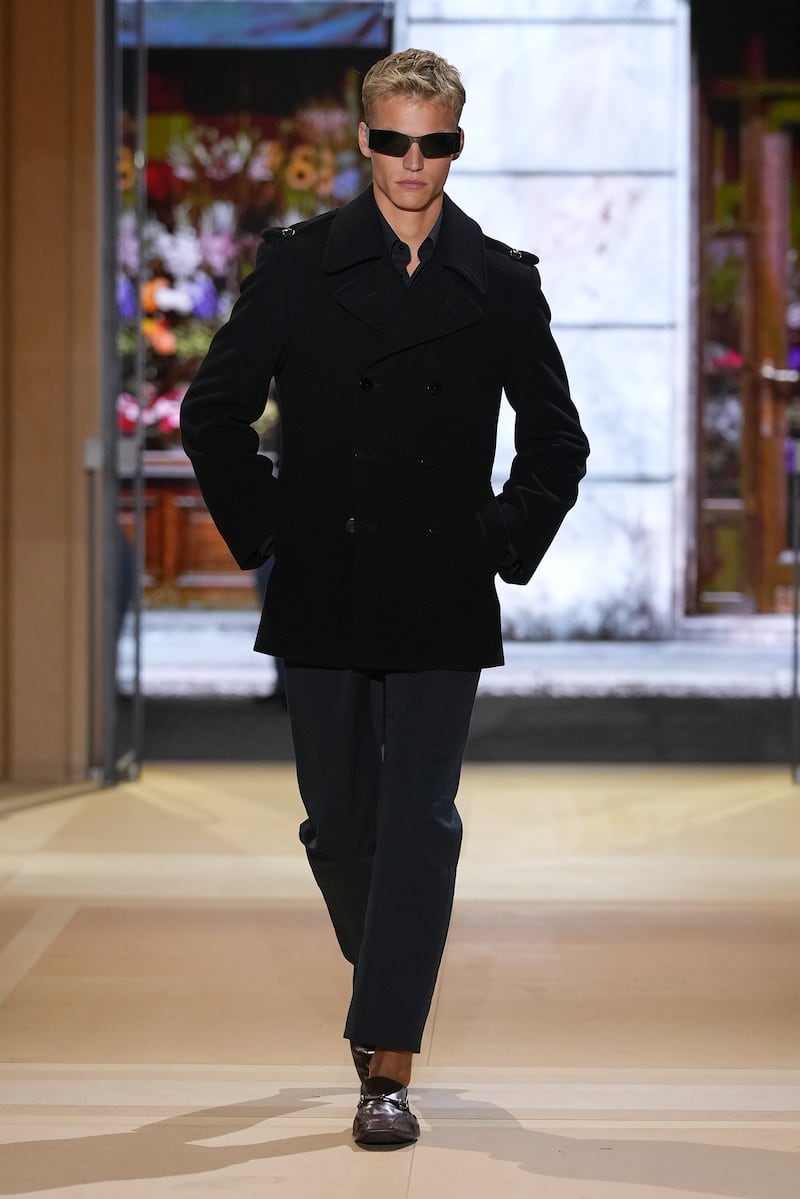
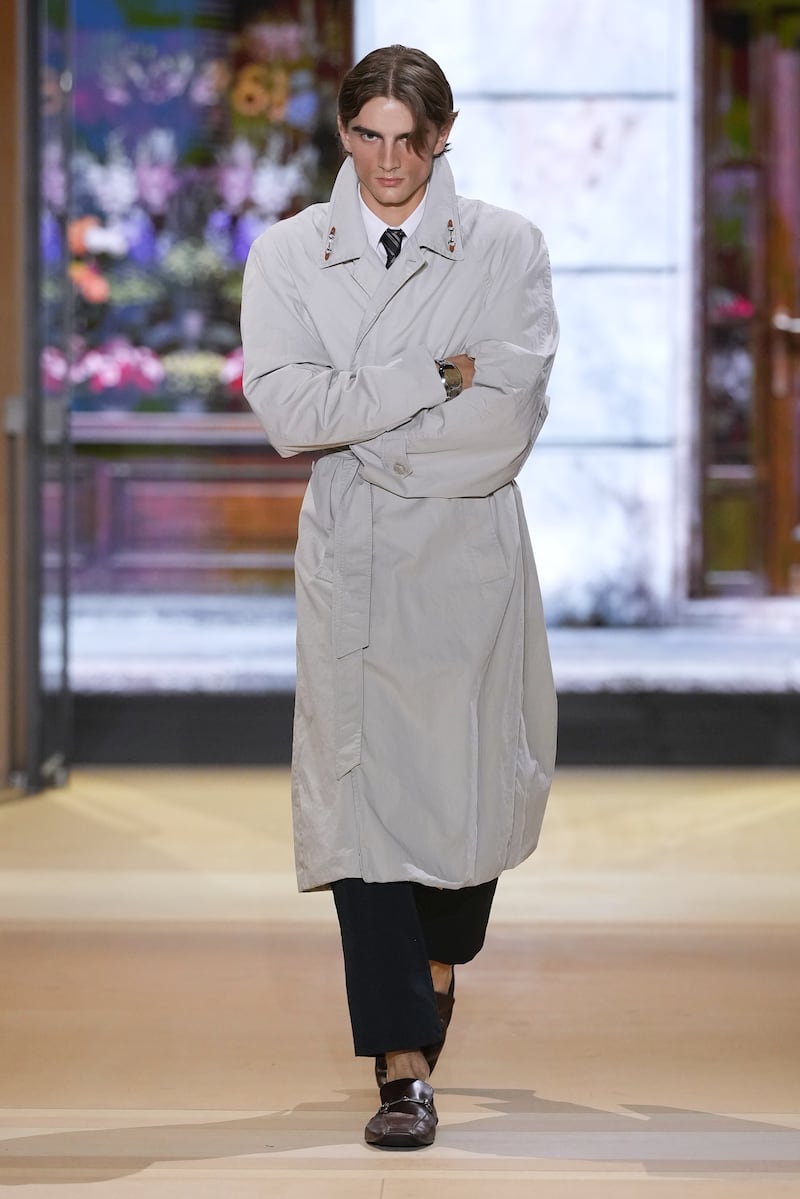
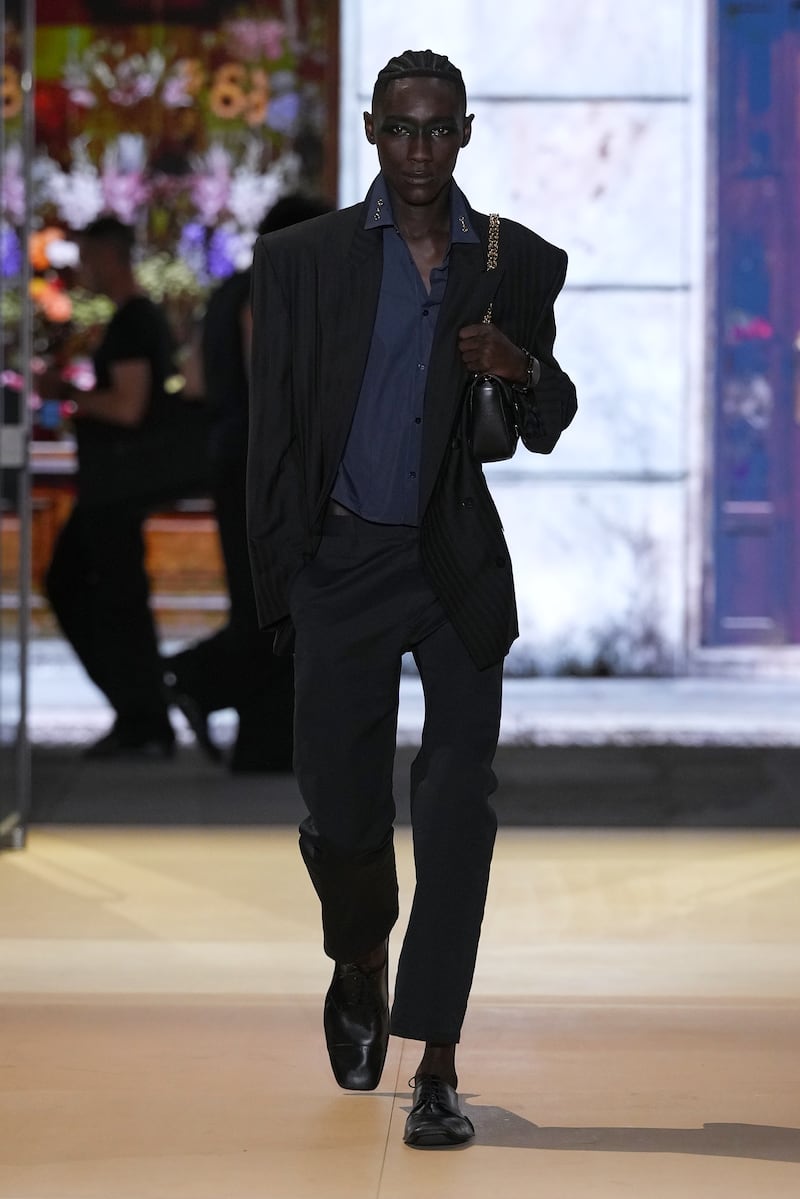
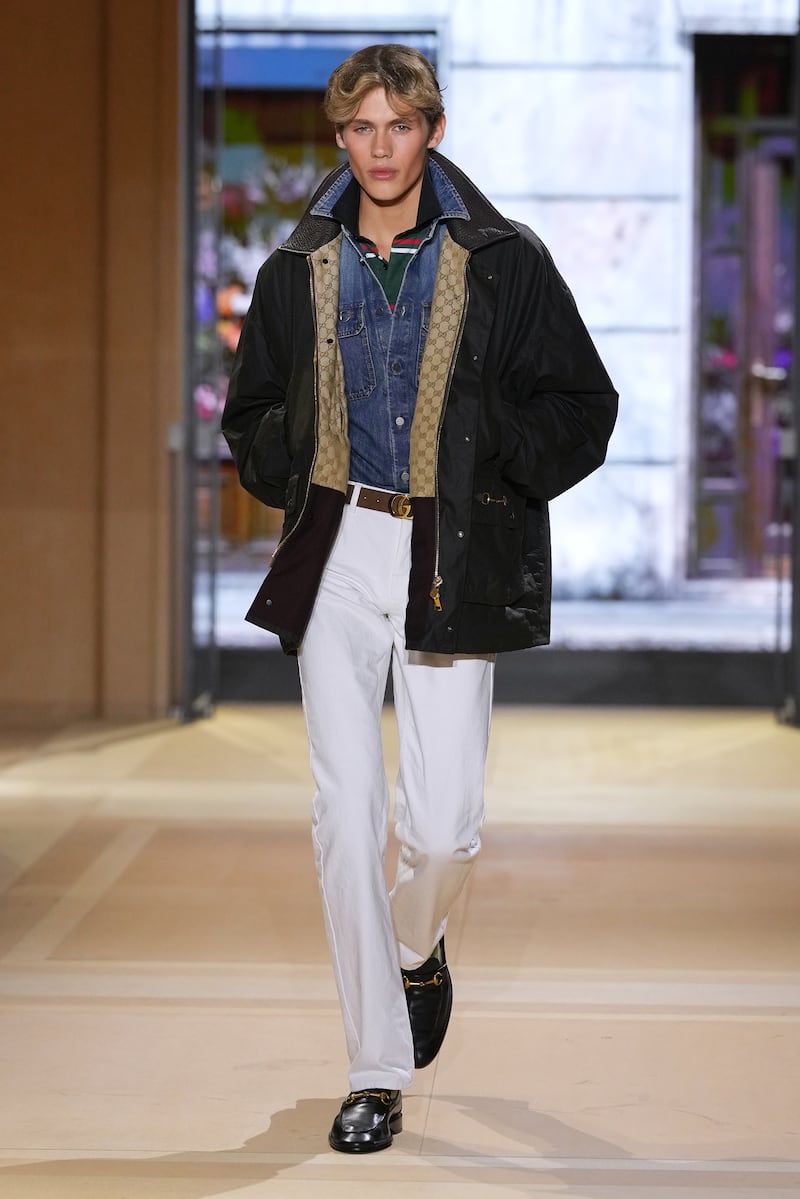
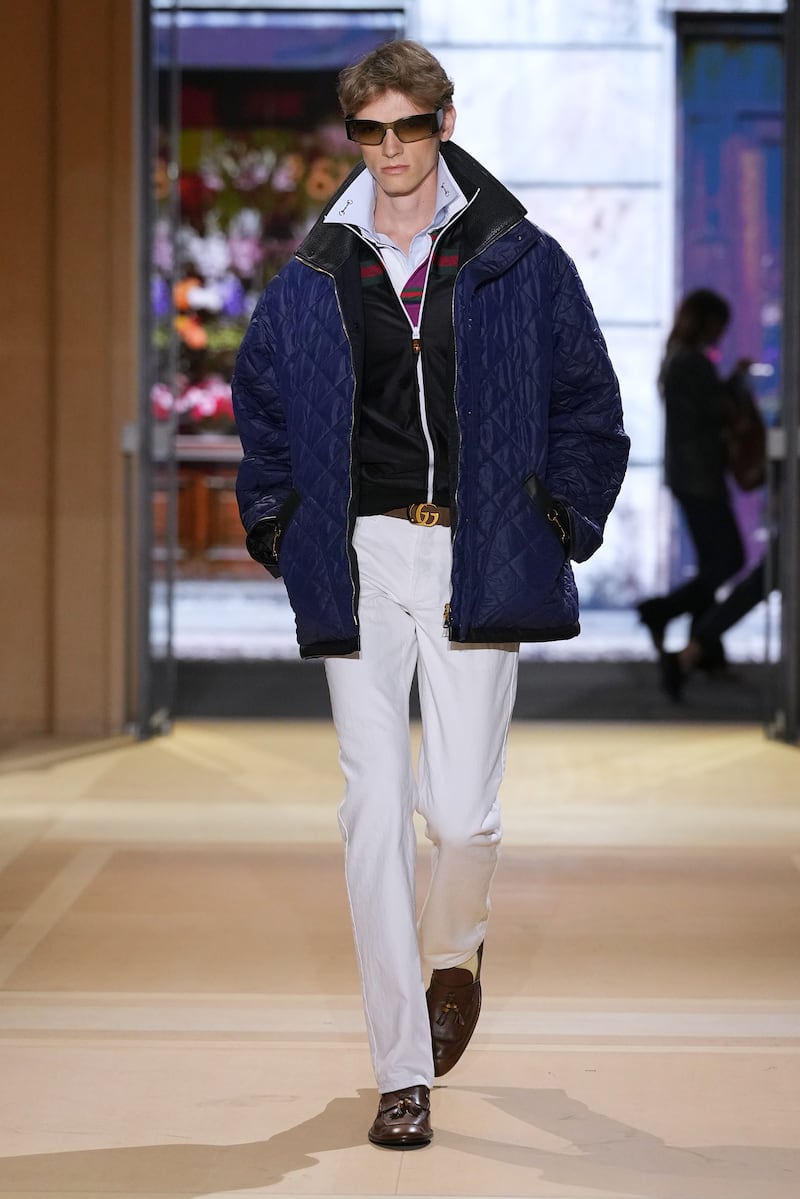
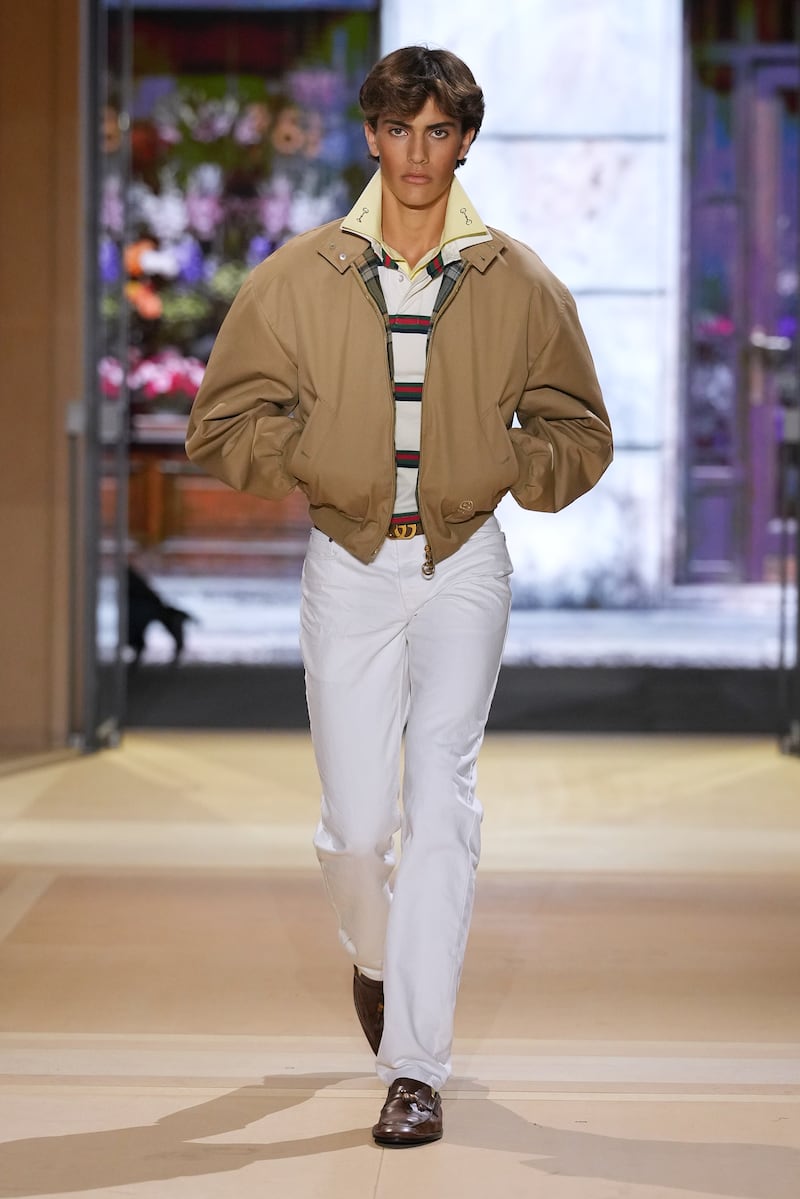
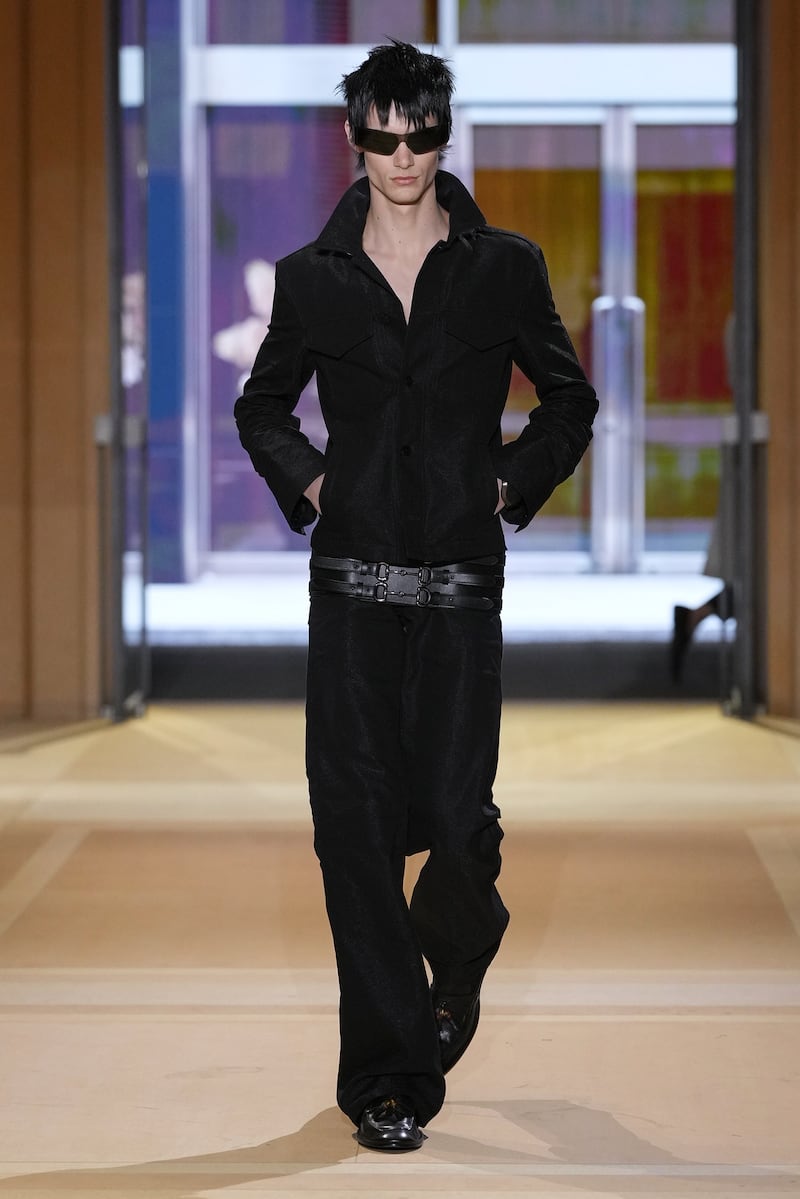
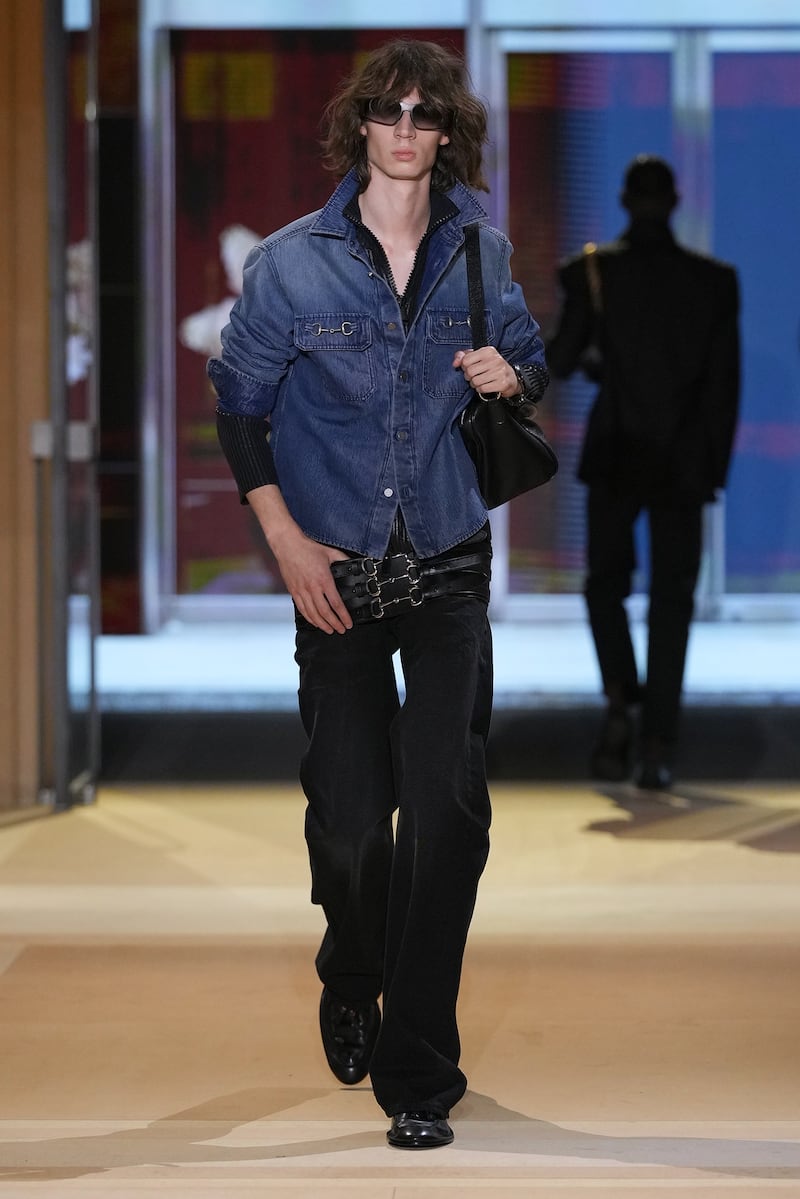
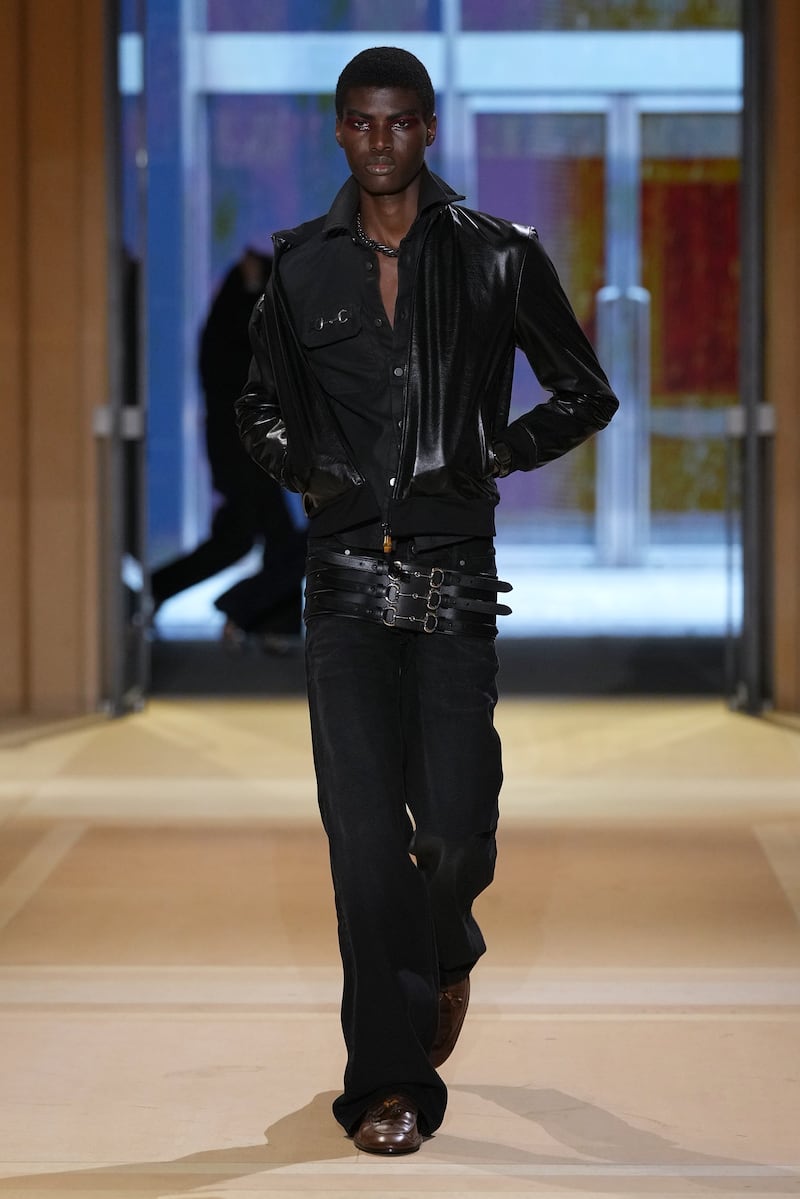
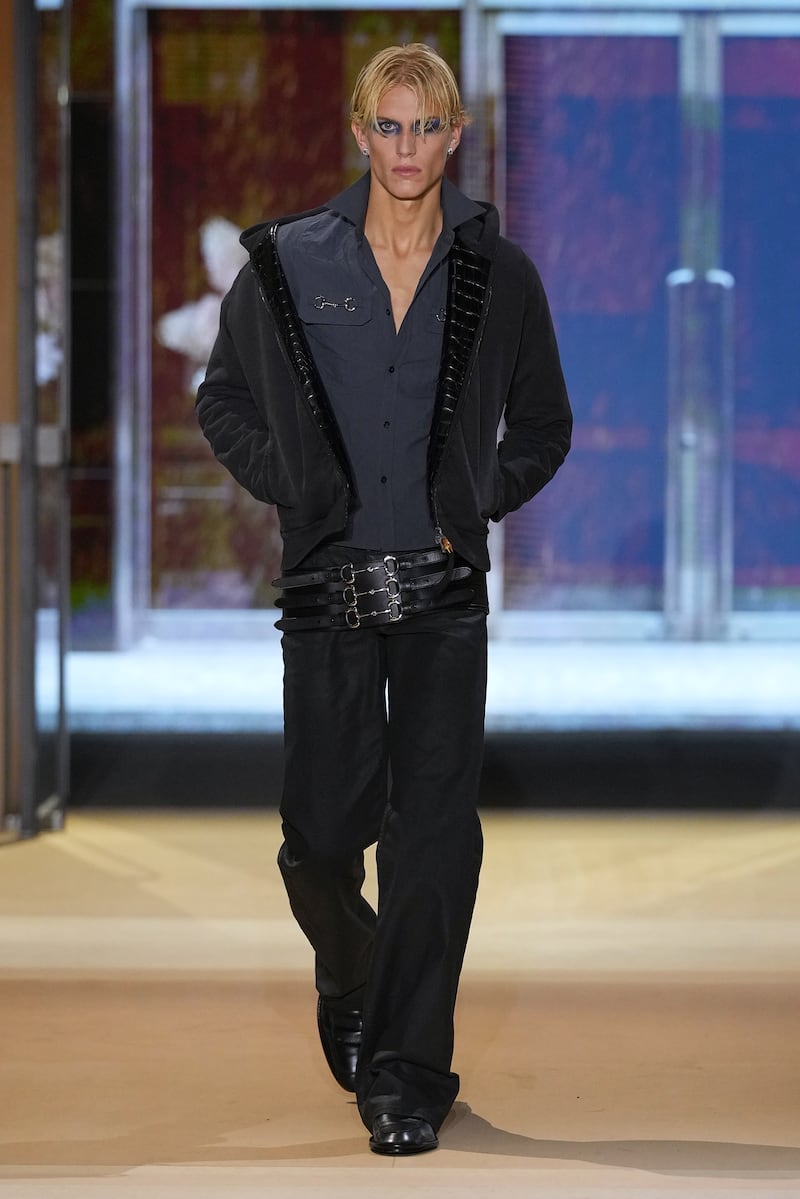
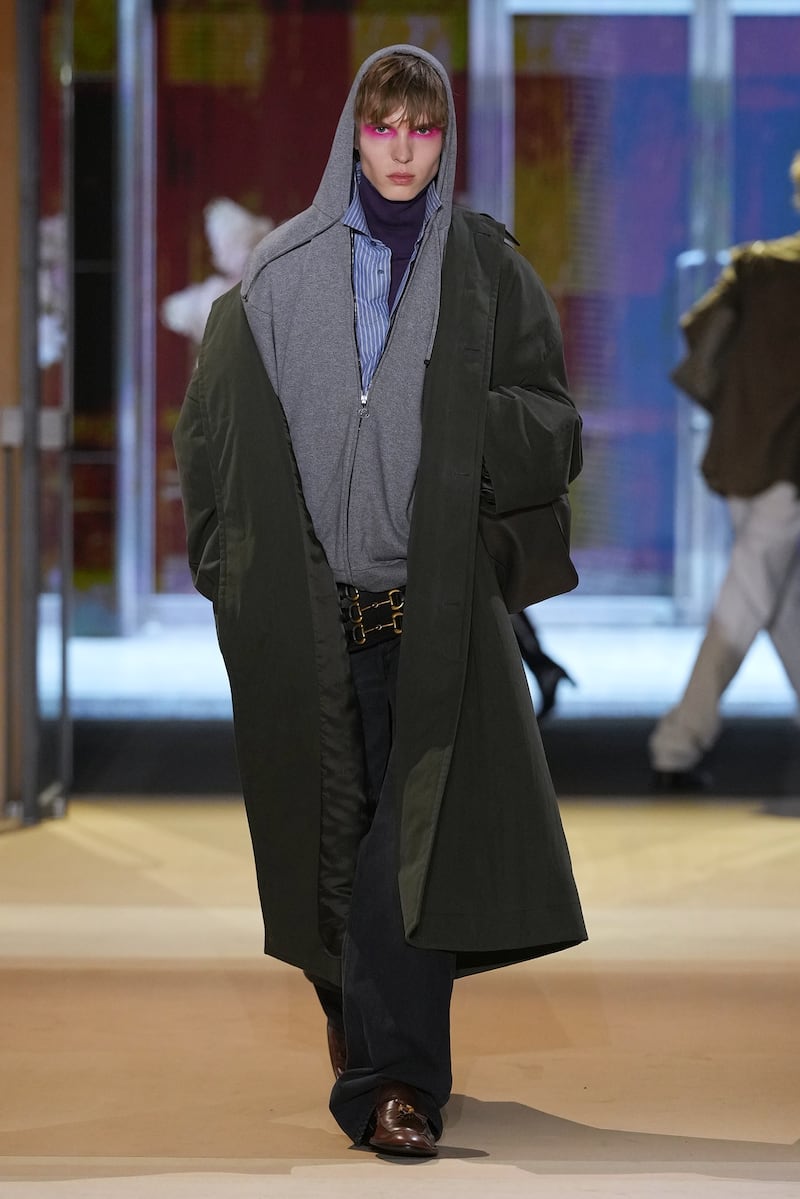
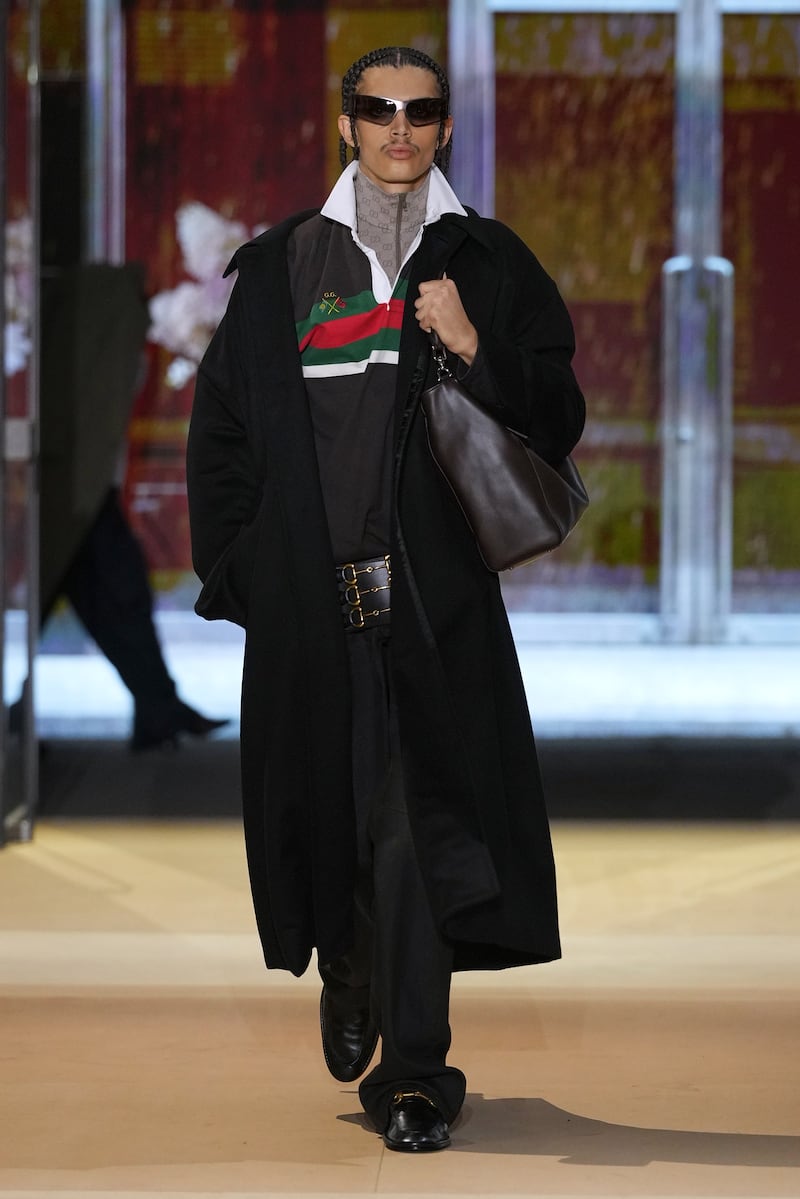
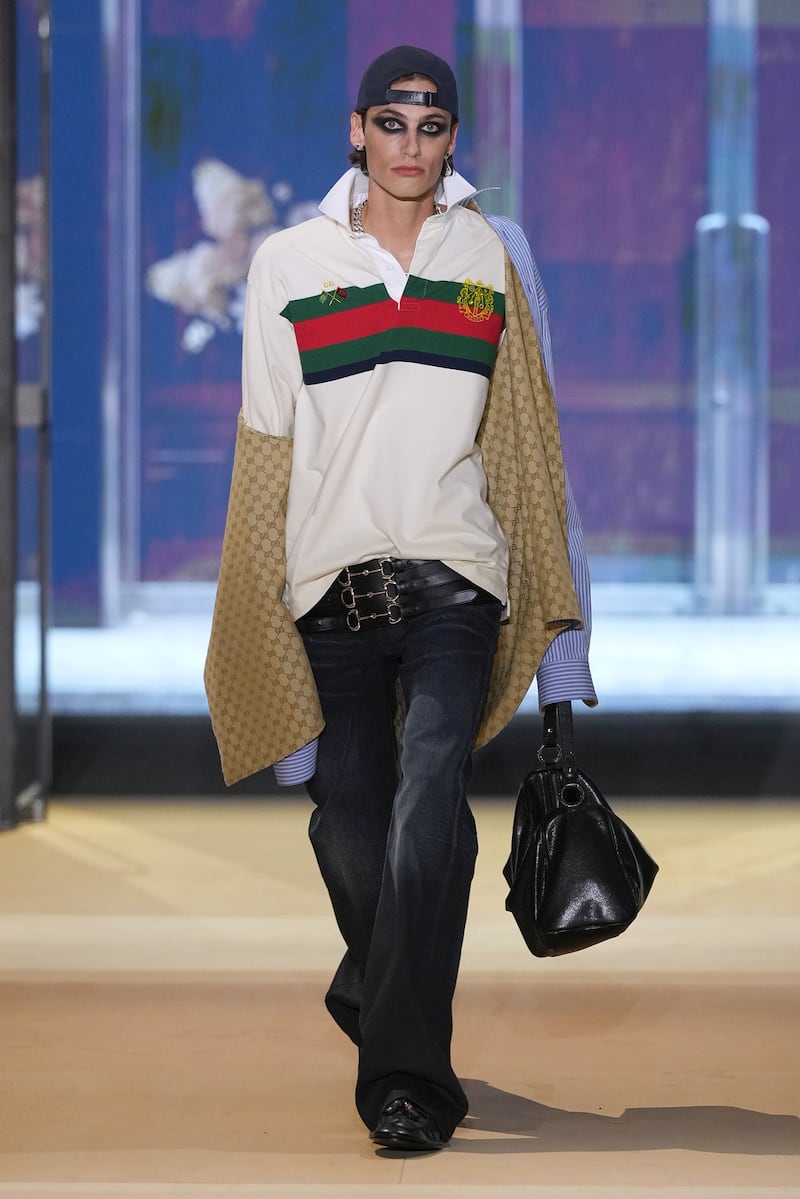
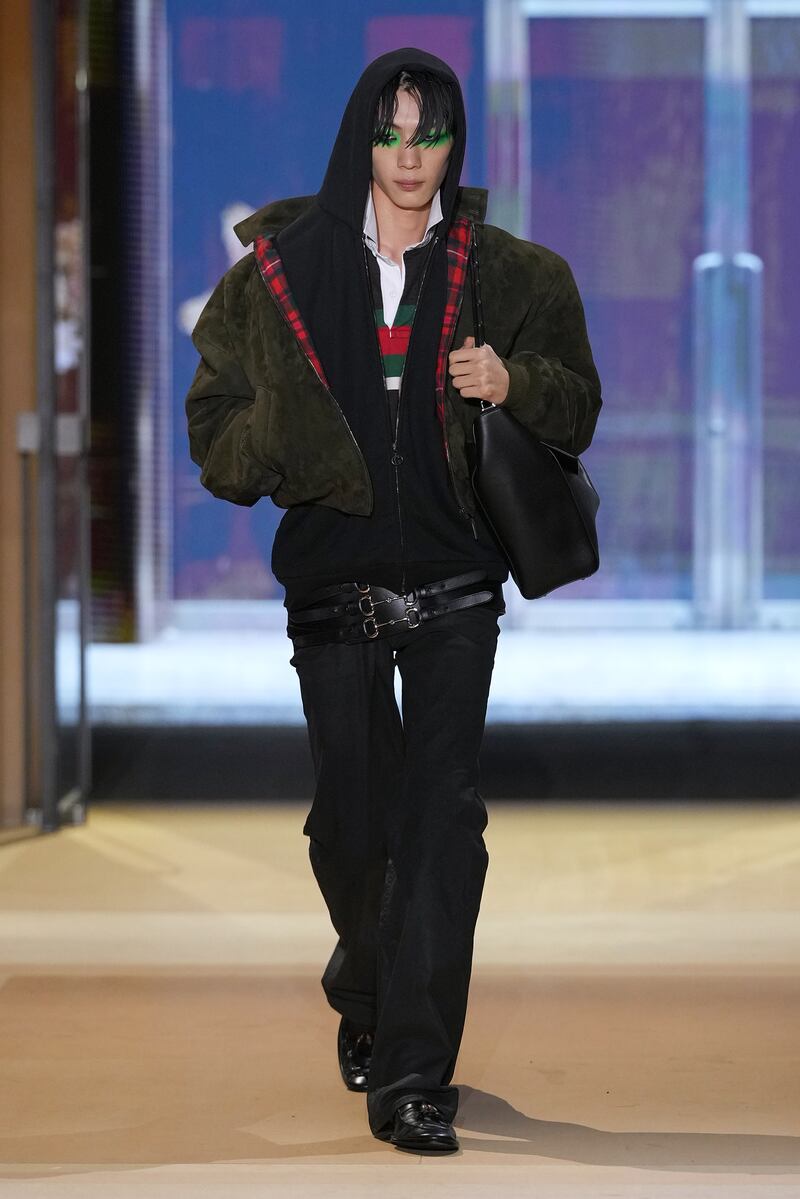
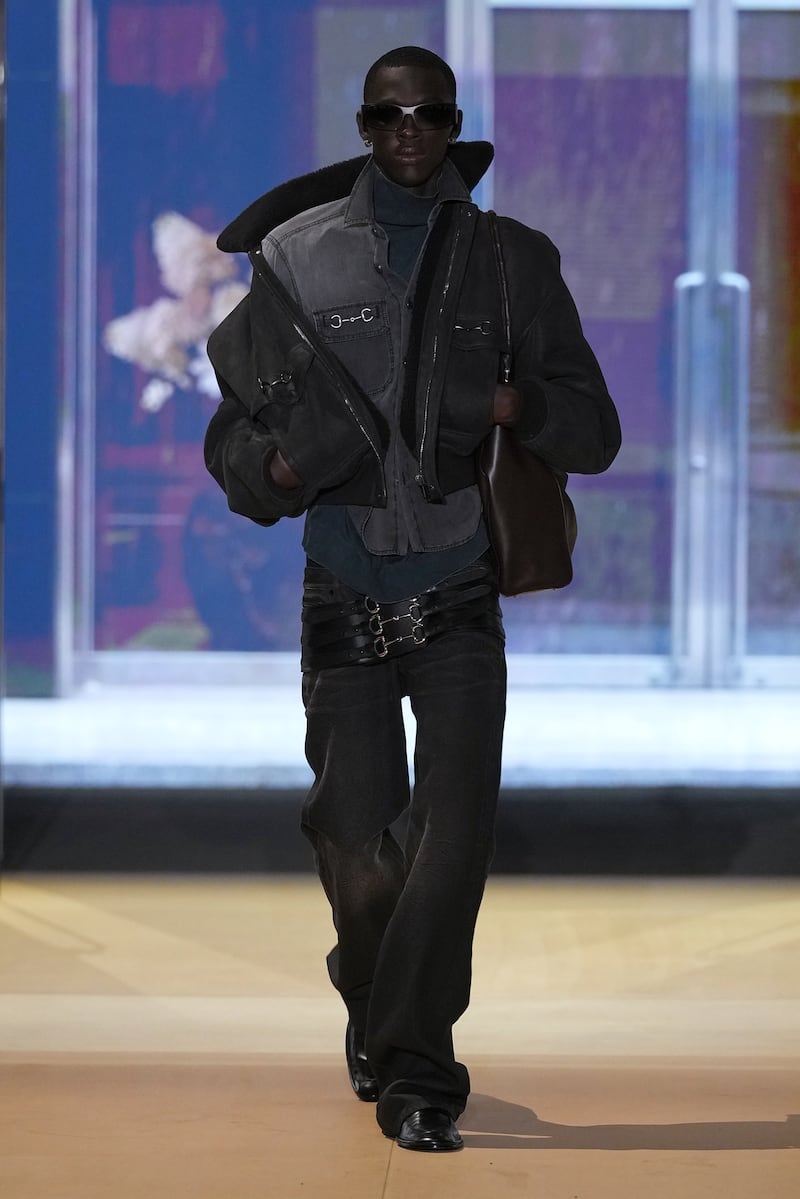
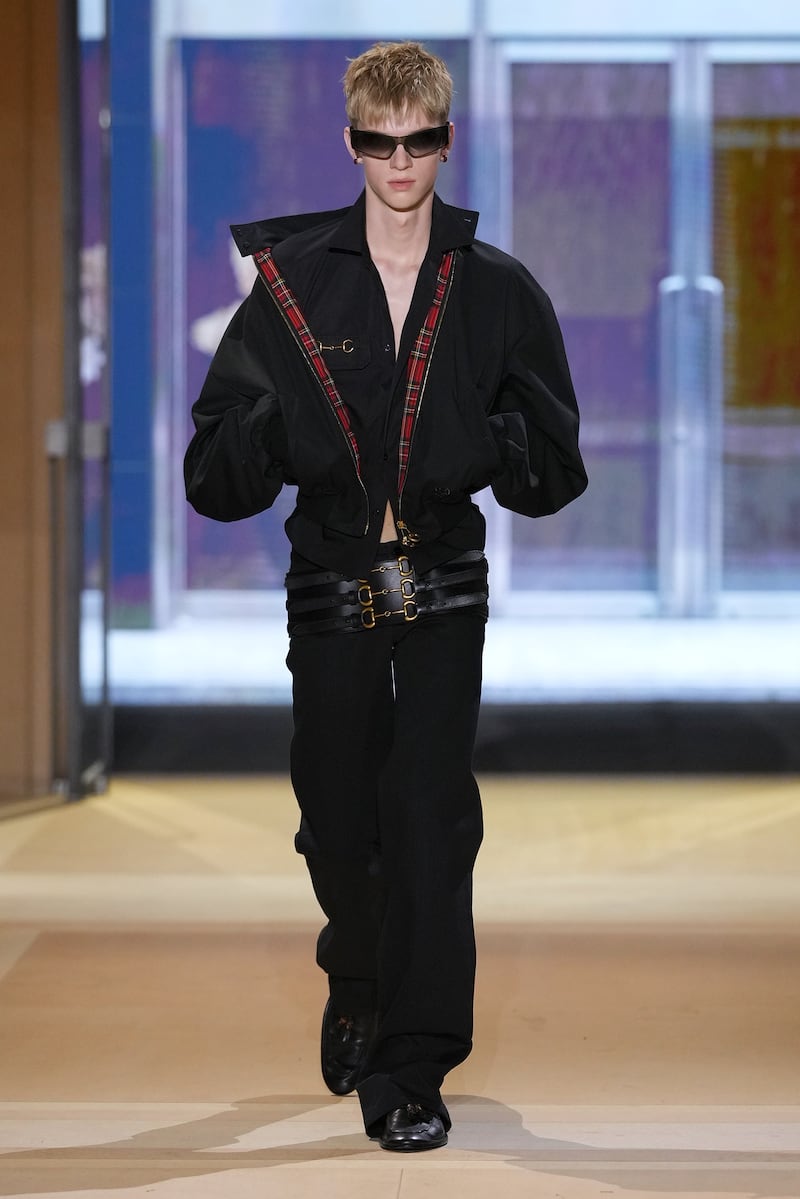
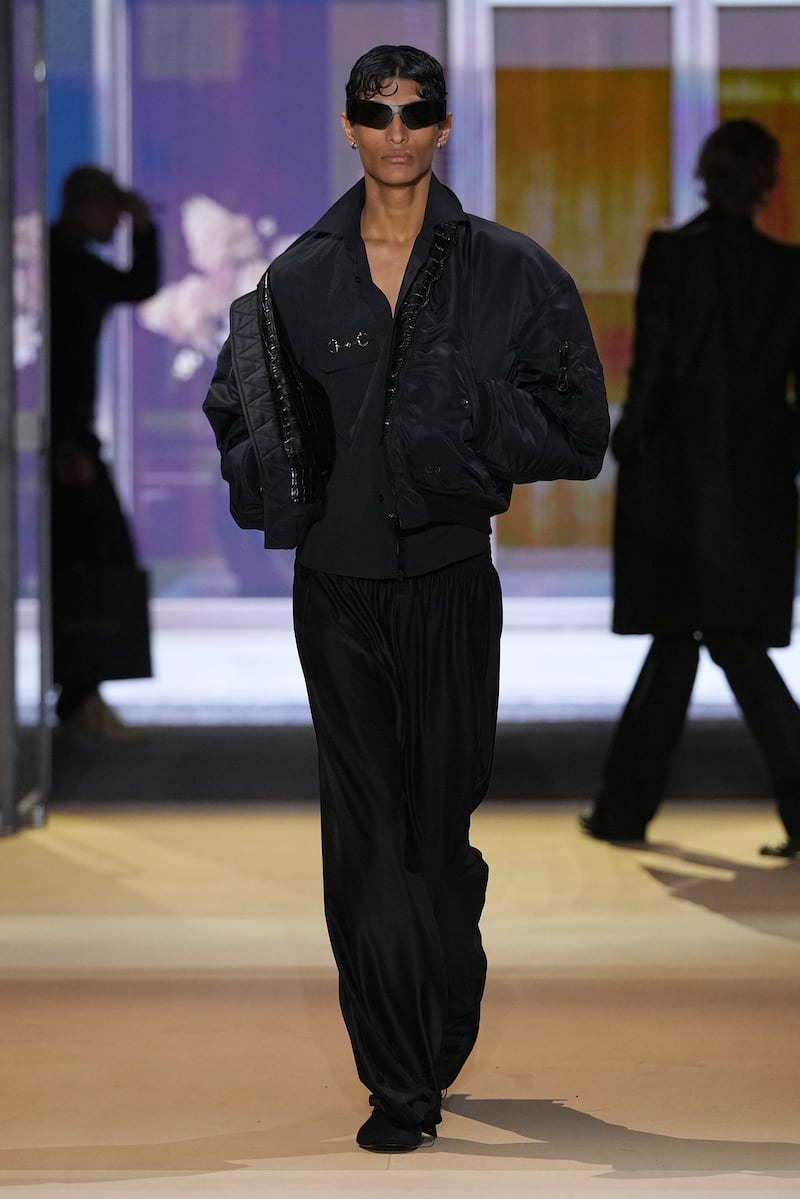
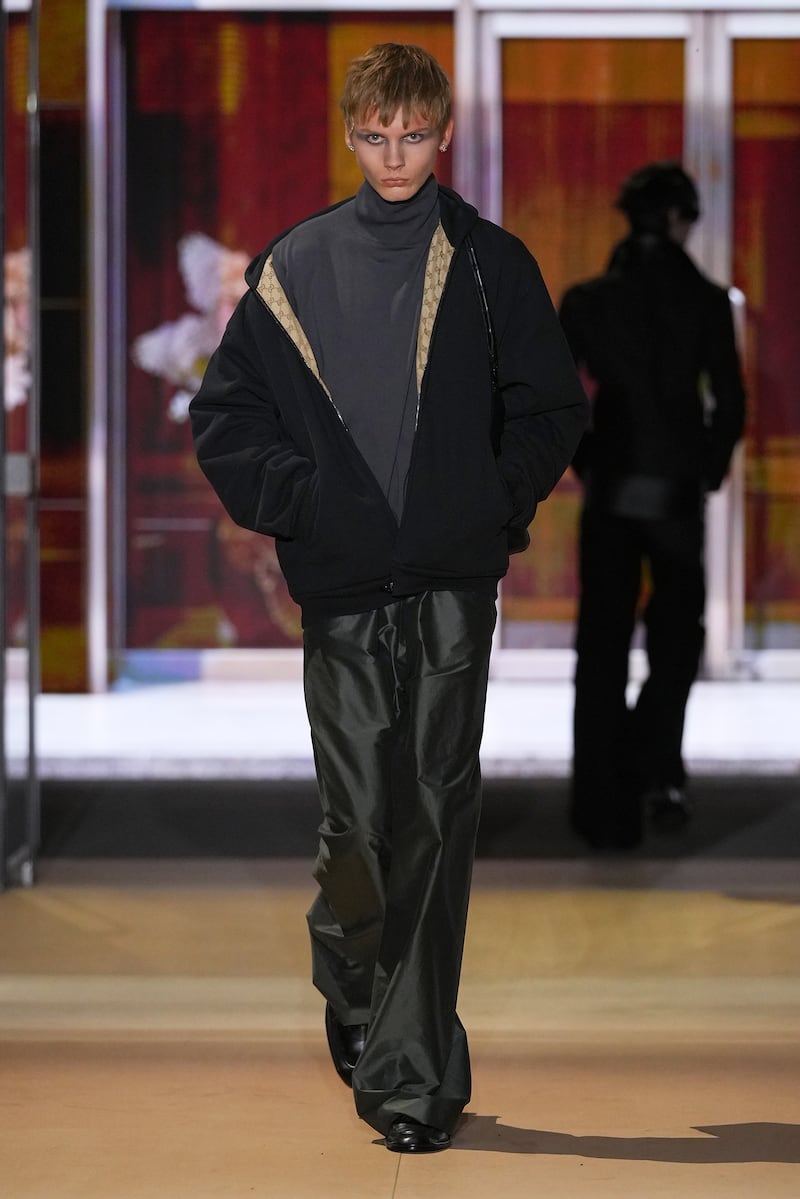
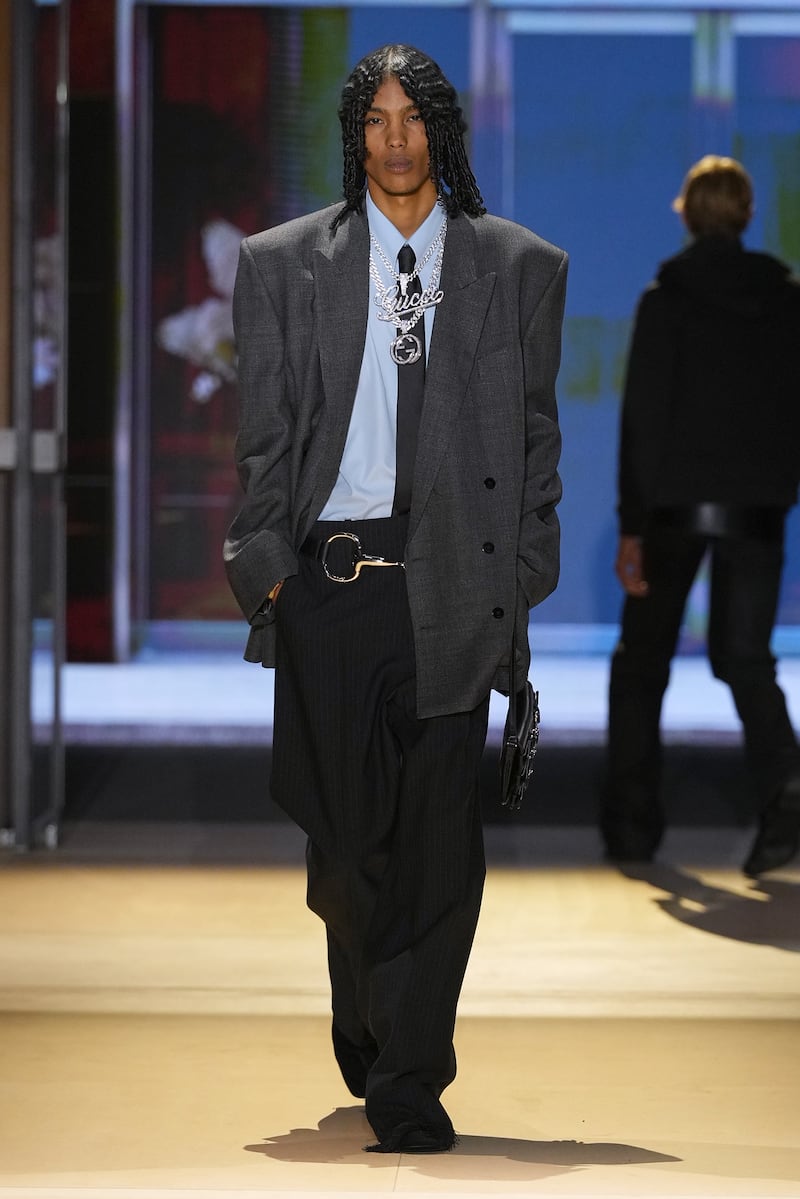
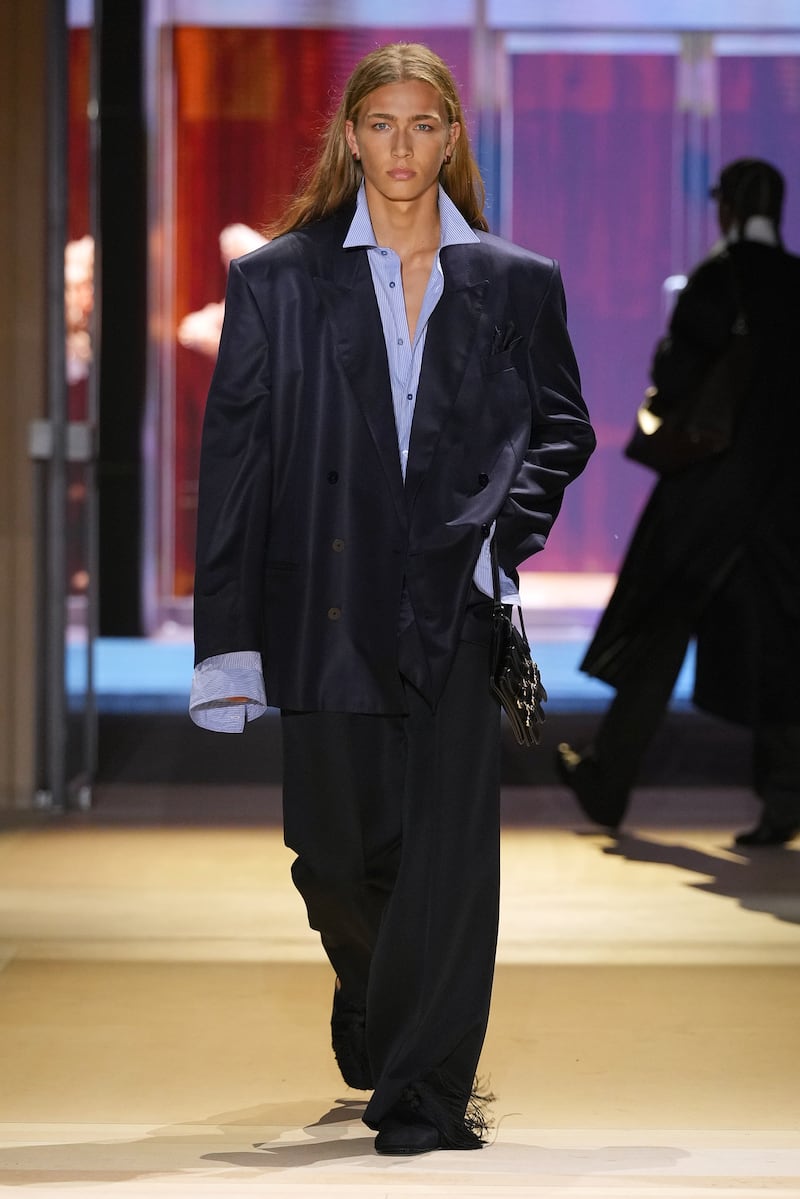
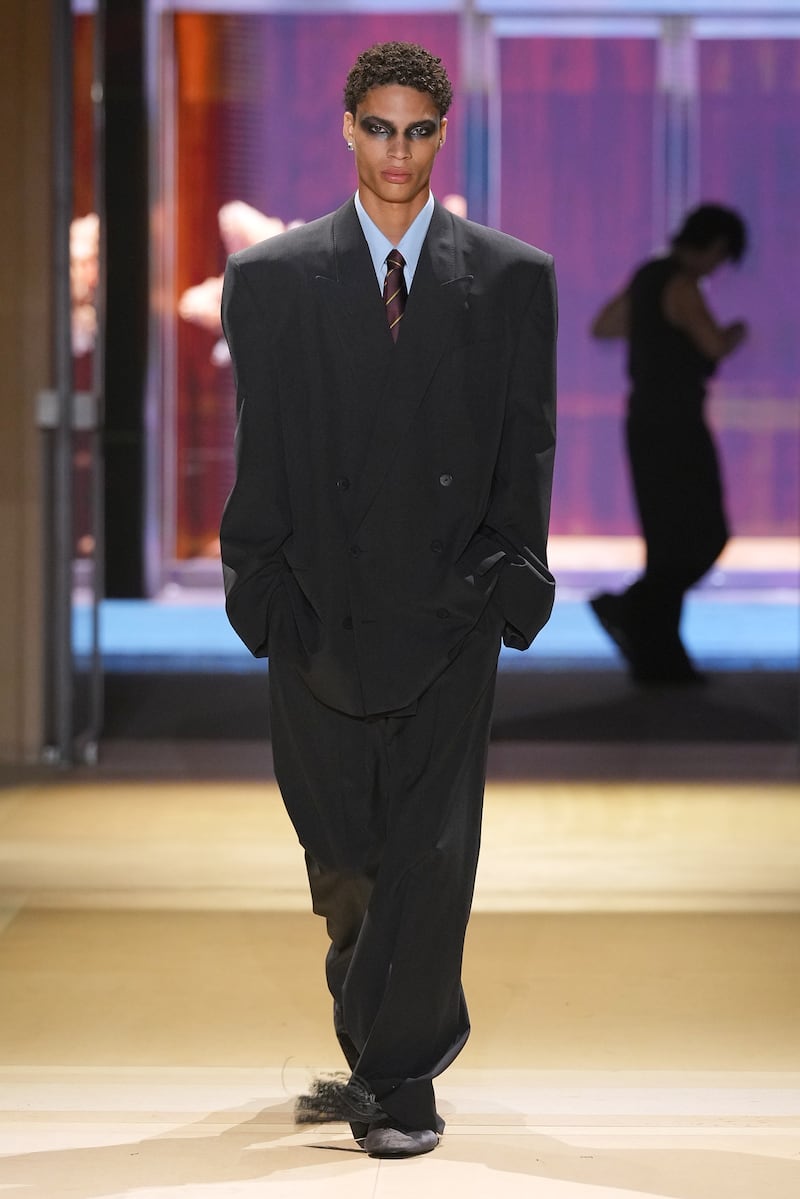
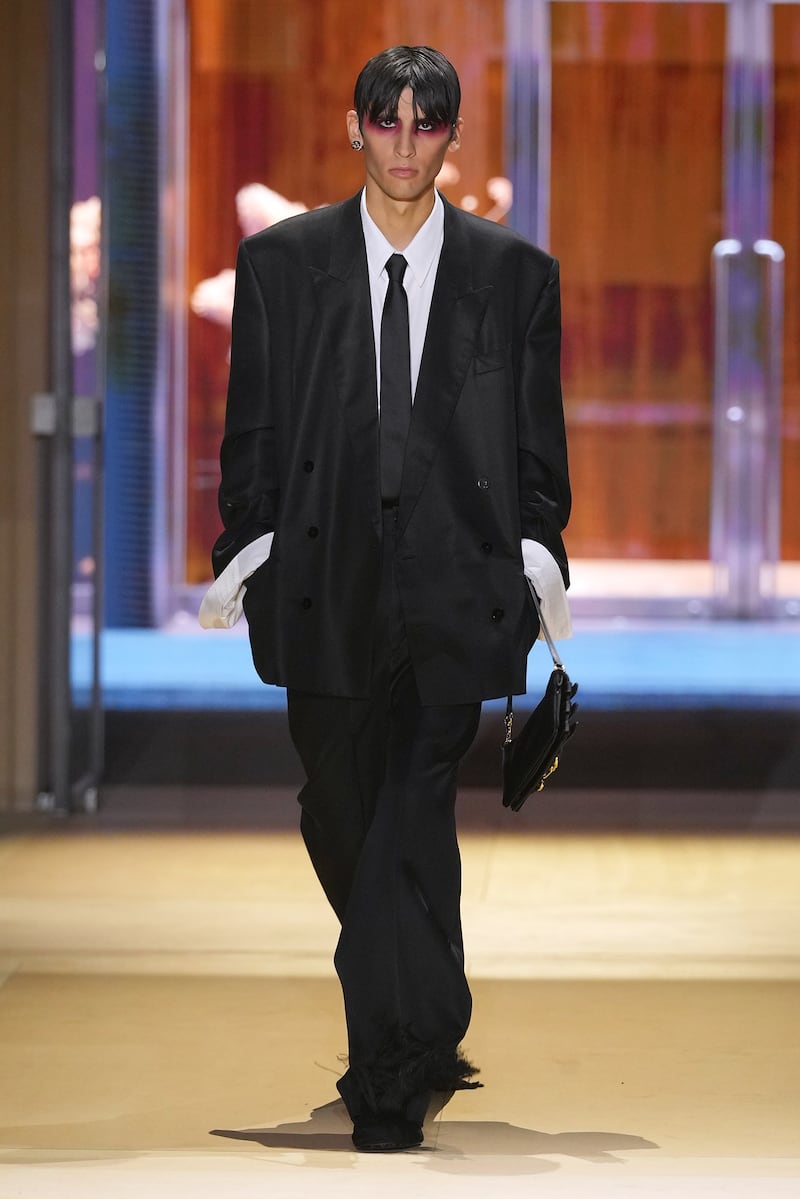
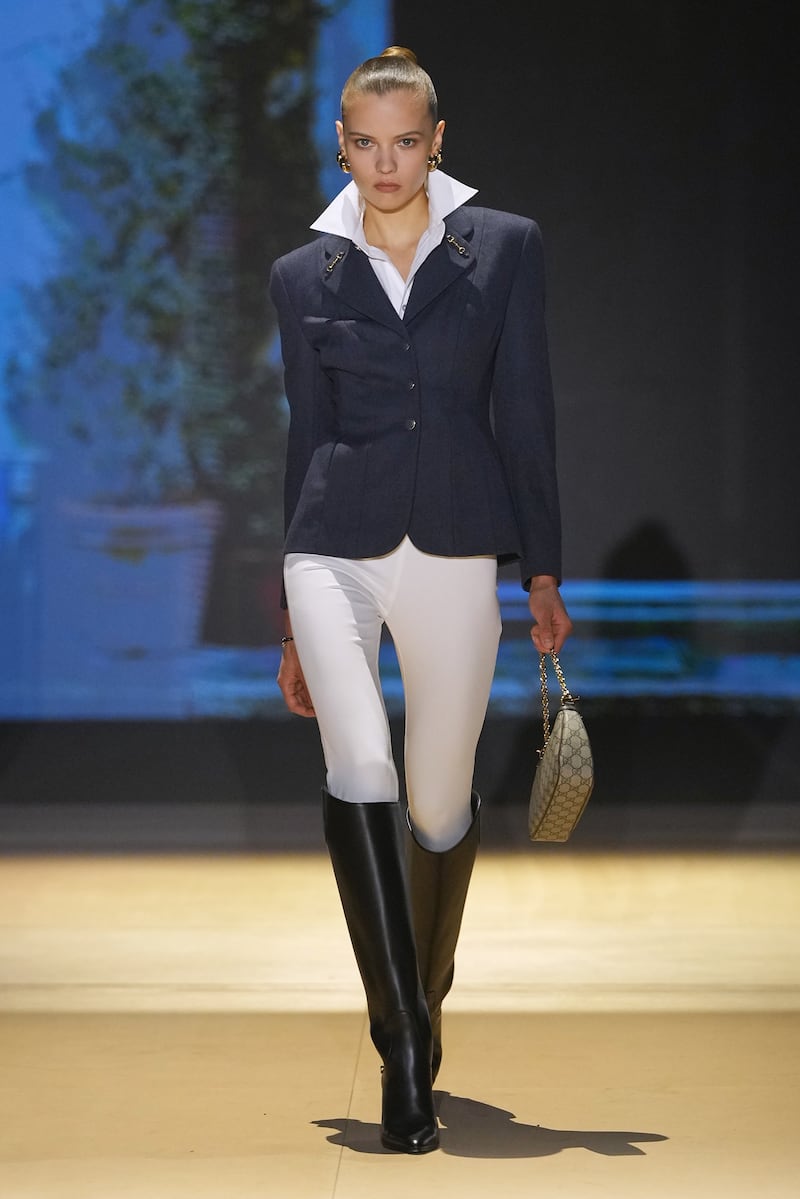
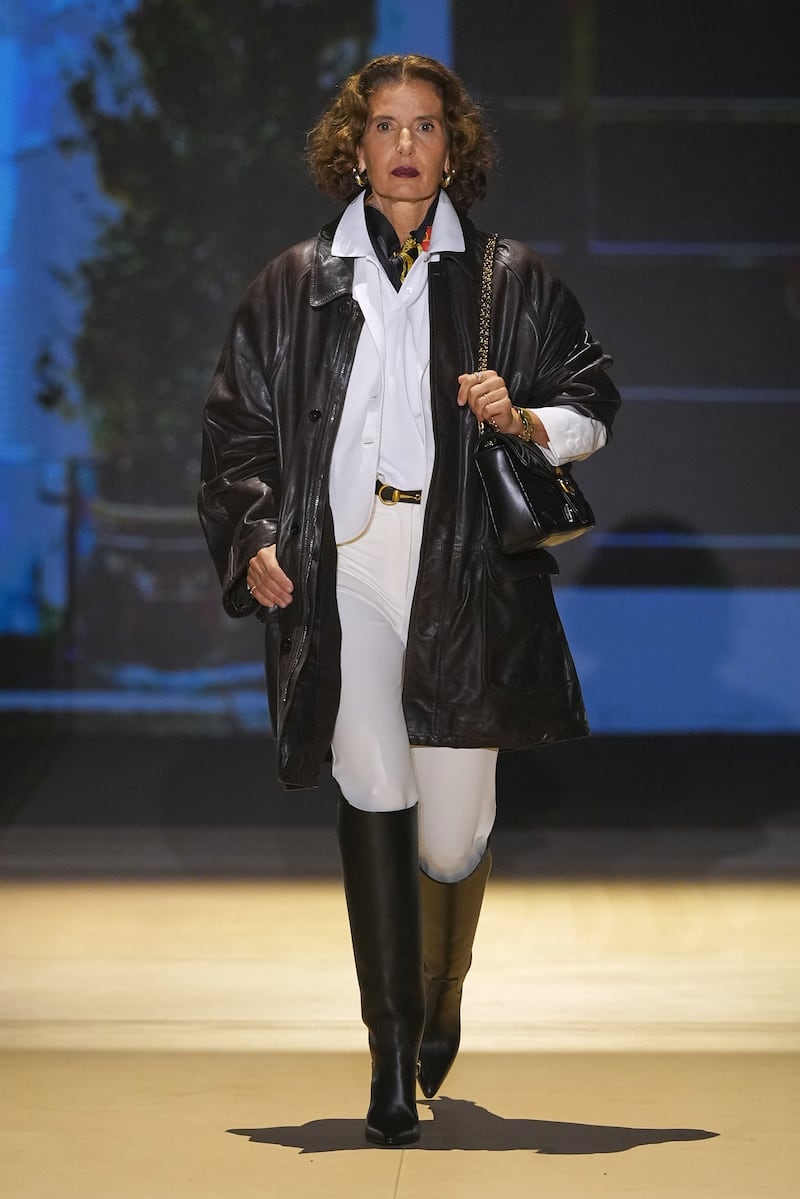
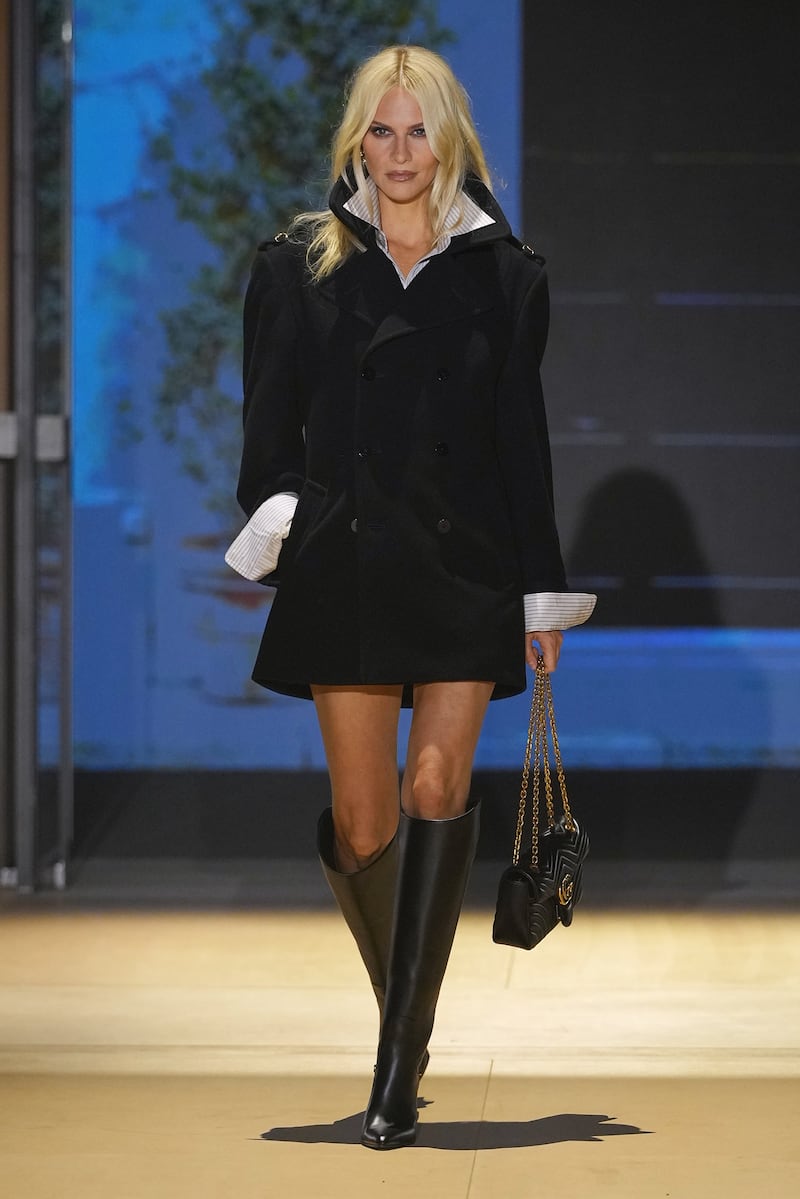
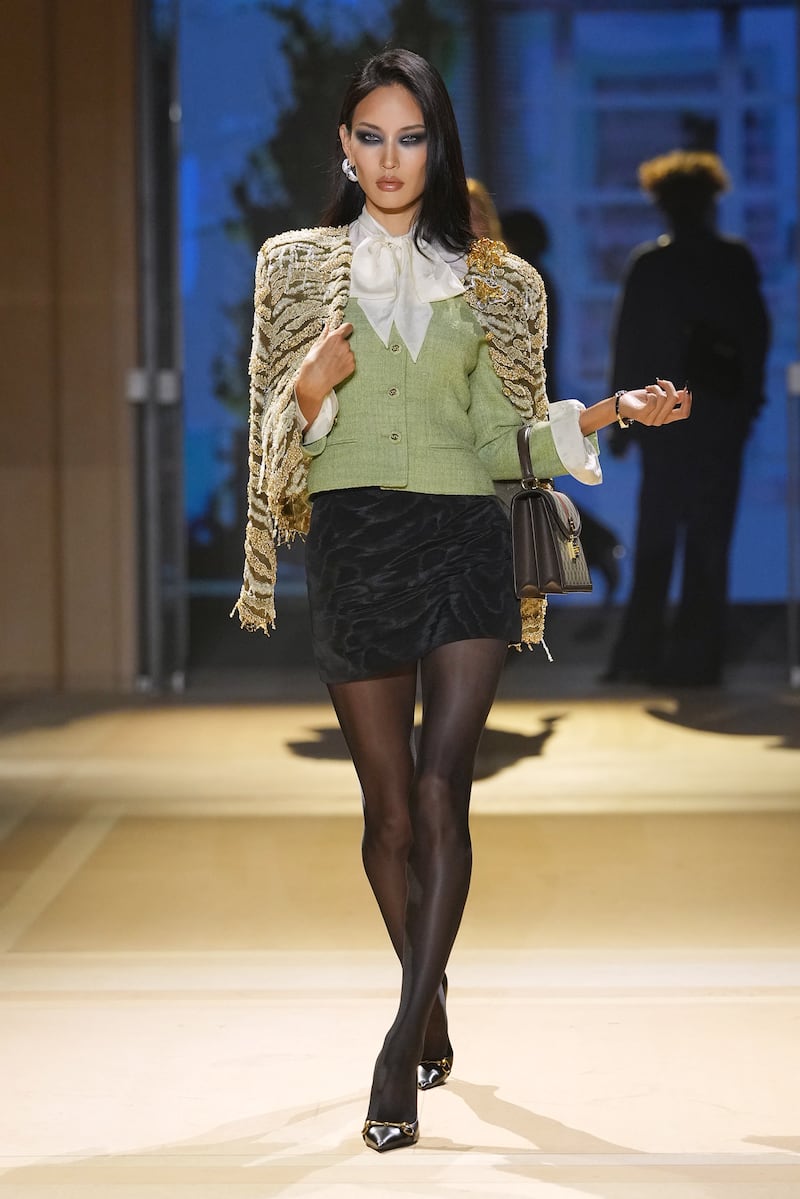
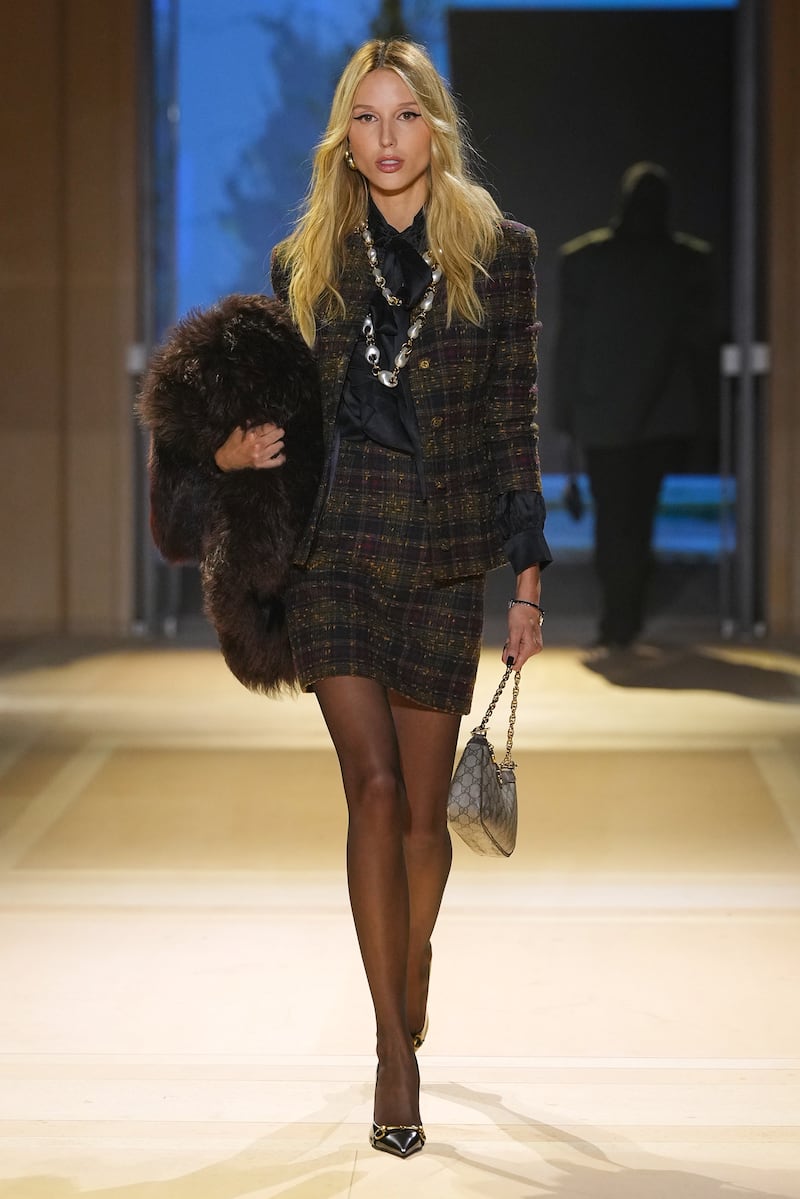
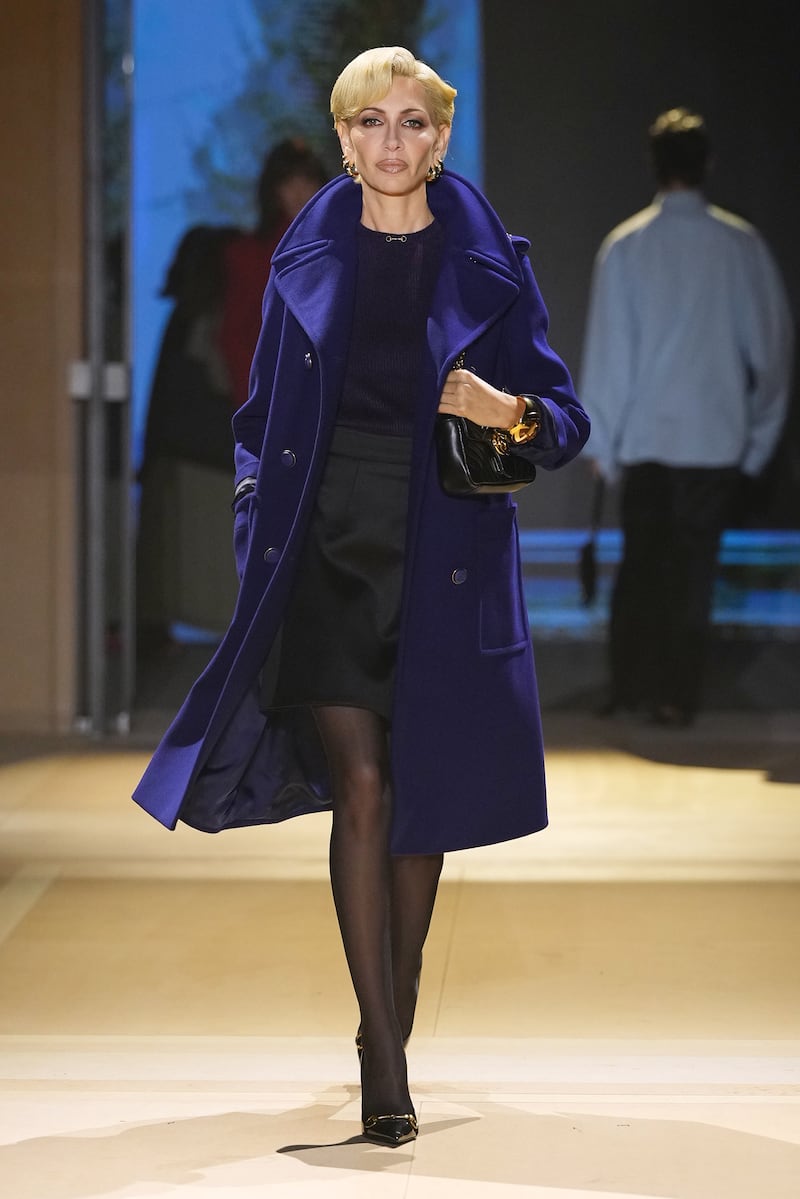
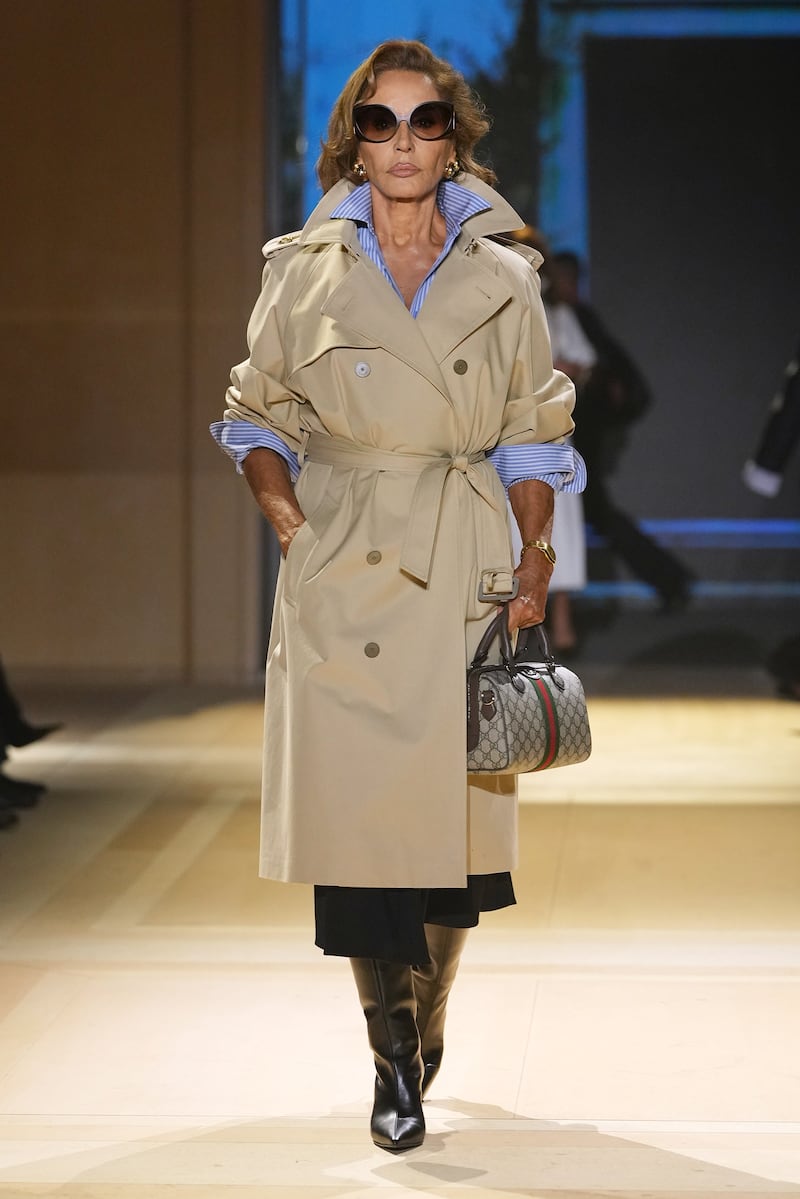
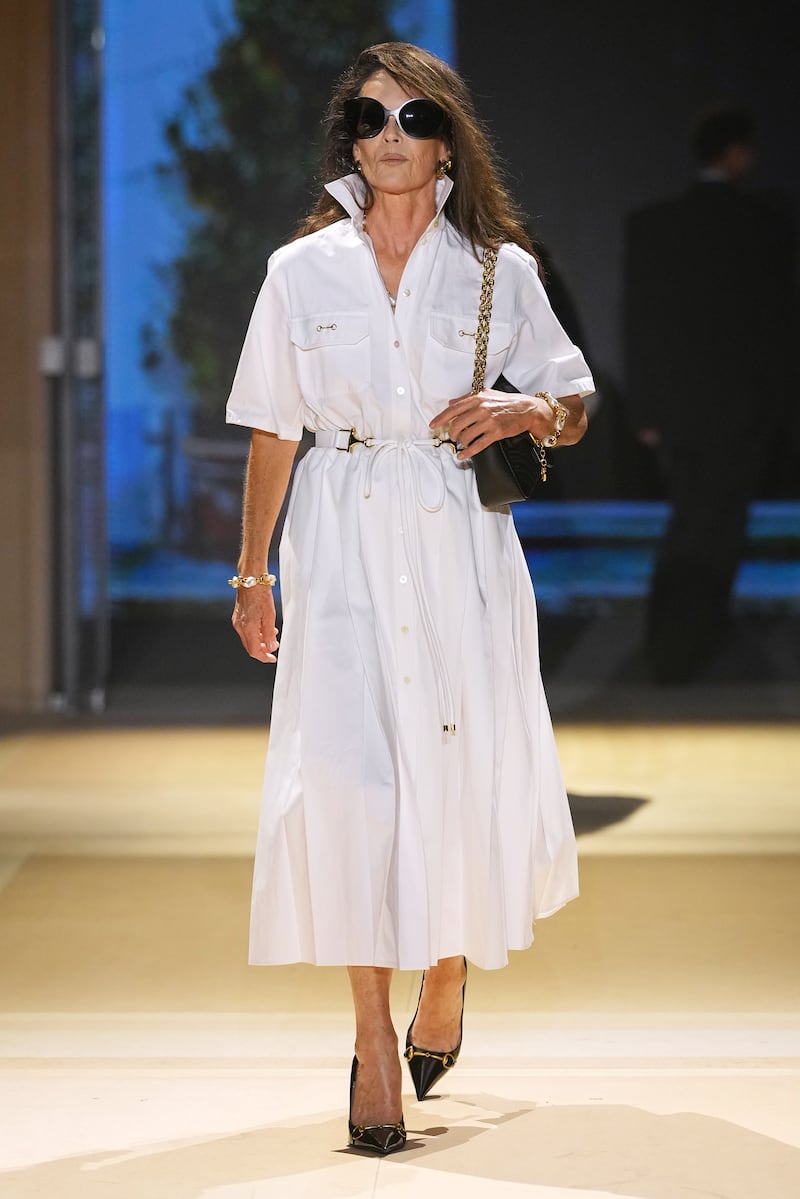
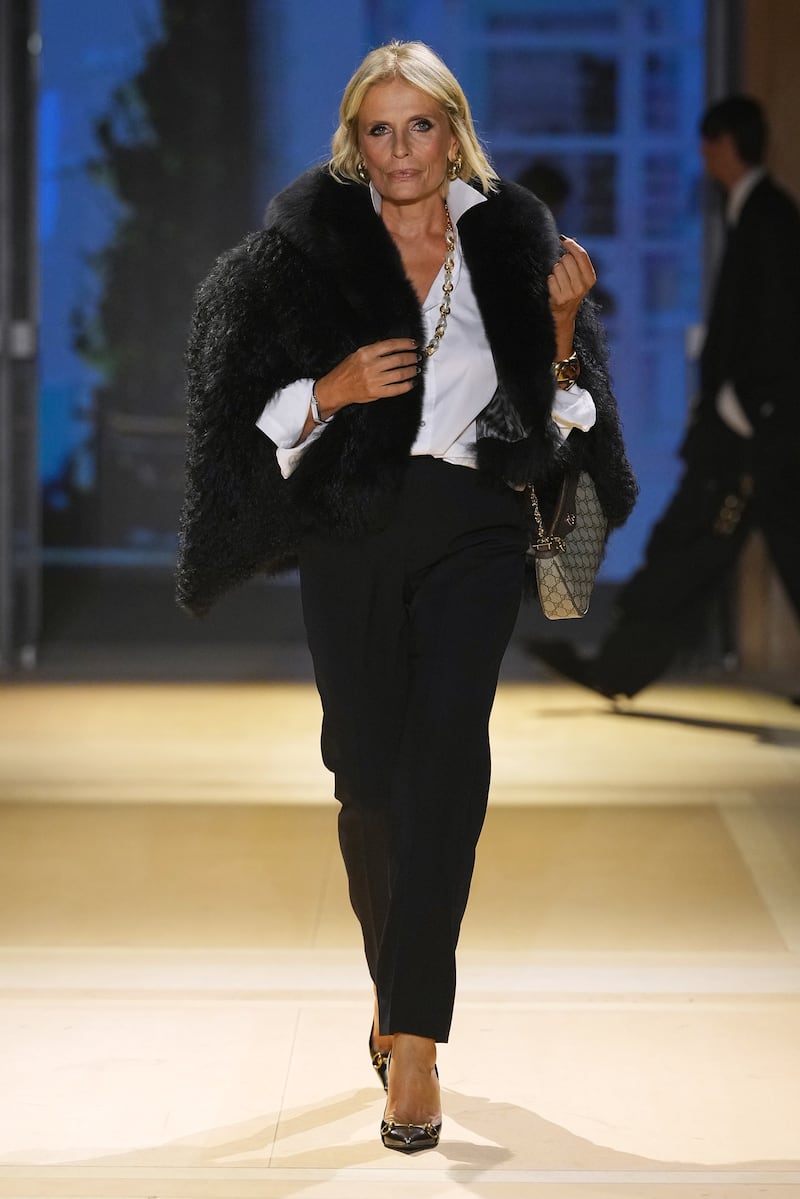
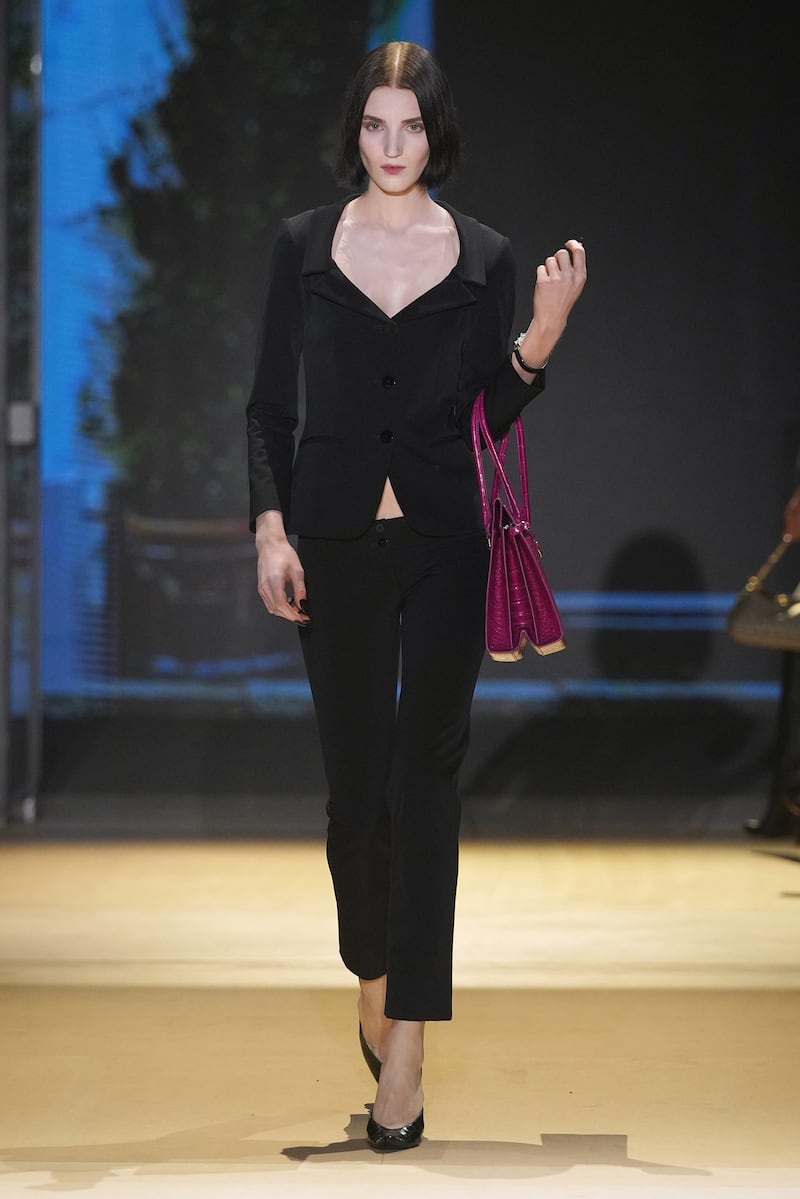
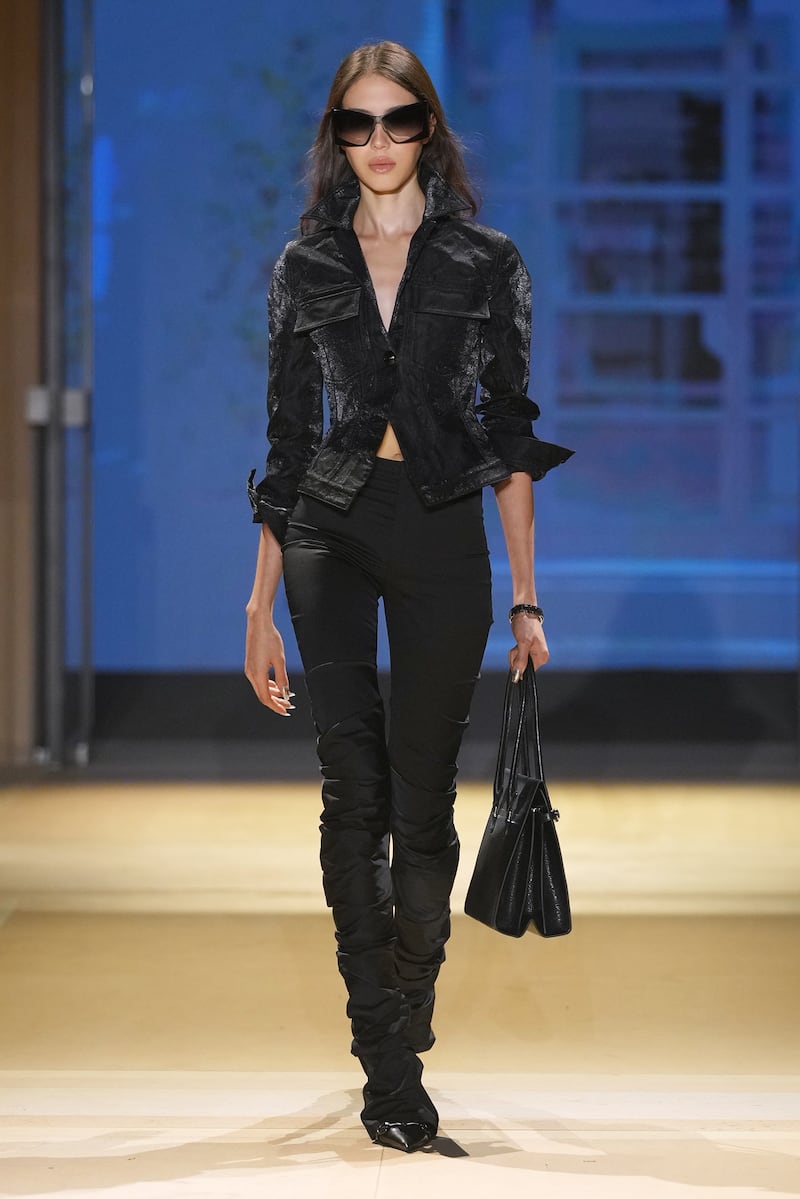
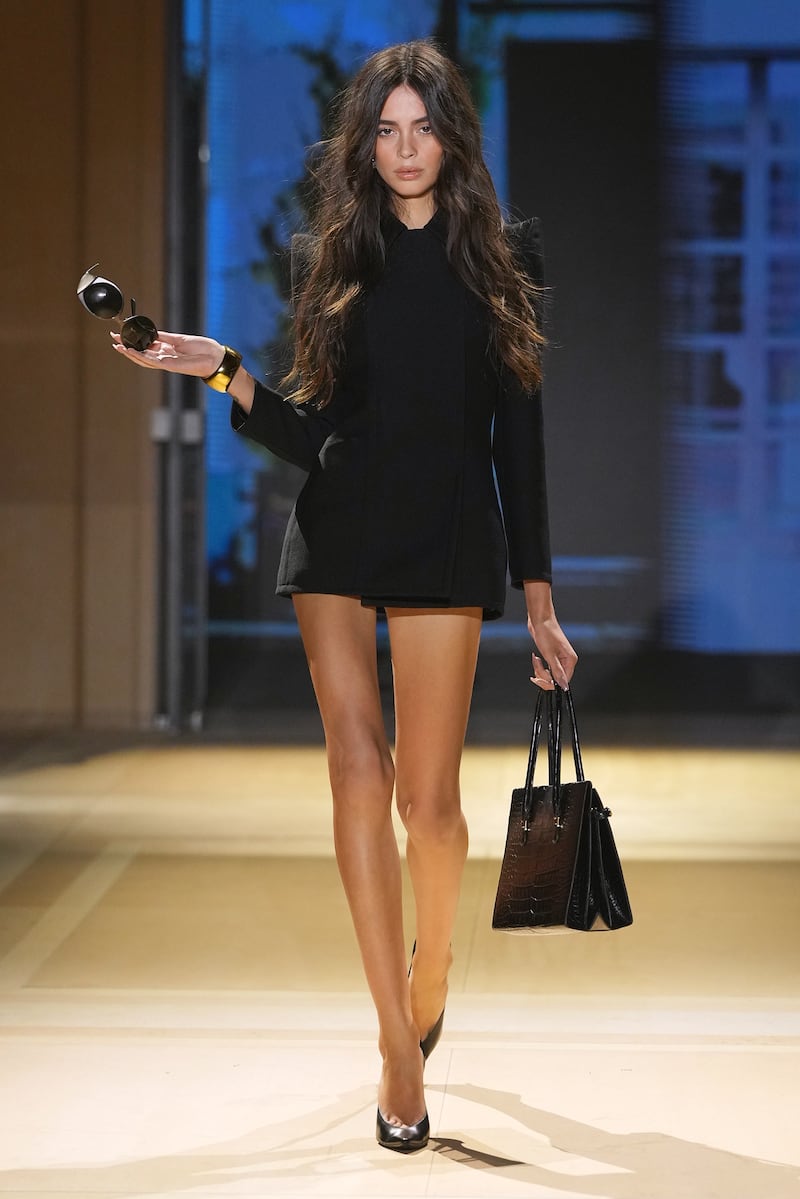
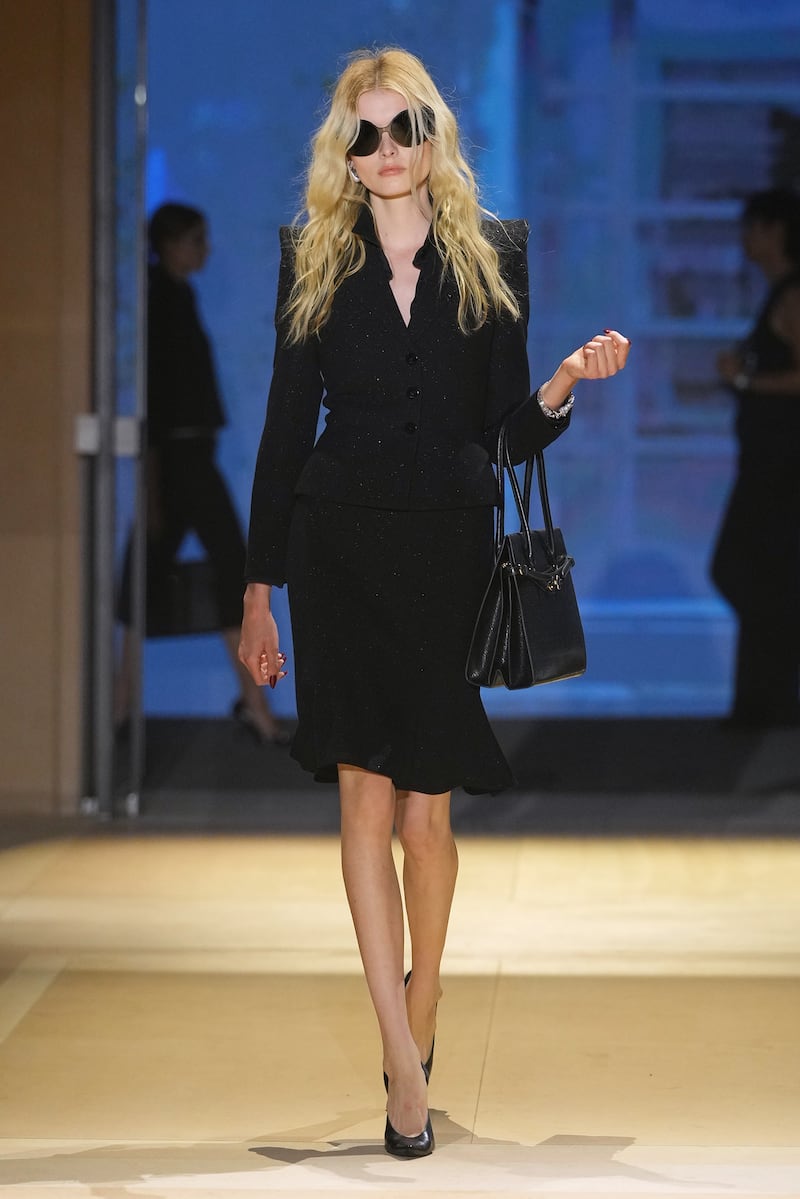
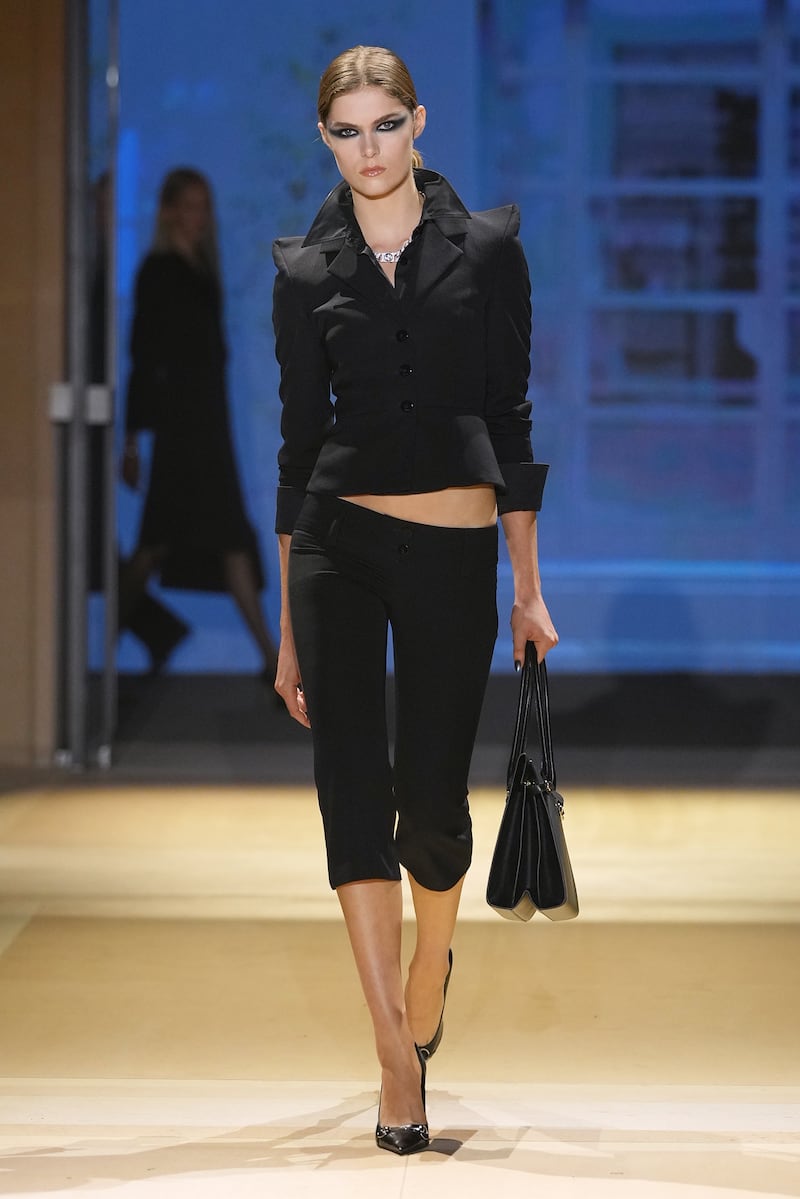
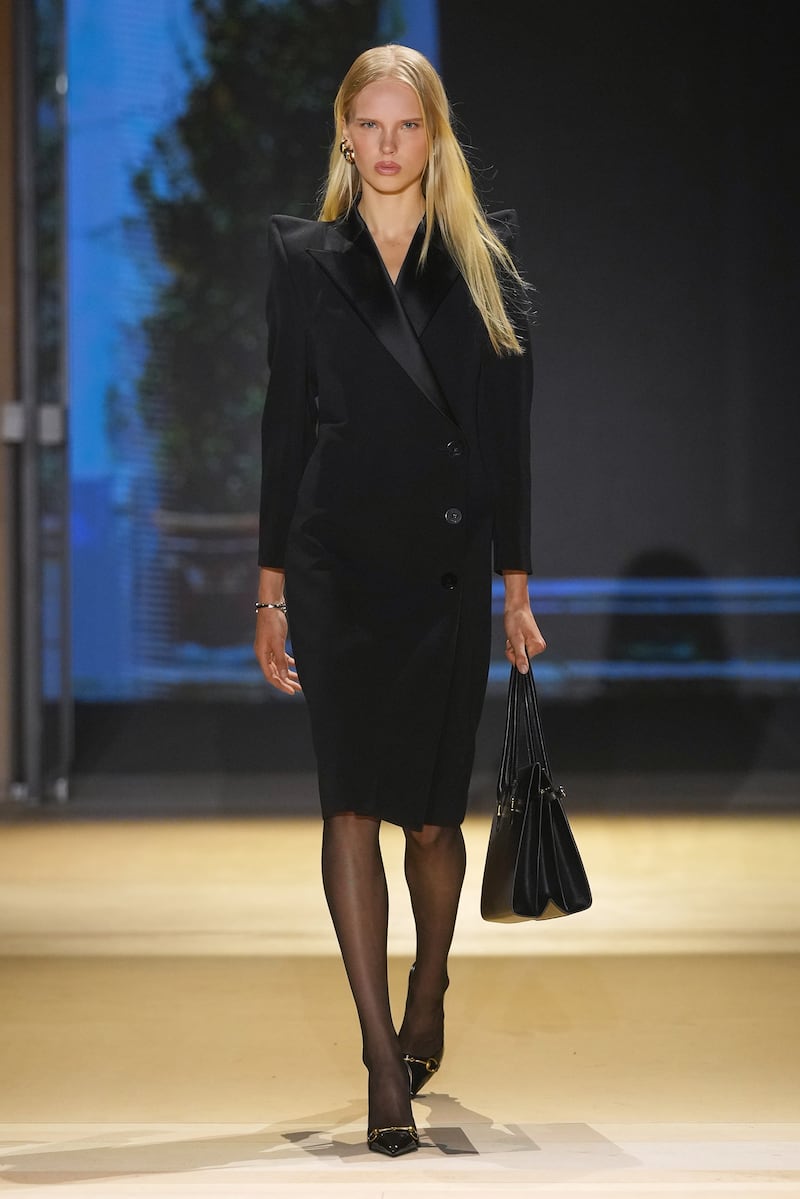
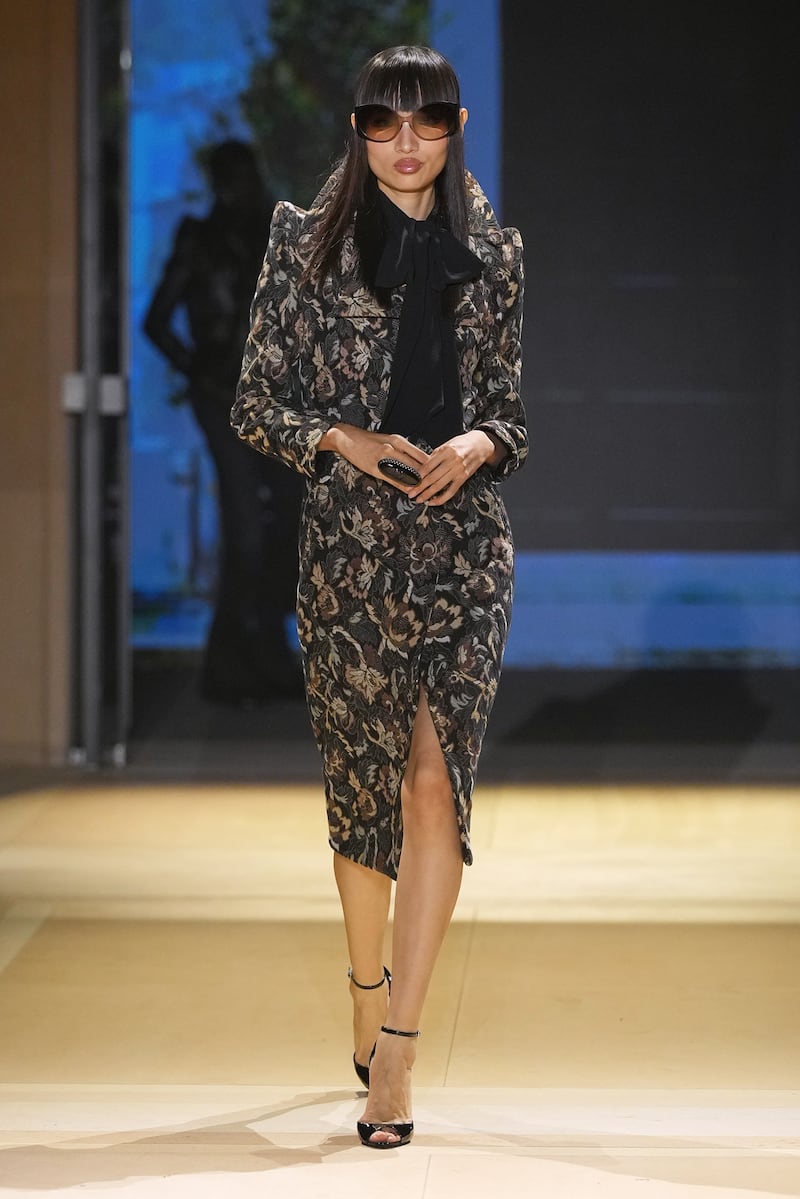
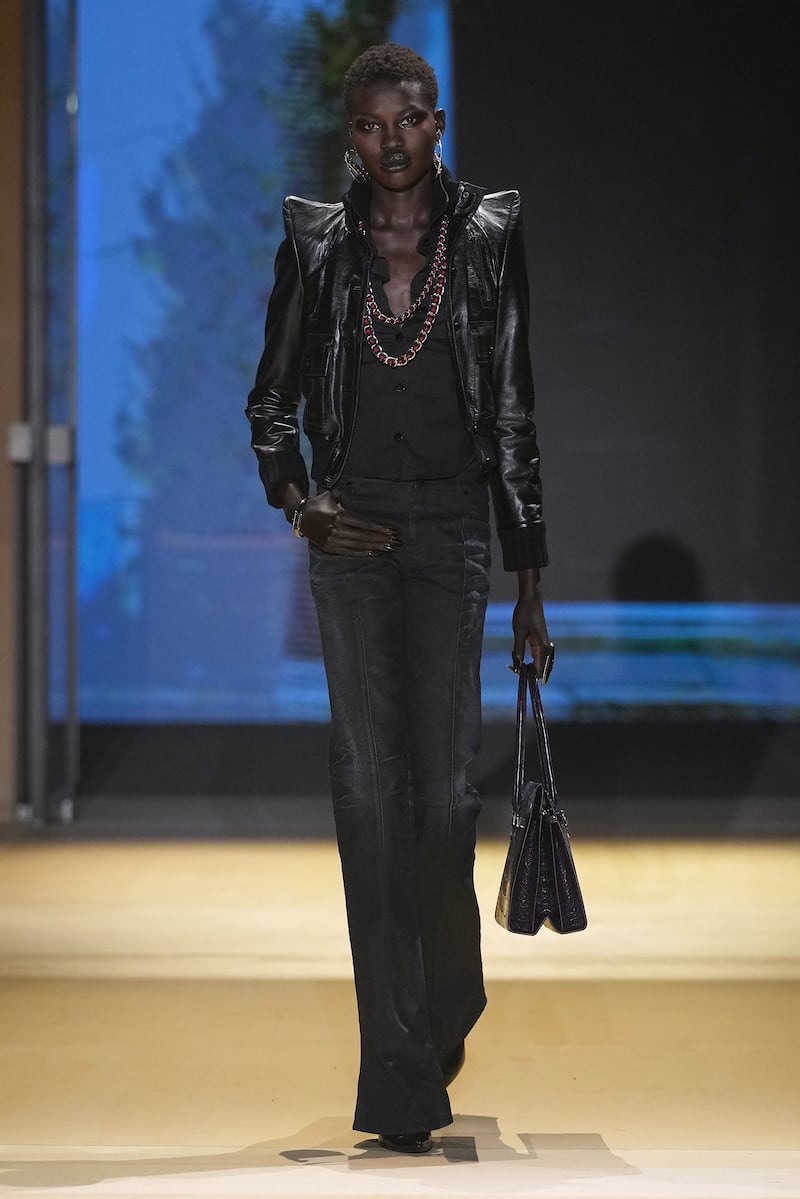
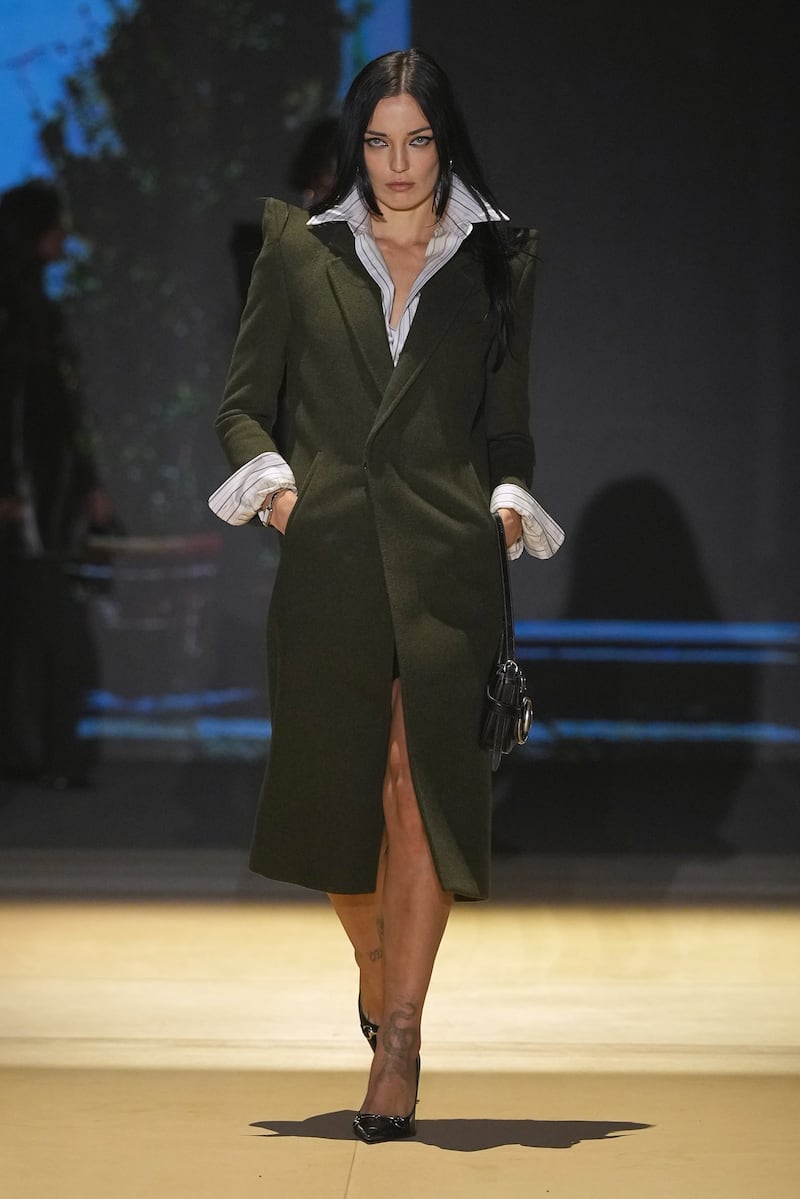
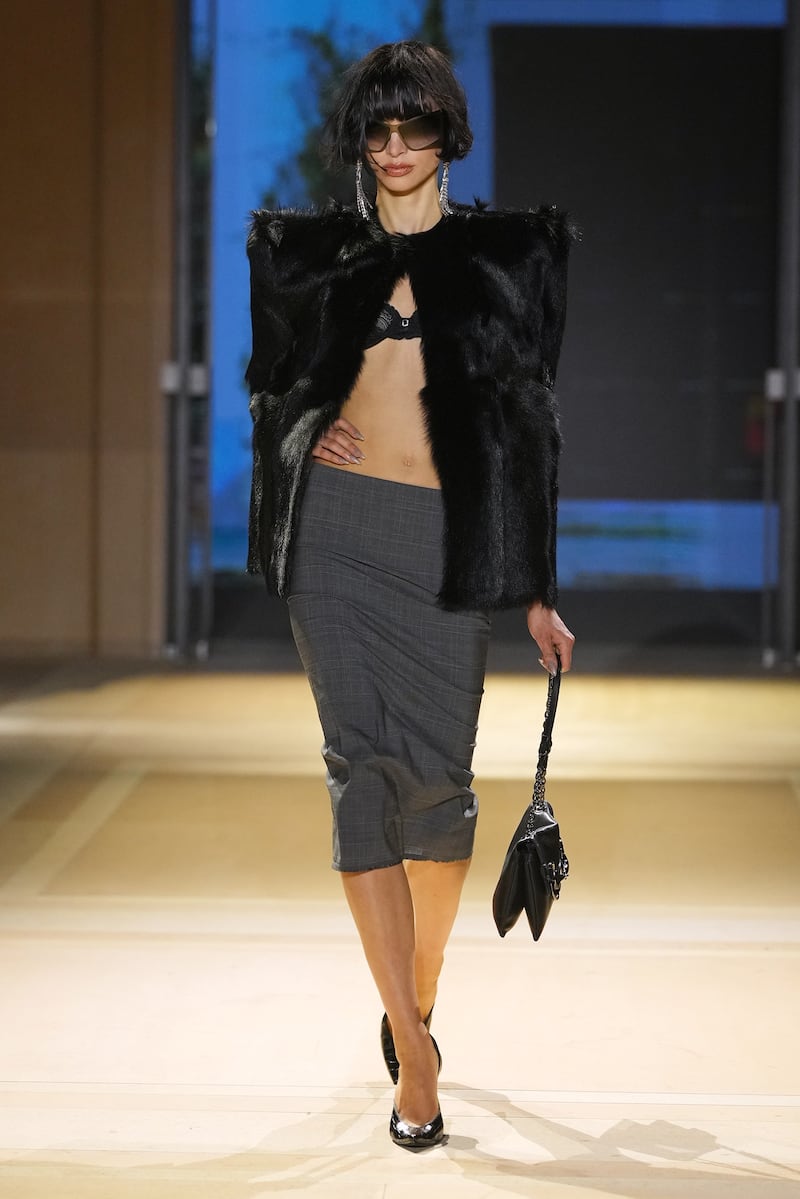
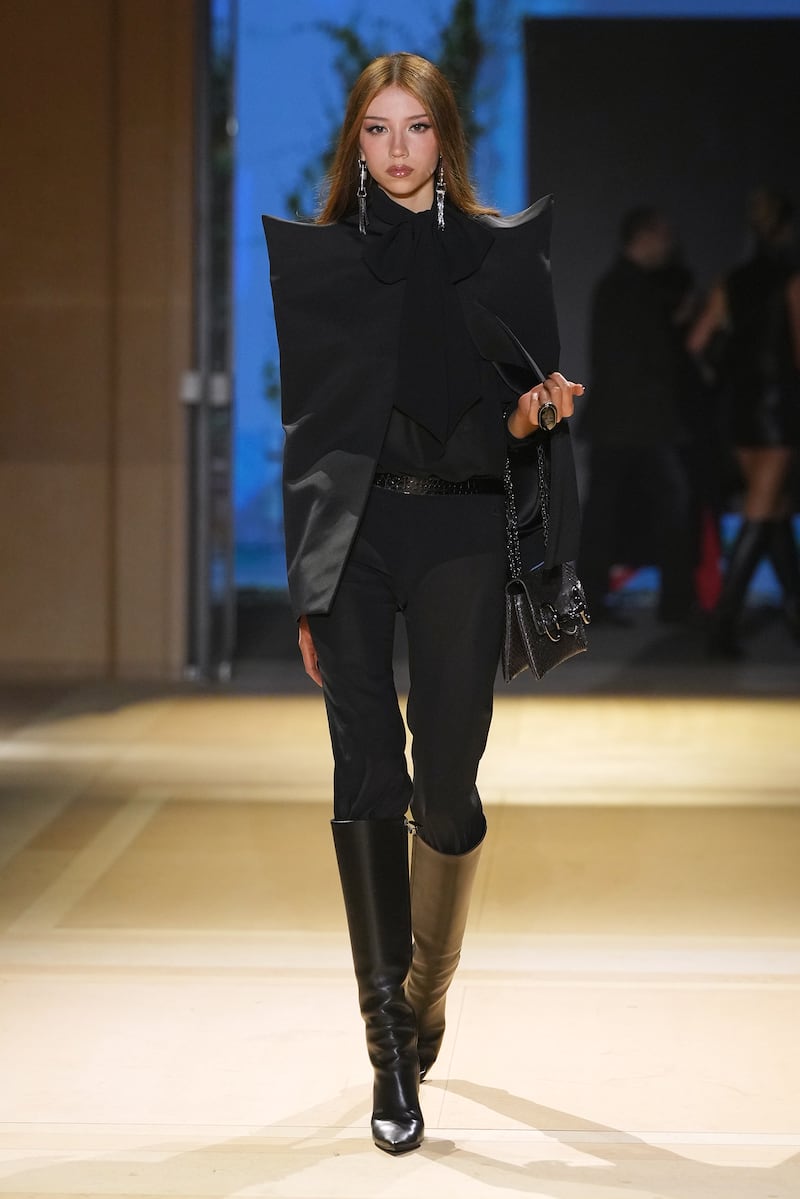
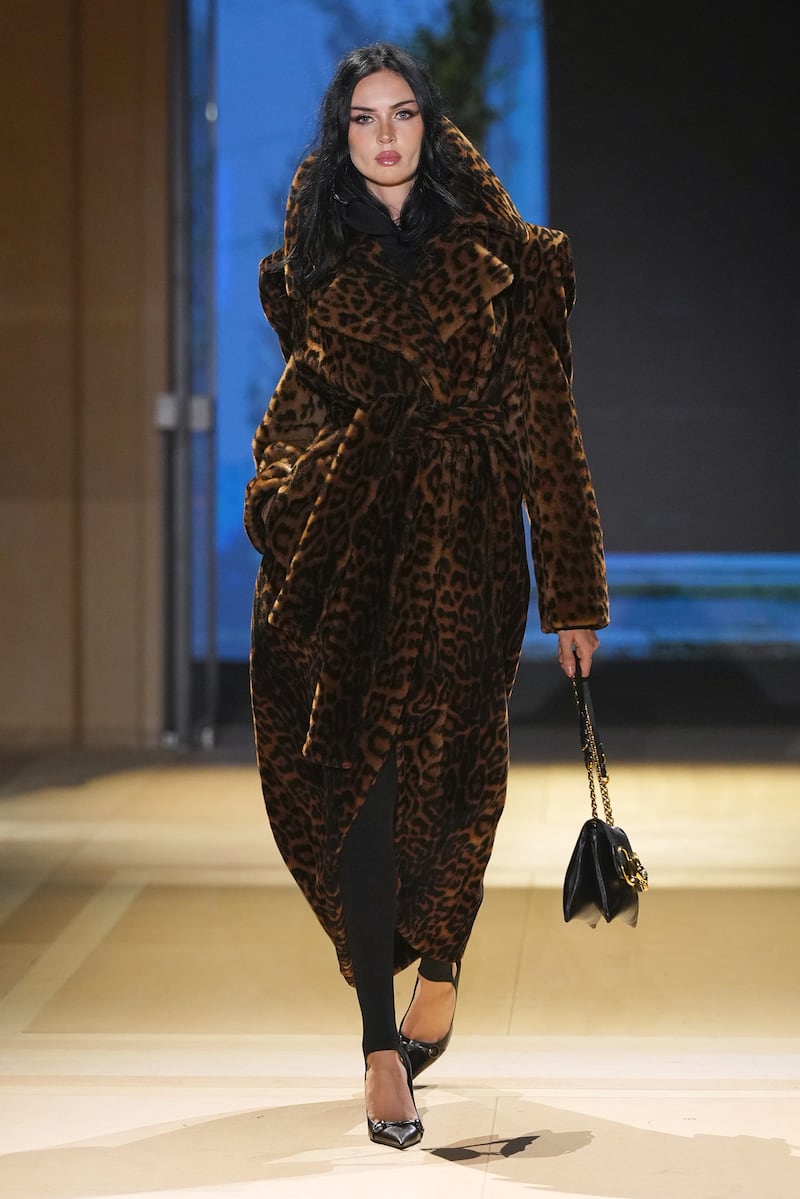
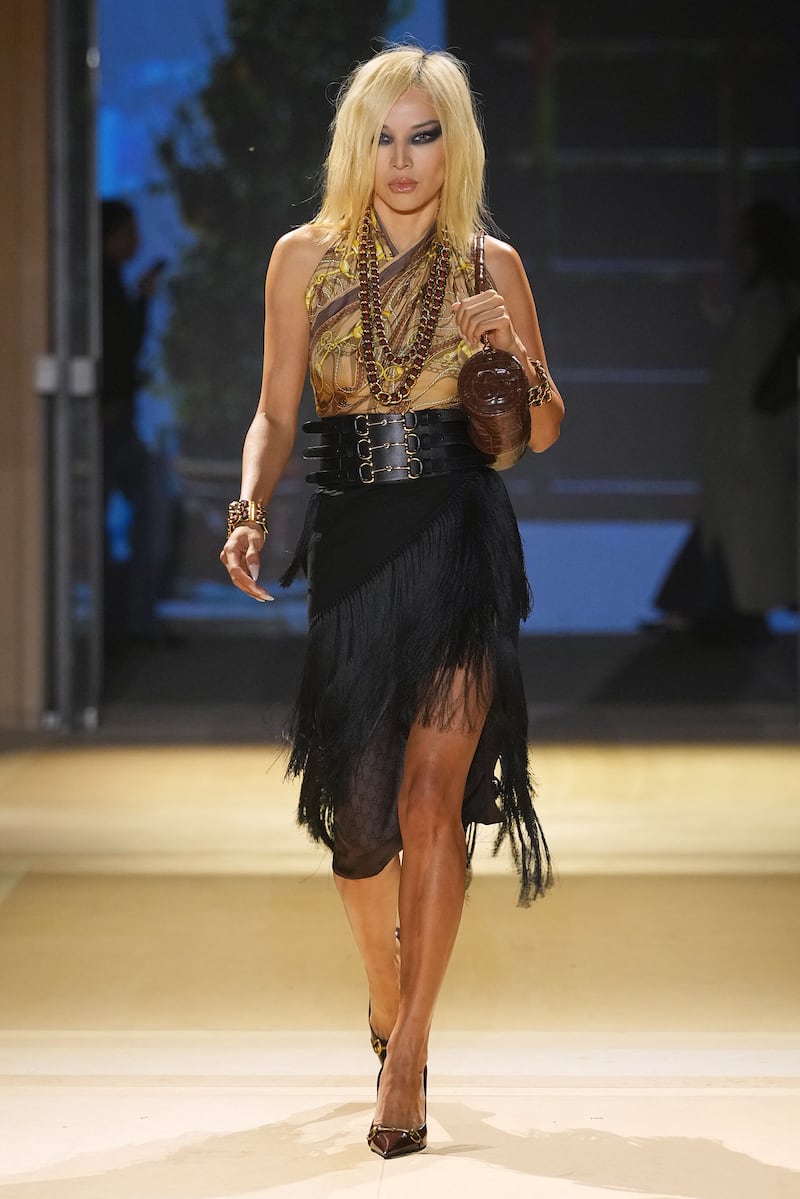
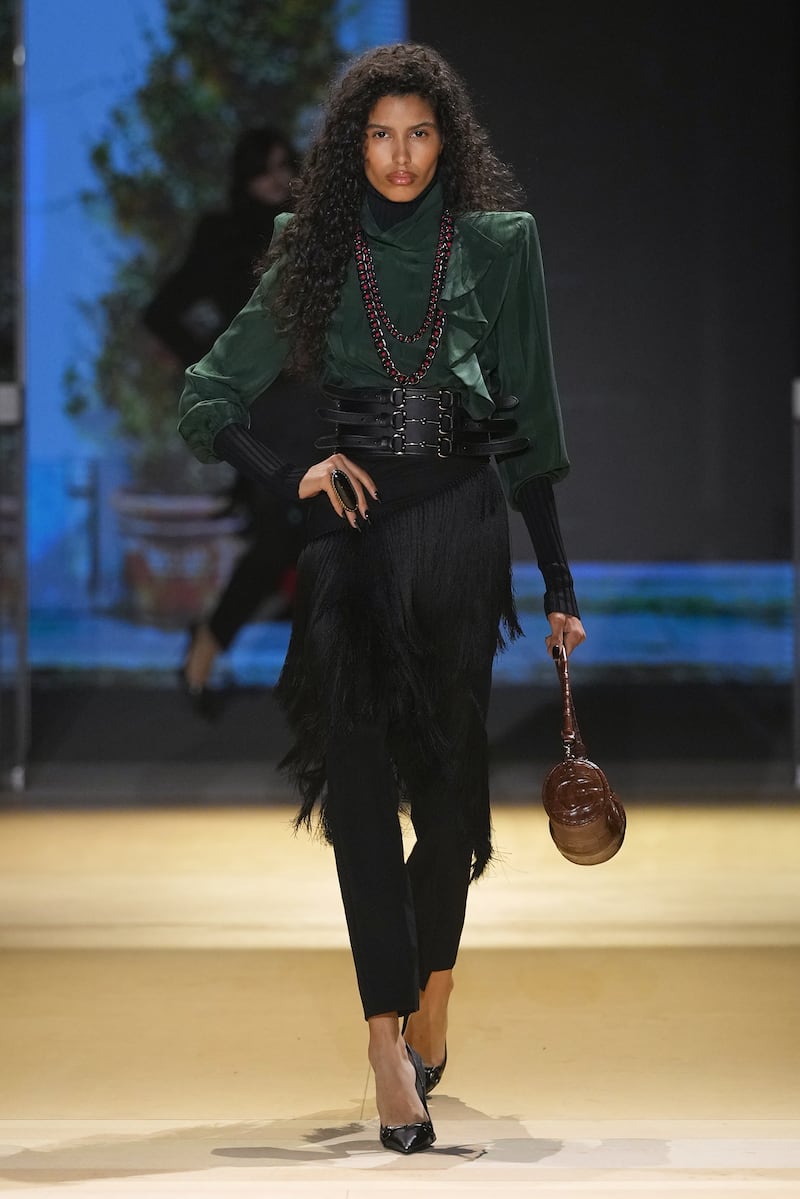
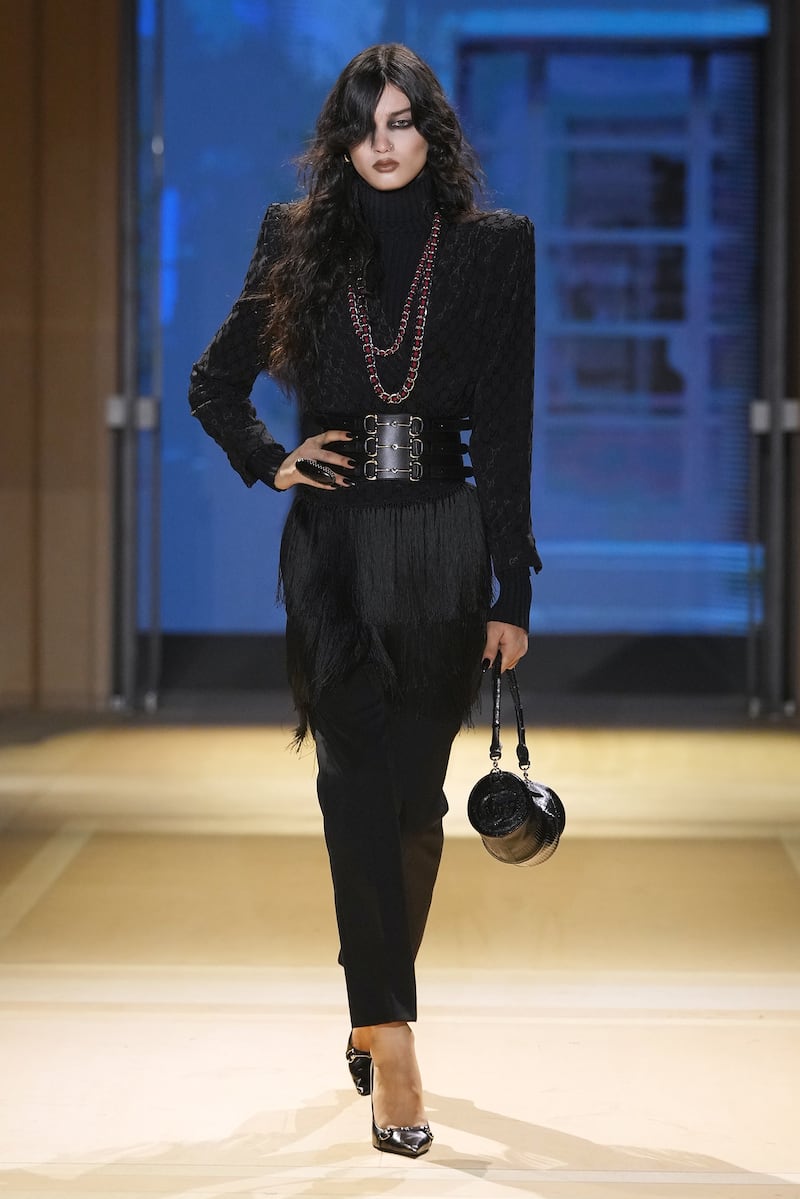
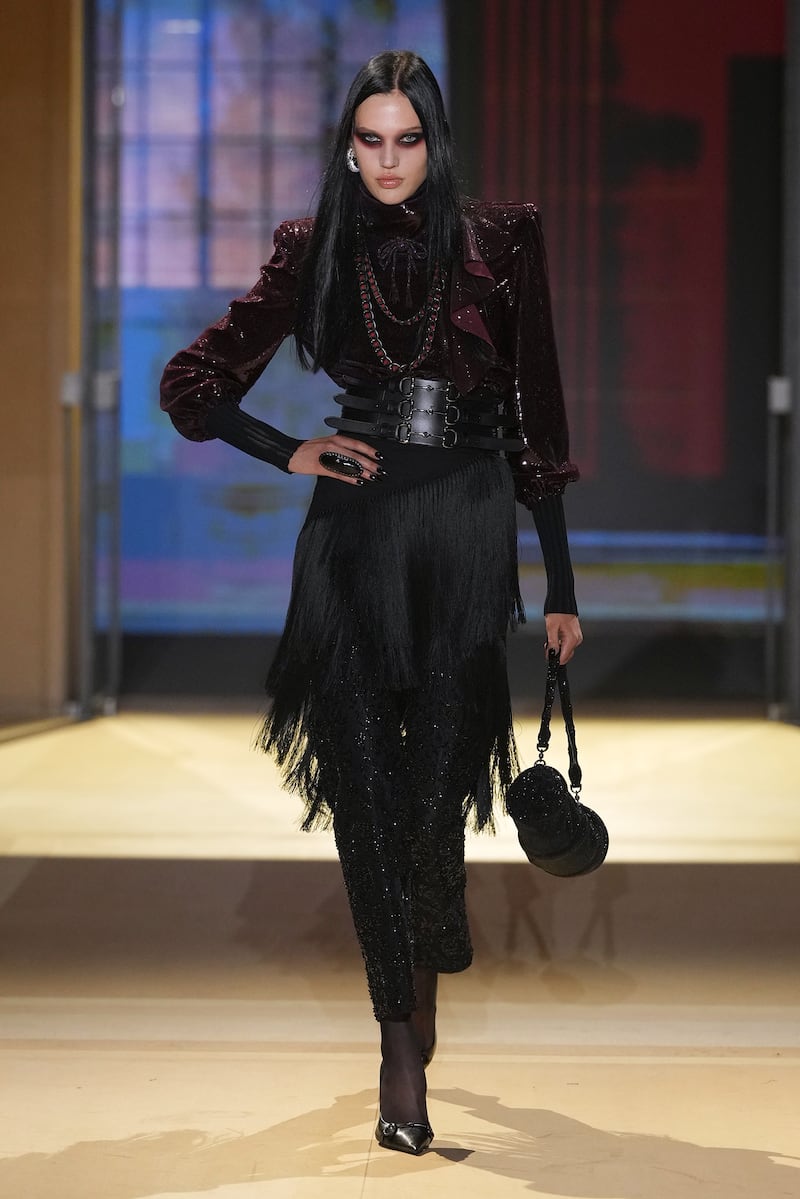
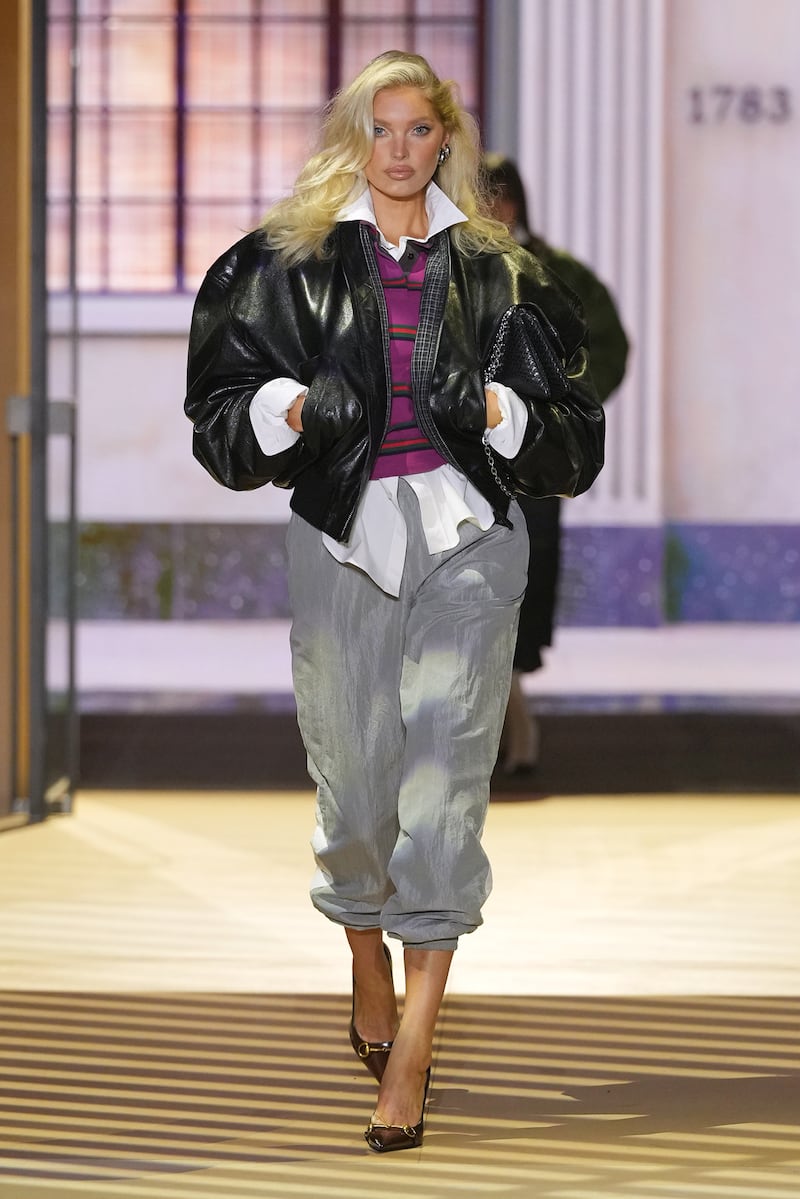
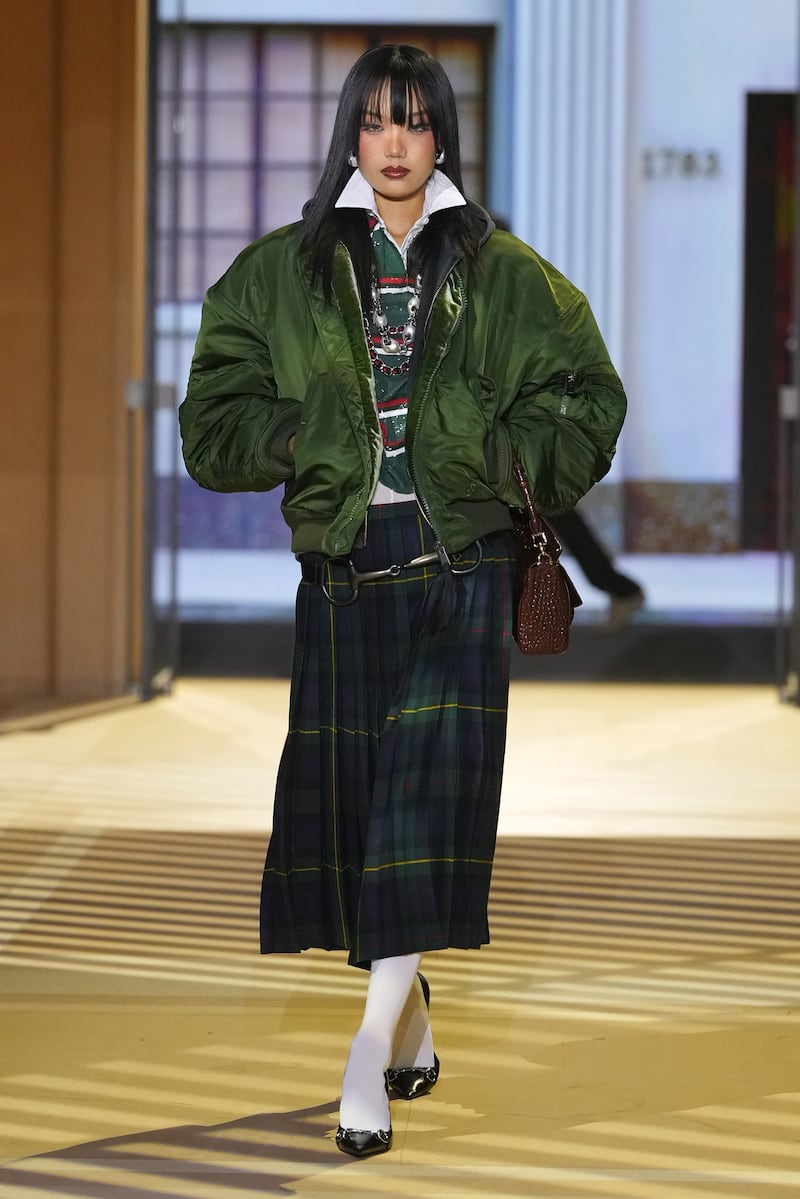
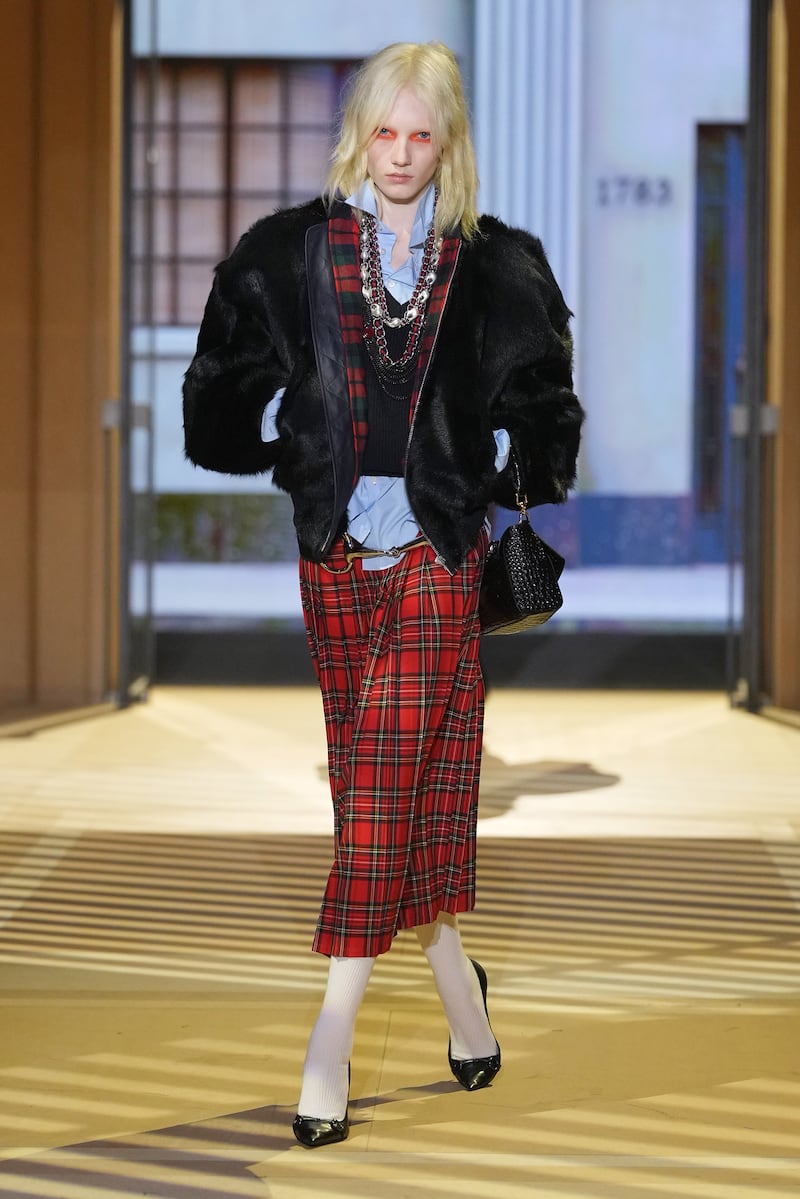
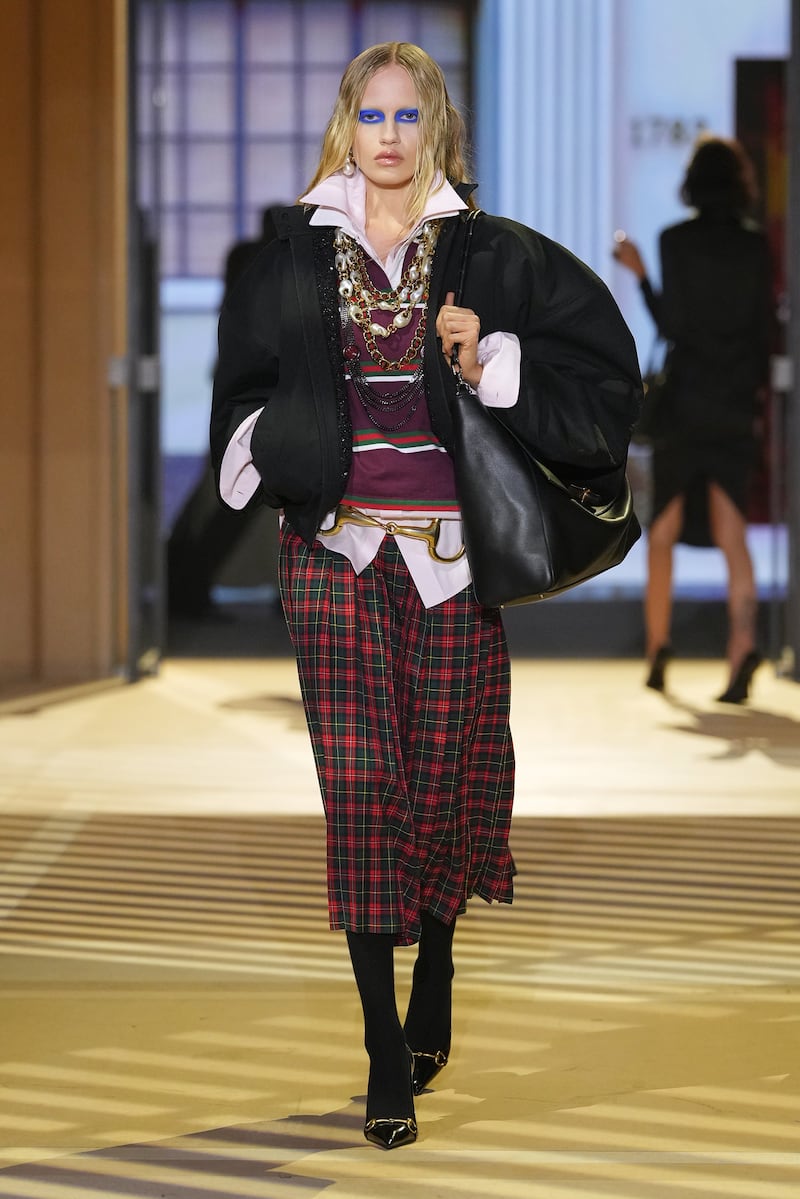
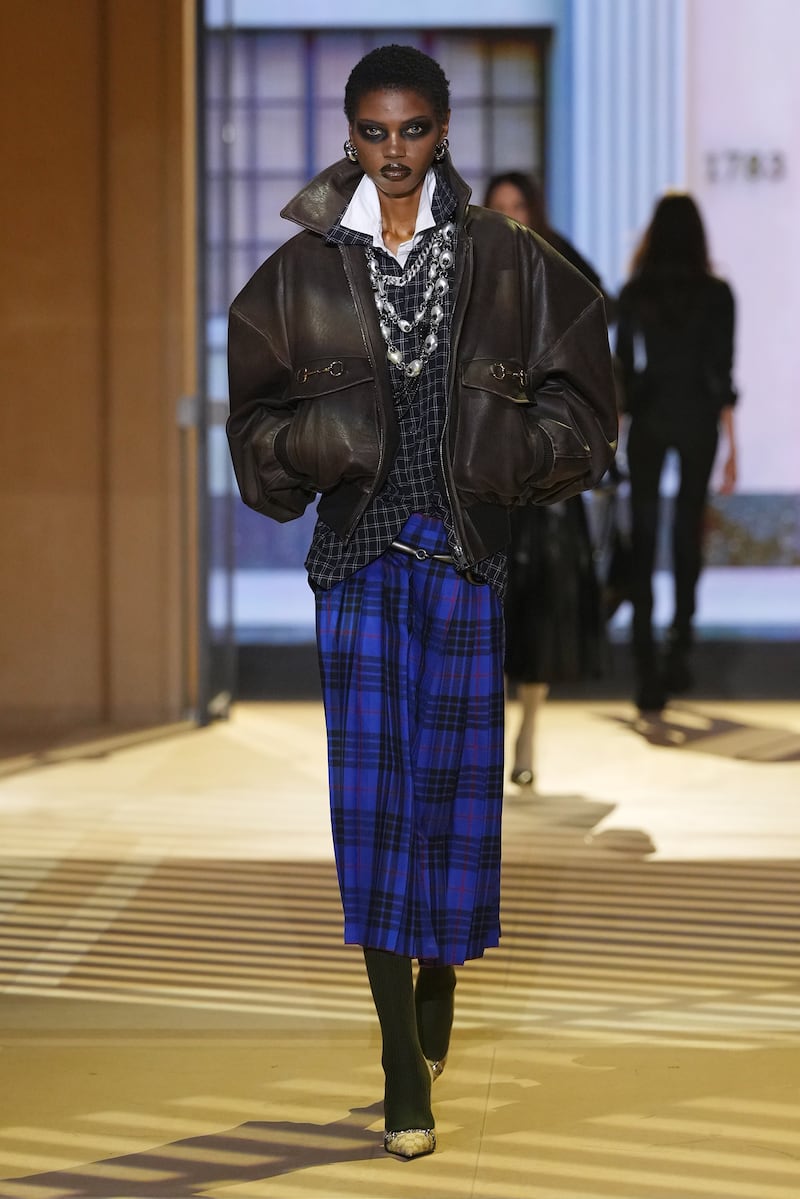
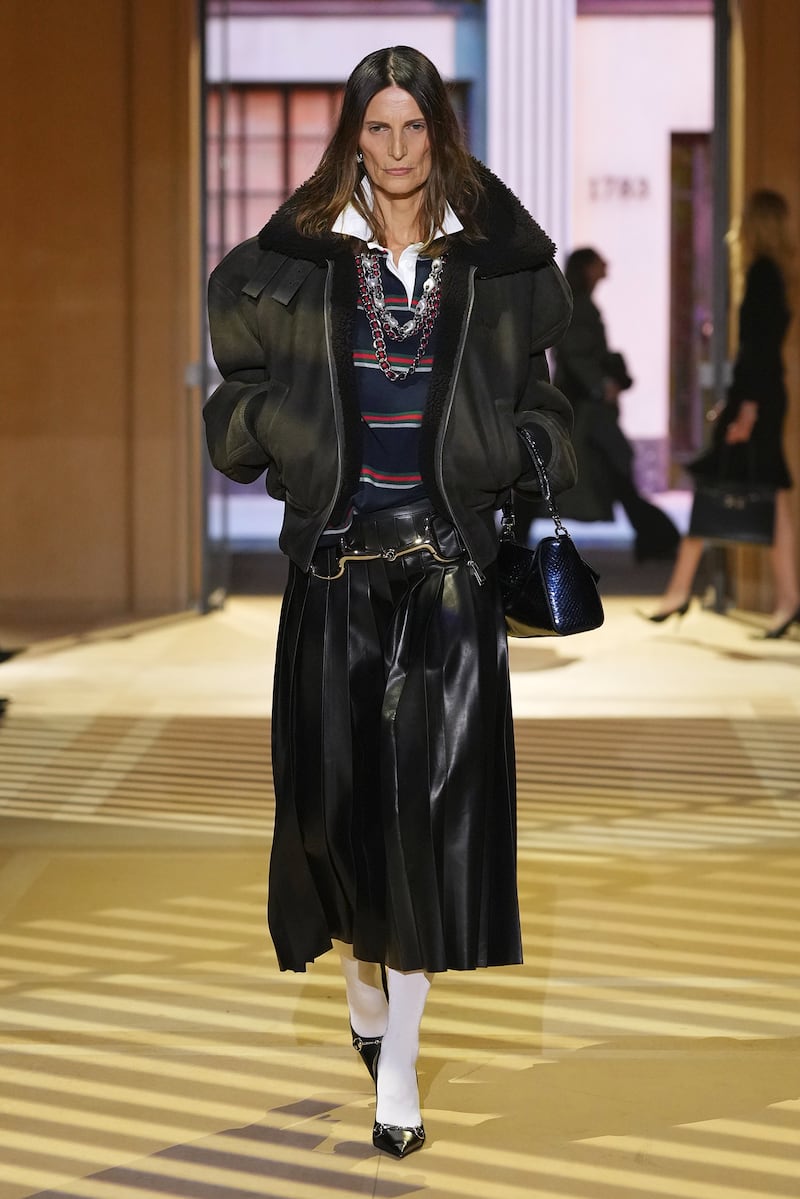
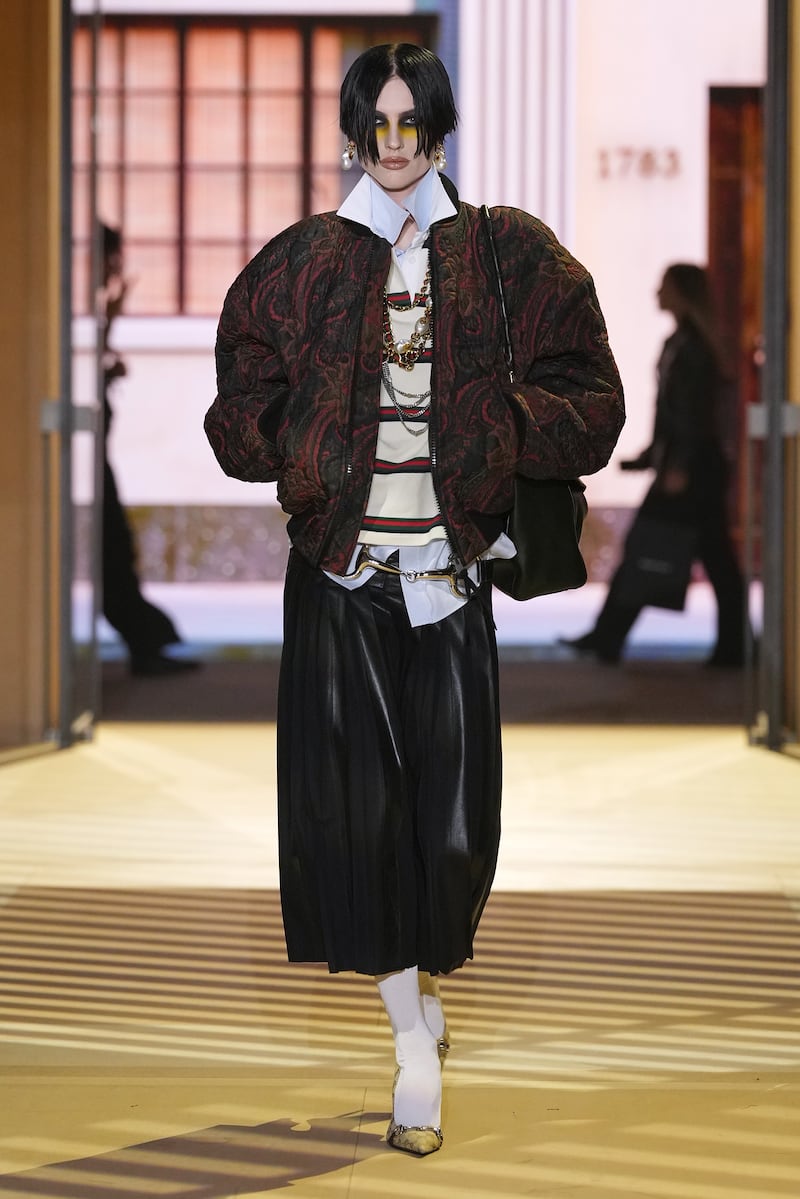
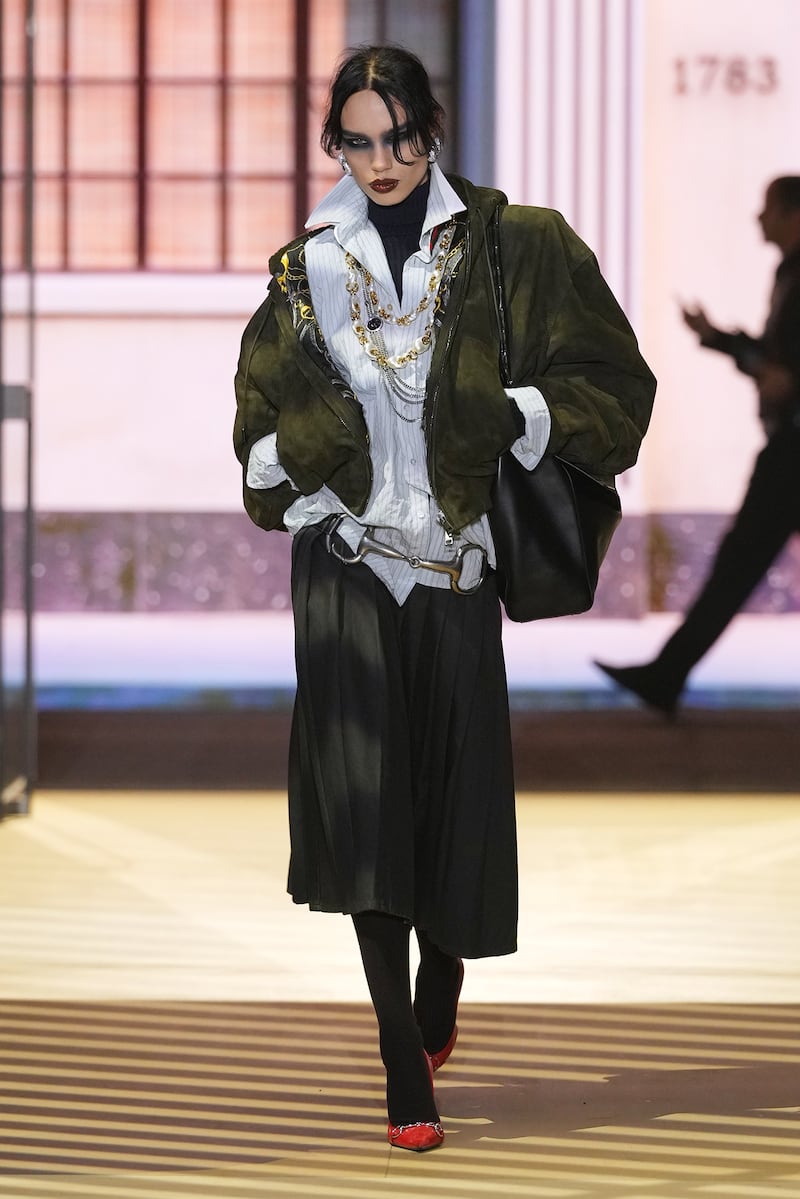
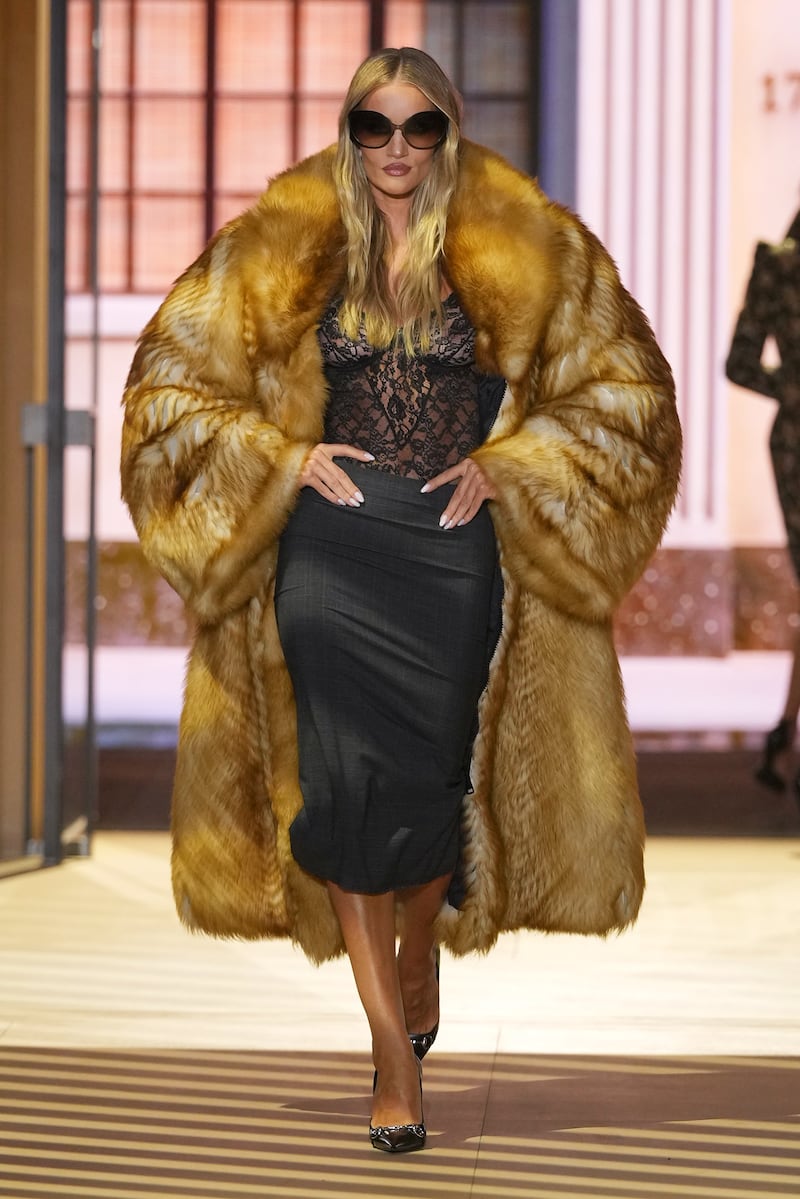
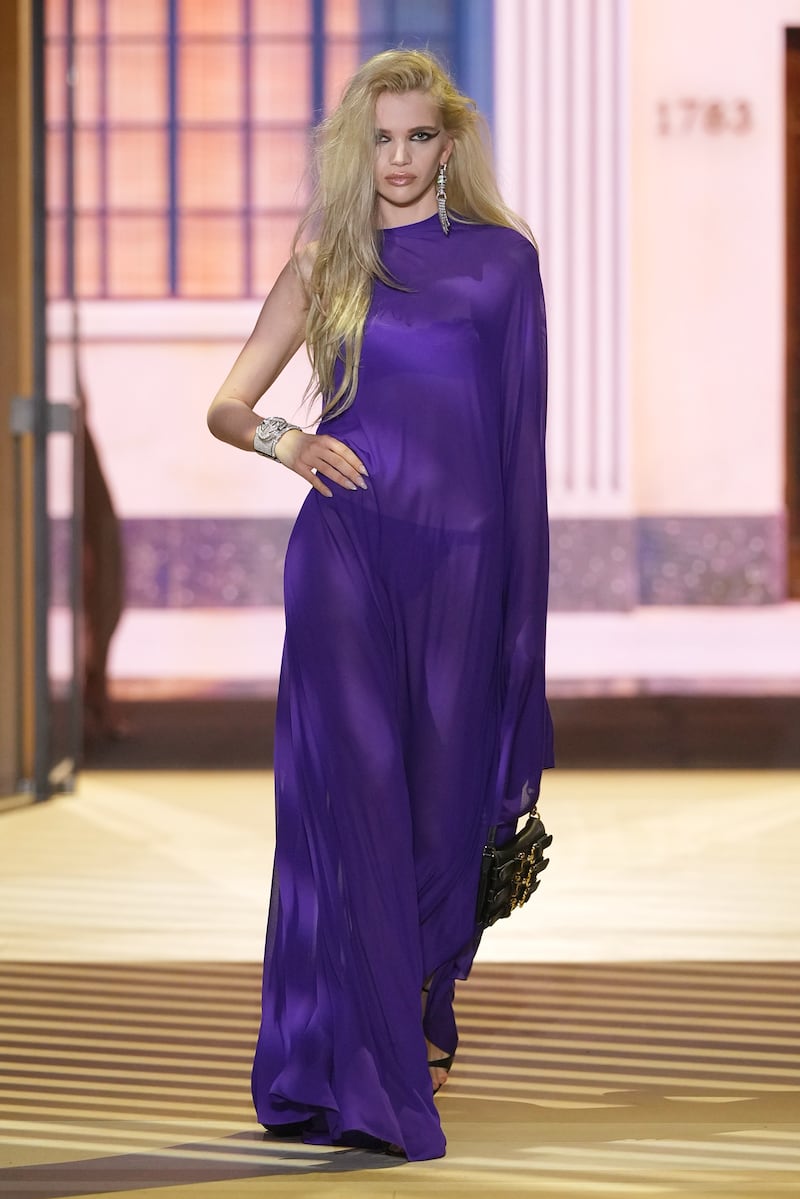
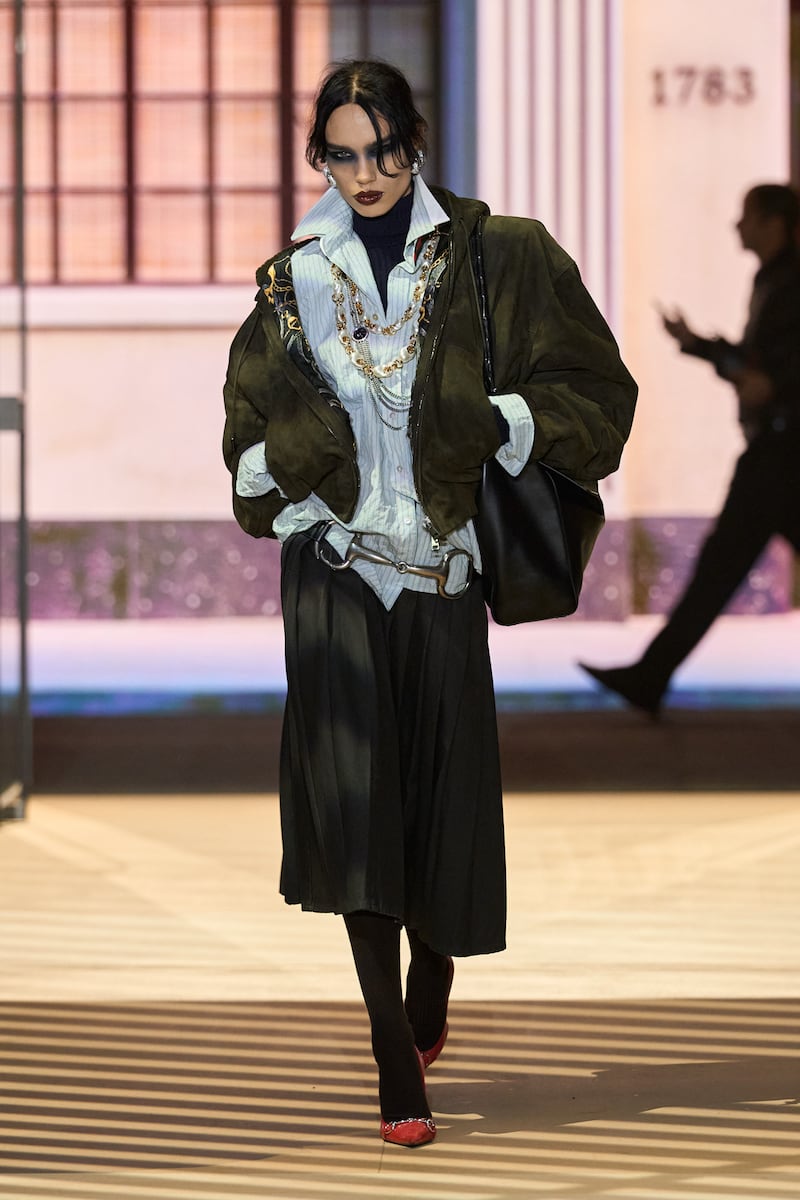
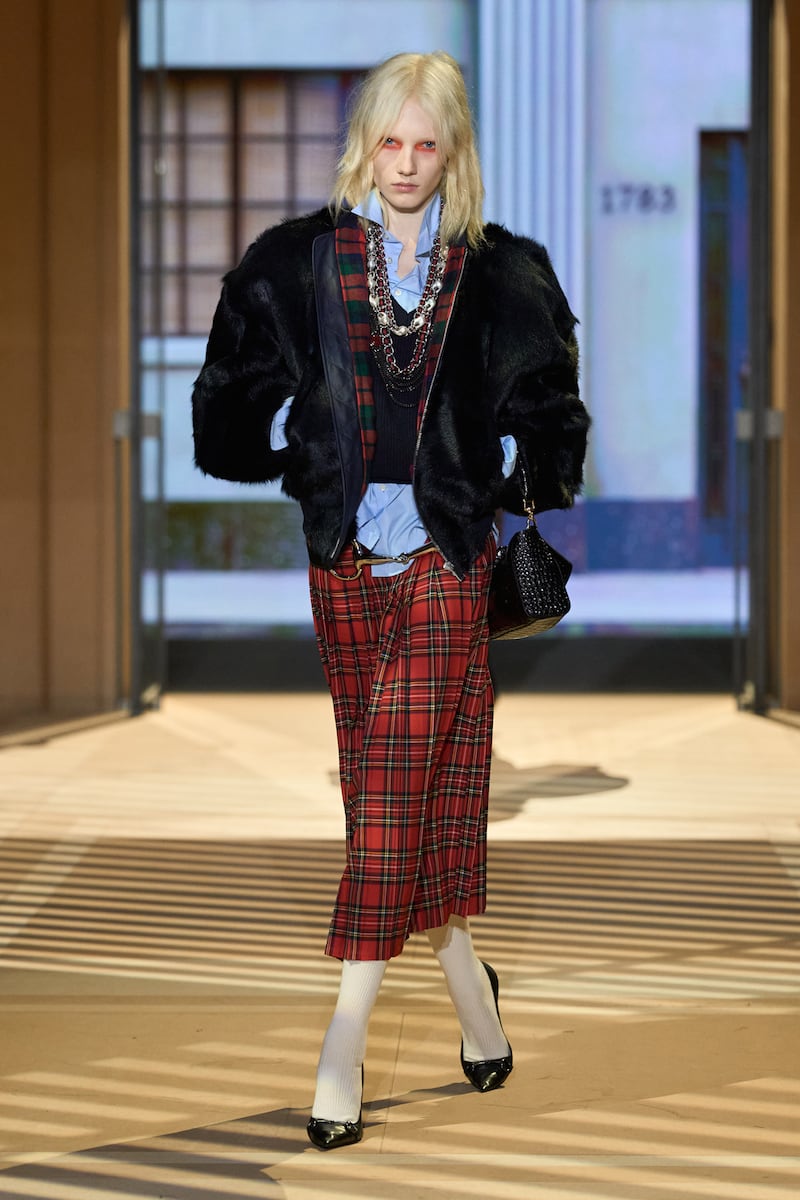
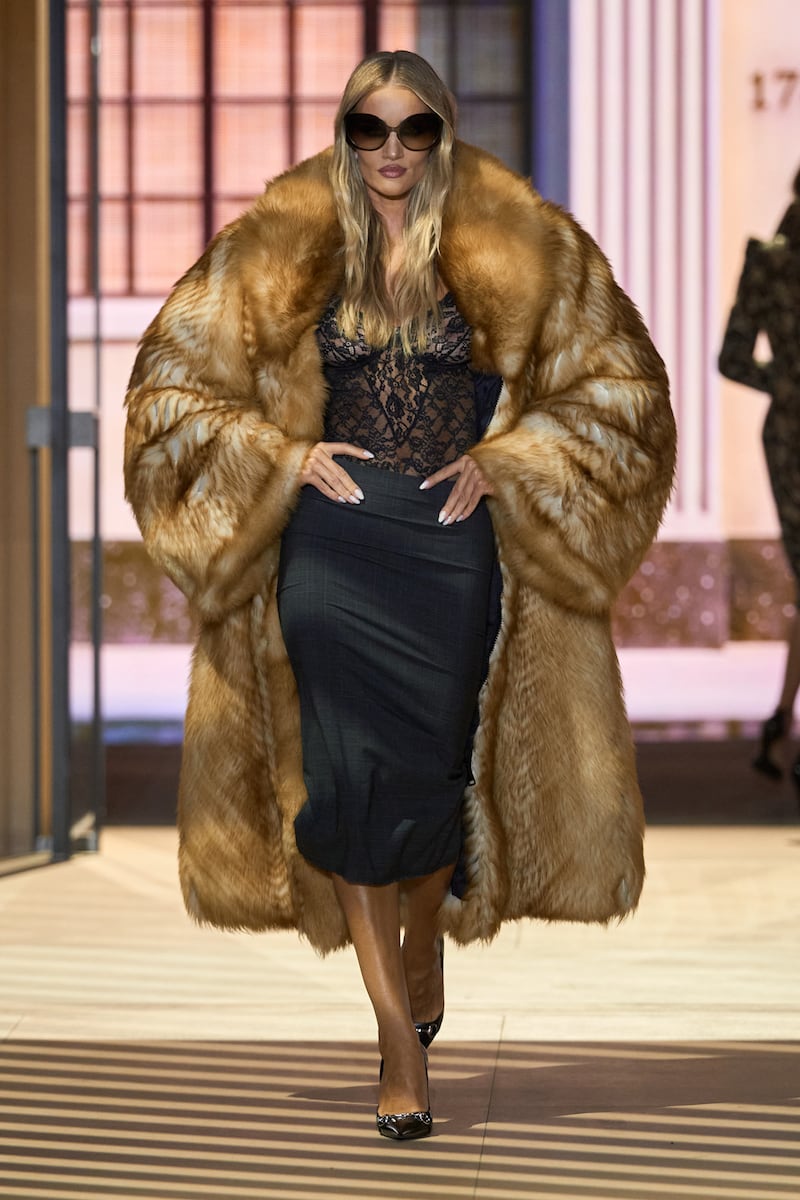
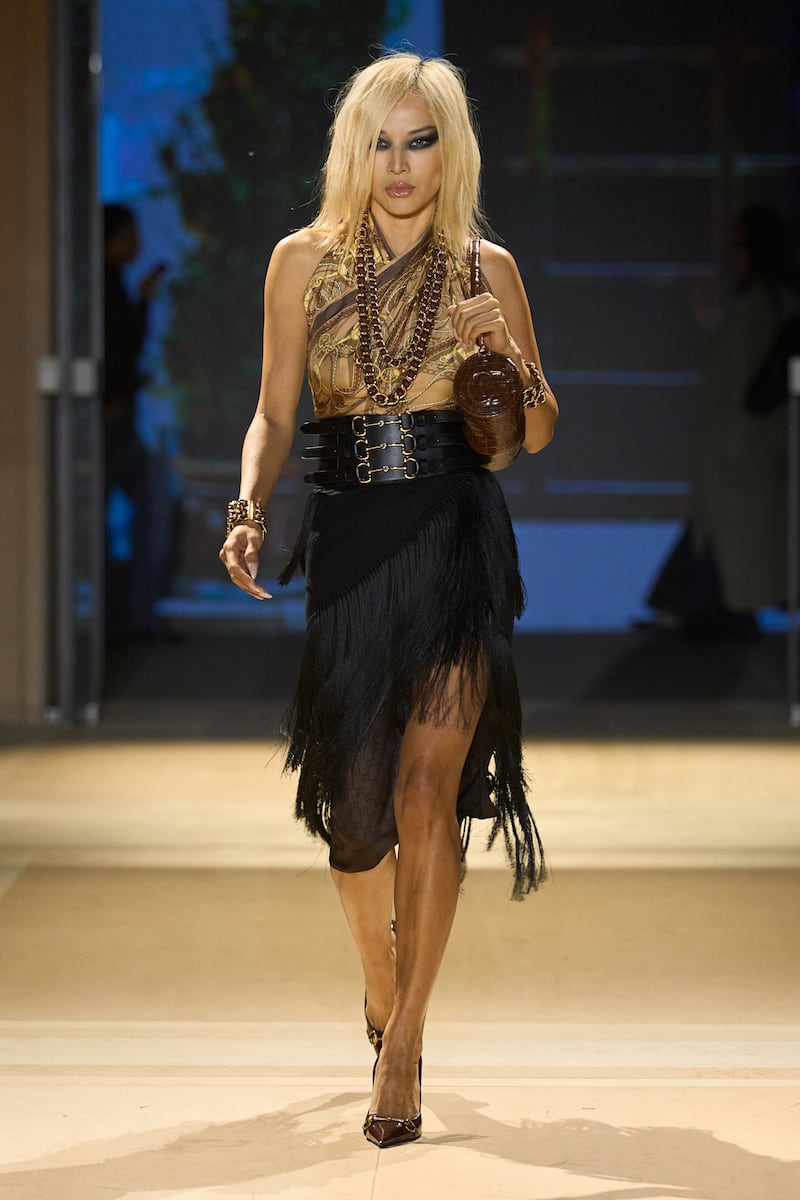
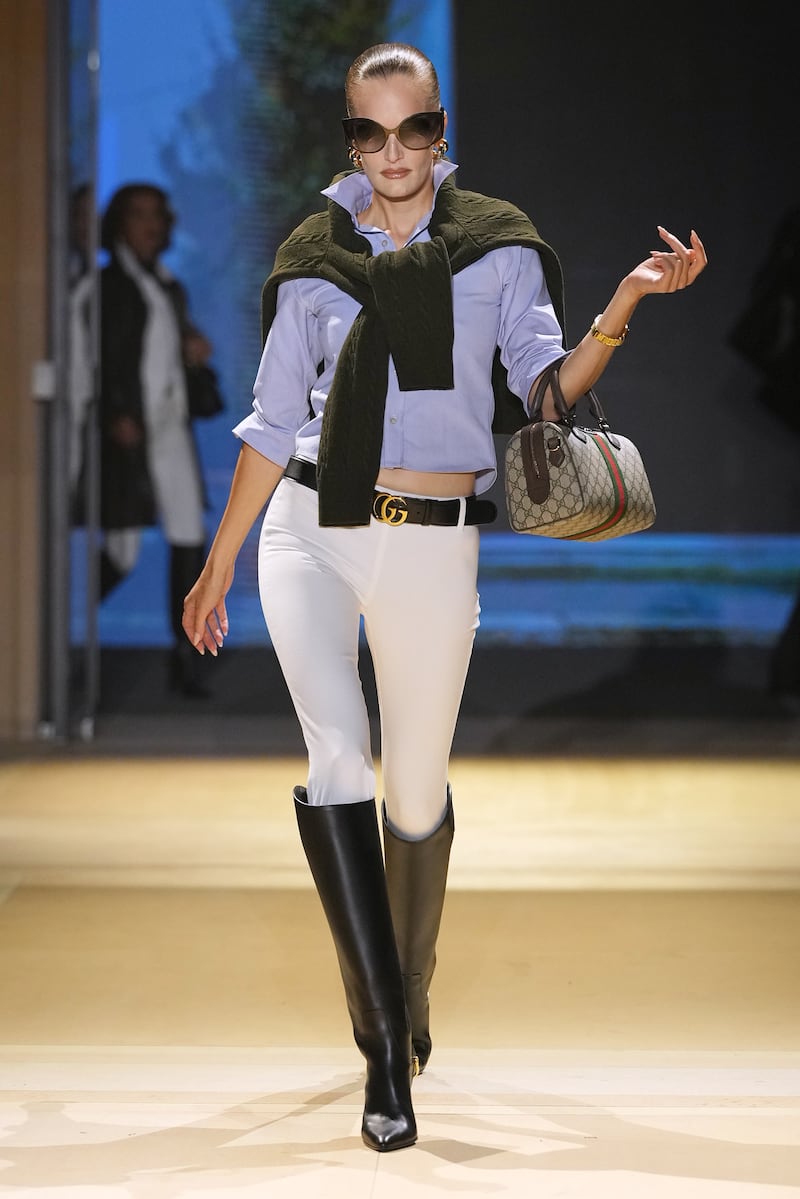
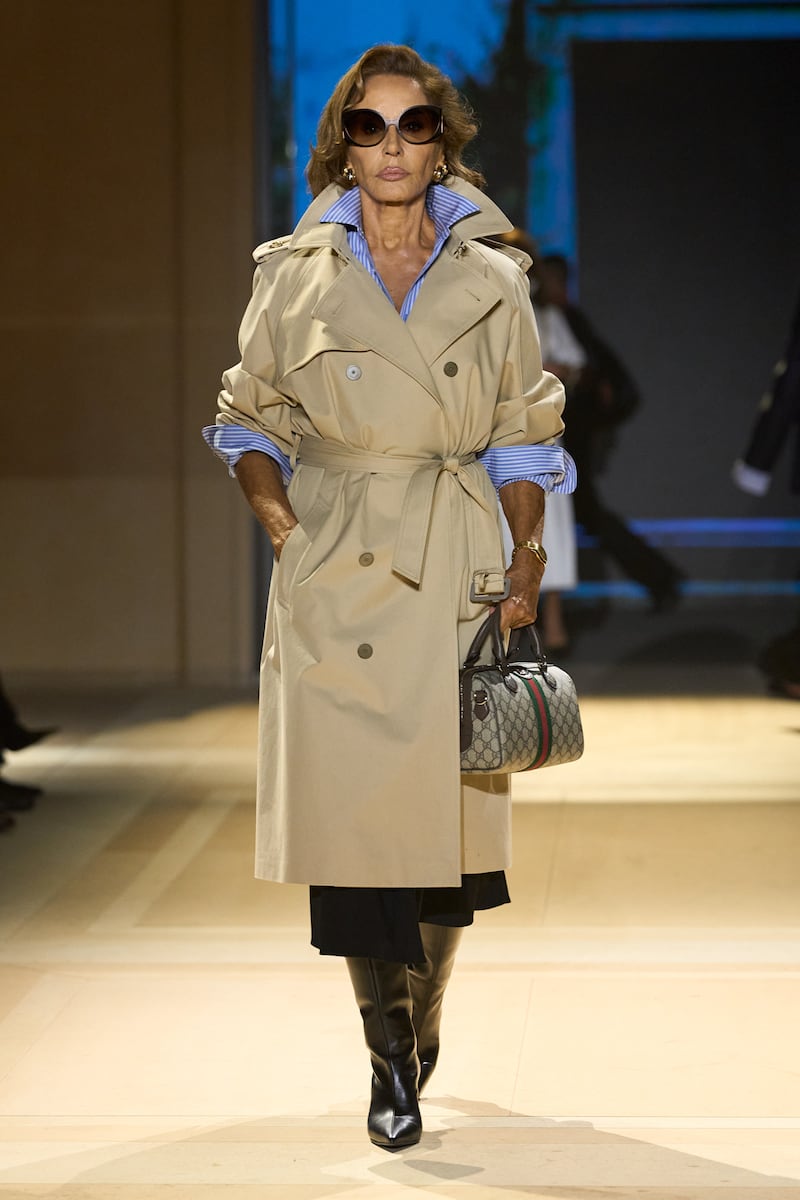
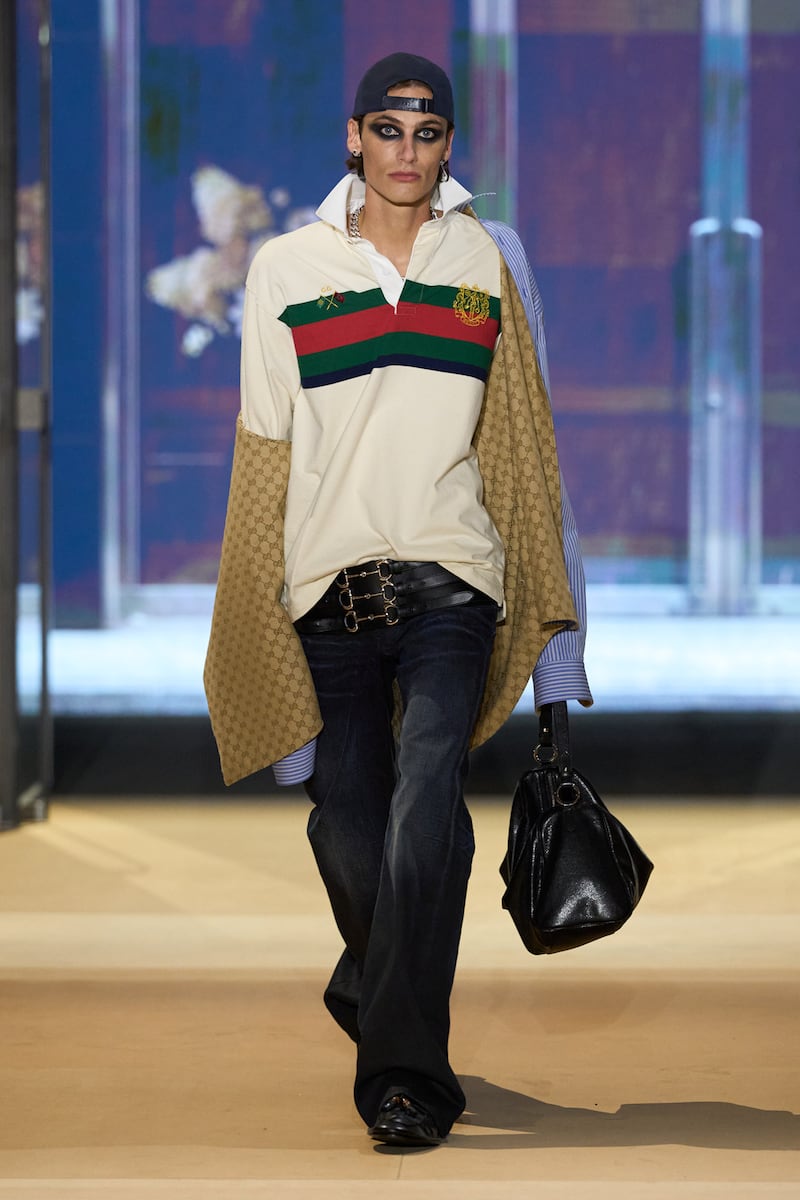
I’m not sure how successfully that “one identity” is communicated in the show because the multiple personalities are so winningly presented by precisely the characters that Demna is claiming he doesn’t want to play with anymore. Except that they’re real. Real aristocrats. Real society mavens. Real It Girls. All of them wearing clothes artfully constructed to suit their status, just as Gucci originally dressed the aristocratic equestrian classes. A cinched jacket with white breeches and riding boots; a velvet peacoat over a patrician striped shirt; a tweed suit; a perfect trench (sorry, fashion team); a white cotton shirt dress on a horsebit drawstring.
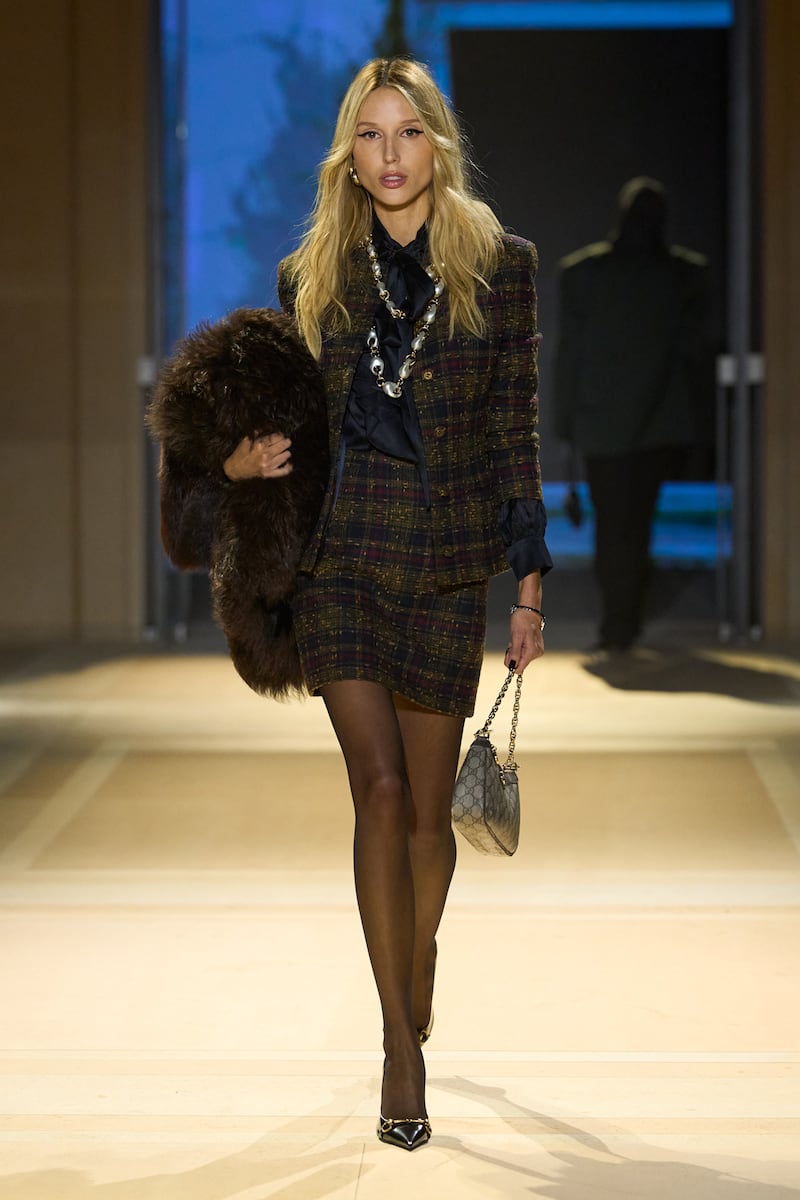
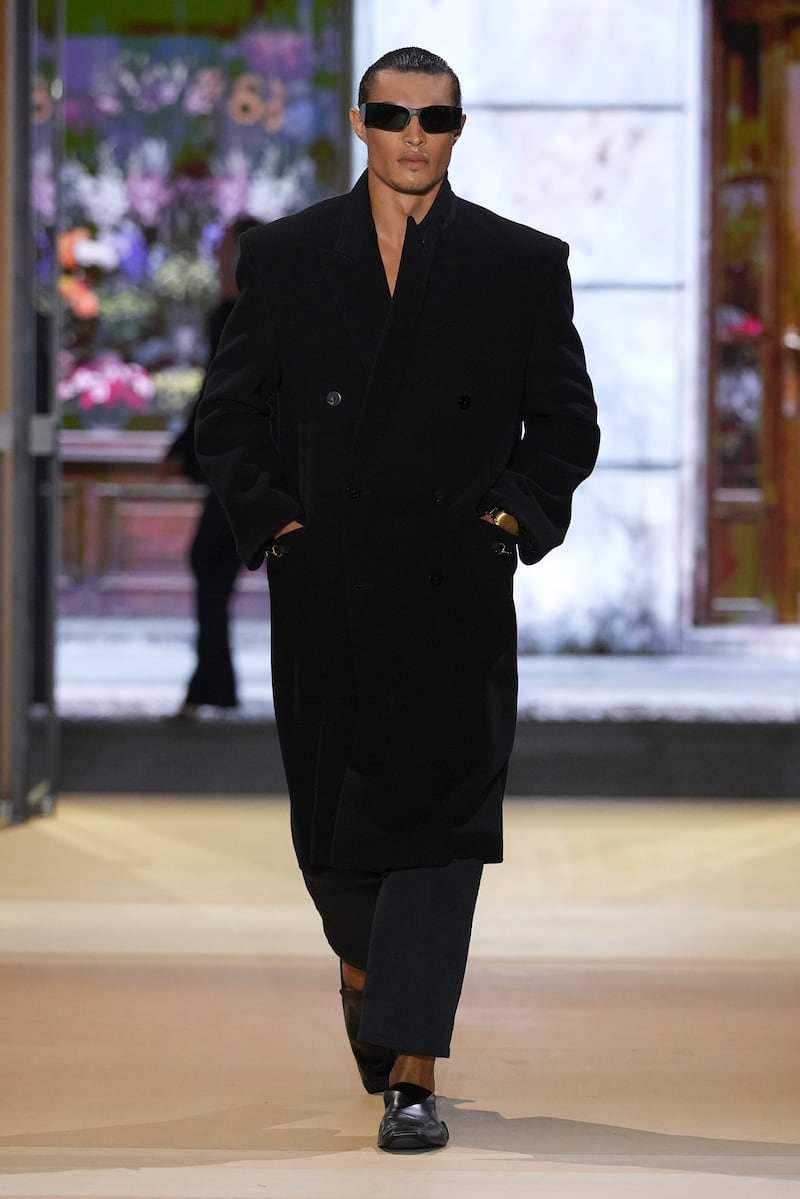
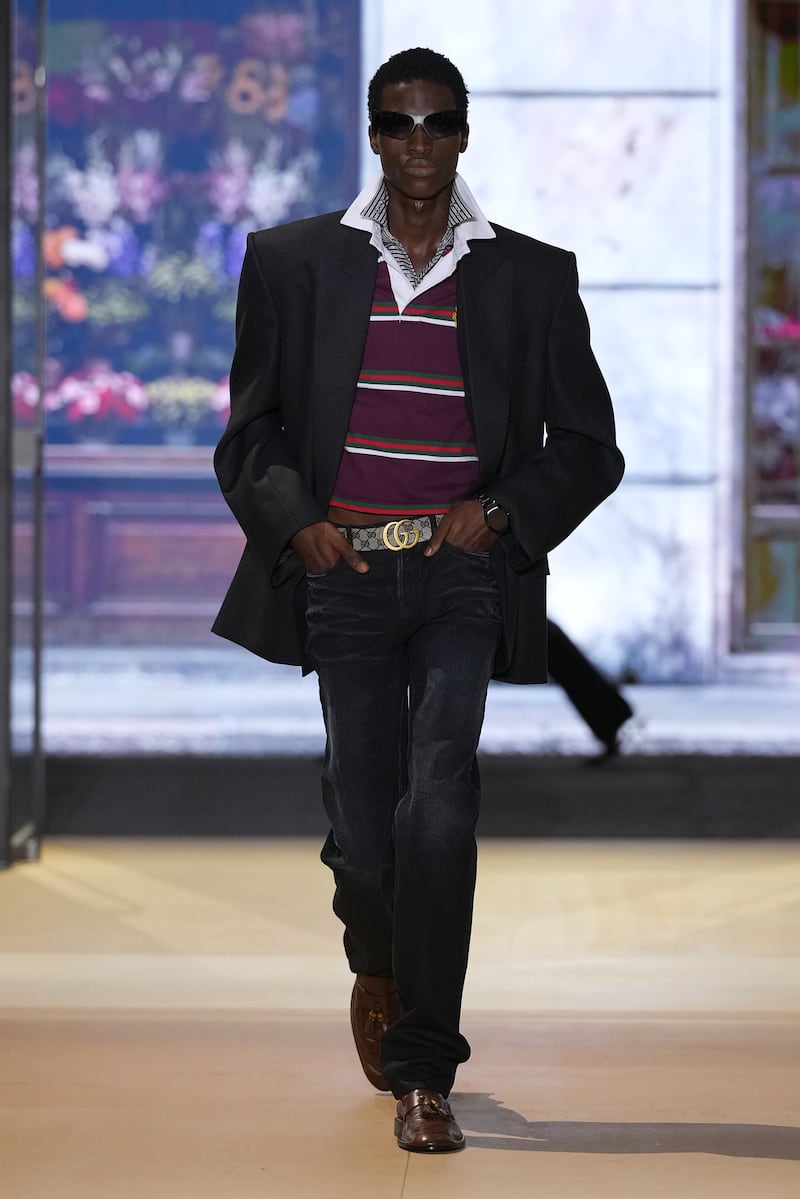
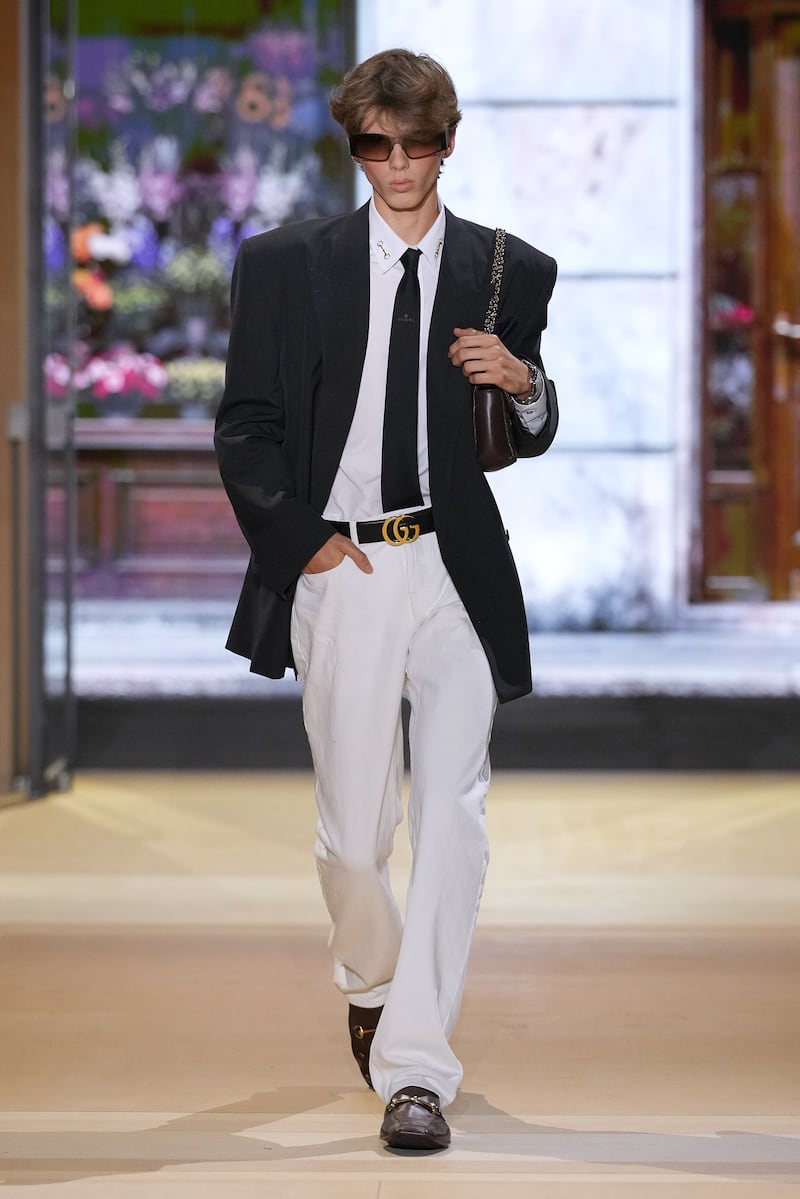
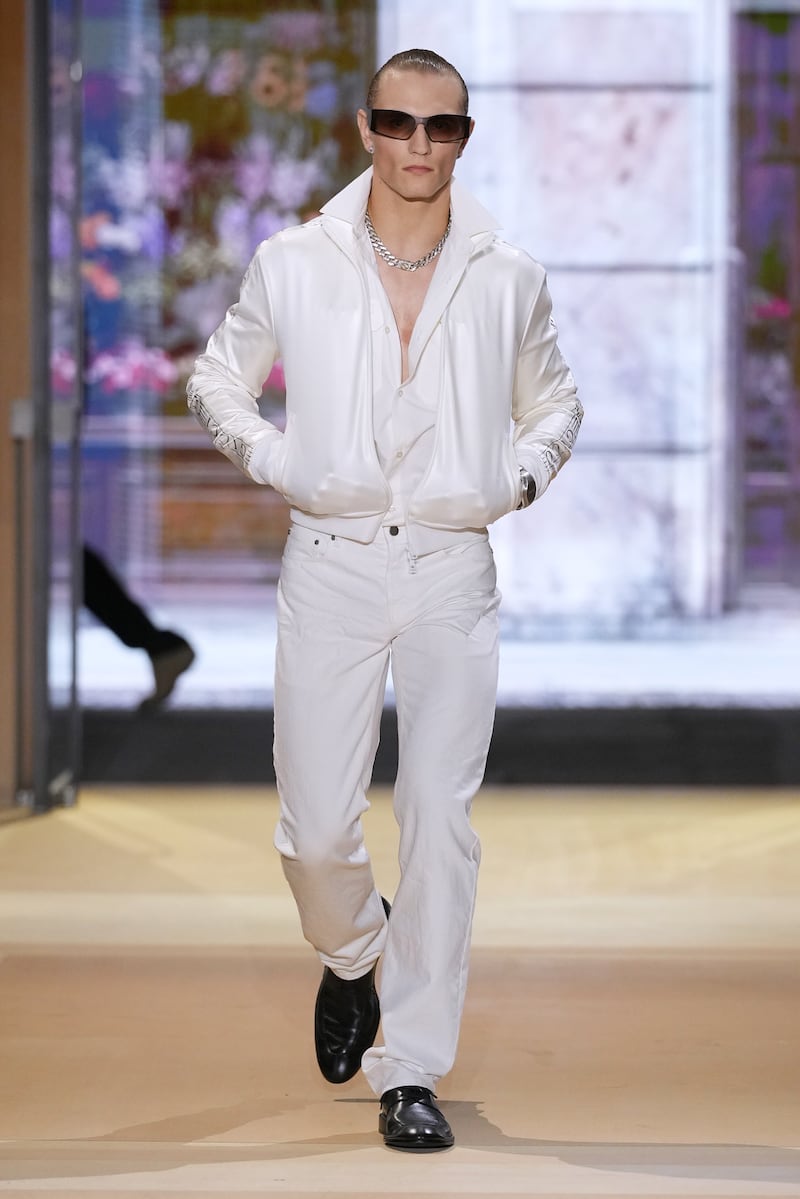
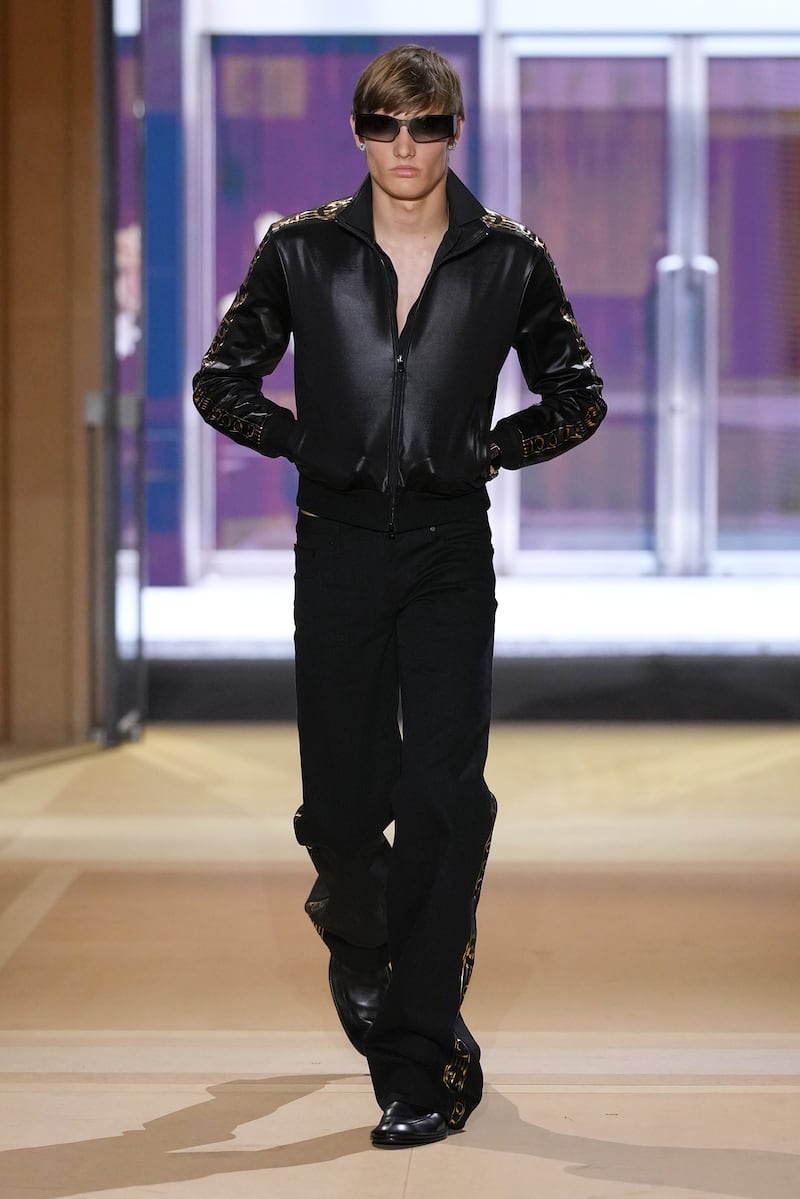
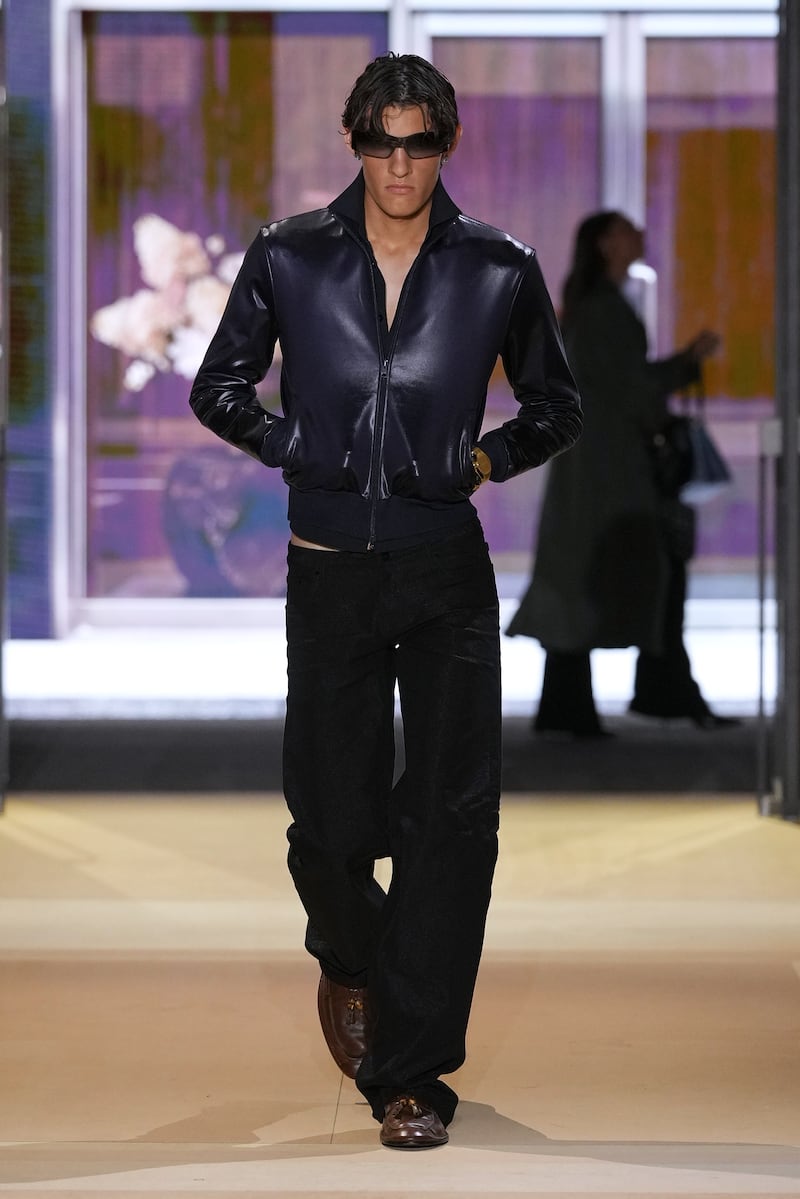
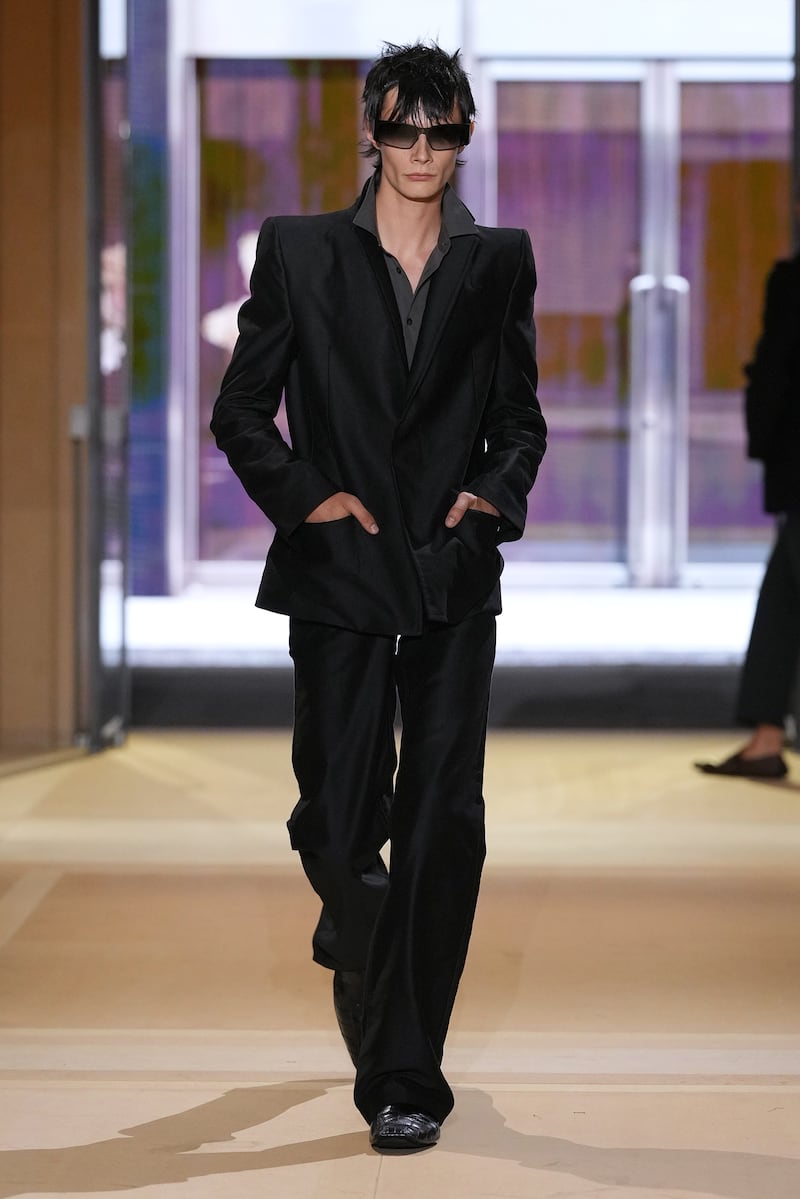
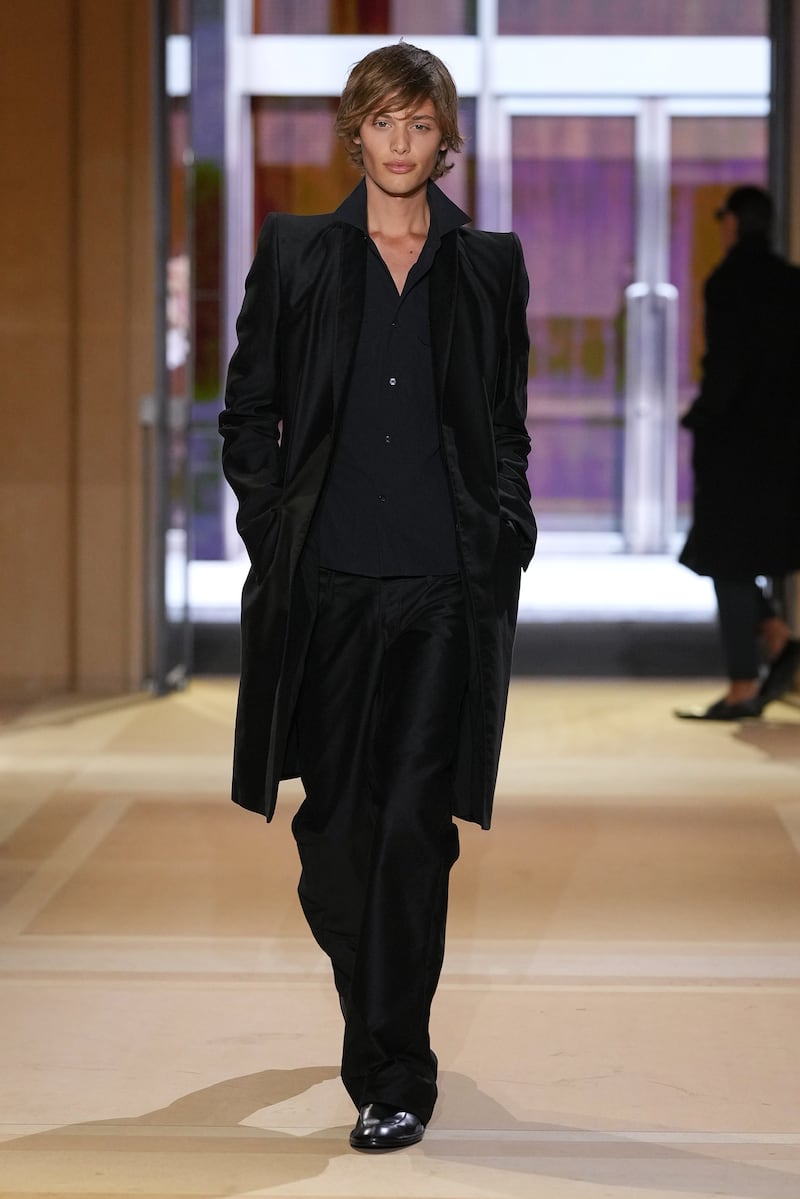
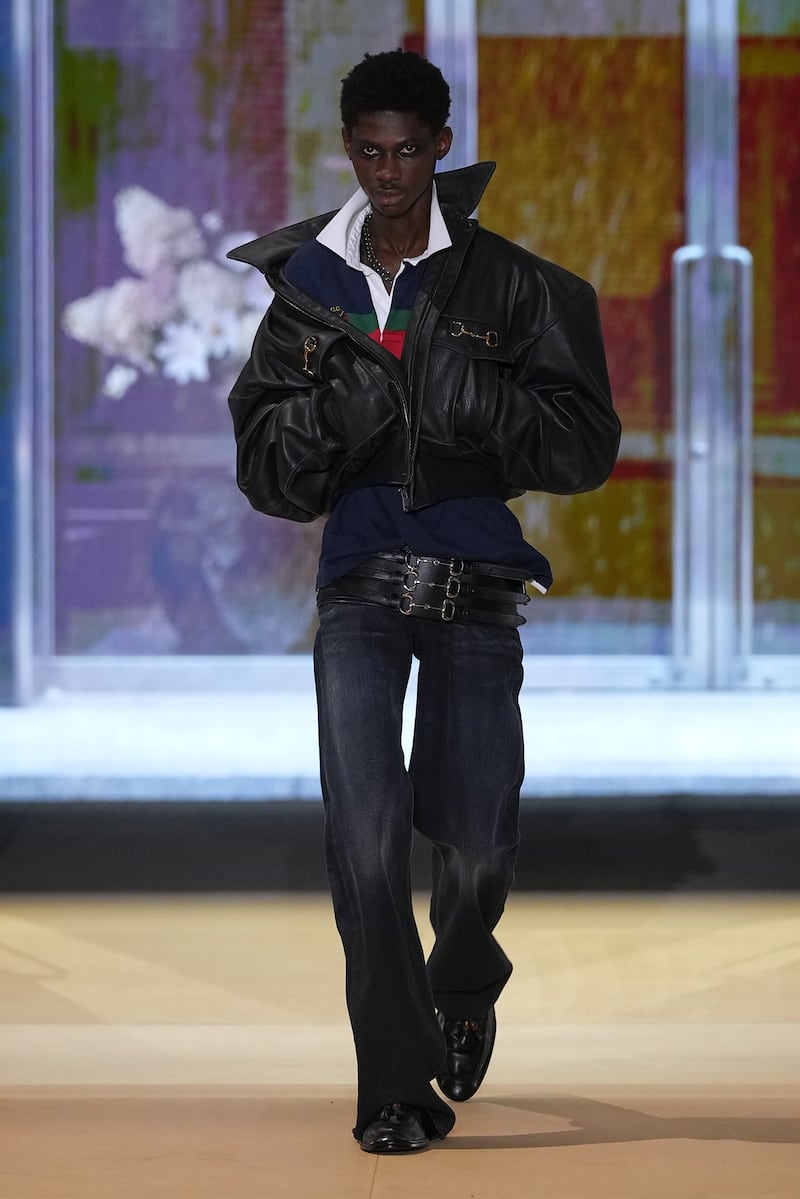
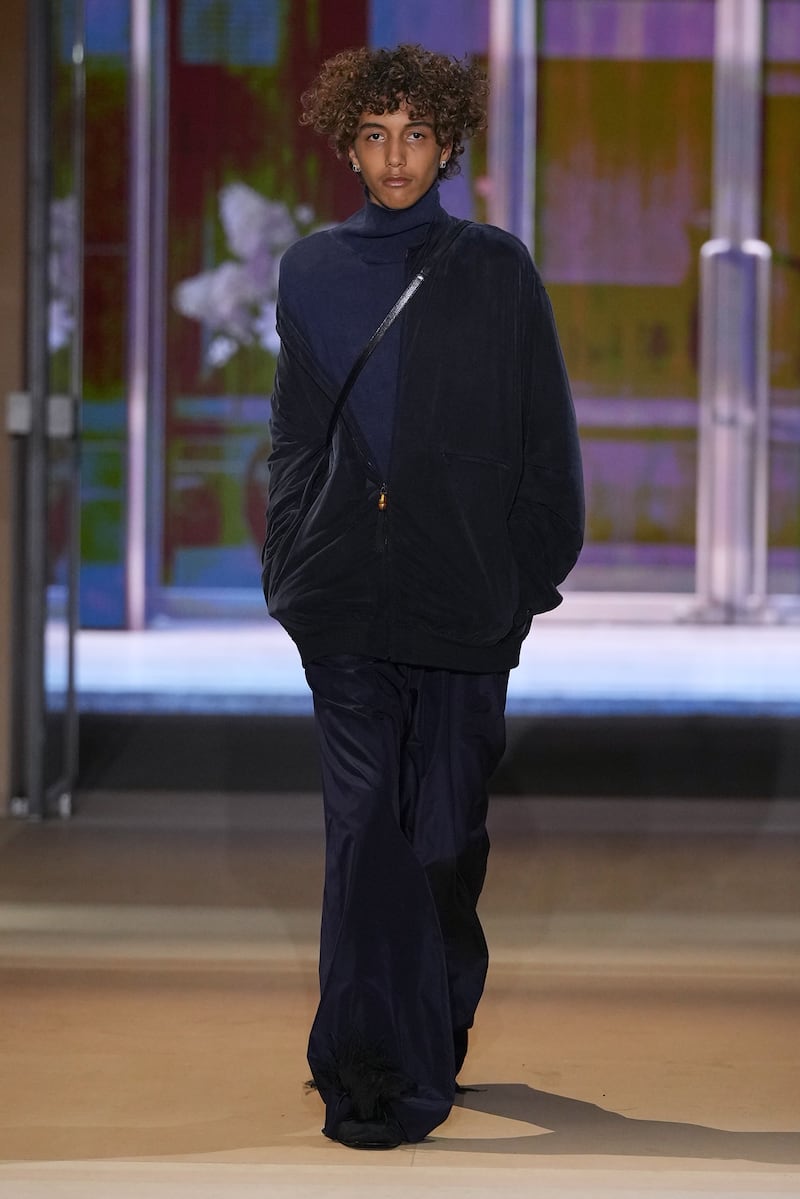
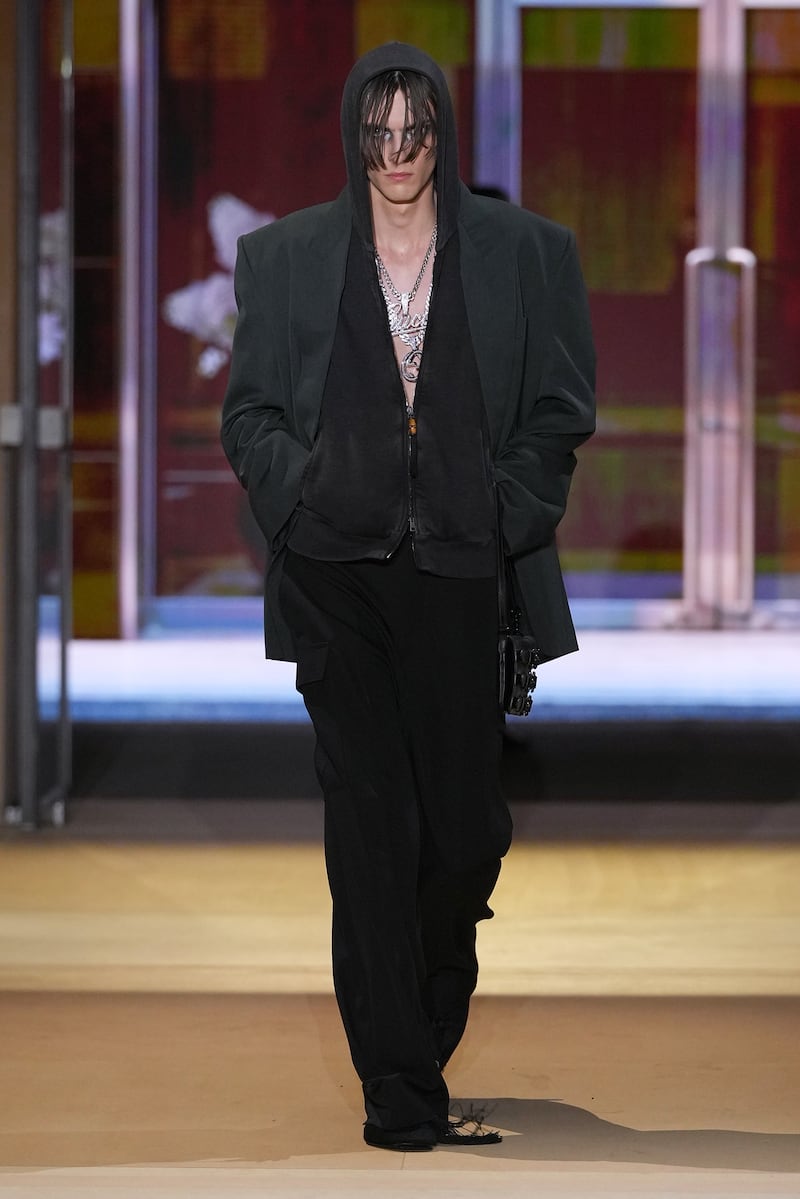
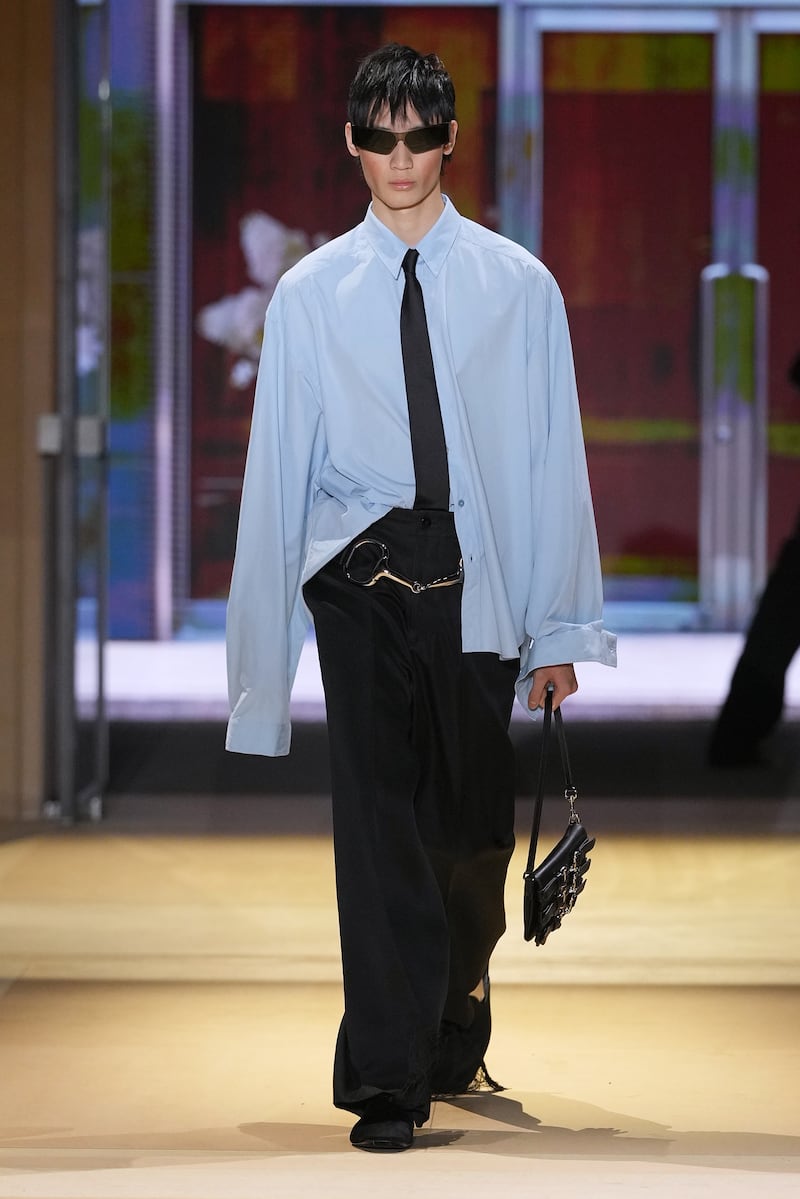
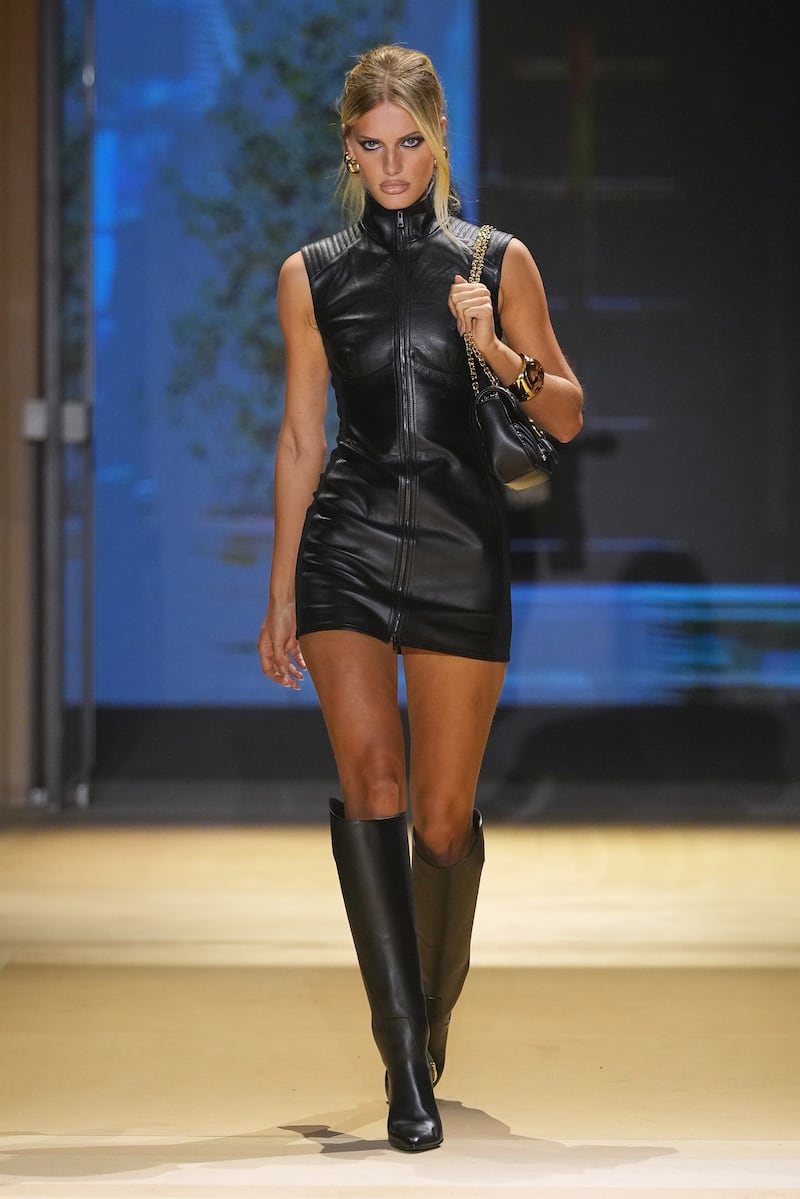
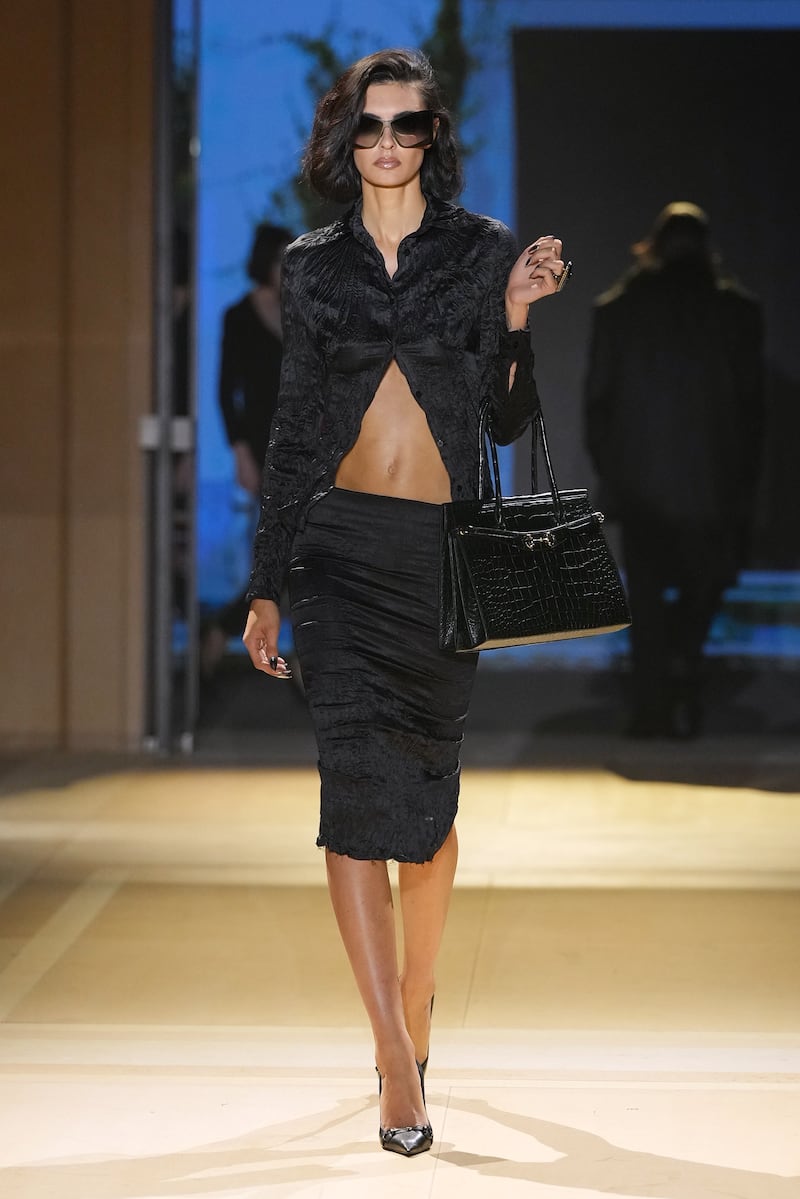
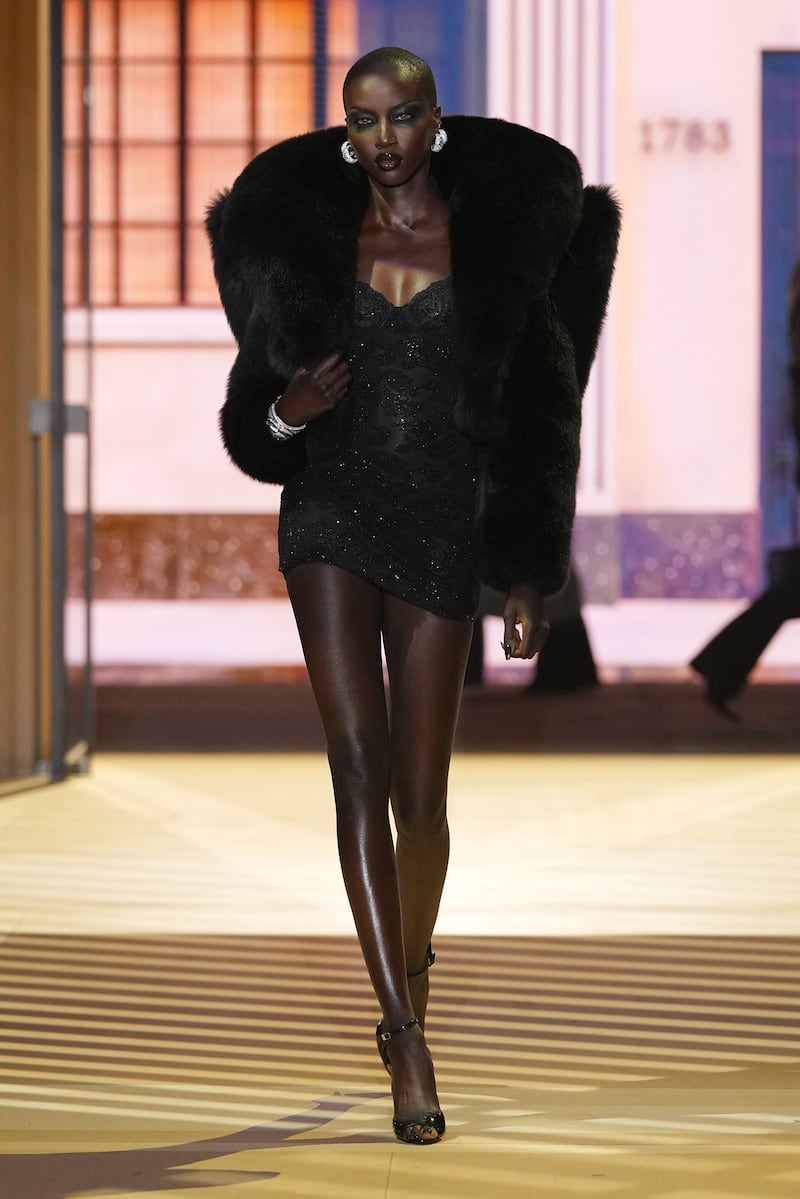
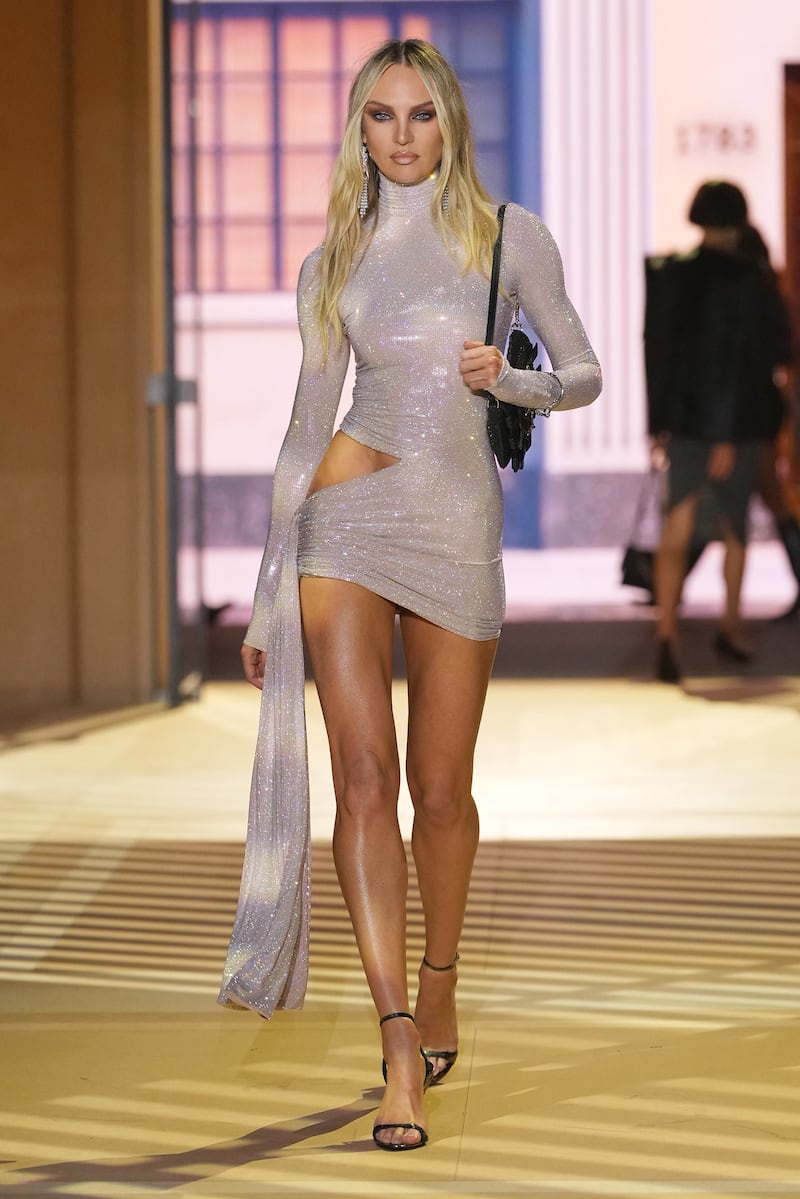
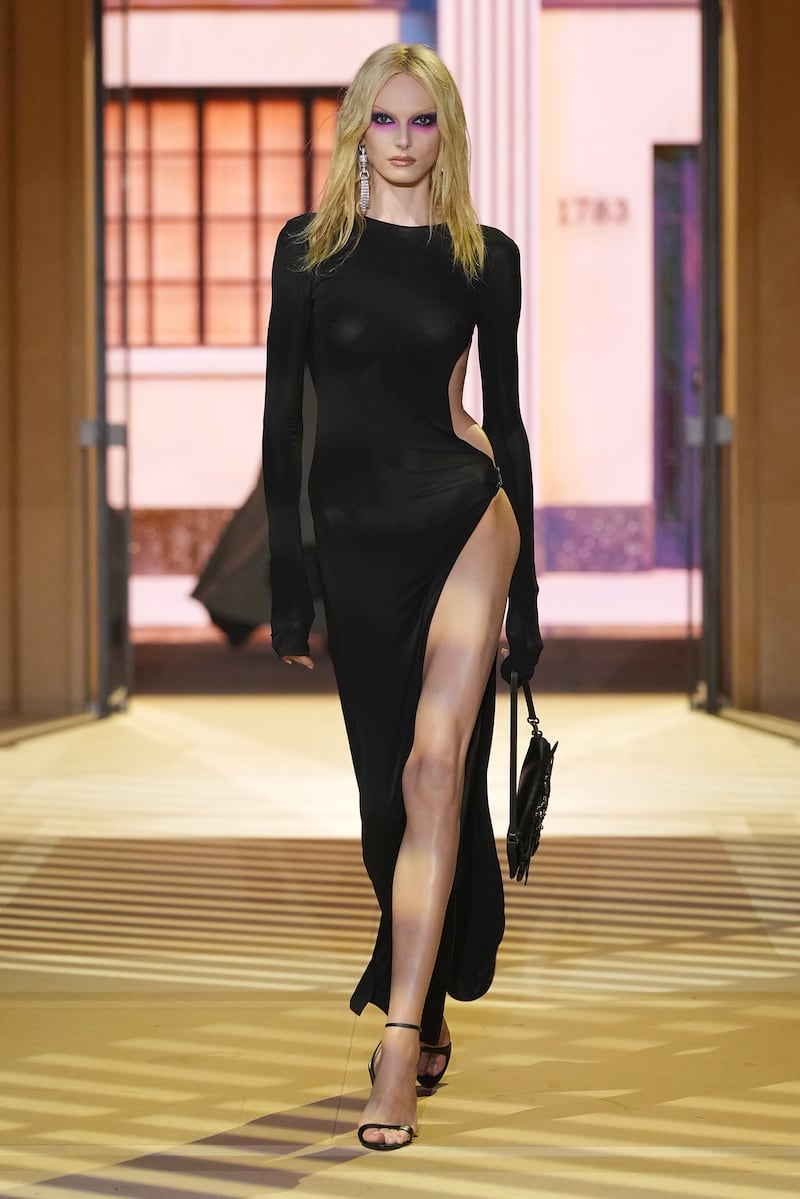
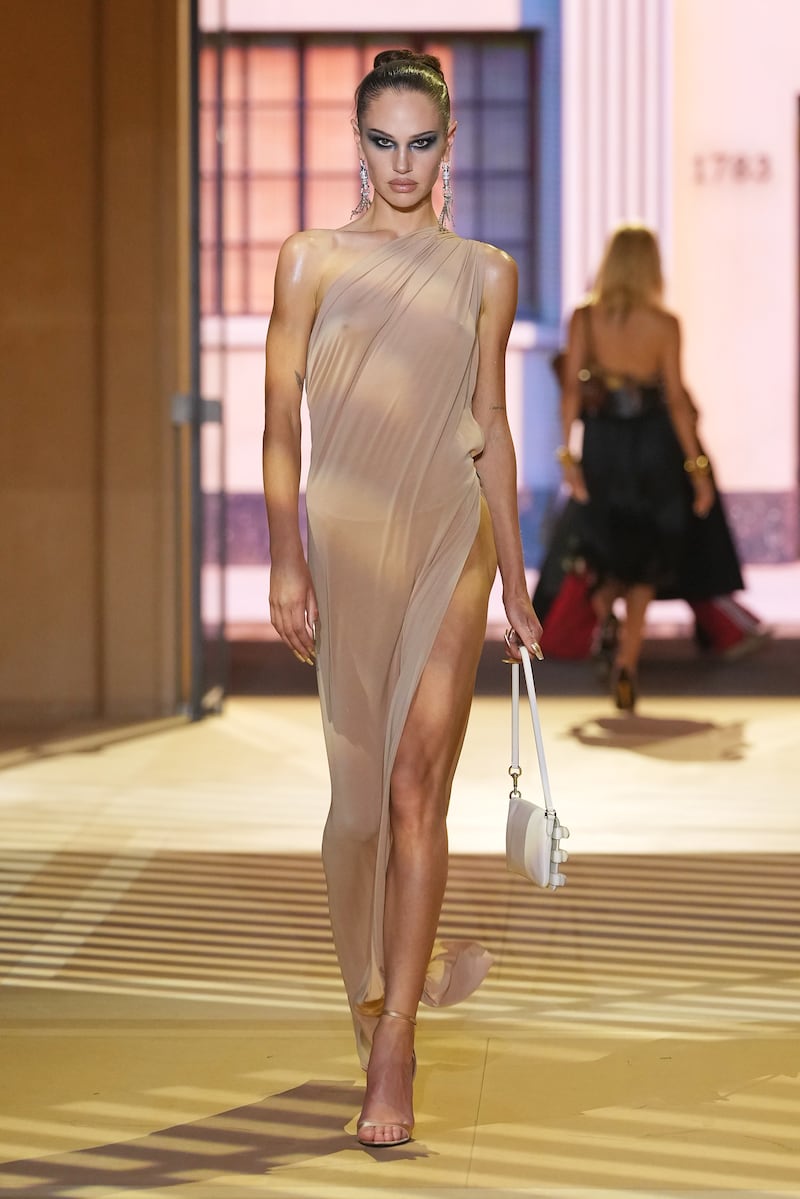
“I’m showing the full thing, the full spectrum of what Gucci is,” Demna exults. “From equestrian, bourgeois, aristocracy, all the dress codes, the white jeans. I never did white jeans in my life. Then going into more what I love to call snobby fashion edginess, and then getting more and more eccentric, quite maximalist actually. And the end of the show is definitely more sensual, glamorous, sexy. Quintessential Gucci that you know I cannot avoid. But my new versions of that, because that for me is a very Gucci thing too.” Which means Candace Swanepoel in a slithery second skin slashed open at the thigh, or Alex Constani in a black sheath whose slashed side-seam is very tentatively held by a GG clasp. Demna is most captivated by the last dress. Sheer, nude muslin, maybe one seam, no darts, with another of those GG clasps. “And then the rest of the dress is like a triangular pattern, with a teardrop of silver, so basically, when you put on the dress, you just toss the teardrop over your shoulder and that’s how it holds. There is no strap or anything. I mean, I’m so proud of this one. We call it the Gravity Dress and really for me, in terms of design in this collection, this is what I like.” It’s almost more physics than fashion. In the nerdiest way, the teardrop had to be weighted just so, so it won’t pull the drape of the fabric. It’s utterly gorgeous.
It feels typically Demna to me that his attraction to Gucci should be motivated by a kind of repulsion. “I realised that that’s something that attracts me most at Gucci, but I’m afraid of it because I don’t know it. It’s not my comfort zone at all. You know, the white-jeans-loafers-without-socks kind of guy on the Riva boat, the guy who goes to Como. That’s why I went there to look at those people. It was part of my research.” That same anthropological fascination infuses his show. Each of his models is pinned in their looks, like specimens. That’s always been Demna’s way. And here, it works as effectively as it ever did when he was collecting specimens at Vetements.
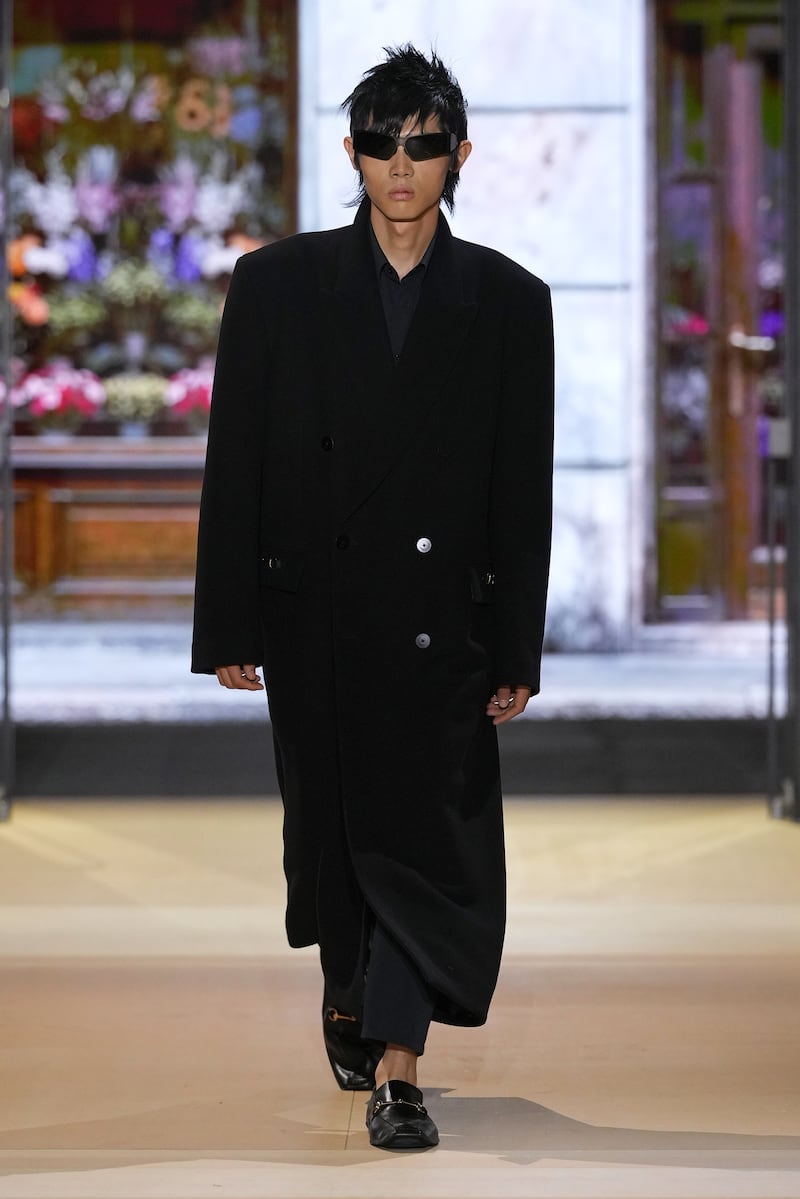
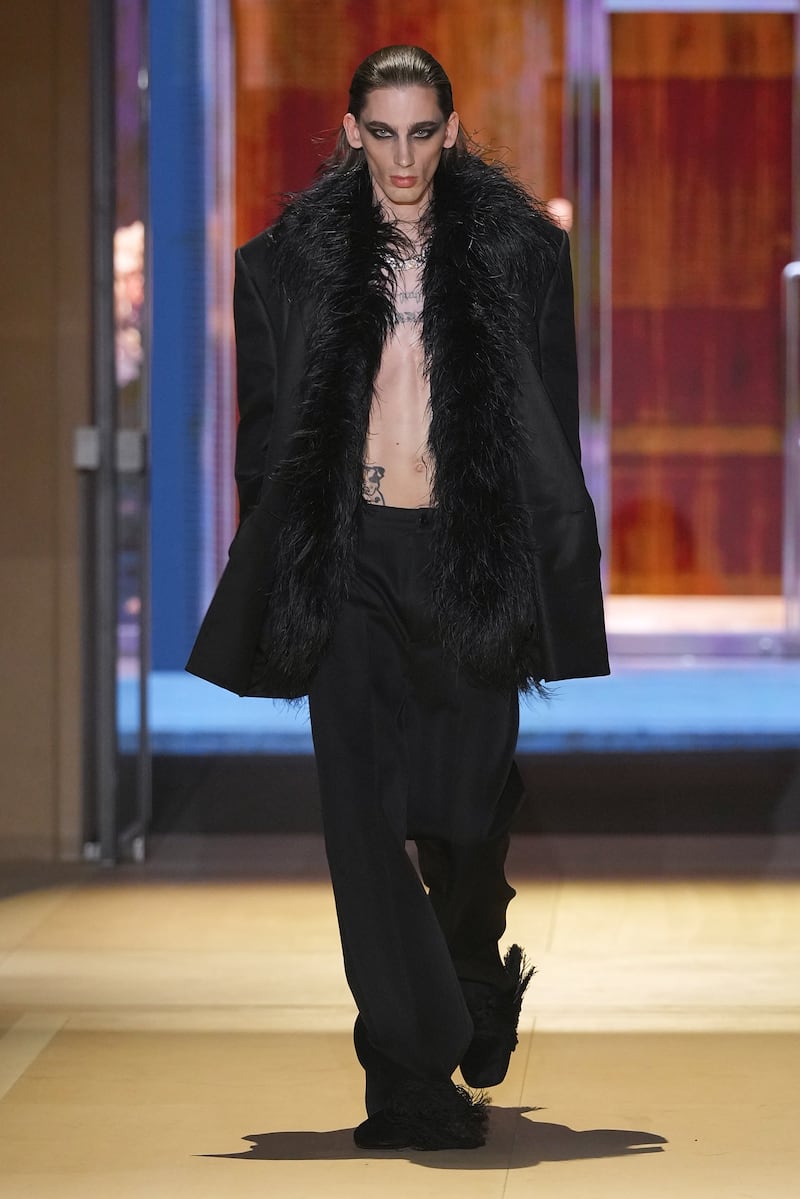
He’s wearing tasselled velvet slippers. They’re all over the eccentric bit of his men’s collection. “It’s a very Gucci palazzo kind of situation.” Demna laughs. “It’s a little bit Marlene Dietrich for me, but I like that. I’m discovering things about myself here that I maybe didn’t know before that I like. I didn’t know before I would like a tasseled velvet pantoufle. In Italian they’re called ciabatta, which I don’t like so much.” He was wearing the slippers a few nights ago at Vogue World. Also a little bit Marlene that night was the way he casually shrugged his bomber jacket off one shoulder, exposing his rainbow flag tattoo. Marlene didn’t have a tattoo but she definitely favoured the shrug, especially when she was wearing one of her white Jean Louis furs. “That’s the attitude to it,” he confirms. “For someone else, it looks maybe sloppy. For me, it’s glamour. I have zero intention of changing myself, but I want to be curious and to learn things about myself that I didn’t know before, and that’s pretty much happened in this season for me.”
He considers that he is holding up a tradition. “I heard that a lot of other people, previous generations of creative directors here, also apparently discovered that, while at Gucci, their lifestyle changed, how they dress changed. I think Gucci has that influence; it has that impact on the person who is here. It doesn’t mean that I’m gonna dress like Tom Ford. I will be who I am, but I will transform these codes and make them mine.”
It’s useful to remember that where this is coming from is a life/work balance that rests on the 6,000-mile axis between Milan and Los Angeles. He’s still trying to get that balance right because, at the moment, Gucci is his priority, which means Milan. “My whole life here is Gucci, even my home. It’s like I’m method acting. I feel very traditional, maybe because a lot of what I’m trying to understand is anchored in the history, the heritage, the Gucci-ness of Gucci. In LA, I question things that I don’t question in Milan. It opens my mind to thinking outside of the box. I haven’t actually applied that thinking so much to Gucci, but it did help me this summer. I usually do my research for the next season when I’m there because I have time and space and no one disturbing me. This time, Loik was in the studio so I was on my own a lot at home with the dogs. And I did three workshops. I made a new shape of jeans myself with a seamstress I found in LA. Just the two of us. I worked on a shoe shape. Almost cut off my finger with the tool they sent me. And I worked on a jacket.” Presumably that means the airy, structure-less pagoda shoulder.
ADVERTISEMENT
Take that as a reminder that Demna is perfectly able to cut and sew his own designs. “The thing is, I haven’t done this for a really long time. The last time was mid-tenure in Balenciaga, for the same reason. I was not happy with what I had, so I needed to do it myself. I needed to have my own hands involved, without other people. I came back to Milan and edited 15 looks into the show that were based on those workshops. That’s never happened in me before. I’m usually ready a month before with the lineup.”
The most obvious fruit of the workshops is the men’s no-sock loafers, Demna’s bête noire, especially in combination with the cropped pants that also used to torment him. The shoes are oversized, slightly crude-looking, not the sleek slip-ons that Riva Man would favour. “I was thinking, ‘How can I do it so I like it, so I would want to wear it?’ It’s the hardest thing for me to do because it’s something I never touched on. Gucci kind of does this to me. That excites me most because it’s completely unknown for me. I dare now to go places that are not familiar for me.” He actually credits LA for that. “The city gives me courage. Maybe because it’s far away. But it’s my state of mind, my social life, my creative life. I have a lot of ideas when I’m there because I have my space, my books, my everything, and I’m not so directly facing fashion, you know.” The house he and husband Loik Gomez have been renovating is nearly done. “And I bought an old police car, a black and white, but it doesn’t have the police signage. In Hollywood, you can get them for five grand. It’s standing in front of the house, a bit menacing. But I didn’t drive it yet.”
In LA, Demna spends a lot of time driving in his Range Rover. He goes to stand-up comedy clubs. He and Loik went to the Hard Festival during the summer. “It was in the afternoon and next to LAX so you had airplanes flying right above, it was quite something. The music was a bit weird, very Gen X, electro pop, not my vibe, but the best thing was the crowd. 50,000 people, the coolest I’ve seen. Everybody loved each other, I guess they took something, but it was so positive. People weren’t wearing many clothes. No complex. I wish I could be so free because clothes are so important for me to express myself. I felt that freedom was really inspiring.”
Also inspiring, his visit to Elizabeth Taylor’s house. Demna toured it with her ex-assistant. The next day he went to see the Marilyn Monroe exhibition at the Motion Picture Museum. “I could see some of her clothes and I was struck by the shape of her denim pants. I’ve never seen anything like that. If you can imagine Kim Kardashian’s pants, exaggerate that and that was Marilyn. Or her bras. I mean, what was going on there?”
“I’m so boomer gay, you could say. It’s the idea of LA that I always had growing up. I mean, where else in the world can you go and see Elizabeth Taylor’s archives, or go and stalk Marilyn Monroe’s house in Brentwood? Thank God Loik likes it too, so we can do it as a couple experience. My grandma wanted to look like these women. There were pictures of them in her house. And now I have pictures of them in my house in LA. What inspires me is the glamour and the tragedy of these women. I’m obsessed by that. And Marlene Dietrich, though a bit less than the others. The impact these women had, and what they left behind, I can relate to them. Elizabeth Taylor came from this bourgeois background, she started working so early, she struggled with addiction, but she gave a shit. With her way of telling the truth, she was pretty punk actually. I admire that. That’s how I strive to be.”
It’s what he’d like to say when people call him a cynic, which happens. “I felt more like I’m talking about things that other people don’t want to talk about. For me, it was more being Elizabeth Taylor. I dared to say stuff, and a lot of people saw it as cynicism, more like, ‘Oh, he’s making fun of things.’ I wasn’t. I was putting a question on the agenda basically. That’s what I try to do. Today for me it’s different. It’s more like Gucci doesn’t really need that from me. I’m not here for that. We all know we live in a shit world. Gucci for me, it’s like an escape from the reality that you cannot ignore. I unfortunately read news every day still. I’m trying to moderate that. It bothers me a lot. But then I come here and I forget. I think about the snobs, the narcissists, the eccentrics, the aristocrats, Charlotte Casiraghi and the equestrian campaign. I’m off. And it’s quite therapeutical to me right now in my life too. So I don’t want it to be pointing out the issues that we all know about, I want to find something else that actually makes life better. Because I feel like Gucci is this idea of belonging to a better world. Maybe it’s something that is completely useless in today’s world. But that’s also part of Gucci.”
And, seeing we’re on a tear about Liz, here are Demna’s thoughts about Marilyn. “She created this persona, she defined things that were not there before. I can also relate to the difference between the public perception and how you feel about yourself. The disconnect can sometimes be very heavy and hard to deal with. You need to have a good support system, good people around you who you can trust. I get it was really hard for her. I’m lucky that I found people in my life who helped me survive the difficult moments that I had with myself.”
In fact, he suggests he was on the same lethally self-destructive trajectory as Marilyn until he was saved by the love of a good man ten years ago. “I was in the darkest moment in terms of my personal life and I kind of felt, Fuck it, I don’t care. And then I met Loik. You know when you meet your person and they tell you what you don’t want to face? He was my lucky star, because without that, I don’t know, maybe I wouldn’t have died, but I was definitely on my way to that until I met him.”
ADVERTISEMENT
I’m quoting Demna so extensively because I’m fascinated by the cascading thought processes. They’re a very persuasive coping mechanism for what must be a high-pressure position. Gucci’s foundational significance to the Kering empire has made its business vicissitudes a rolling controversy in the fashion industry, turning every show into an orgy of fiscal speculation. “It always triggers that, it’s not just me,” Demna insists, “though obviously I’m the perfect scapegoat. I feel Gucci has to create conversation, whatever that is, but I would like to create conversation that is not the bullshit conversation in February, for example, about the quality and things looking cheap. Nothing was cheap. Quality went up since I came. I’m pushing that a lot. People who judge everything on a screen have no idea about that. I want the conversation to be about what Gucci is, and who it’s for. That is something I would love.”
So how does Friday afternoon’s show address all that? The title The Store Show is a giveaway. So is the set, a mockup of the new retail environments that Demna and his longtime collaborator Niklas Bildstein Zaar have been working on since before the La Famiglia presentation. Clothing and accessories from past collections are displayed around the rooms as if they were for sale. Guests are seated on boutique-ready banquettes. The message is scarcely subliminal. “Here, I really wanted to have clothes to wear for every type of consumer that I want to speak to,” Demna says. The pressure is on him to design the product that will activate these spaces in the real world with real live shoppers.
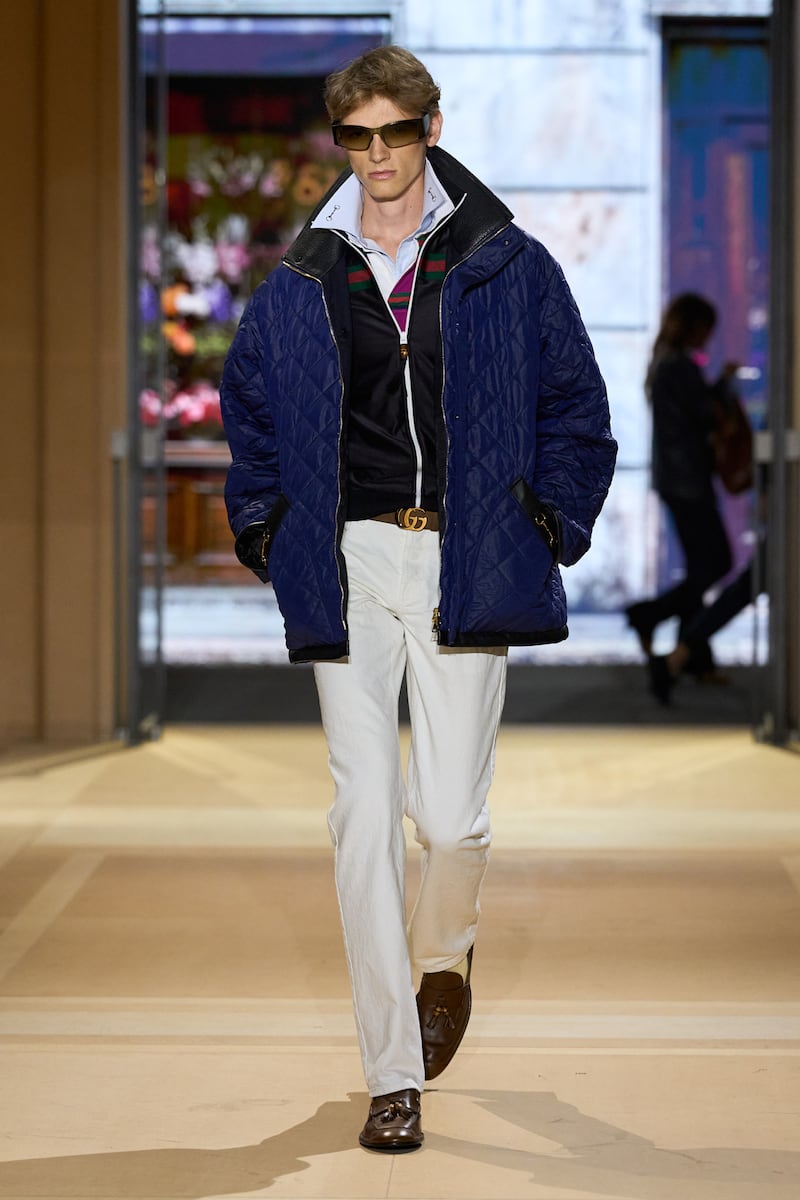
That’s where the thesis/antithesis/synthesis comes in. I think Demna’s collection artfully addresses the “something for everyone” pitch without patronising his market and without the banality that is usually attached to such a notion. Dividing mens- and womenswear into separate shows-within-a-show lends a critical clarity. The two were scarcely ever joined at the hip in Demna’s world anyway. It’s the same women-vs-boys dichotomy that has always defined Prada, and it’s instructive to watch the journey that the various genders make from aristocrat to eccentric to fully fledged sexual deities. The boys don’t actually make it all the way. (That’s one shortcoming you could never attach to Tom Ford.)
I can’t imagine this new collection unleashing the shellacking that Demna received after last February’s show. He really felt it. “How can you not be sensitive?” he wonders. “Of course I am. I can tell you one thing. Thanks to my amazing therapist in Paris, I learned a while ago that other people’s opinions are always there anyway, and I cannot really control that. I cannot please everyone, especially here. So the way I perceive it is a bit, ”Fuck you! I like it!” This is what matters to me the most now. Before, what mattered to me was I wanted you to like it. Anyway, I think if Gucci is not polarising and if everybody loves everything, I might be a bit suspicious about that.”
The defensiveness isn’t a surprise. Demna knows that fashion doesn’t like to wait. “Maybe some people would have wanted me to do this show last year or in February, but honestly it’s ridiculous to expect that because I think everything through, and I really go into the detail of things. I’m quite fast with my stuff, but Gucci was such a patchwork of things that to take it apart, understand what my ingredients would be, and build that vision in six months would have been impossible. Even I could not do that. I took a year. But I cannot keep researching. I knew this show had to be my vision.”
“This is finally my idea of Gucci. You like it or not, this is what it is.”
0 of 83
The hottest show in Milan confounded those seeking a clear answer to the question: can Demna save Gucci? What we got was an urgent meditation on beauty and sex. ‘Clear and attractive and hot. More than ever, I need fashion to be like that for me,’ the designer told Tim Blanks, ‘and Gucci is a perfect place for it.’
A look book and a movie were all it took to propel Gucci back into the fashion conversation. But Demna already has his sights set on a February show inflected with ‘a new minimalism,’ the designer told Tim Blanks in an in-depth interview.
Demna’s revamp of the Italian mega-label came into further focus with a cruise show staged in the middle of New York’s iconic Times Square, reports Angelo Flaccavento.
Tim Blanks is Editor-at-Large at The Business of Fashion. He is based in London and covers designers, fashion weeks and fashion’s creative class.
Loading recommended reads…
The New York Times photographer and style columnist joins Imran Amed on The BoF Podcast to discuss why practice makes permanent, the blind spot he had to admit to himself and why the style he looks for is meant to feel within reach.
In Panipat, 1 million tons of used clothing a year are turned into products for global brands, but dangerous machinery and few safeguards mean life-changing injuries are common
The struggles of Nanushka and Coperni expose the challenges of turning a promising label into a sustainable business, even after successfully building a global customer base and distinctive visual identity.
What to keep and what to change when a brand changes designers? Pierpaolo Piccioli’s brief stint at Balenciaga and Kering’s effort to course correct by bringing in Martine Rose offers learnings for houses seeking creative renewal.