Agenda-setting intelligence, analysis and advice for the global fashion community.
Agenda-setting intelligence, analysis and advice for the global fashion community.

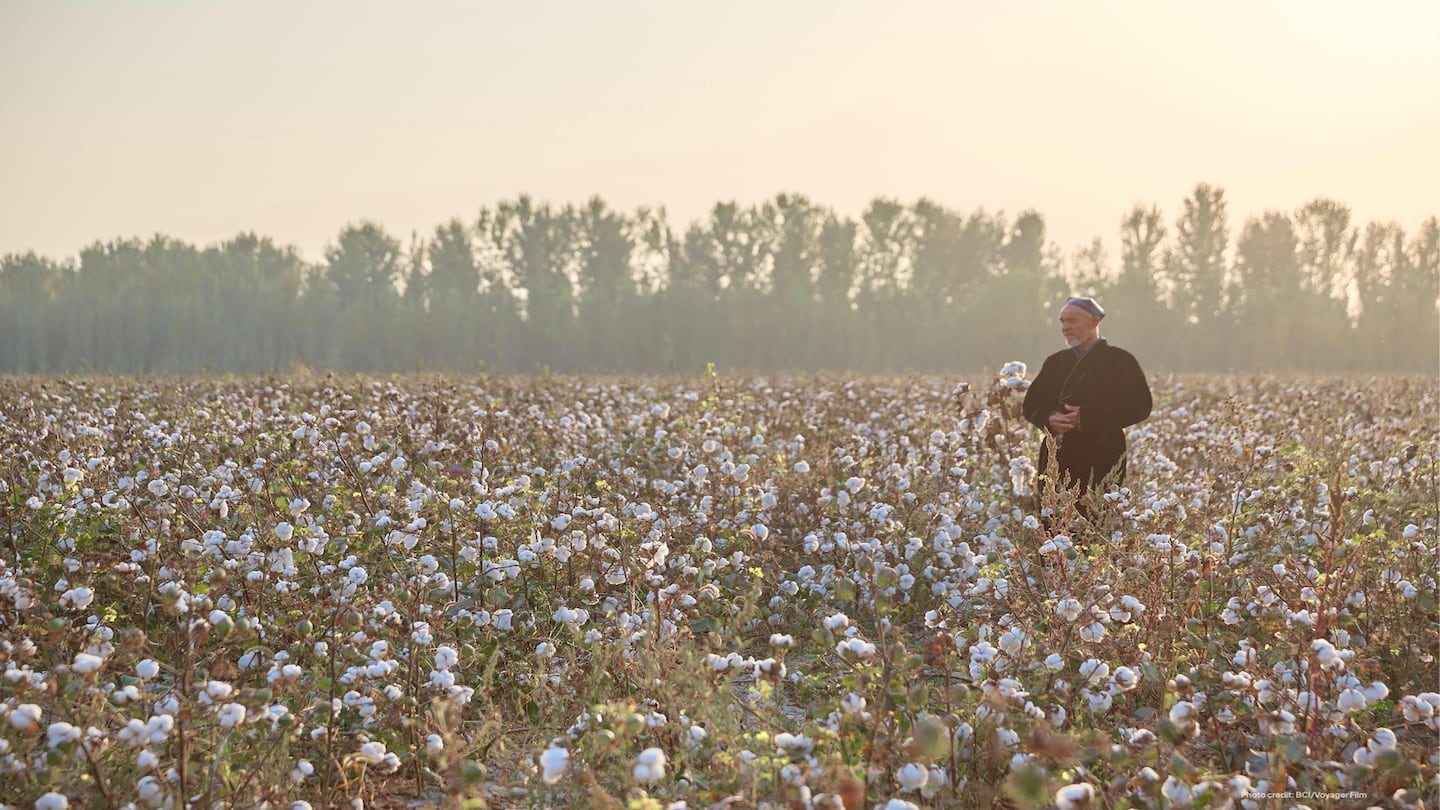
Fashion’s biggest sustainable cotton scheme, Better Cotton Initiative (BCI), released its first global impact report in five years Wednesday.
Its release is the latest milestone in an effort to address criticism of BCI’s standards and shore up confidence in its programmes with data-backed evidence of its positive impact. It follows a period of restructuring within the initiative, after an environmental NGO alleged in 2024 that Brazilian farms covered by its standards were linked to environmental and human rights abuses.
At the time, BCI said a third-party audit found no evidence its standards had been breached, but it acknowledged the findings revealed weaknesses in its approach. Since then, BCI has tightened oversight and ramped up a traceability initiative already under way. It became a formal certification scheme last year. The publication of its impact report provides additional transparency into how the initiative is working and “reflects the fact that BCI continues to invest in improving our approach to data collection and reporting,” the organisation said in a comment.
“Data and evidence represent the most important currency with which we operate and form the foundation for all aspects of our work — enabling us to strengthen our impact at field level and building the trust and confidence of the market and stakeholders in BCI cotton,” BCI chief executive Nick Weatherill said in a statement.
ADVERTISEMENT
The report draws on nine years of farm-level data and millions of individual data points. BCI worked with 1.4 million farmers in the 2024–25 season, who produced nearly a quarter of the world’s cotton. In the majority of cases the report found that since joining the programme, farmers who adopted BCI’s standards reduced their use of synthetic fertilisers and pesticides, which can be toxic and pollute soil and water, harm biodiversity and pose health risks to farmers.
More than two-thirds of participating farmers cut their synthetic pesticide use per hectare by a quarter. This helped lower emissions and reduce risks to soil and farmer health, the report said. More than half of the farms covered lowered their carbon footprint by an average 25 percent, while 52 percent of fully irrigated farms halved irrigation water usage, the report found.
BCI has also helped improve farmer income, according to the report. 59 percent of participating smallholders increased their income from cotton by 26 percent on average, after accounting for changes in cotton prices.
Nonetheless, progress was uneven. BCI found pesticide reductions were more challenging on large industrial farms, particularly in Brazil, Australia and the US, where higher pest levels and farming methods that rely more heavily on herbicides to control weeds without ploughing make reducing chemical use harder. Income improvements also varied considerably between countries.
The report comes as sustainability certification schemes across the board face growing scrutiny over whether they deliver measurable improvements on the ground, even as they are poised to play a bigger role in helping brands meet new regulations and traceability requirements in key markets, including the US and EU.
Alongside the report, BCI said it has also developed a new global framework to track key indicators and assess progress over time, as part of its efforts to strengthen how it measures its impact. The framework is set to launch later this year.
Learn more:
Better Cotton Appoints Nick Weatherill CEO
The former executive director of the International Cocoa Initiative will take over from Alan McClay, who has led the sustainable cotton initiative for the last decade.
Loading recommended reads…
In this week’s High Margin, a search for images that cut through our visual fatigue — with leads from M/M Paris, Ferdinando Verderi and stylist Emilie Kareh. Plus: Tod’s designer exit; Burberry’s resilient sales.
The producer price index rose 6.5% from October 2025, an acceleration from the prior month, according to Bureau of Labor Statistics data out Friday. On a monthly basis, the PPI increased 0.3%.
The creative director and strategist joins Imran Amed on The BoF Podcast to discuss the evolution of his career, the realities of shaping artist narratives and why long-term collaboration outperforms short-term marketing.
The former Nvidia CEO was central to an AI boom that has propelled the US stock market and fueled the country’s unmatched luxury spending. After his exit, nobody is sure what happens next.