Agenda-setting intelligence, analysis and advice for the global fashion community.
Agenda-setting intelligence, analysis and advice for the global fashion community.
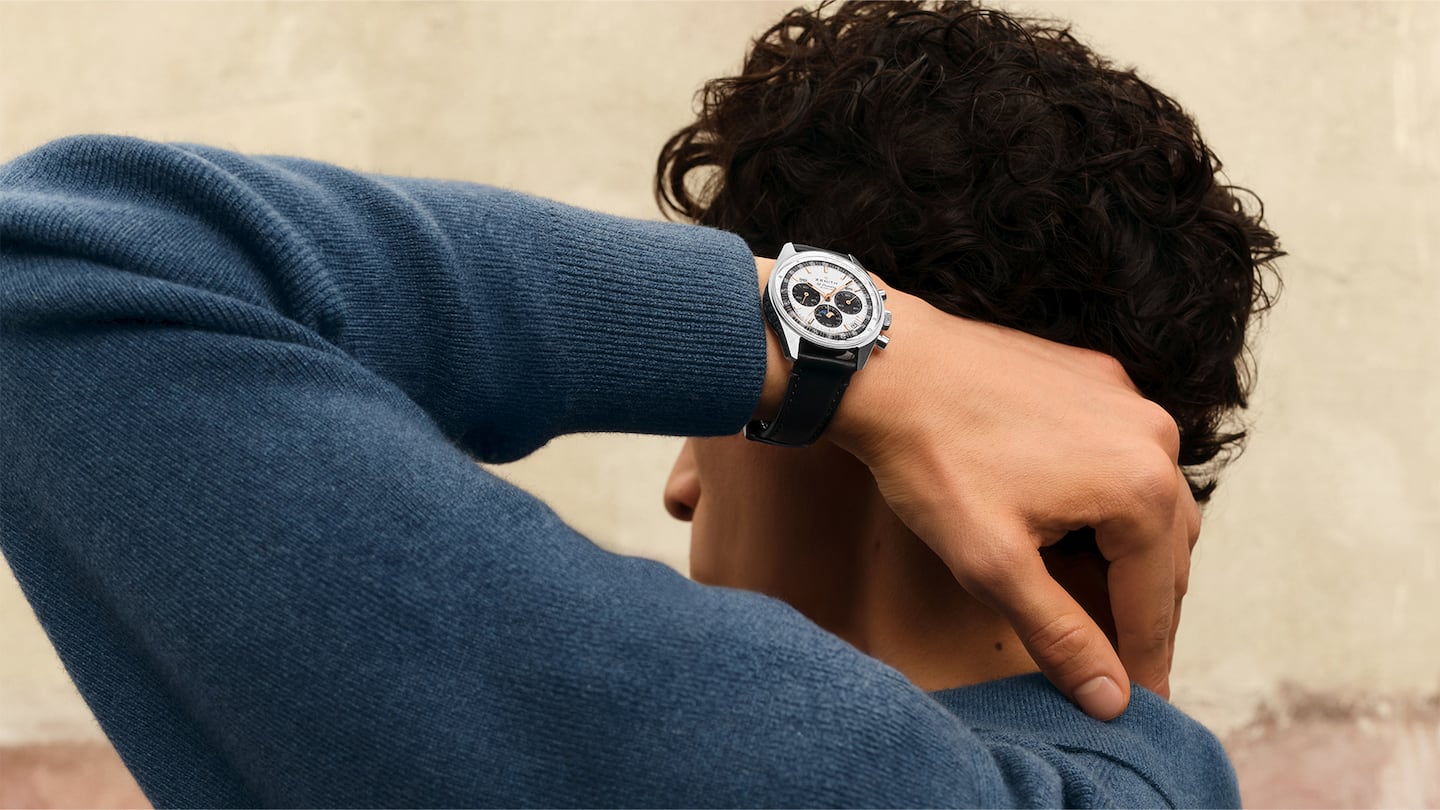
LVMH-owned Zenith is embarking on a major strategic repositioning that could result in the loss of half its Swiss workforce, with plans to shutter retail operations until 2029 and discontinue collections, the LVMH-owned watchmaker said on Thursday.
Zenith requires “a profound resizing” to make it “more exclusive, rarer, and with a stronger identity,” the watchmaker’s chief executive Benoit de Clerck said in a statement to The Business of Fashion.
The executive said the company could no longer sustain “continuous financial losses” and that it was unable to reach break-even with its current cost structure.
Swiss news outlet Le Temps, which broke the news earlier on Thursday, said that half of around 200 jobs at Zenith’s manufacturing headquarters in Le Locle, Switzerland, were at stake, as well as a further 100 roles linked to sales and distribution outside the country.
ADVERTISEMENT
Zenith confirmed it has entered into a formal period of consultation with local staff, in accordance with Swiss employment law, due to conclude on Nov. 12 — no decisions can be made before that date.
In addition to potential job cuts, de Clerck said Zenith would likely discontinue the vast majority of its current collections “in the very short term.”
The announcement comes after three years of struggle for Switzerland’s luxury watchmakers. According to Federation of the Swiss Watch Industry data, export values contracted 5 percent over that period, dropping from 26.7 billion Swiss francs ($32.5 billion) in 2023 to 25.5 billion Swiss francs last year.
Annual volumes fell sharply over the same period, from 16.9 million to 14.6 million units, indicating a shift to higher value pieces. However, there have been signs of recovery. Exports rose in September for the fourth consecutive month on the back of strong demand from the US and Europe.
Zenith has been particularly hard hit by the downturn. LVMH does not publish results by brand, but according to Morgan Stanley estimates, Zenith sales dropped to 98 million Swiss francs last year, down from a 2023 high of 138 million. Morgan Stanley also calculated Zenith’s annual volumes had fallen from 13,000 to 8,500 units over the period.
“Every watch brand in our segment is facing a severely depressed market right now,” said de Clerck. “You’ve seen it in the numerous announcements from our competitors in recent months. Between the strong Swiss franc, US tariffs and a sharp contraction across Asia and the Middle East, our market has fundamentally changed.”
Breitling cut around 50 jobs across HR, marketing and sustainability, Bloomberg reported in May without citing sources. Earlier this month, SwissInfo reported that Richemont-owned Montblanc was laying off six of the 45 staff employed at its Le Locle watchmaking facility. Breitling and Richemont did not immediately respond to a request for comment.
Zenith is a long-time supplier of mechanical movements to LVMH stablemates including Hublot and Bulgari. Two years ago, LVMH’s former watch division head Frédéric Arnault — the third son of LVMH chairman and chief executive Bernard Arnault, who is now chief executive of Loro Piana — announced Zenith would become a specialist movement hub for the group. This prompted questions about the brand’s future.
ADVERTISEMENT
More recently, the arrangement has come under question as Hublot prepares to open its new manufacturing facility in Nyon, Switzerland early next year. Zenith will continue to supply its LVMH stablemates, even if sustaining a large-scale manufacturing facility is no longer viable, de Clerck said on Thursday. “Our commercial and industrial footprint is far larger than our sales volume, which heavily weighs on our profitability,” he said.
When Zenith returns in 2029 it will be focused on the high-end segment known as “haute horlogerie,” de Clerck said, without detailing a pricing strategy. Last year, the company introduced the G.F.J. Calibre 135, a low-volume line in precious metals aimed at collectors with prices starting from around $50,000. According to Zenith’s website, most models are sold out. A “double-signed” $75,000 version of the watch made with Japan’s Naoya Hida announced earlier this year and limited to 10 pieces was fully allocated before it was introduced to the public.
As a low-volume, high-end maker, Zenith would face stiff competition from LVMH’s specialist makers Gerald Genta and Daniel Roth, as well as those made by Louis Vuitton, all of which are produced in Geneva at the group’s prestigious La Fabrique du Temps facility.
But de Clerck said he was confident Zenith would rise to the top: “Our ambition is clear,” he said. “To make Zenith the pinnacle of LVMH watchmaking.”
The move illustrates the polarisation of the market. While entry- and mid-range luxury brands selling watches between around $2,000 and $15,000 have borne the brunt of the downturn, ultra-luxury makers like Patek Philippe, Audemars Piguet and Richard Mille have outperformed the market.
Rolex, meanwhile, with steel sports watches priced similarly to Zenith’s, has also been resilient as the industry’s dominant name — and its largest manufacturer.
“We operate in a hyper-competitive segment against brands with massive marketing power,” said de Clerck.
Repositioning the brand comes with risk after years of changing directions, cautioned Oliver Müller, of consultancy LuxeConsult.
ADVERTISEMENT
“Since 1999 the brand has had five CEOs and almost as many strategies: One wanted to take on Patek Philippe, another tried to revive it through collaborations that had little to do with watchmaking,” he said.
“Every change came with a new price positioning, and you cannot move a brand up and down the price ladder and expect clients to follow you each time.”
Learn more:
Hublot Taps Ex-Audemars Piguet Chief François-Henri Bennahmias as Consultant
The move, which was facilitated by Jean Arnault, comes as Hublot undergoes a repositioning in a bid to reignite sales.
Disclosure: LVMH is part of a group of investors who, together, hold a minority interest in The Business of Fashion. All investors have signed shareholders’ documentation guaranteeing BoF’s complete editorial independence.
Loading recommended reads…
The company’s share price notched its biggest weekly rise since 2020 as investors bet on softer gold prices to bring customers back to stores.
Workers staged fresh demonstrations in Dhaka Thursday, forcing factories to suspend operations despite government promises to raise wages before the end of the year.
The cult menswear designer and former Demna collaborator is returning to Balenciaga as owner Kering seeks to revive sales at the French house.
Just a few years ago, commentators were declaring the brand as past its peak amid multiple ownership changes and a broader streetwear cooldown. Today, consumer tracking metrics shows domestic sales and youth market share is rebounding strongly.