Agenda-setting intelligence, analysis and advice for the global fashion community.
Agenda-setting intelligence, analysis and advice for the global fashion community.

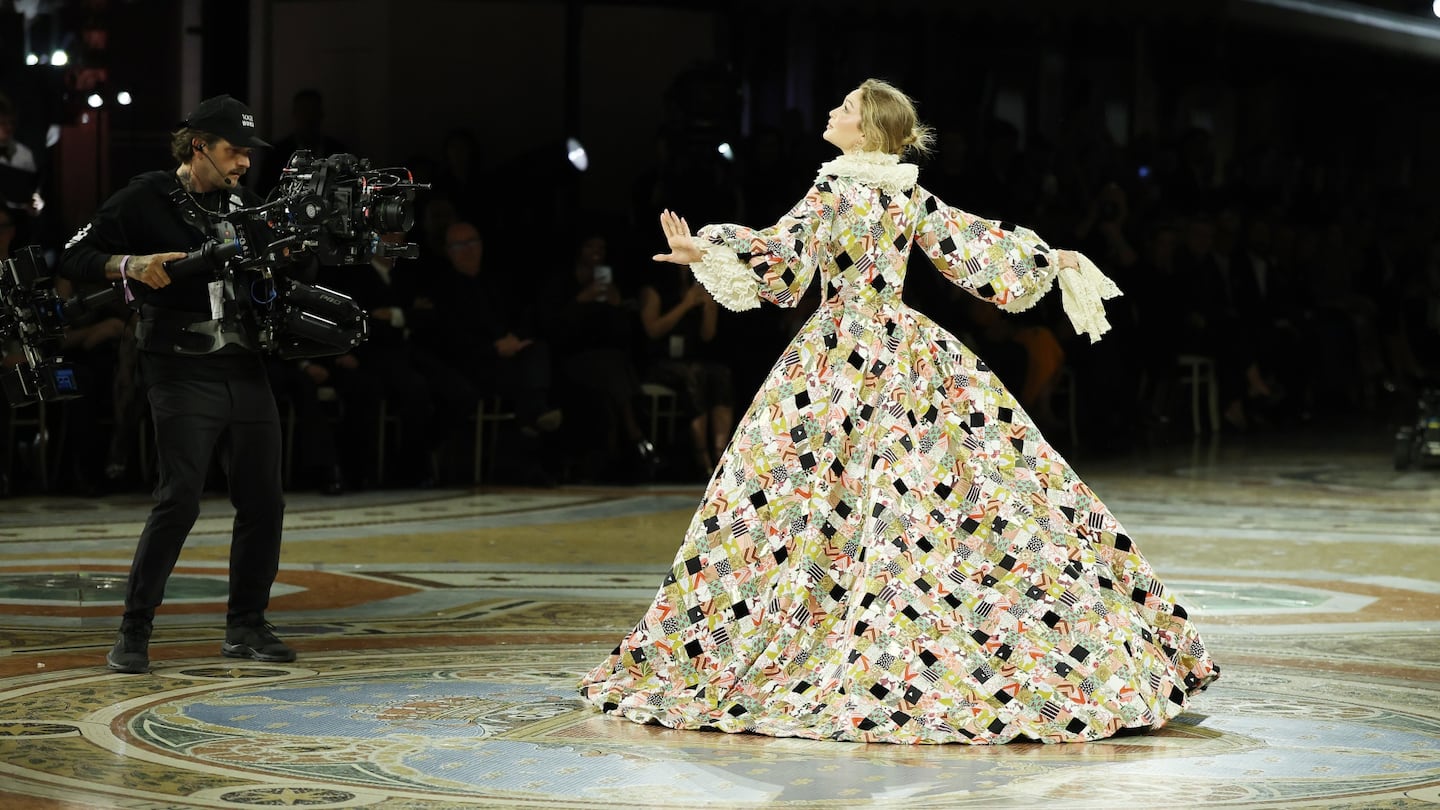
MILAN — For its fifth edition, Vogue brought the Vogue World event to Milan on Monday, as the magazine leans into publisher Condé Nast’s fastest-growing business segment.
The city’s majestic Galleria Vittorio Emanuele II provided the stage for a show built around dance, music and a fashion show for about 500 spectators. It unfolded in front of Prada’s first store and the window displays of many of luxury’s biggest names, including Louis Vuitton, Chanel, Dior, Gucci and Bottega Veneta.
Gigi Hadid, Angelina Kendall, Anok Yai and Vittoria Ceretti opened the show in Valentino Haute Couture gowns as creative director Alessandro Michele and a slew of other heavyweight designers looked on. The 40 minute spectacle included live music and dozens of dancers (including a star turn by Italian ballet dancer Roberto Bolle) while drones buzzed overhead to capture footage for the livestream. Alex Consani wore a bubblegum-pink, ankle-length Bottega Veneta dress, while Jennifer Lopez came striding into the venue holding the hands of Domenico Dolce and Stefano Gabbana, wearing one of their black tulle gowns.
Like many publishers, Condé Nast has long been experimenting with models beyond subscriptions and advertising to grow its business and make up for revenue lost to growing competition from social media giants like TikTok and Instagram. Revenue from events – including Vogue World, the Met Gala and the Vanity Fair Oscar party – jumped 40 percent in 2025, according to a company memo.
ADVERTISEMENT
“We don’t expect advertising to be a growth engine for the business,” Condé Nast chief executive Roger Lynch told The Wall Street Journal late last year.
The Vogue World event in Los Angeles last year generated more than $30 million in revenue, a 50 percent increase on the previous year. Condé Nast didn’t say how much it costs to stage the events or whether Vogue World has ever been profitable. But the figures show how the event has evolved into a significant revenue generator in its own right.
Front-row seats reportedly sold for as much as 25,000 euros ($28,620), but many attendees were invited by Vogue, making sponsorships the event’s main source of revenue. Partners included fashion-adjacent brands such as Alo Yoga, Eli Lilly, Meta Glasses and eBay. Vogue did not disclose how much sponsors paid. The invite list included members of the publication’s Vogue 100 club, who pay $100,000 a year for a membership that provides access to events like Vogue World.
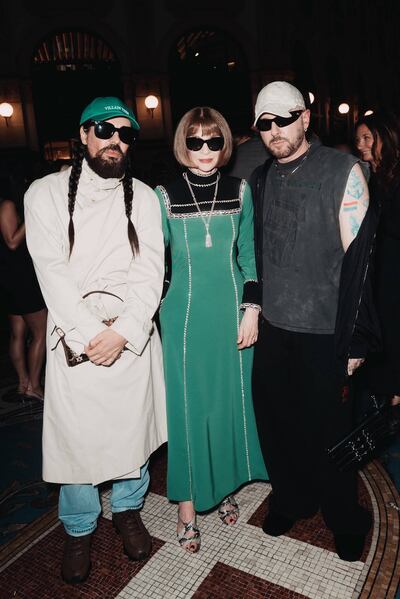
The event was the first major public appearance for Anna Wintour, Vogue’s global editorial director and Condé Nast’s chief content officer, since the Metropolitan Museum of Art cancelled a planned retrospective of star couturier John Galliano late last month amid renewed scrutiny of his history of antisemitic remarks. A new theme for the exhibition and associated gala has not yet been announced.
Wintour, the driving force behind the Meta Gala, is a close friend of Galliano and had pushed to have the museum hold an exhibition of his work.
Despite the dustup over the Galliano exhibit, Wintour’s ability to pull together not only top models, but also Italy’s top designers and fashion industry executives appears to be intact. Sitting in the front row under the Galleria’s soaring cupola were Prada Group’s Miuccia Prada and Andrea Guerra; Zegna executive chairman Gildo Zegna; Tod’s chairman Diego Della Valle, Kering chief executive Luca de Meo, Donatella Versace and Balenciaga creative director Pierpaolo Piccioli.
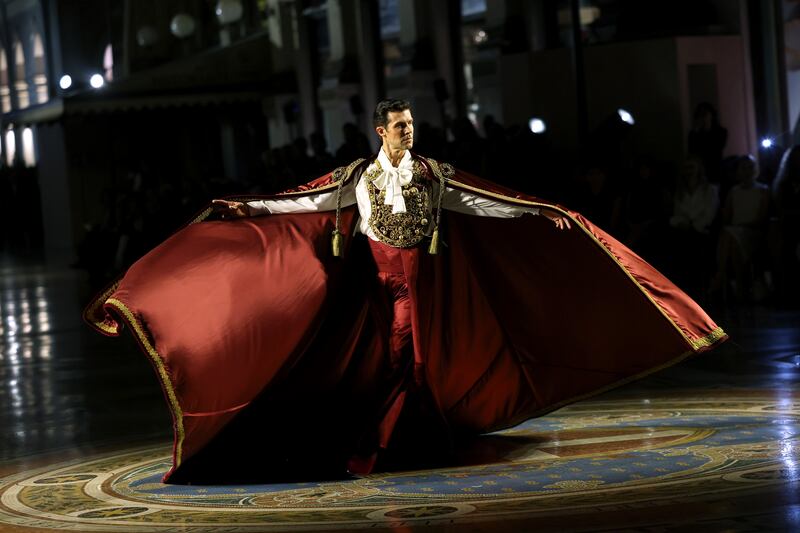
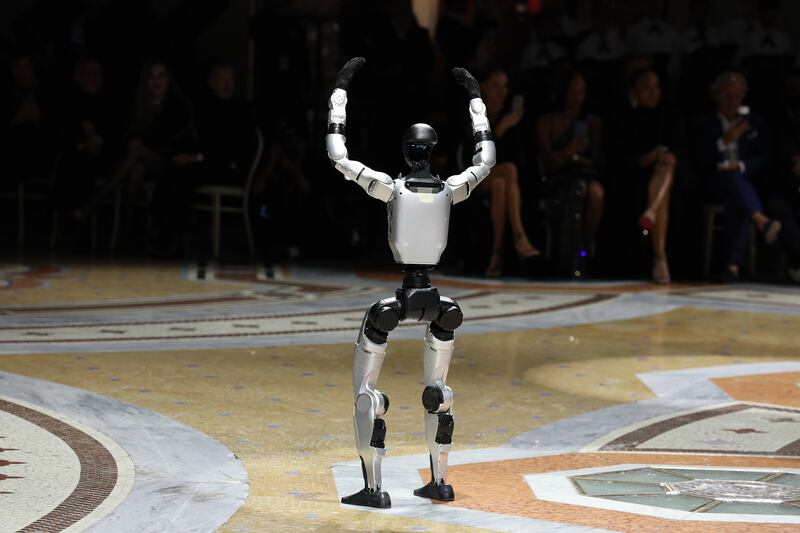
Titled “The Human Touch in the Age of Technology,” the Milan event aimed to highlight and celebrate “Made in Italy,” craftsmanship and “the human side of fashion,” Vogue said in a statement. The show was structured around five thematic acts and mediums, moving from Renaissance brocades and wool to screen-based imagery and lace. A group of robots walked the runway towards the end of the event (videos of which are already attracting ire online). For the finale, eight Italian brands, including Fendi, Gucci and Prada, created custom “memory dresses” meant to reinterpret each house’s codes for today.
“Vogue World… tells a story about the culture and our current moment, akin to the way a fashion portfolio tells a story,” Wintour told BoF in a written response to questions. “Staging Vogue World allows us to bring together fashion, art, performance, technology and history and bring it to a global audience.”
ADVERTISEMENT
The focus on craftsmanship and Italy’s fashion industry, however, comes at a thorny moment, as the sector continues to grapple with allegations of worker abuses in its supply chain. Investigations that began in 2024 exposed undocumented workers and poor working conditions at suppliers to some of the country’s biggest luxury brands, prompting a broader debate over how the industry can protect both the workers and the small manufacturers and specialised workshops that underpin Made in Italy.
The inaugural Vogue World event took place in New York in 2022, followed by events in London, Paris and Los Angeles. For use of the Galleria, Vogue will donate a minimum of €2 million generated from ticket sales to remodel a public library on the outskirts of Milan.
The next iteration of Vogue World will take place next year in San Francisco.
The sixth edition of the annual runway spectacle will return to the US after this year's outing in Milan.
Condé Nast’s decision to absorb the publication into Vogue.com will likely boost the company’s bottom line, but its progressive, Gen-Z-centric political content is unlikely to survive the transition.
The Los Angeles iteration of Vogue’s annual runway entertainment event aimed to revitalise the city’s beleaguered film industry through fashion tie-ups.

Eric Sylvers is Milan Correspondent at The Business of Fashion. He is based in Milan and leads BoF’s coverage of all things Italian.
Loading recommended reads…
In this week’s High Margin, a search for images that cut through our visual fatigue — with leads from M/M Paris, Ferdinando Verderi and stylist Emilie Kareh. Plus: Tod’s designer exit; Burberry’s resilient sales.
The producer price index rose 6.5% from October 2025, an acceleration from the prior month, according to Bureau of Labor Statistics data out Friday. On a monthly basis, the PPI increased 0.3%.
The creative director and strategist joins Imran Amed on The BoF Podcast to discuss the evolution of his career, the realities of shaping artist narratives and why long-term collaboration outperforms short-term marketing.
The former Nvidia CEO was central to an AI boom that has propelled the US stock market and fueled the country’s unmatched luxury spending. After his exit, nobody is sure what happens next.