Agenda-setting intelligence, analysis and advice for the global fashion community.
Agenda-setting intelligence, analysis and advice for the global fashion community.


A monthly briefing on the technology news and trends shaping fashion and the wider world.
Subscribe to Tech Mode by Marc Bain to go deep on the most intriguing developments in AI and how technology is reshaping the fashion industry.
Welcome back to Tech Mode, your monthly guide to how AI and other technologies are changing the fashion industry.
First, ICYMI:
Also of note: Beginning Sunday, companies in the EU will have to label imagery generated with AI or face steep fines.
ADVERTISEMENT
And earlier this week, Salesforce announced its investment in Solomei AI, the company behind the AI experience on Brunello Cucinelli’s website; Cucinelli himself is Solomei’s chairman. It uses AI to generate different content in real time based on how the user interacts with the site, rather than having the same fixed experience for everyone. Marc Benioff, chief executive of Salesforce, said it creates “entirely new ways for businesses to engage with their customers” in a press release.
Let’s get to our main topics.
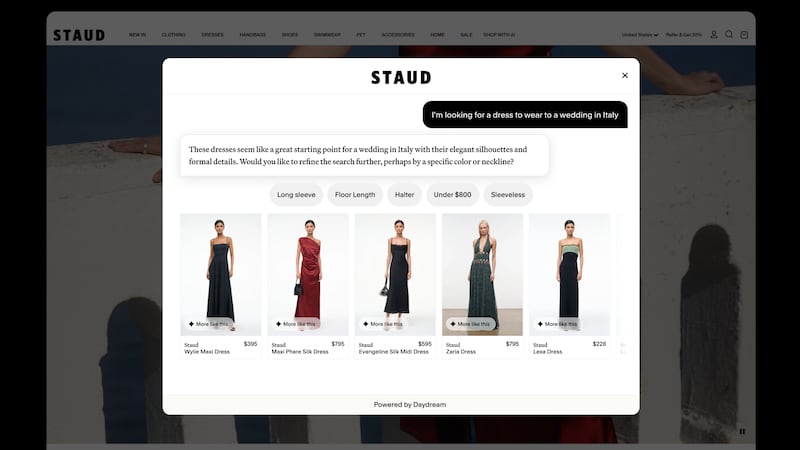
The news: With large language models changing how search engines operate, brands have been bringing the capabilities of LLMs to their own e-commerce sites with the help of tech providers such as Swap.
Now, AI shopping platform Daydream, which built its entire user experience around leveraging LLMs, is adding to the momentum by opening its technology up to brand partners. The company launched a pilot programme in May that lets partners effectively replicate Daydream’s interface on their own sites, allowing shoppers to search for products and get personalised recommendations.
Let’s chat: LLM search is appealing for fashion brands because it lets shoppers say exactly what they’re looking for and use inputs like images rather than just keywords. They can also refine their results with follow-up prompts. The mix makes for a more conversational and personalised experience.
Couper, a multibrand retailer in the pilot, launched its Daydream-powered AI stylist in the US this spring and has found the technology valuable, according to Lindsay Ladas, chief operating officer and chief financial officer. Customers often come to the site to shop for specific occasions, she said, but don’t always know exactly what they’re looking for.
“With this programme, our customer can feed specifics around event, location, time of year, even if she needs a specific colour of bridesmaid’s dress, right to the [AI] stylist, and from there it will — for lack of a better term — spit out options that are directly curated to her exact needs,” she said.
Partners only: Julie Bornstein, Daydream’s co-founder and CEO, said for at least the next quarter the company will only offer the technology to partners selling through its platform. Those companies are already set up on Daydream, a process that includes integrating their inventory, and Bornstein said the company has its hands full with those that have already expressed interest. Currently, Daydream has about 325 direct partners, from multibrand players like Revolve to brands such as Gucci.
ADVERTISEMENT
The company isn’t currently charging for the technology because it wants to “first understand the cost and value,” said Lisa Yamner, Daydream’s co-founder and its chief brands officer. The hope, according to Bornstein, is to eventually have every major brand and retailer on Daydream, which would also mean those businesses could all one day have Daydream’s tech integrated into their sites.
New behaviour: Whether this form of AI-assisted shopping will become a commonplace way people find and buy fashion remains to be seen. The number of people using LLMs to shop overall is small but continues to grow, with Adobe Analytics reporting that traffic to US retailers from AI sources more than doubled from April to June compared to the same period last year. (Adobe did not provide the actual number of visits.) Daydream, which recently passed its one-year anniversary, says it has now surpassed 1.5 million shoppers.
LLMs may not replace traditional search bars and site navigation anytime soon, but they could conceivably become a fixture right alongside them.
“We’re learning along with customers,” Bornstein said. “The behaviour is still adapting.”
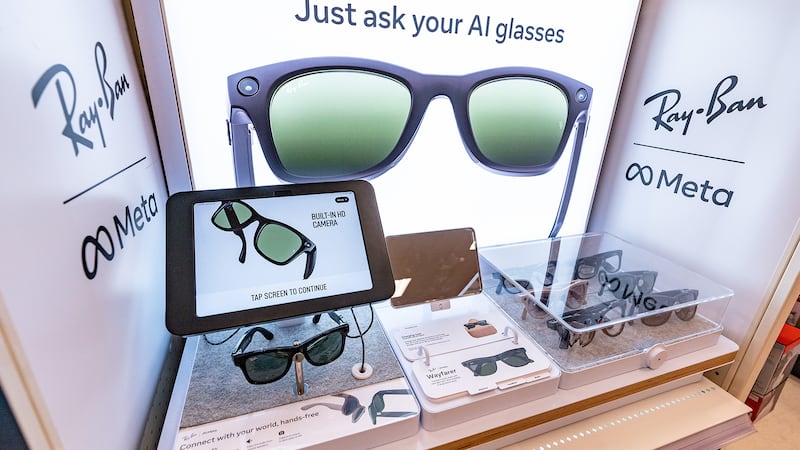
“Not sexy”: Smart glasses face mounting backlash as concerns grow they’re being used to record people without their consent or knowledge. The situation has been brewing for months now: The Ray-Ban Meta AI glasses are increasingly popular, and more people are posting POV videos to social media of customer service at luxury stores or attempts to pick up women. Wired even published a story called “The Rise of the Ray-Ban Meta Creep” in March.
These issues have gained more attention recently as celebrities have taken up the cause. In late June, Tyler, the Creator posted on Instagram that anyone wearing the Ray-Ban Meta glasses was a “weirdo” and said they “need to be banned.” Lorde chimed in this month during a set in Madrid, saying “fuck the glasses” and calling them “not sexy.” (Sexy is exactly how Meta seems to be trying to cast its first smart glasses solely under its own brand, partnering with Kylie Jenner on one style.)
Privacy please: Tech companies are taking note. At a media briefing last week where Samsung showed off glasses developed with Google and eyewear brands Warby Parker and Gentle Monster, a company executive said it was “an industry-shared problem” and highlighted the steps Samsung is taking to protect privacy, according to a report by Bloomberg. They include measures like the glasses not recording if the LED light that signals they’re capturing has been covered, something Meta’s glasses also do.
Apple, meanwhile, is considering pitching privacy as one of the differentiating factors of its forthcoming glasses, Bloomberg reported this weekend.
ADVERTISEMENT
Why it matters: Tech players and eyewear companies are trying to make smart glasses the next must-have consumer product, with EssilorLuxottica chief executive Francesco Milleri predicting they are “poised to become the central device in people’s lives, possibly replacing smartphones.” It’s debatable whether they’ll reach that level of ubiquity, but they could become a popular companion accessory to phones, similar to the Apple Watch, which would still create a valuable market.
The privacy concerns threaten that future, though it’s hard to say what effect, if any, they’re having so far. Yesterday, EssilorLuxottica reported revenue from AI glasses “almost doubling” in the second quarter, without revealing what sales volumes were.
Still, tech giants, which already face anger over AI, will have to reassure consumers their products have strong safeguards against misuse, or they’ll face a significant branding problem.

Survey says: The BoF Careers team surveyed 2,926 fashion and beauty professionals across 98 countries about several topics, including their experiences with AI at work.
DIY: Many workers are adopting AI tools on their own rather than being equipped with them by their employer. Only 16 percent of fashion workers and 25 percent of beauty workers said they had received any sort of structured AI training.
The bottom line: “The picture that emerges is one of broad adoption but narrow transformation,” wrote authors Dan Hastings and Eoghan O’Donnell.
That’s not to say AI isn’t having an impact. Half of fashion workers and 59 percent in beauty said AI had sped up specific tasks or made them more efficient. But it’s clear from the results that substantially changing how a company operates with AI is as much a cultural and organisational challenge as a technological one.
Loading recommended reads…
Workers staged fresh demonstrations in Dhaka Thursday, forcing factories to suspend operations despite government promises to raise wages before the end of the year.
The cult menswear designer and former Demna collaborator is returning to Balenciaga as owner Kering seeks to revive sales at the French house.
Just a few years ago, commentators were declaring the brand as past its peak amid multiple ownership changes and a broader streetwear cooldown. Today, consumer tracking metrics shows domestic sales and youth market share is rebounding strongly.
Dior claimed its winter campaign, ‘Christian Dior’s Night in Colour,’ was fully hand-illustrated. But online commenters have questioned whether the campaign used AI in its development.