Agenda-setting intelligence, analysis and advice for the global fashion community.
Agenda-setting intelligence, analysis and advice for the global fashion community.


Your scannable cheat sheet to the coming week in fashion and beauty.
Uniqlo-owner Fast Retailing, Levi Strauss and Aritzia report earnings this week, showing how three very different apparel businesses are doing in the all-important US market.
The underlying businesses behind Uniqlo’s functional essentials, Levi’s denim and Aritzia’s elevated basics will come under scrutiny as investors try to gauge shopper appetite amid high inflation and a choppy economic outlook.
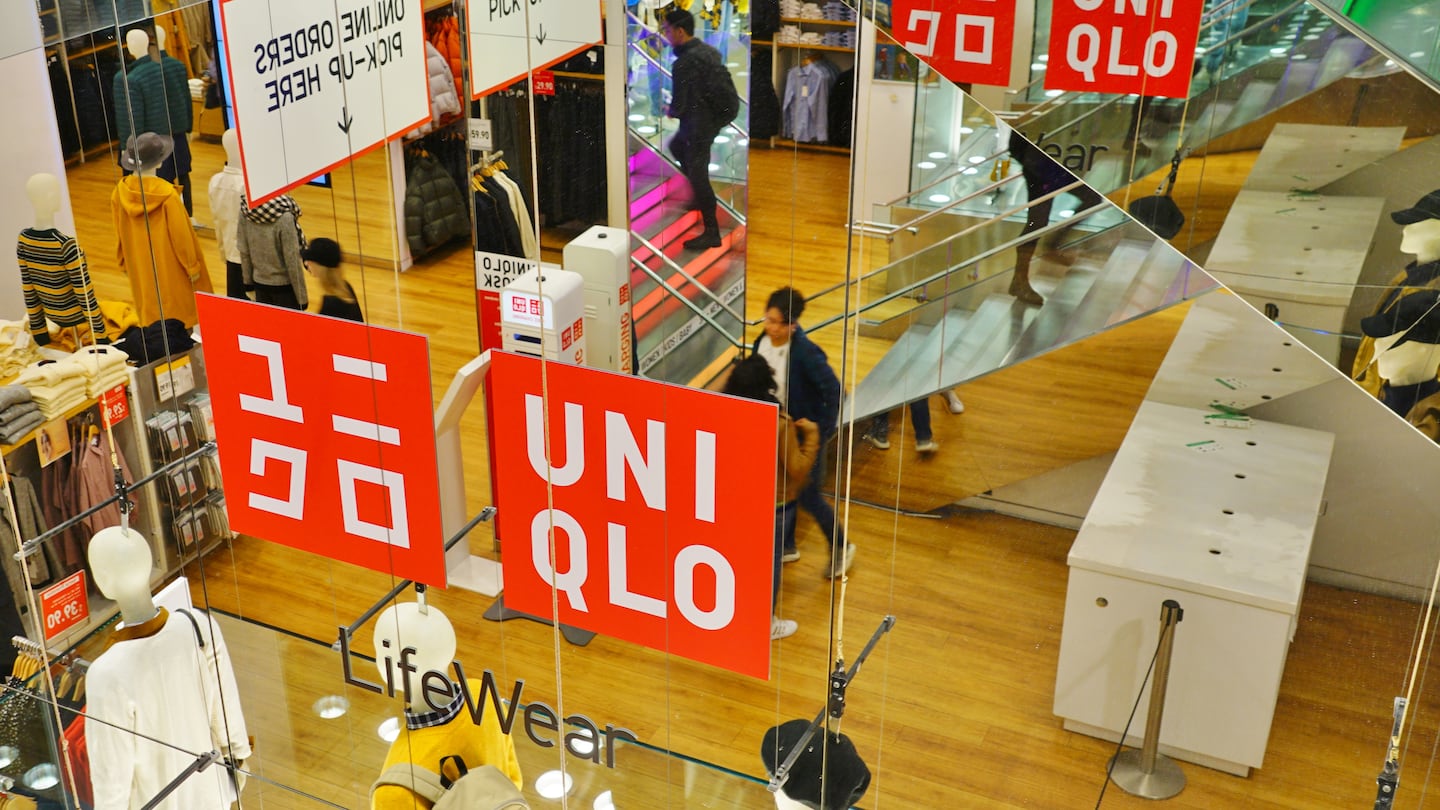
Fast Retailing will publish results on Thursday with the focus on Uniqlo’s expansion beyond its home Japanese market. While the US accounts for less than 10 percent of the company’s revenue, the Japanese group is counting on the country as a major source of future growth as it looks to diversify beyond China, where momentum has slowed. Fast Retailing has set a target to more than triple revenue in North America in about five years.
Levi’s reports third-quarter results on Wednesday, with investors and analysts looking for reassurance that the denim maker can sustain growth amid signs of weakening consumer demand in the US and Europe. Investors have soured on the stock, which has lost about a fifth of its value since the company raised its sales forecast in early July.
ADVERTISEMENT
Aritzia, which has occupied a sweet spot for wardrobe staples that sits above Zara and Gap, but well below luxury, also reports on Thursday, giving investors a look at whether the Canadian retailer can sustain its recent breakneck growth. Its US business has driven much of that momentum, but the shares have fallen almost 20 percent since its July results as investors focus on the inevitable normalisation of comparable sales growth and question how much of the latest US tariff burden Aritzia can absorb.
Foreign expansion. While Fast Retailing has been growing quickly and has lifted guidance three times this year — including most recently in July — investors will be looking for indications that Uniqlo’s expansion outside of Japan can keep powering profits. Investors want to see signs that the US business can maintain its recent growth and become a bigger contributor to overall group revenue.
The yen. Foreign expansion is complicated by the weak yen, which is approaching a 40-year low against the dollar. The Japanese currency remains relatively weak against other major currencies such as the euro, British pound and Chinese yuan.
Premium denim. The San Francisco-based retailer aims to capture more of the premium denim market, a move that since last year has brought us $400 denim jackets and $300 jeans. Levi’s is also boosting its more profitable direct-to-consumer business that currently makes up about half of total revenue.
Sales growth. Analysts are forecasting a 5 percent increase in third-quarter revenue. Updates from management on a call with analysts could offer insight into expectations for the evolution of cotton prices and how the company is managing them. While Levi’s is relatively underexposed to the current high price of crude because of its limited use of petroleum-based fabrics, higher shipping costs could still affect a business that relies heavily on cotton.
New CFO. In late September, Levi’s appointed John Vandemore as chief financial officer. Vandemore, who was CFO of Skechers for the past nine years — during which time revenue doubled at the footwear company — will take up his new post on Nov. 1. Analysts have welcomed his appointment, citing his long track record in apparel and footwear. At Skechers, he had a wide remit that included overseeing supply chain, digital and IT functions, areas where he is expected to be involved at Levi’s.
The outlook. Aritzia is expected to report a 30 percent rise in quarterly sales and higher margins, with lower markdowns, better distribution and improved store occupancy helping to offset tariff pressure, according to UBS. The Swiss bank is forecasting sales growth of about 15 percent a year through 2031.
US tariffs. Most of what Aritzia sells in the US — which includes its “super puff” jacket that ranges from about $250–$450 — isn’t made in Canada and therefore generally isn’t subject to tariffs on Canadian goods. But the company’s Canadian distribution network, which dispatches some orders south of the border, can lead to additional costs following the elimination of the US de minimis exemption. In response, Aritzia is shifting some fulfilment to its US distribution centres.
Loading recommended reads…
In this week’s High Margin, a search for images that cut through our visual fatigue — with leads from M/M Paris, Ferdinando Verderi and stylist Emilie Kareh. Plus: Tod’s designer exit; Burberry’s resilient sales.
The producer price index rose 6.5% from October 2025, an acceleration from the prior month, according to Bureau of Labor Statistics data out Friday. On a monthly basis, the PPI increased 0.3%.
The creative director and strategist joins Imran Amed on The BoF Podcast to discuss the evolution of his career, the realities of shaping artist narratives and why long-term collaboration outperforms short-term marketing.
The former Nvidia CEO was central to an AI boom that has propelled the US stock market and fueled the country’s unmatched luxury spending. After his exit, nobody is sure what happens next.