Agenda-setting intelligence, analysis and advice for the global fashion community.
Agenda-setting intelligence, analysis and advice for the global fashion community.

What's up, down and making news this week in the fashion and beauty businesses.
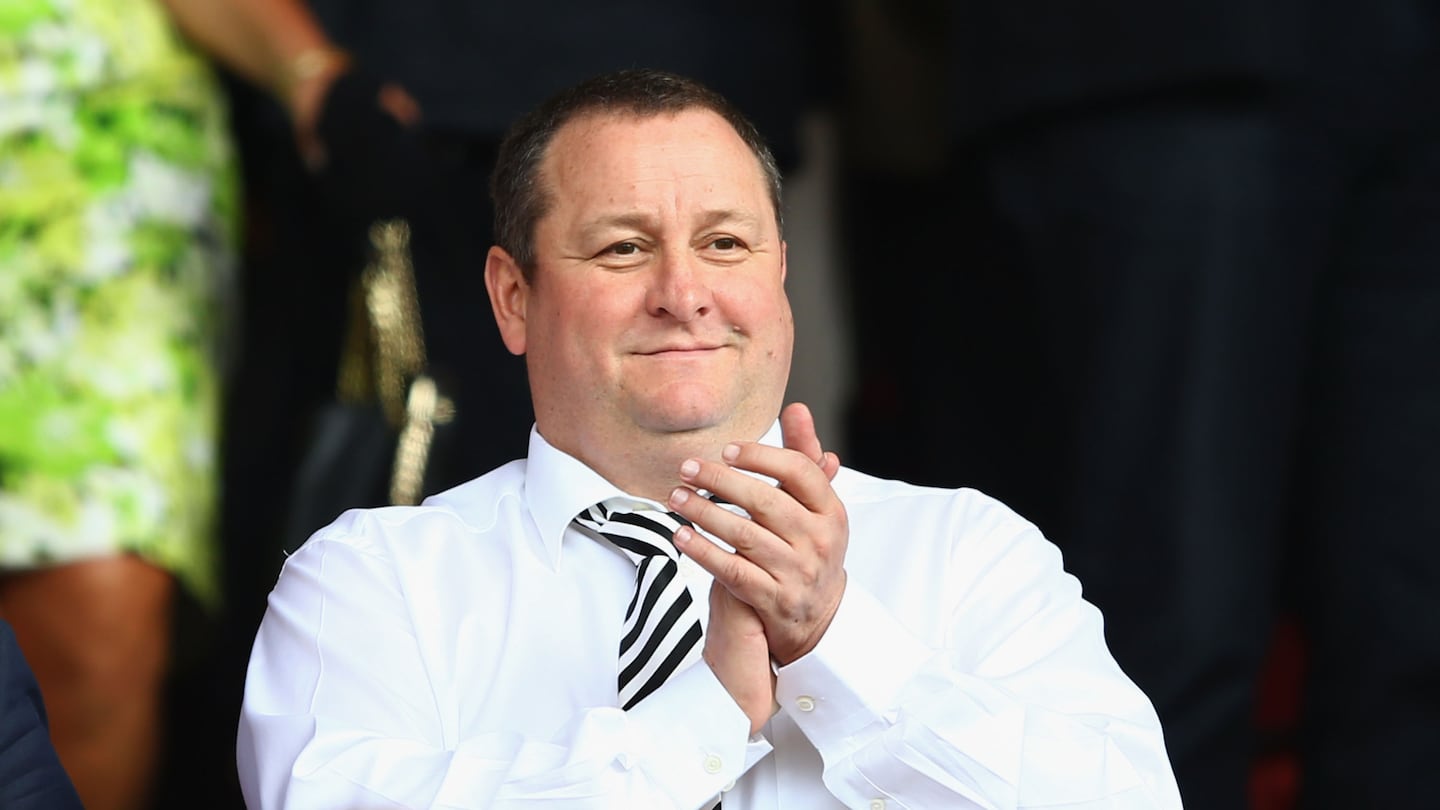
Buying an ailing luxury department store chain while trying to take over a German fashion house amid a three-year downturn in demand for high-end goods takes a certain degree of optimism. Mike Ashley has plenty of it.
The British billionaire, who controls retail juggernaut Frasers Group, is betting that a collection of luxury assets can become something greater than the sum of its parts.
Last week, Frasers bought financially troubled Harvey Nichols, while this week a bid to buy Hugo Boss concluded with the group boosting its stake in the luxury brand to 48 percent, up from about a quarter before the tender offer.
Whether Ashley can turn the recent acquisitions and his existing portfolio — which include luxury multi-brand retailer Flannels, House of Fraser department stores, a small stake in Burberry, more than a third of British luxury leather goods brand Mulberry and UK discount chain Sports Direct — into a cohesive luxury retail empire or simply a collection of disparate assets remains to be seen.
ADVERTISEMENT
“Mike Ashley is an M&A junkie and I don’t think his recent record, from House of Fraser downwards, has been at all impressive,” said Nick Bubb, an independent retailing analyst.
Ashley has had his share of failures. Frasers bought troubled luxury e-tailer Matchesfashion in late 2023 only to push the company into administration three months later. Frasers took a steep loss on its investment in Debenhams and had to pare back the number of House of Frasers stores.
But Bubb sees one clear success in Ashley’s luxury push: Flannels, the upscale fashion chain he has expanded from just a handful of stores when Frasers acquired it to more than 80 today.
“Ironically, the best success he’s had has been to see the potential in the ‘footballer and footballer’s wives’ market for upscale fashion and build up the Flannels chain into something significant,” Bubb said. “I suspect Harvey Nichols will become a sub-brand within Flannels in due course.”
That would suggest Ashley may not restore Harvey Nichols to its former glory but instead use the brand, its stores and its relationships with luxury labels to strengthen a broader retail platform built around Flannels.
Frasers didn’t respond to a request for comment on its wider plans.
When it announced the Harvey Nichols acquisition, the group said it would do “a review and rationalisation of the store portfolio, organisational structure, operating model and cost base,” in what could add up to a deep restructuring of the almost-100-year-old department store chain.
That approach would fit with the way Ashley has assembled the rest of the group’s portfolio: Frasers is accumulating pieces of the luxury ecosystem, from retailers and department stores to stakes in brands themselves. The question is whether those pieces can reinforce one another or whether the group simply ends up owning a collection of disparate and difficult-to-manage assets.
ADVERTISEMENT
“The acquisition builds on the group’s bold elevation strategy, strengthening its luxury positioning… while deepening its relationships with many of the sector’s leading global luxury brands, including Gucci, Moncler, Burberry, Prada and Dior,” Frasers said.
That implies a retail focus that will include top-end brands even as the group concentrates individual investments on accessible luxury — an emerging sweet spot in the market as shoppers question the value proposition at some of fashion’s most boldfaced names.
Frasers’ attempts to use stakes in luxury companies as a bridge to getting better access to products and then using that to attract other luxury brands can be successful, said Priscilla Chan, a senior lecturer at Manchester Metropolitan University’s Fashion Institute who focuses on fashion product development and marketing.
But the group will need to preserve the distinct identity of the brands in its portfolio.
“Each individual brand has its own name, so each of them can have its own identity, own positioning and can be in different market segments,” Chan said.
“Unlike shareholders and investors, consumers are more concerned with the brand name they buy items from, instead of which huge group that brand belongs to.”

Eric Sylvers is Milan Correspondent at The Business of Fashion. He is based in Milan and leads BoF’s coverage of all things Italian.
Loading recommended reads…
In this week’s High Margin, a search for images that cut through our visual fatigue — with leads from M/M Paris, Ferdinando Verderi and stylist Emilie Kareh. Plus: Tod’s designer exit; Burberry’s resilient sales.
The producer price index rose 6.5% from October 2025, an acceleration from the prior month, according to Bureau of Labor Statistics data out Friday. On a monthly basis, the PPI increased 0.3%.
The creative director and strategist joins Imran Amed on The BoF Podcast to discuss the evolution of his career, the realities of shaping artist narratives and why long-term collaboration outperforms short-term marketing.
The former Nvidia CEO was central to an AI boom that has propelled the US stock market and fueled the country’s unmatched luxury spending. After his exit, nobody is sure what happens next.