Agenda-setting intelligence, analysis and advice for the global fashion community.
Agenda-setting intelligence, analysis and advice for the global fashion community.

Welcome back to your Executive Briefing, a look back at the most significant events and trends of the past month.
For many luxury brands, October was a fright.
Halloween aside, the sector reported a slate of underwhelming earnings that spooked investors and dashed hopes that a rebound from luxury’s multi-year downturn might finally be materialising. Sales continued to slide in LVMH’s fashion division and at Kering, where chief executive Luca de Meo is realigning creative leadership at multiple brands in a bid to get the conglomerate back on track. Prada Group sales rose slightly but turned negative at Miu Miu after more than four years of quarterly increases, while Ferragamo and Moncler reported declines.
US luxury spending, which was helping to prop up the industry, may be weakening. Softness has persisted in Europe, where conditions worsened in the month as cost-of-living and student protests in shopping hubs like Paris and Milan turned in some instances to looting of luxury shops.
ADVERTISEMENT
Meanwhile, a long-hoped-for recovery in the Chinese market remained elusive. An economic slowdown in the country has piled pressure on young and middle-class shoppers, while a tax push by the government hit spending by the rich. Many consumers are turning to homegrown labels, which they see as offering better value than European brands.
China also remains a cultural minefield for Western businesses and their spokespeople. French football star Kylian Mbappé was reminded of this fact after receiving widespread backlash from consumers and the government for saying the funniest meme he’d seen of himself featured his face on “some guy — I think he’s a Chinese dictator,” referring to Mao Zedong, founder of the People’s Republic of China. Brands such as Dior, Hublot and On, which announced Mbappé as the face of its expansion into football in September, reportedly removed mentions of him from their Chinese social media.
Mbappé swiftly apologised, but it will likely take time to undo the damage.
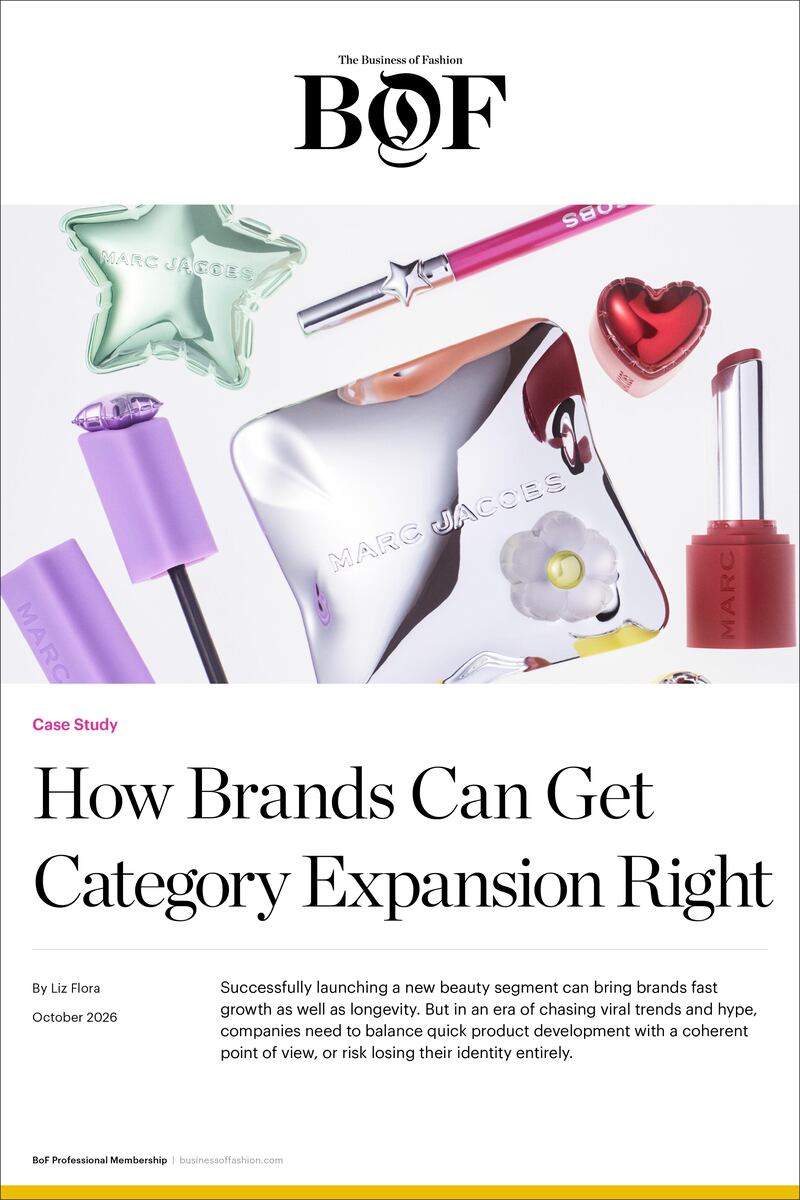
The expansion imperative: For young beauty brands, just as in fashion, branching into new categories will become a necessity at some point if they want to attract investors and become diversified, resilient businesses. But the rules for doing so successfully have changed.
Where brands were once expected to move into the categories that seemed most obvious, like makeup companies launching skincare or fragrance companies getting into makeup, “these days, the market is a free-for-all, with lines constantly breaking the mould,” BoF’s Liz Flora writes.
Unexpected launches: To identify the ingredients of a successful expansion, Flora examined cases of brands jumping into new categories. Wellness brand The Nue Co., for example, made its name selling supplements, yet when it introduced fragrance into its lineup, customers happily snapped them up.
Consumers don’t think about category divisions the way brands do, though they do expect brands to have some credibility in the space they’re entering. The Nue Co. earned trust as a wellness brand and it positioned its scents as an extension of its offering, touting them as functional products with health benefits like relieving stress and boosting mood.
Risk and reward: This environment opens up plenty of opportunities for brands to expand in new directions, but it also brings challenges. Companies can invest substantial amounts of money into products that ultimately go nowhere, and every new category entered risks diluting the brand’s identity if not done properly.
ADVERTISEMENT
Brands need consumer permission to enter a new space, they need to craft the right story and they need to nail the launch if they want their investments to pay off. Flora’s case study offers lessons from beauty that brands in categories like fashion and footwear can just as easily learn from.
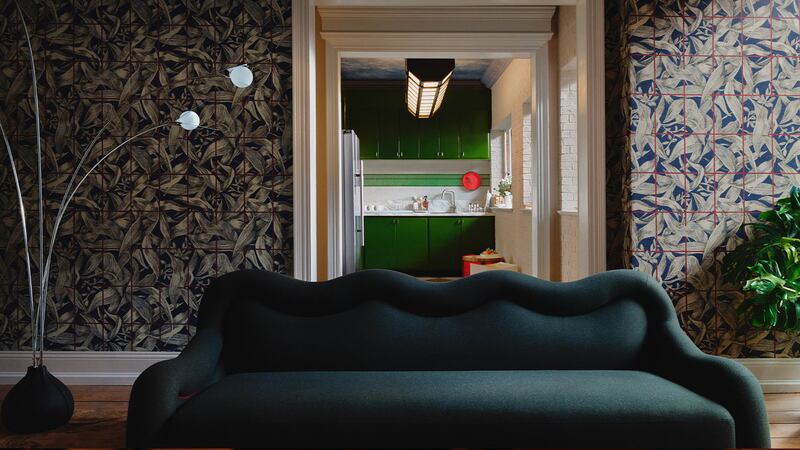
Home economics: Zara Home, the fast-fashion label’s 23-year-old homewares line, has been attracting attention among fashion types in recent years. The brand has built up its profile in part through collaborations with names like Vincent Van Duysen, the Belgian architect whose last collection with the brand spanned items from napkins to a sofa that cost thousands of euros.
During the most recent Milan Fashion Week, Zara Home even hosted a party in the city celebrating its three-way tie-up with “Challengers” director Luca Guadagnino and architect Stefano Baisi.
Attention please: For a fashion brand to move into homegoods isn’t new in itself; Ralph Lauren and Armani helped pioneer the idea. The thinking, as Eric Sylvers writes, is that “shoppers will spend more on a brand that offers an aesthetic universe, not just a wardrobe.”
But for Zara, its home line plays an additional role. The brand has worked to elevate its image in recent years, and Zara Home, with its higher-priced offering, helps in that pursuit.
Not a home run: It’s difficult to gauge how successful Zara Home has been, however, since parent company Inditex discloses only limited information about it. In all likelihood, it’s not a significant sales driver, since it’s not a category with high rates of repeat purchase. It’s also uncertain whether a buzzy collaboration at the sub-brand is effective at casting a premium halo over Zara’s €20 ($22) T-shirts.
Zara is clearly not about to stop investing in the line though, or seeking out high-profile collaborators to stamp their name on it.
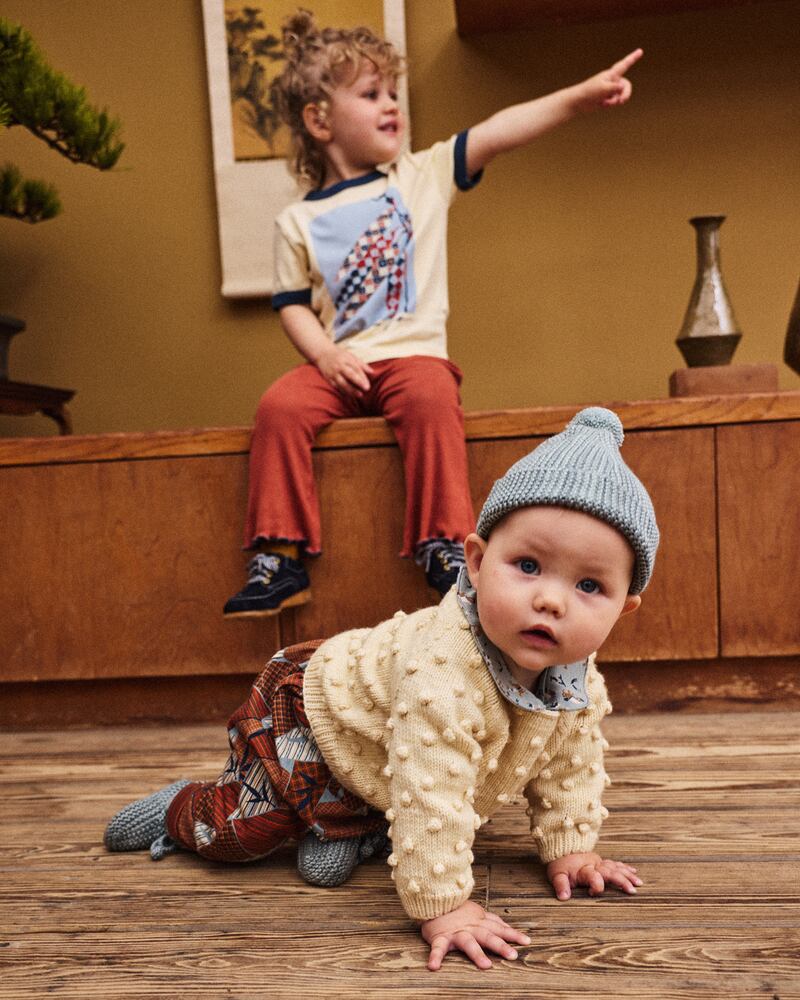
The baby paradox: Birth rates are falling in countries around the world, yet there have never been more baby products available, especially on the high end of the price spectrum. These two seemingly contradictory phenomena are in fact related, as Cathaleen Chen unpacks in her story: As people have fewer kids or become parents at older ages, they have more disposable income to devote to the babies they are having, while the rising costs of having children make parenthood seem like a luxury.
ADVERTISEMENT
Express yourself: The situation has turned baby products into status signaling opportunities. “Whereas parents from previous generations may have approached childrearing and the purchases it requires as a problem to solve, today’s new moms and dads see it as an exercise in self-expression,” Chen writes.
Parents with means are unwilling to trade down and are instead devoting larger sums of money to having the best stroller or the nicest pram, such as the $5,000 version Silver Cross made in collaboration with Lamborghini.
Why it matters for fashion: As distant as these dynamics may seem from fashion, they may be having an impact. In the same way consumers have redirected their spending away from stuff and towards experiences like travel over the years, they may now be similarly cutting back on their fashion spend and instead putting the money towards fancy baby gear.
Brands beware: Babies are tough competition.
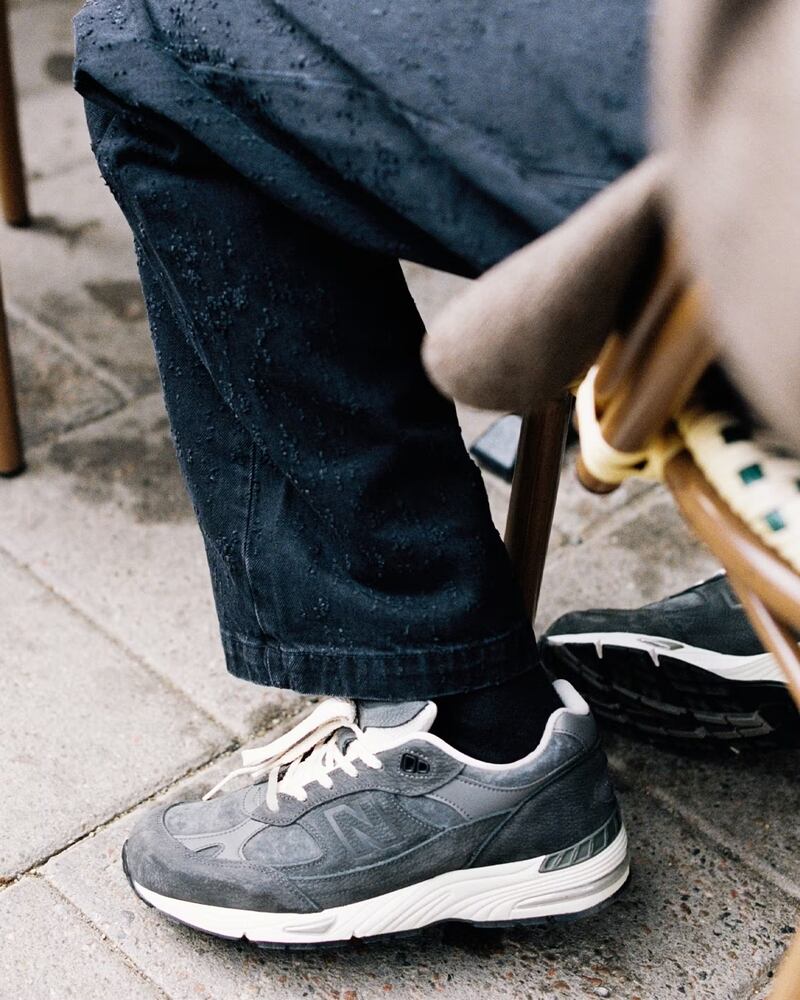
Real thing: It’s simple supply and demand: Scarcity has long been a key way brands create desire for products, and for many years, they did that artificially, limiting quantities just to build hype.
Chasing these drops has become tedious for many shoppers, however, while consumers are also seeking out greater value in the products they buy. Brands are consequently seeing shoppers respond to what you might call genuine scarcity, where products are hard to get because of the rare materials or slow craftsmanship involved.
Small batch: The dynamic has benefitted different types of brands. Emily Dawn Long, for instance, has built a growing fanbase of shoppers who clamour for the brand’s painstakingly made collection pieces and special drops, produced in runs of about 300.
One of New Balance’s most popular recent collaborations, created with Copenhagen-based brand Mfpen, totalled only about 90 pairs and was made with a very limited surplus leather from its UK factory.
Hype machine: None of this is to say brands can no longer engineer hype by limiting quantities. Exclusivity will always be important in fashion, however it’s created.
But brands that are seen by consumers as pulling this lever too often risk losing customer trust and pushing them to rivals prioritising real scarcity over the fake kind.
Loading recommended reads…
In this week’s High Margin, a search for images that cut through our visual fatigue — with leads from M/M Paris, Ferdinando Verderi and stylist Emilie Kareh. Plus: Tod’s designer exit; Burberry’s resilient sales.
The producer price index rose 6.5% from October 2025, an acceleration from the prior month, according to Bureau of Labor Statistics data out Friday. On a monthly basis, the PPI increased 0.3%.
The creative director and strategist joins Imran Amed on The BoF Podcast to discuss the evolution of his career, the realities of shaping artist narratives and why long-term collaboration outperforms short-term marketing.
The former Nvidia CEO was central to an AI boom that has propelled the US stock market and fueled the country’s unmatched luxury spending. After his exit, nobody is sure what happens next.