Agenda-setting intelligence, analysis and advice for the global fashion community.
Agenda-setting intelligence, analysis and advice for the global fashion community.


Subscribe to Full Coverage by Priya Rao: unpacking how shifting ideals, new players and cultural movements are transforming the global beauty and wellness industries.
Good morning,
Daniela here pitching in for Priya during a surprisingly blustery week in New York. How are my fellow East Coasters feeling post Nor’easter? I took it as a sign to put away open-toed shoes for the year, but I stubbornly refuse to wear tights until at least November. (Going to an all-girls school makes you competitive about sartorial suffering.)
Before I dive into my main topic for today, it’s been an eventful week in brand-land. On Monday morning, I broke the news that the niche perfume line Vyrao, known for its libido- and mood-boosting scents with names like Witchy Woo had been acquired by a new beauty platform, Tresalis, and later that night, that Scarlett Johansson’s skincare line The Outset was shuttering. Both lines were losing money, my sources tell me, but Vyrao has a clear point of view and a committed founder. The Outset had good formulas for sensitive skin (and a genuine fan base, according to mourners on Reddit) but couldn’t gain momentum between Johansson’s hectic filming schedule and lack of social media presence, plus the fact that the line was without a CEO for a year.
ADVERTISEMENT
But if you were concerned about a dearth of celebrity brands, don’t be. Just this week, the singers Madison Beer and Tate McRae both teased beauty offerings.
Also in this week’s edition:
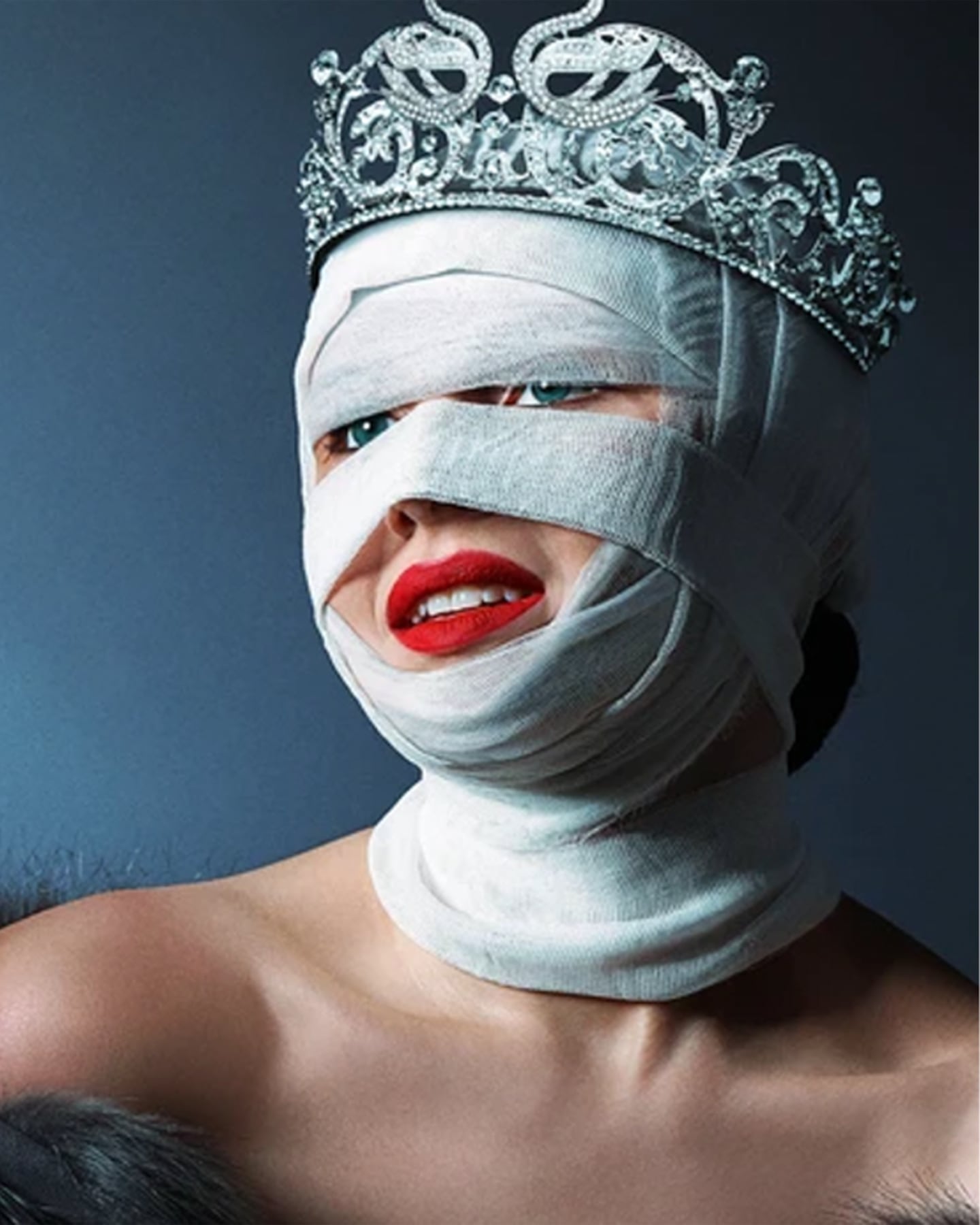
Remember “The Swan”? I was too young — and too British — to catch it live when it aired on Fox back in the 2000s, but I was introduced to it this week thanks to Hulu’s new documentary, “The Swan: Behind The Mirror,” which re-examines the show and its participants-turned-contestants. Over a single season of eight episodes, women from all over the US were promised a “life makeover,” including therapy, nutrition, exercise coaching and extensive plastic surgery to help them feel their best selves. Except partway through taping, they were told that they would also have to compete in a pageant against their fellow freshly surgically-enhanced peers, with only one being crowned “the Swan.”
Despite moments of real camaraderie and sweetness between the women, the documentary is a tough, but excellent, watch. Some 20 years on, the contestants recount everything from botched surgeries, post-show health crises and manipulation from the show’s producers, one of whom summed up the show’s purpose was to “take ugly chicks and make them hot.” A doctor told a contestant she had “masculine teeth”; in a present-day conversation, one of the surgeons — unwittingly, so he claims — compares women to toilets, and himself to a plumber. The women, with a tinge of black humour, called the apartment complexes where they stayed “pretty prison.”
It’s easy to look at a show like this and shudder, but think, “At least it would never be made today.” It was cancelled after two seasons when ratings slumped.
But I’m not so sure the hotness industrial complex has changed much in the intervening decades. We are still painfully obsessed with how women look, and how they got to look that way. If we weren’t, top surgeons like Dr. Steven Levine, who did Kris Jenner’s much-lauded facelift, or the BBL maestro Dr. Miami wouldn’t be micro-celebrities; companies like The Beauty Broker, a concierge service to help you find the right sculptor for your new nose/cheekbones/chin, wouldn’t have a business. Social media has fast become an open colosseum for women: Through unfiltered and oft-anonymous comments, you can see exactly who has had “too much” work done, and be taught the new rules of “glowing up,” which all of us, mere mortals and celebrities alike, are meant to embrace.
In “The Swan: Behind The Mirror,” one talking head observes beauty is not only power, but also a passport to the lives we want. The reality is even more insidious than that: as the pursuit of “looksmaxxing” shows, our appearances can become a reflection of our bank balances, education level, self-confidence — and entire worth. But that reflection is a funhouse mirror, distorted by what we think others see when they look at us, and how others project their own ideas onto us.
I work in the beauty industry and love my fancy hair treatments, pricey manicures and standing appointments with Upper East Side derms. I’m in no position to judge any woman for her routine, and I’d find it tragically boring to do so. I’ve always rolled my eyes at the suggestion that women who opt for more involved routines are deeply insecure and looking to conceal something (some of us are just high maintenance), but I am worried about the normalisation of procedures, especially irreversible ones, for young women. It can take a long time to learn to love one’s face! And pop culture loves to deem some treatments acceptable and others not so, some high class and others declassé, which can add on another kind of anxiety for those going under the knife or needle. As The Wall Street Journal recently pointed out, even “imperfections” like light acne or an un-rhinoplastied nose have become aspirational. But for whom?
ADVERTISEMENT
Sometimes, I worry that all of our pretty-prison sentences may be for life. We may not be getting out any time soon, but there are furloughs. I’ve found it helpful to put away my phone, and look at the very gorgeous, very real faces of my friends and family (seriously, just think about your best friend. Aren’t they stunning? Text them right now that you think they’re divine), and feel grateful for how small the problems in my life must be if I’m simply thinking about my nose.
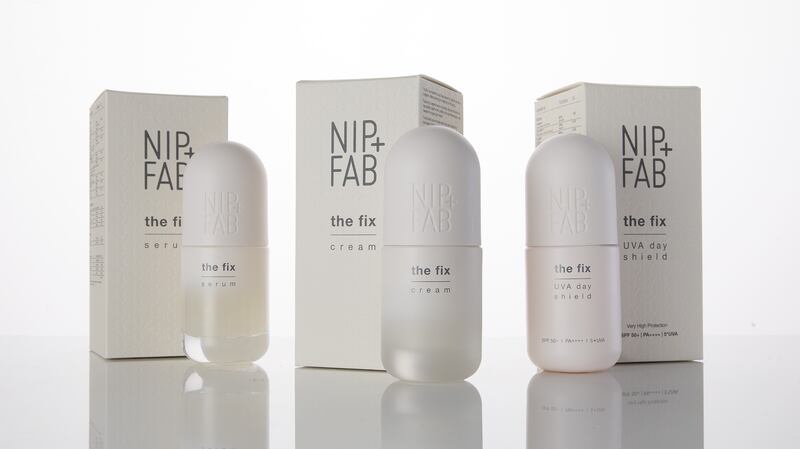
This week, the UK skincare label Nip + Fab announced a rather risky beauty experiment: radical transparency.
On Sept. 29, the label unveiled a new three-product collection called The Fix, including a serum and moisturiser ($100) and sunscreen ($90); more interestingly, they released them alongside a trove of information about clinical efficacy, formula composition and pricing architecture. For most beauty brands, “transparency” is a value often invisibly modified by “selective.” Flattering information is funnelled into marketing, but specific formulas and unit economics are part of the secret sauce.
So it’s refreshing, and a little shocking, that the 15-year-old brand is divulging tidbits like how the formula for The Fix Cream costs just over $9.28 to make but retails for nearly tenfold. Once you factor in marketing costs, taxes and staff overhead, each moisturiser sale makes a profit of about $4.50, according to the brand’s new website. Meanwhile, it loses $7 on products like its souped-up new sunscreen — unless people keep buying more, managing director Michael Hume said in an interview.
“We are losing money to acquire customers for this line,” Hume said. That’s not unusual in beauty, he added — but it doesn’t make it any less bold. Hume said the move was inspired by listening to Nip + Fab’s consumer base — nearly half the brand’s sales are direct-to-consumer — who wanted even more proof of value. This is obviously a winning strategy in skincare: The Ordinary was founded on it, and brands like Aroma-Zone have scaled up quickly with a similar offer. But both brands sell cheaper skincare products, and Nip + Fab relies on more premium positioning.
The project makes more than a few bets: that dupe labels won’t just steal the recipes and make them profitably; that shoppers will actually engage with the reading material (including, among other documents, a 900-plus page clinical trial); and, the biggest gamble of all, that these buyers will respond more to this level of transparency than they would a splashy marketing campaign. Of course, Hume is hopeful that the experiment will prove itself a valuable case study in contemporary consumerism.
“No big model is going to take this level of risk,” he said. “It’s down to businesses like us to push the norms.”
— Brennan Kilbane
ADVERTISEMENT
All these “archival” scent releases are not just a marketing play — they’re also a way for brands to do more with less. [The Business of Beauty]
Vanessa Friedman’s sit-down with Mark Zuckerberg about his shopping habits was immediate group-chat material. [The New York Times]
Body dysmorphia affects men, too: It was remarkable to read Sylvester Stallone talk about his own complicated relationship with his reflection. [The New York Times]
When does a dupe cross the line, morally or legally? Rachael Griffiths explores. [The Business of Beauty]
Bye for now (and you look great!),
Daniela

Daniela Morosini is Senior Beauty Correspondent and Special Projects Editor at The Business of Beauty at BoF. She covers the global beauty industry, with an interest in how companies go to market and overcome hurdles.

Brennan Kilbane is News and Features Editor at The Business of Beauty. He is based in London, and supports BoF’s coverage of the multifaceted cosmetics industry, from fine fragrance to wellness trends.
Loading recommended reads…
The department store’s Leeds and Bristol outlets will be converted to the Flannels brand in a shake-up under Mike Ashley’s Frasers Group, which purchased the chain when it was put into administration in mid-August.
Jack Tobin is joining Diane von Furstenberg artistic director Henry Zankov’s namesake label as CEO and part owner.
Nearly a decade since the luxury groups first published a charter of model protections, they are introducing new measures to protect those working in the industry.
As the platform matures as a media channel, a slew of beauty brands are turning to its most trusted writers for a more intimate form of audience engagement.