Agenda-setting intelligence, analysis and advice for the global fashion community.
Agenda-setting intelligence, analysis and advice for the global fashion community.

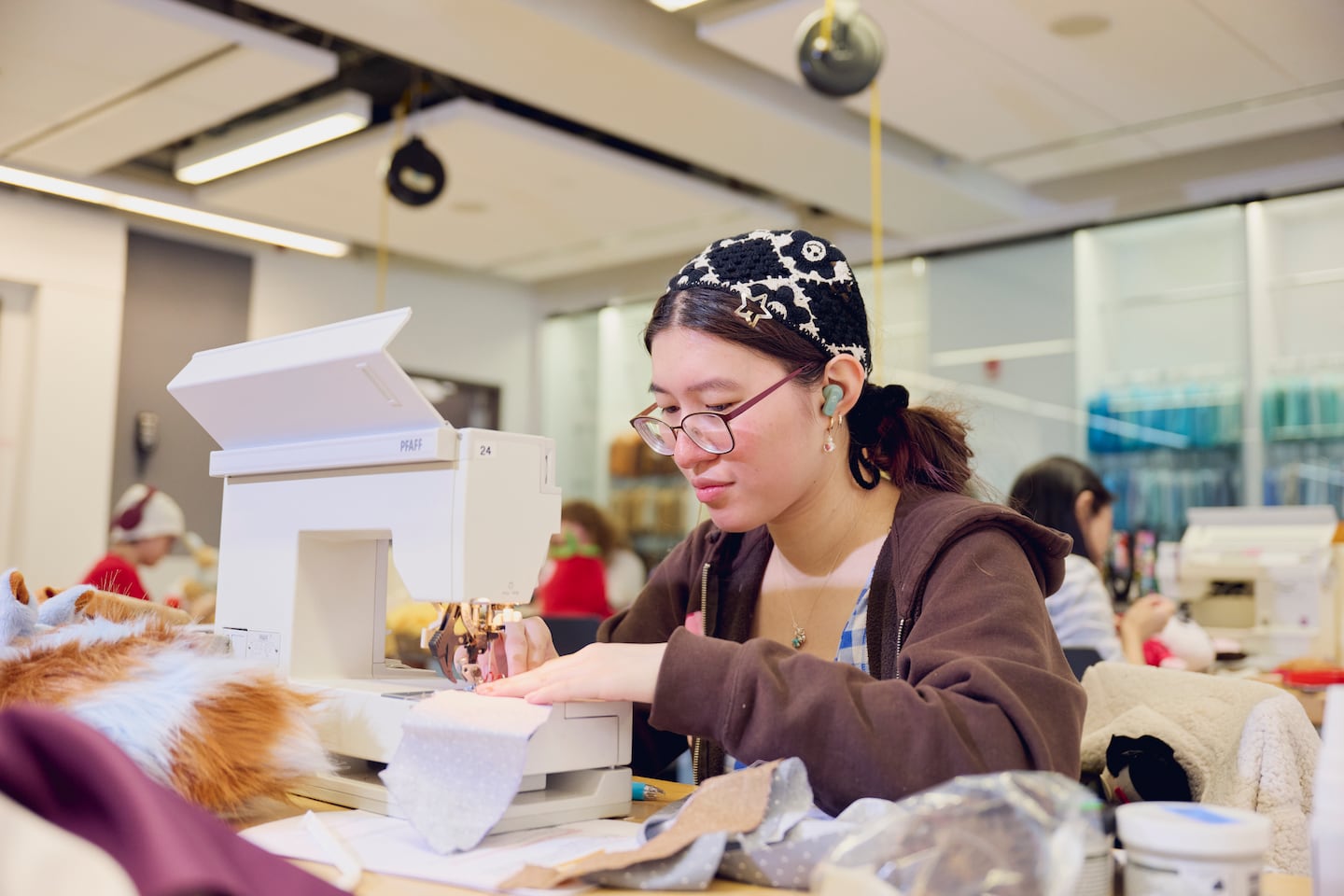
Nordstrom’s latest expansion plan reads more like a syllabus than a sales pitch.
In March, the retailer’s Future of Tailoring Program graduated its first class at the Fashion Institute of Technology. In August, it unveiled the programme at Seattle Central College’s School of Apparel Design & Development; next, it plans to bring its curriculum to Los Angeles through ASU FIDM (Arizona State University’s fashion school). All are fully funded by Nordstrom.
It’s the department store’s biggest move yet in the race to rebuild the increasingly shrinking pipeline of skilled tailors. The number of people working in tailoring roles in the US has fallen roughly 30 percent over the past decade, according to the Bureau of Labor Statistics. For Nordstrom — the largest employer of tailors in North America, with nearly 1,500 alterations specialists — replenishing that workforce has become an increasingly pressing business need. The company hired nine of the 30 students in FIT’s inaugural classes.
The pipeline for hands-on fashion skills has been drying up for years, and companies have tried a range of ways to replenish it. Luxury groups including LVMH, Chanel, Hermès and Prada have long operated schools and training programmes for specialist craftspeople, while Bottega Veneta launched its own academy in 2023.
ADVERTISEMENT
What has changed is the backdrop. Outside of fashion, skilled trades are enjoying renewed interest as the rising cost of a four-year degree and questions about how generative AI will reshape entry-level white-collar work push more young people toward careers that offer clear paths to employment without a bachelor’s degree. More workers are turning to vocational programmes and apprenticeships as pathways into trades such as plumbing, electrical work and construction. For fashion, it creates a new opening.
“There’s a general lack of awareness that this is a viable career path,” said Jessica Cloutier, vice president of selling programs at Nordstrom. “We think showing people real outcomes, not just describing the work, is what actually shifts perception.”
But fashion companies still have work to do to make skilled careers — from tailoring and patternmaking to draping, cobbling and jewellery-making — more visible and convince younger workers that creativity and status exist beyond the industry’s most high-profile roles. Not to mention, while shorter-term certifications can offer an alternative to a four-year degree, crafts like bootmaking and handbag construction can take decades to master, complicating the idea that trades offer a quick route to a viable career.
“There is not only the challenge of simply training the next generation of craftspeople, but also how to make them want to become those craftspeople in the first place,” said Yvonne Pengue, founder and director of London-based executive search firm Spot On Minds.
There’s no shortage of places to learn skills. Most fashion schools teach everything from patternmaking and tailoring to footwear and jewellery-making; at FIT, president Jason Schupbach said technical skills are so embedded in its programmes that students joke about learning to “drape til they drop.”
Still, students largely arrive at fashion school aspiring to become designers or creative directors, rather than tailors or craftspeople. Building that aspiration has to start much earlier, insiders say.
“It’s convincing parents that being a tailor is actually a good job and something that [they’d] want your 16-year-old to do,” said Adam Lukoskie, executive director of the NRF Foundation and senior vice president at the National Retail Federation.
It also means reaching people outside fashion’s existing craft hubs. Pengue said that while the older generation of craftspeople “are beyond proud of the job they are doing,” oftentimes, “they grew up in that region and they’ve been doing that all their lives … they see the value and the excitement.”
ADVERTISEMENT
Even today, efforts to promote trade careers remain mostly concentrated in these traditional hubs from Tuscany to Romans-sur-Isère in France and Northampton in the UK, Pengue said.
“I don’t know if someone from Atlanta or Minnesota or Scotland would be [aware],” she added.
For its part, Nordstrom sees itself as “having a stake” in helping spread the word in US markets. That’s also why the department store has moved aggressively this year to expand its programming beyond into cities where it sees the greatest need for skilled tailors, Cloutier said.
But she said the company is also trying to sell the job differently: less as task-based alterations work and more around the creativity, customer interaction and sustainability inherent in extending the life of a garment.
“It’s no longer just going to get something hemmed,” she said. “It’s also about sustainability and bringing life back into fashion.”
At Dallas-based luxury boot brand Miron Crosby, co-founders Lizzie Duplantis and Sarah Ward said giving artisans greater autonomy and recognition has become an important part of how they work with their factories in Texas and Mexico.
“There’s a lot of judgment and a lot of trust [and] communication that goes into the partnership and collaboration,” Duplantis said. “We’re very serious about making sure the artisans feel … they are contributing, excited [and] passionate.”
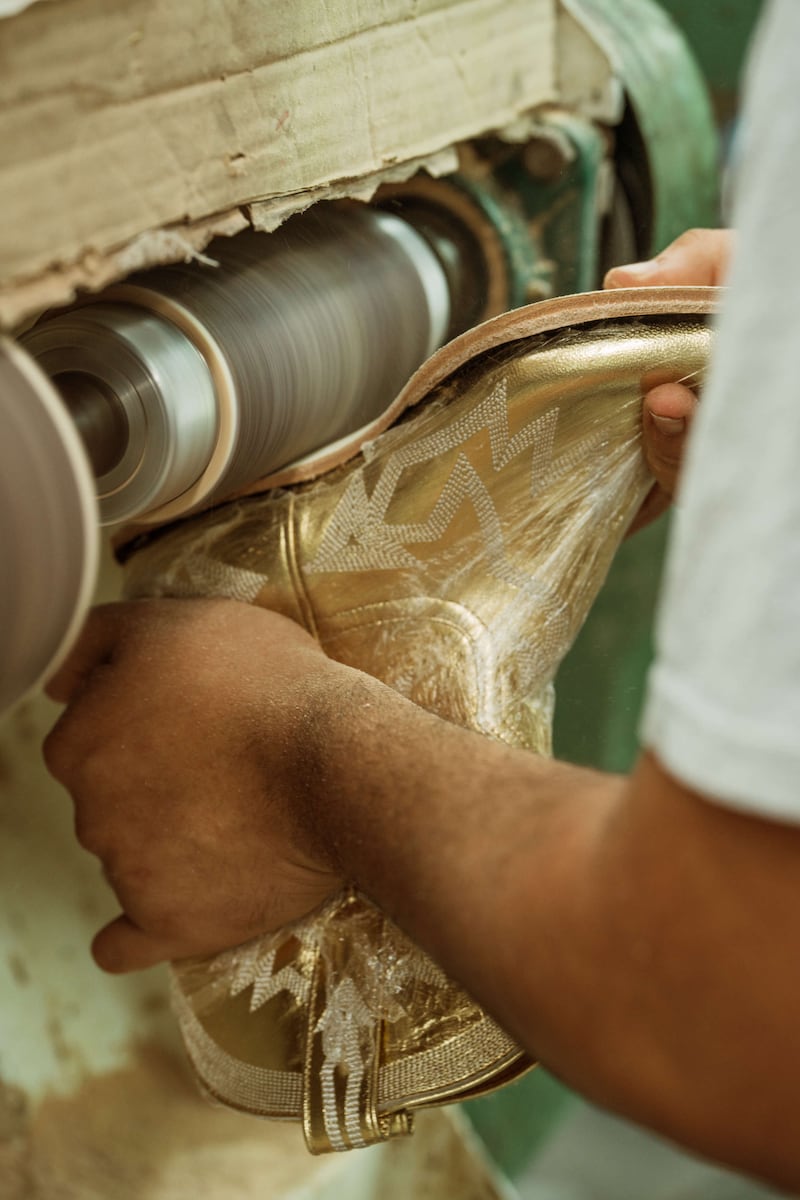
And while many of the craftspeople making Miron Crosby’s boots have decades of experience under their belts, Duplantis said she’s noticed a “refresh of interest” among a newer generation, drawn in part by the prospect of making something distinctive and built to last amid an endless churn of product.
ADVERTISEMENT
Fashion has another opportunity there: The industry has gotten very good at turning designers, founders and creative directors into luminaries. It has done less to confer that same kind of “social recognition” on the craftspeople who bring their ideas to life, Pengue said.
“The onus is on brands to celebrate the craftsmanship and thereby the craftsmen and women,” Ward said.
Fashion companies still have a long way to go from generating interest to building a meaningful pipeline of skilled workers. Competitive pay, career mobility and the time it takes to develop expertise are all part of the equation.
That last piece can’t be rushed, even if brands succeed in attracting more workers, Duplantis said.
“To really accomplish it and become a master in it takes years and years,” she said. “I worry about what the backlash of that will be.”
Some of the most effective solutions are often more practical. One is not trying to make these jobs the dream at all but framing them as a means to an end. Nordstrom has increasingly made career mobility part of its pitch for tailoring roles, Cloutier said, including through quarterly check-ins with frontline employees that ask a simple question: “Where do you want to go?”
“We have a lot of examples of people who come in with the skill set of being a tailor … and they pivot to become really successful stylists,” she said, adding that others have become regional managers or moved into product development roles.
Another is looking beyond young workers altogether. Recruiting Gen Z remains an important opportunity, but some of Nordstrom’s best success stories have been adults who take up tailoring as a “second, third or fourth act,” Cloutier said.
Then there’s pay. Tailors, dressmakers and custom sewers earned an average of about $45,000 in the US last year, according to the Bureau of Labor Statistics; shoe and leather workers and repairers averaged about $39,000. Pengue said wages for experienced craftspeople are becoming more competitive in Europe and the UK as the pool for talent becomes thinner.
“It’s increased because a lot of companies are competing for these skills, for these individuals when they are good,” Pengue said. “And these are very stable roles.”
Facing mass retirement from their ageing artisanal workforce, fashion brands and makers are working to gain — and hold — the attention of the next generation of pattern makers, tailors and more.
A panel of experts, unpack our latest case study Inside Hermès’ Best-in-Class Leather Goods Strategy.
Waves of Silicon Valley layoffs may create an opportunity for companies in other industries to staff up. Retailers like Nordstrom are looking to the next generation by sponsoring college courses.
Schools are updating curricula, strengthening ties with industry and expanding career support. But educators say success still depends on what students do with those opportunities.
Sheena Butler-Young is Senior Correspondent at The Business of Fashion. She is based in New York and covers workplace, talent and issues surrounding diversity and inclusion.
Loading recommended reads…
The designer leaned into the glamour and sex appeal of the storied Parisian fashion house. Sales nearly tripled during his tenure before sliding in recent years.
BoF’s editors pick the best shows from the Spring/Summer 2027 fashion season.
Brands may be racing to invest in new technology, but the biggest barrier to online sales is far more basic, finds BoF Insights and Amazon Fashion & Sports’ latest report ‘Inside Fashion & Sports E-Commerce.’
Every photographer is telling their own tale, says Walker, but his new exhibition also offers an emotional document of the triumphs and challenges of queer culture.