Agenda-setting intelligence, analysis and advice for the global fashion community.
Agenda-setting intelligence, analysis and advice for the global fashion community.

LOS ANGELES, CA —In the fall of 2024, Violet Grey’s new leadership was plotting its store expansion. One top-choice location: Palisades Village, the outdoor shopping centre owned by California developer Rick Caruso. With a store lineup that included Saint Laurent, Chanel Beauty and Bottega Veneta, it drew a customer in the market for an Augustinus Bader face cream or Biologique Recherche exfoliant. At the time, those storefronts were in high demand.
Then came the most destructive fires in Los Angeles’ history, resulting in 31 deaths and over 16,000 structures destroyed across the Pacific Palisades and Altadena neighbourhoods. Protected by private firefighters hired by Caruso, the Village remained intact amid a sea of devastation around it. It was closed for almost two years, however, as the developer fixed smoke-damaged shop interiors, clearing many out for new tenants as brands declined to return.
But Violet Grey was undeterred, with faith in the area’s eventual comeback. Just a month after the fires, the retailer reached back out to Caruso — and this time, there was no waitlist.
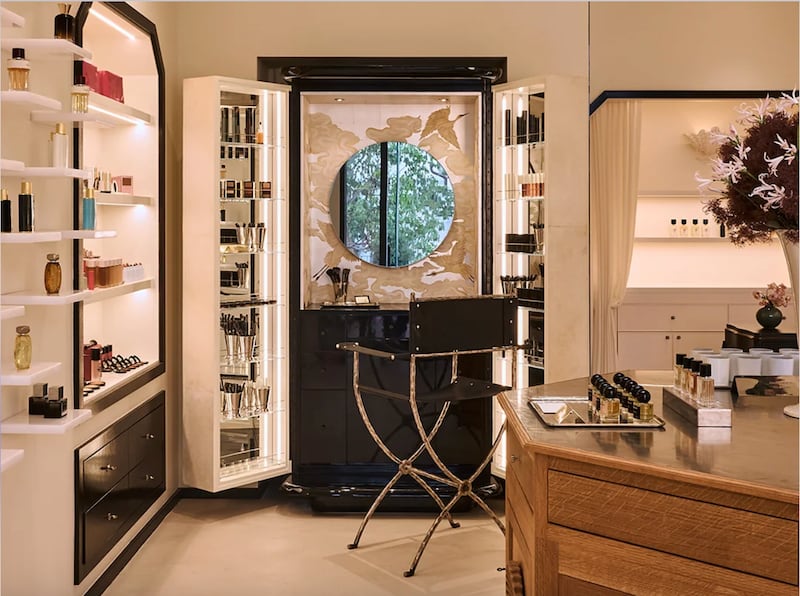
“At that time, more people were trying to leave or not reopen than were proactively trying to get in there,” said Sherif Guirgis, chief executive officer of Violet Grey. His team opted for a small shop Aesop vacated after less than two years, waiting until Caruso gutted the space to begin designing the boutique. Violet Grey soft-opened in August, and in October, finally held its grand opening for its Palisades Village store, with a crowd spilling out of the jewel-box space to the sounds of a live violin player. The location marks the brand’s fourth standalone shop, with a fifth in Aspen planned for this year.
ADVERTISEMENT
Violet Grey is one of several brands, including Mother and Xirena, entering a Palisades Village that looks very different than it did before January 2025. The major luxury labels are, by and large, now gone from the mall, which officially reopened on Aug. 17 and remains surrounded by burned-out buildings and empty lots.
Major retailers and labels like Chanel Beauty, Sephora and Lululemon are all gone. Brunello Cucinelli and Isabel Marant have opted to reopen, and are joined by a number of indie labels like Staud and Leset alongside small local businesses. Local multibrand luxury boutique Elysewalker now takes up the biggest luxury presence in the 8,000-square-foot flagship space previously held by Saint Laurent.
“It’s a better mix, because it’s more approachable things you actually wear every day,” said Lela Becker, the co-founder of Los Angeles-based denim brand Mother. After losing its store across the street from the Village in the fires, the brand signed a lease with Palisades Village and will open in February next year.
Caruso — and the Village’s new crop of brands — are making a major bet on the future of the Pacific Palisades before the community has returned. With 80 percent of its stores now open and all but one of them leased, its clean, manicured paths and smoke-mitigated buildings are one of the earliest signs of a return to normalcy in the area.
But the costs associated with the fires are a tangible example of how natural disasters are changing risk calculation for businesses. For Caruso, the remediation totaled $100 million; the 19-month closure amounts to 20 percent of the Village’s total existence. Even before the disaster, retailers had been anticipating climate-led cost increases: a 2024 Deloitte survey found that 68 percent of retailers said they are certain that climate change would significantly increase business costs over the next five years.
The soot-stained facade of a burned-down Spanish Colonial Revival structure that previously housed Mother’s store sits across the street from the Village, next to a lot with a shell of metal beams twisted into dramatic shapes. The charred remains and empty lots in the area indicate the speed of the overall recovery, for both businesses and residents. Only 59 houses have been fully rebuilt so far, according to a tracker by local media outlet PaliPost. Another 1,180 homes are currently under construction, making up a fraction of the 6,837 structures destroyed in the Palisades fire.
In Palisades Village, however, progress is well underway.
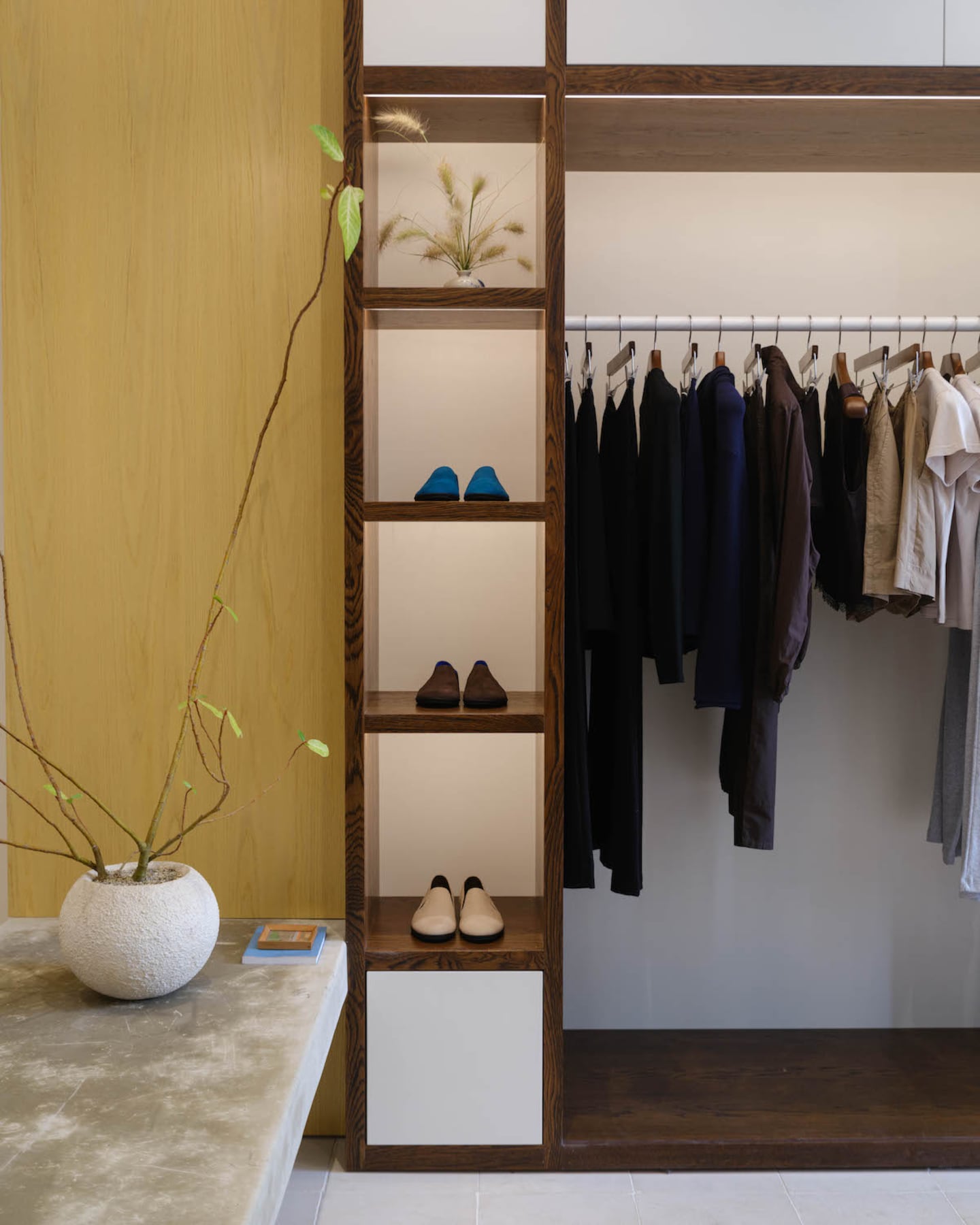
A wave of contemporary fashion brands accounts for a sizable chunk of the new retailers. Beyond Staud, Mother and the first West Coast location for Leset, there is womenswear label Xirena’s first standalone store. Roughly 60 percent of stores are those that are reopening locations they had before the fires, including Zimmermann, Toteme, Jacques Marie Mage and fragrance lines Diptyque and Byredo. Travis Heard, brand president of Los Angeles-based Xirena, said that the Caruso team particularly wanted to bring in more brands based in the city. Leset and Staud are both headquartered in Los Angeles, too.
ADVERTISEMENT
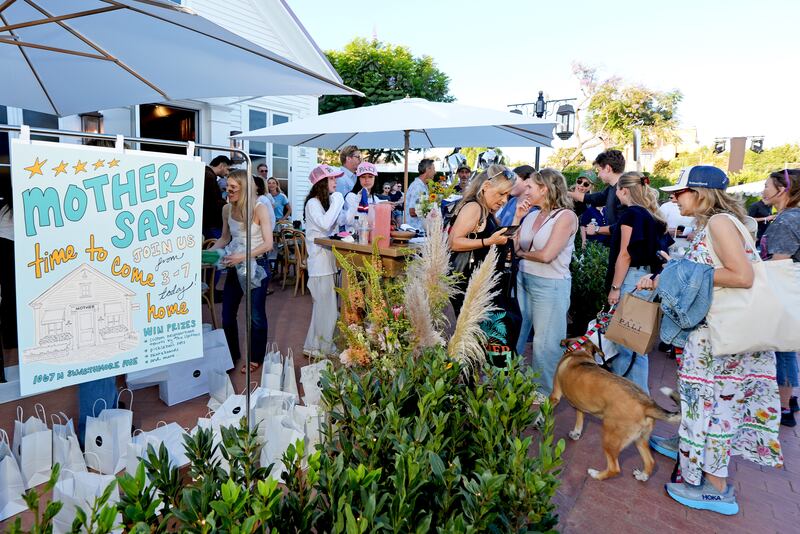
While some retailers, like Violet Grey, signed on early, others needed more convincing. Becker, whose house was in the Palisades and suffered damage, was one of them.
“We were just in shock,” she said of the aftermath of the fires. When the Caruso team approached her to open a store in the Village, “It kind of took a minute because we were wondering, ‘Are people going to come?’” She started asking around. “Erewhon was not coming back when we first talked to them, and that made me a little worried.”
But then she heard from Elysewalker’s eponymous founder. Walker has been one of the most enthusiastic voices supporting the area’s comeback, working to convince brands to open stores in the property.
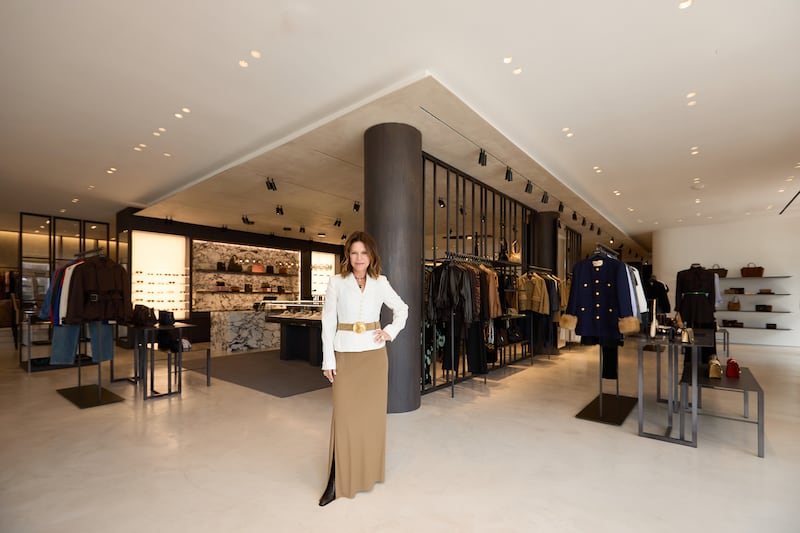
“I was telling them, ‘It’s going to be worth it. Long-term, there’s no other place you’re going to want to be,’” said Walker. She spoke to Becker, as well as ALC, Zimmermann and Xirena’s Heard. Jackie Levy, chief financial and revenue officer of Caruso, said that having the multi-brand store in its lineup will give the Village an anchor in luxury.
“We slowly started to get comfortable about being excited to go back there,” said Becker. When she learned that Erewhon would indeed be back to slinging smoothies for shoppers, she was all-in.
While Caruso has filled its walkways with buzzy names, bringing back luxury will be more of a challenge in the longer term. For contemporary brands and beauty, even at Violet Grey’s price ranges, the overall cost of merchandise is more insurable than handbags at four- and five-digit costs.
For developers, it’s also significantly more expensive to operate stores in disaster-risk areas. Even prior to spending the nine-digit sum on the revamp, Caruso had kept its property standing through expensive measures including non-combustible materials and its highly publicised use of private firefighters.
Caruso also made adjustments on rent prices to entice businesses to open. According to Levy, some of the rents are lower than they previously were, while others are the same as pre-fire rates. As well, several local businesses that were destroyed in the fires have now taken up real estate in the Palisades Village, including a local jiu-jitsu studio, a toy store and bakery.
ADVERTISEMENT
“Certainly, the mom and pops don’t have the balance sheet that an international brand like Saint Laurent does,” said Levy. “There’s not a one-size-fits-all kind of approach that we take” when it comes to rent prices.
Xirena’s rent deal, for example, was “structured around what we believed that the store would ramp up to,” said Heard. “They tried to de-risk losses as much as possible and make sure that the capital expenditure that was being put in could be not too high of a liability.”
Retailers based their rent negotiations on expected store revenue, which was, “in a scenario like this, pretty difficult to guess,” said Guergis. Leset founder Lili Chemla said “the economics were very fair, thoughtfully considering the reality of regrowth” in a statement to The Business of Fashion.
But some retailers say they have been pleasantly surprised so far, as visitors have come to shop from other parts of the city. Leset, which opened in August, has seen “really strong” performance at their store, said Chemla. Xirena has doubled its sales expectations over the same time period, said Heard. Elysewalker, which was also one of the first stores to open in August, saw six-figure sales on both its first and second days open. Walker said the retailer had originally projected to be at pre-fire revenue within three years, but has changed that prediction to one year.
“Some people will say there’s a halo period, but I don’t think so,” said Walker. “People are going to get more and more comfortable coming out here.”
Six months after the Eaton and Palisades fires, fashion and beauty businesses are just starting to imagine what rebuilding will look like in a world increasingly beset by climate change-related disasters.
The Los Angeles iteration of Vogue’s annual runway entertainment event aimed to revitalise the city’s beleaguered film industry through fashion tie-ups.
The denim label Mother’s first store burned to the ground days before opening. Strong local roots are playing a big role in recovery.
Liz Flora is a Beauty Correspondent at Business of Fashion. She is based in Los Angeles and covers beauty and wellness.
Loading recommended reads…
The company’s share price notched its biggest weekly rise since 2020 as investors bet on softer gold prices to bring customers back to stores.
Workers staged fresh demonstrations in Dhaka Thursday, forcing factories to suspend operations despite government promises to raise wages before the end of the year.
The cult menswear designer and former Demna collaborator is returning to Balenciaga as owner Kering seeks to revive sales at the French house.
Just a few years ago, commentators were declaring the brand as past its peak amid multiple ownership changes and a broader streetwear cooldown. Today, consumer tracking metrics shows domestic sales and youth market share is rebounding strongly.