Agenda-setting intelligence, analysis and advice for the global fashion community.
Agenda-setting intelligence, analysis and advice for the global fashion community.

After years of teaming up with hotels and restaurants, lately, fashion brands are looking to a new, more unexpected realm of hospitality for partnerships: grocery stores.
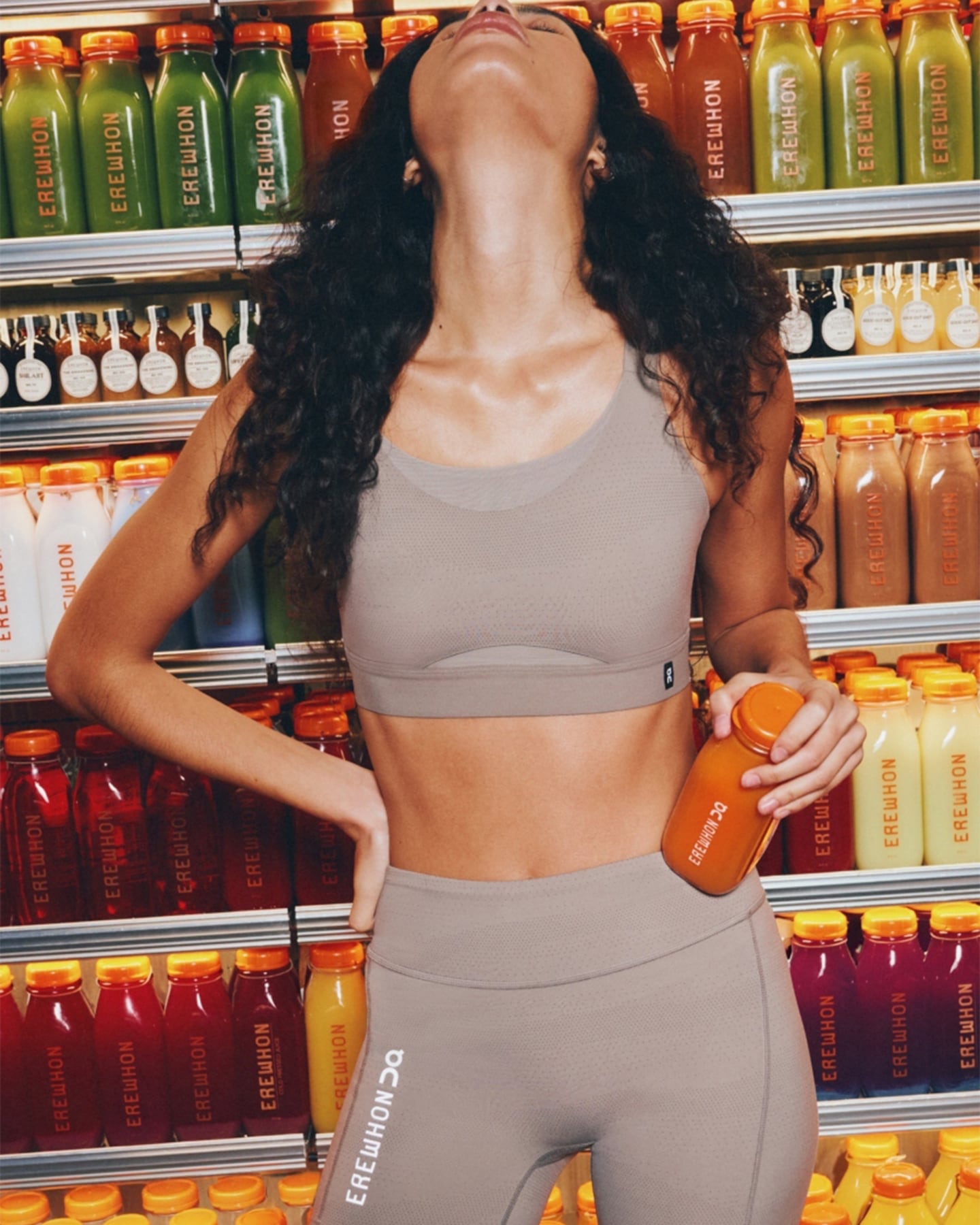
Gourmet grocery stores, that is. Stores like Los Angeles’s Erewhon and New York’s Happier Grocery have gained traction for their sleek storefronts stocked with goods that, depending on your perspective, are aspirational or overpriced — think $50 bone broth and $20 smoothies. Their crossover with wellness helped to attract beauty brands and founders a few years ago — Erewhon rolled out its first co-branded smoothie with Summer Fridays founder, Marianna Hewitt, in 2022, quickly followed by a team-up with Hailey Bieber the month she launched Rhode. Now, even though the connection to the products these stores sell is seemingly more tenuous, fashion brands want a piece of the action, too.
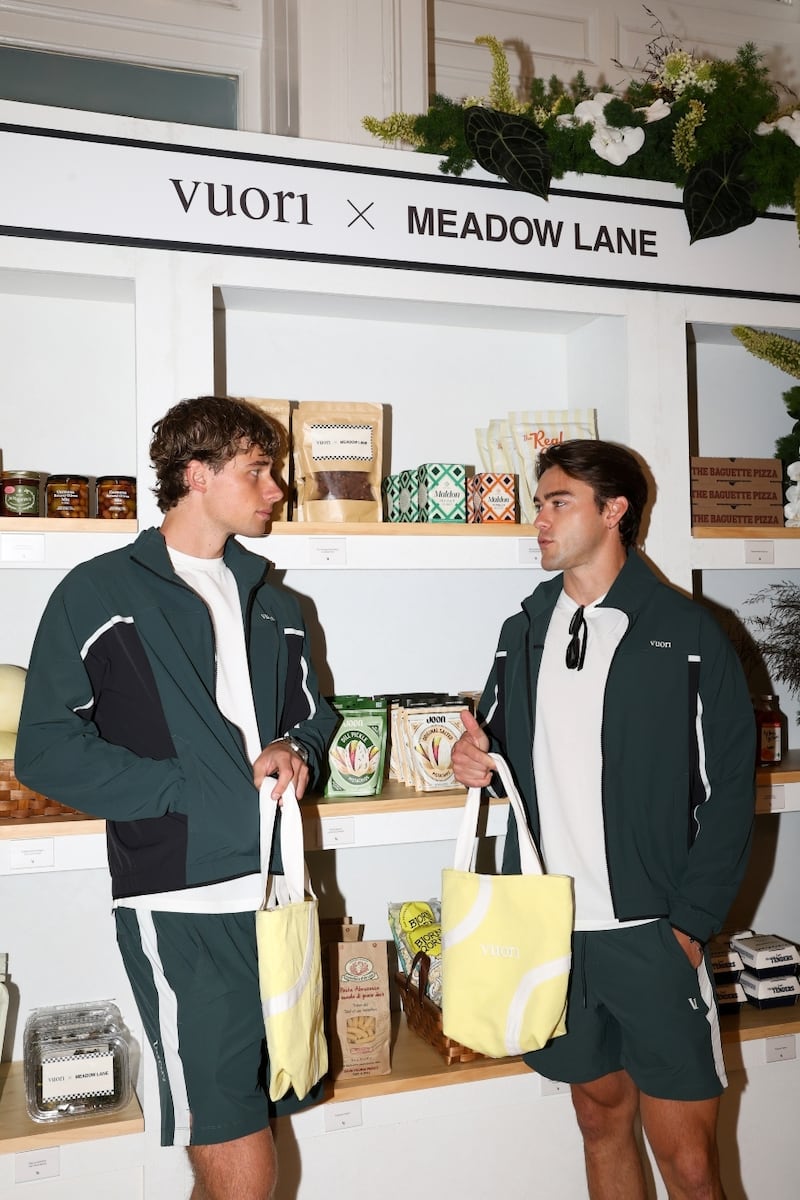
Happier Grocery — whose founder, Wells Stellberger, was previously a menswear designer at Marc Jacobs — did a café takeover with contemporary label Nanushka and worked with sportswear brand Adanola to host a run club and create a limited-edition coffee. Since its Nov. 2025 launch, New York’s Meadow Lane has already worked with 16 brands across categories, including activewear label Vuori and Paige Paul’s womenswear brand Dairy Boy. Erewhon is still regularly inking new collaborations; some of its latest partners include Lululemon and On. British handbag seller Anya Hindmarch created custom versions of its “Universal Bag” for stores like Daylesford Organic in the UK and Seijo Ishii in Japan, while in 2025, Land’s End made a version of its canvas tote for Round Swamp Farm, an influencer-favourite prepared foods store in the Hamptons.
It’s the latest example of fashion brands seeking out ways to latch onto viral cultural entities in a bid to boost their own relevance. With consumers increasingly tired of being blatantly sold to, rather than running a TV commercial or a billboard, brands would rather find ways to more organically insert themselves into what shoppers are already interacting with. In practice, that’s mostly meant fashion cosying up to entertainment properties like “Wicked” or “The Devil Wears Prada 2.” Now, brands are entering the stores they frequent, too.
ADVERTISEMENT
“The phenomenon of gourmet grocers and high-end prepared food markets or grocery stores, and the attention it’s gotten in the last year … [high fashion brands] have taken note of that and think that it can broaden their customer base and allow for a more accessible experience,” said Sammy Nussdorf, founder of Meadow Lane. “Fashion brands are trying to not necessarily pivot, but broaden and diversify what their offering is.”
Food was a focal point in fashion marketing last year, from Saint Laurent’s picnic-centric campaign to Burberry’s shoot with fish and chips. The goal was to evoke a tangible and sensory experience that everyone could relate to — gourmet grocery stores provide much of the same, but with an added layer of aspiration.
In an era of digital fatigue, consumers are seeking out opportunities to connect and engage through their senses, making an opportunity to interact with a brand through smell, taste or an activity like a run club a much more memorable encounter than scrolling through lookalike content.
At the same time, consumer interest in wellness and longevity continues to ramp up — evidenced by the rising number of wellness clubs lining city streets and luxury brands like Dior opening their own spas. Top-of-the-line grocery stores, similarly, have become a place where consumers are choosing to spend their off-screen time.
But while they’re a standard part of shoppers’ daily lives, these stores in particular are elevated to feel more like a luxury boutique than a Tesco or Trader Joe’s. At Meadow Lane, for example, chicken tenders are served in puppy-adorned boxes while cartons of endives are symmetrically displayed; Happier Grocery sells extra-virgin olive oil in keepsake metal bottles; and Erewhon’s shopping bags, which can go for $150, are collectibles. As part of a “Spring Market” activation for its Paradoxe perfume, Prada Beauty took over an existing greengrocer in Milan’s upscale Brera neighbourhood, featuring the brand’s newly released blush and fragrance alongside equally elegant produce displays.
“Mixing the product with the fruit or groceries tells you … you need our fragrance as much as you need the apple for the day,” said Ludovica Squillacioti, senior project manager at Harlequin Milano, the firm which designed Prada’s Milan market pop-up.
Beauty and wellness brands have natural overlap with the lifestyle sold by gourmet retailers, though fashion brands can get it right too if there is enough value alignment.
Meadow Lane founder Nussdorf said that working with Vuori, for instance, was a “natural fit” for an activation centred around the US Open. The two hosted a miniature market and matcha pop-up at Vuori’s Soho, New York store with the goal of giving Vuori’s customer base a taste of the tournament without attending in person. They sold tennis ball-inspired totes and served items like a honeydew melon juice and matcha inspired by the US Open’s popular “honey deuce” cocktail.
ADVERTISEMENT
Meadow Lane also has an ongoing relationship with womenswear brand Dairy Boy, which has a similar natural, farm-to-table aesthetic in its marketing, rooted in founder Paul’s Connecticut lifestyle. Nussdorf and Paul first posted a TikTok together in May 2025 in which they taste-tested a trout dip Meadow Lane made specifically to celebrate Dairy Boy’s new Fisherman’s Daughter sweater, which features an illustrated trout. The pair also served ice cream out of a Dairy Boy soft serve truck in August 2025, which they parked outside the Meadow Lane store before the grocer officially opened. The truck was timed to a broader “drink real milk” marketing push surrounding Dairy Boy’s Milk Bottle sweatsuit collection.
Local relevance is especially crucial for these partnerships, because these stores are so rooted in shoppers’ everyday lives and routines.
Butterfield Market, which has two locations on New York’s Upper East Side, released a partnership with sleepwear brand Roller Rabbit in September, featuring a local touch. In addition to a limited-edition frozen yogurt flavour, the two released an “I love UES” pouch — based on both brands being native to the neighbourhood. The partnership also has strong alignment: in addition to being multigenerational brands, local teenage shoppers are fans of both, and each of the brands has a knack for graphic design (the collaborative pouch featured Butterfield’s illustrated giraffe mascot as part of Roller Rabbit’s beloved monkey pattern).
“This Upper East Side origin story is the same for both of us,” said Roller Rabbit chief executive Ed Bertouch. “All of the kids will get out of school and they’ll get picked up by their parents, and they’ll go to Butterfield and they’ll come to our store. It’s a very natural community thing that we’ve had with them.”
Erewhon’s latest partnership with On also tapped into the local sporty LA community, kicking off with a campaign showing runners in the grocery shop’s aisles, highlighting the natural overlap between sports and nutrition. It also included an On x Erewhon running collection, a wellness club complete with running and training events in LA and a post-run Erewhon juice. Similarly, at Prada Beauty’s Milan Spring Market, attendees brushed shoulders with customers stopping in for their daily shop. Customers were gifted a basket of strawberries alongside their purchases, which lent an additional sensorial touch to the pop-up.
“It pays at the end to have something that is [in its local] territory with a strong identity,” said Lucia Ortolani, associate director of Harlequin Milano. “The food is not necessarily the most important thing, because a lot of brands do food at the moment … [This] was really well received from the customers because it was real.”
Loading recommended reads…
Fenty Beauty’s first 12-hour online shopping event, featuring Rihanna, shows how a new generation of brands are embracing the practised art of live selling.
The policy bars ads from ByteDance, which remains in charge of key parts of TikTok, and extends to third-party advertisers running campaigns that link to TikTok.
The departure of Athleta’s CEO for Lululemon is a chance to ‘reimagine the brand’s path forward,’ Gap Inc. CEO Richard Dickson wrote in an internal memo viewed by Bloomberg.
Opening in Q4 2026 on Saadiyat Island — at the heart of Abu Dhabi’s cultural district — Saadiyat Grove brings together luxury retail, hospitality, residential living and culture in one of the emirate’s most ambitious new developments. BoF speaks to Jonathan Emery, chief executive officer of Aldar Development, about the strategic vision behind the project.