Agenda-setting intelligence, analysis and advice for the global fashion community.
Agenda-setting intelligence, analysis and advice for the global fashion community.

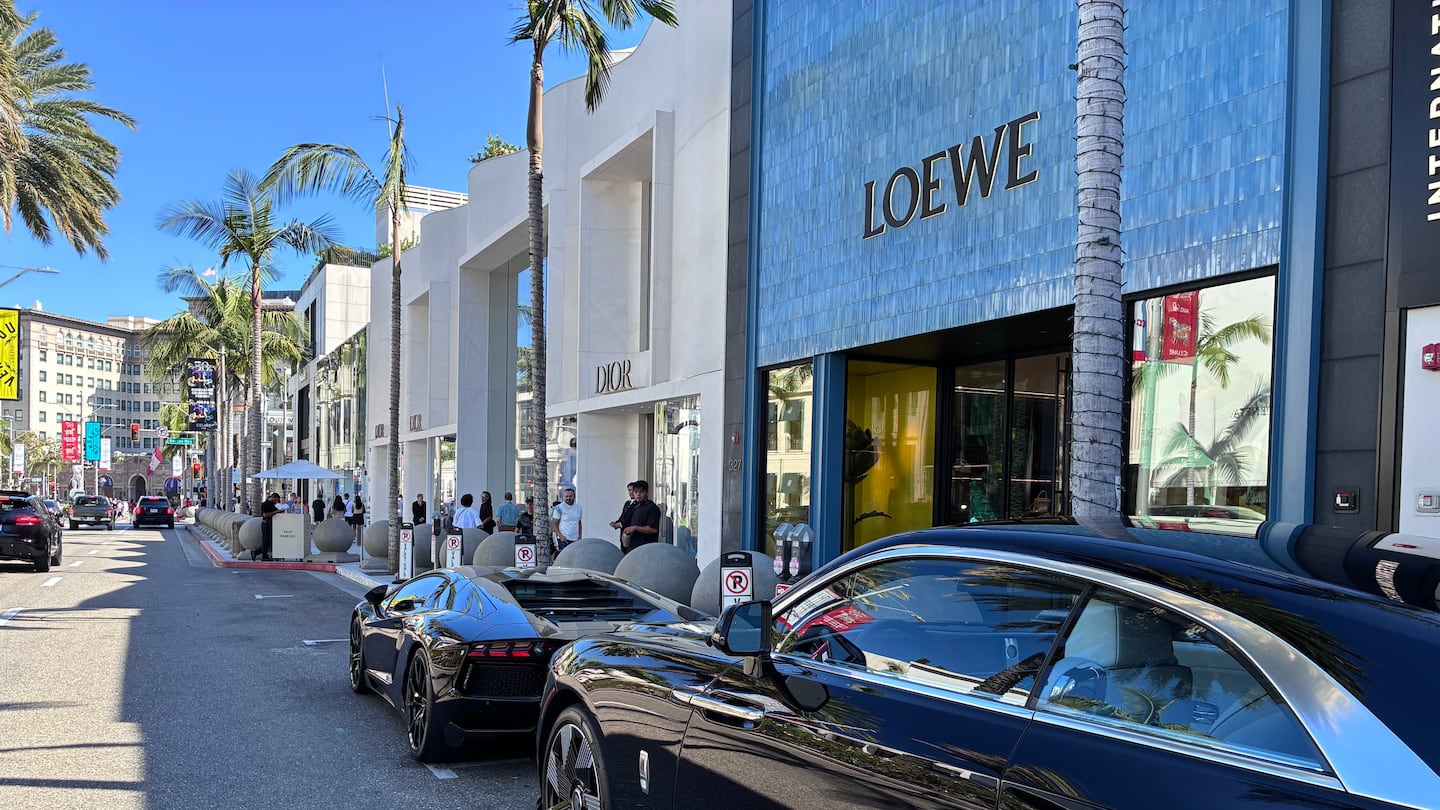
LOS ANGELES — Elizabeth Garcia has visited the South Coast Plaza mall in California’s Orange County since she was a kid — when her father had to drive her. Back then, it was for window-shopping. Now, she’s a regular client visiting several times a month.
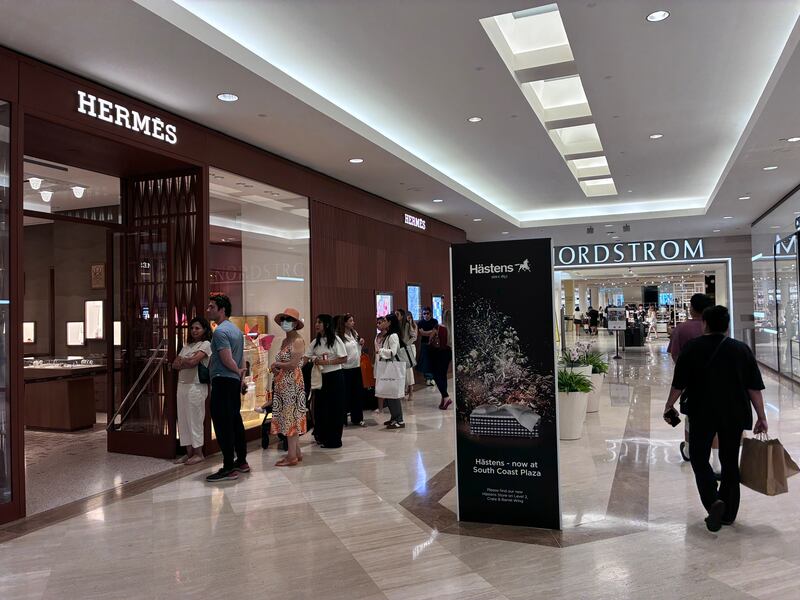
On a late summer Friday afternoon, Garcia lined up with her cousin outside Hermès clutching shopping bags from Louis Vuitton, Dior and Chanel.
She had made the 30-minute drive to purchase shoes and a handbag.
“I’m willing to spend for the right product, but I want things that are timeless, that won’t fade in and out as trends come and go,” said Garcia. It’s the same when it comes to buying things for her daughters, who are all under ten: “It has to be something that will age well.”
ADVERTISEMENT
Garcia’s readiness to spend — though carefully considering her purchases — is emblematic of the US luxury market, which has held up better than the rest of the world over a three-year industry slump. Europe has stagnated while China, despite showing hints of improvement, remains mired in a real estate slump that has curbed appetite for luxury. The on-again, off-again war in the Middle East, meanwhile, has slammed a region that had been a bright, if small, patch of growth.
US resilience has prompted a flood of investments from European brands. Earlier this year, some of the industry’s biggest names Dior, Gucci, Louis Vuitton, Hermès and Zegna hosted runway shows in New York and Los Angeles.
Recent financial performances show the market’s outperformance. First half sales at Zegna grew 20 percent in the US, compared with 6.8 percent in China and 1.5 percent in Europe. At Gucci-owner Kering, the US was the only region of growth, up 3 percent.
The AI boom has fuelled stock markets, creating new pockets of wealth. Rising property values are bringing further optimism to big spenders.
Analysts caution, however, that the luxury market’s resilience is increasingly tied to the fortunes of a relatively small pool of wealthy shoppers whose spending is supported by strong real estate values and soaring equity markets. Less than 5 percent of luxury consumers account for almost 50 percent of all spending, according to Bain. And much of their wealth remains tied up in assets, leaving the market exposed if the AI boom or other asset classes experience a significant correction.
“The wealth is very concentrated in the US and that’s a real risk for the luxury market because you have fewer consumers making up more of the spending,” said Nora Kleinewillinghoefer, a partner at Kearney where she leads the luxury and fashion practice. “As long as all these markets hold, it’ll be fine. But if something happens, if we see a major shock — and there are a lot of questions about whether all the money invested in AI has created a bubble — I think we’ll see a shift away from this stable US market that’s holding up luxury.”
The K-shaped US economy is a challenge for luxury brands operating here. While wealthier clients might be spending more freely, a higher cost of living is weighing on appetite from aspirational shoppers — who are becoming more selective. These clients still represent a large share of spending, but are far less loyal shoppers.
“That aspirational shopper still makes up about 50 to 55 percent of the spend and is across a much larger cross-segment of individuals,” said Kleinewillinghoefer. “If that shopper pulls back and doesn’t buy the occasional Chanel bag, that’s half the market, and that is a huge impact.”
ADVERTISEMENT
Lisa Thompson, a mother of two who lives in Los Angeles, is one of those aspirational shoppers that brands need. She buys a luxury bag every couple of years, and shoes or accessories on occasion.
“I have one kid who started college this year and another starting next year, so I’ll probably be spending less on bags and shoes for the foreseeable future,” Thompson said.
The spending power of wealthy shoppers in the US remains considerable. A survey of high-net-worth individuals in the country showed fifty-seven percent of them planned to increase spending on luxury fashion clothing over the next six months, according to Agility Research & Strategy, which focused on consumers with at least $1 million in investable assets.
“The US luxury market has been resilient because of the wealth of the high-end consumers and their higher propensity to spend on luxury than in many other markets,” said Flavio Cereda, investment director at GAM who manages the firm’s luxury brands investment strategy.
The emergence of new pockets of wealth beyond the country’s largest cities has expanded the pool of high-end shoppers, helping to sustain demand as shoppers in other markets pull back, Cereda said.
That strength is also showing up in shopping activity. Luxury mall foot traffic accelerated in the second quarter, rising 4.6 percent from a year earlier, compared with 2.5 percent growth in the first quarter, according to Advan Research, which tracks spending from 120 million US credit cards. Traffic continued to strengthen in July and August, but that improvement so far has not shown up in stronger sales this quarter, said Advan’s head of market insights Thomas Paulson.
The question for luxury companies is whether the US can continue to compensate for weakness elsewhere. The country has become the industry’s most important growth engine at a time when appetite in places like Europe remains subdued, while bright spots like South Korea are too small to move the needle.
The industry’s previous growth engine China, meanwhile, is not expected to return to meaningful improvement until 2028, according to Morningstar equity analyst Jelena Sokolova.
ADVERTISEMENT
This makes the pipeline of US luxury consumers particularly important. Many brands raised prices considerably after the pandemic as they concentrated on wealthier shoppers — seen as more immune to economic headwinds — accepting the loss of some aspirational consumers. But some high-paying technology and finance jobs that have traditionally provided a pipeline of new luxury customers may be at risk from advances in AI, warns Sokolova.
“You have to have the pipeline of new consumers coming in,” Sokolova said. “If those consumers that are employed in higher-wage professions are losing their potential jobs, then this pipeline is drying out as well for luxury consumption.”
Tourism, meanwhile, has become a less reliable source of luxury spending in the US. International arrivals fell 4.7 percent in the first six months of the year, despite the draw of World Cup matches mostly held in the US, following a 5.5 percent decline in 2025.
Khulud Saif, a tourist from Saudi Arabia, was shopping on Rodeo Drive in Beverly Hills during a 10-day trip to California this summer that included visits to Disneyland and the Hollywood sign. She planned to buy a Dior purse and a Van Cleef bracelet while in Los Angeles.
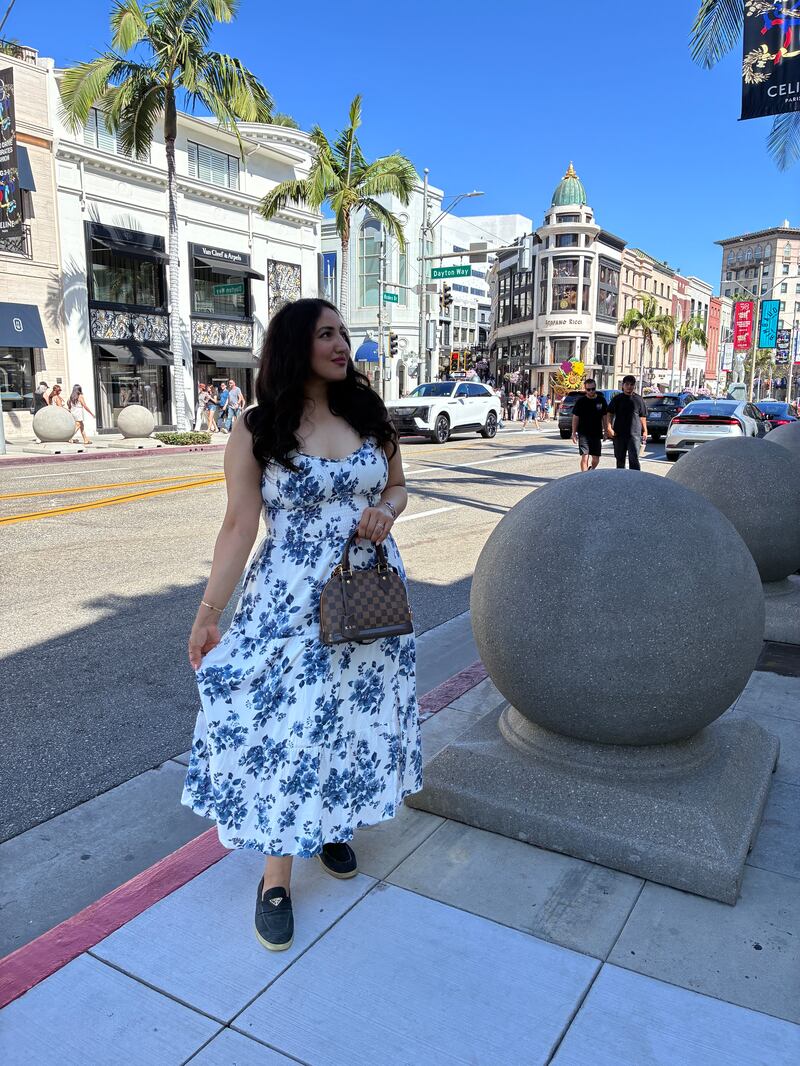
“I wanted some souvenirs from this trip,” Saif said.
For luxury companies betting on the US to keep the industry moving, shoppers like Saif are particularly valuable. While international tourists account for a relatively small share of luxury spending in the US compared with Europe, their spending is concentrated in some of the country’s most important luxury shopping destinations, including Rodeo Drive in Beverly Hills, Miami and parts of New York – where European luxury brands are investing heavily, setting up expansive boutiques.
Louis Vuitton’s planned Rodeo Drive flagship, designed by Frank Gehry and slated to open in 2029, is a big bet on the US market, geared to both locals and international visitors. It will include a restaurant, café, rooftop gardens and exhibition space. But the success of the investment will ultimately depend on the appetite of US shoppers — including aspirational ones that often start out as window-shoppers, like Garcia, before becoming regular clients.
This week’s LVMH and Kering results suggest a fragile recovery is underway in the face of sluggish Chinese demand, succession drama, wildfires and heat waves.
This week, Europe’s leading luxury groups LVMH, Kering, Hermès and Prada will show who’s pulling ahead in the stubbornly choppy environment.
Silicon Valley is minting new multi-millionaires — and billionaires — at a rapid rate, as tech firms like SpaceX, OpenAI and Anthropic target huge IPOs. Fashion, travel and wellness are benefitting, but not all beauty companies can capitalise on the boom.

Eric Sylvers is Milan Correspondent at The Business of Fashion. He is based in Milan and leads BoF’s coverage of all things Italian.
Loading recommended reads…
In this week’s High Margin, a search for images that cut through our visual fatigue — with leads from M/M Paris, Ferdinando Verderi and stylist Emilie Kareh. Plus: Tod’s designer exit; Burberry’s resilient sales.
The producer price index rose 6.5% from October 2025, an acceleration from the prior month, according to Bureau of Labor Statistics data out Friday. On a monthly basis, the PPI increased 0.3%.
The creative director and strategist joins Imran Amed on The BoF Podcast to discuss the evolution of his career, the realities of shaping artist narratives and why long-term collaboration outperforms short-term marketing.
The former Nvidia CEO was central to an AI boom that has propelled the US stock market and fueled the country’s unmatched luxury spending. After his exit, nobody is sure what happens next.