Agenda-setting intelligence, analysis and advice for the global fashion community.
Agenda-setting intelligence, analysis and advice for the global fashion community.
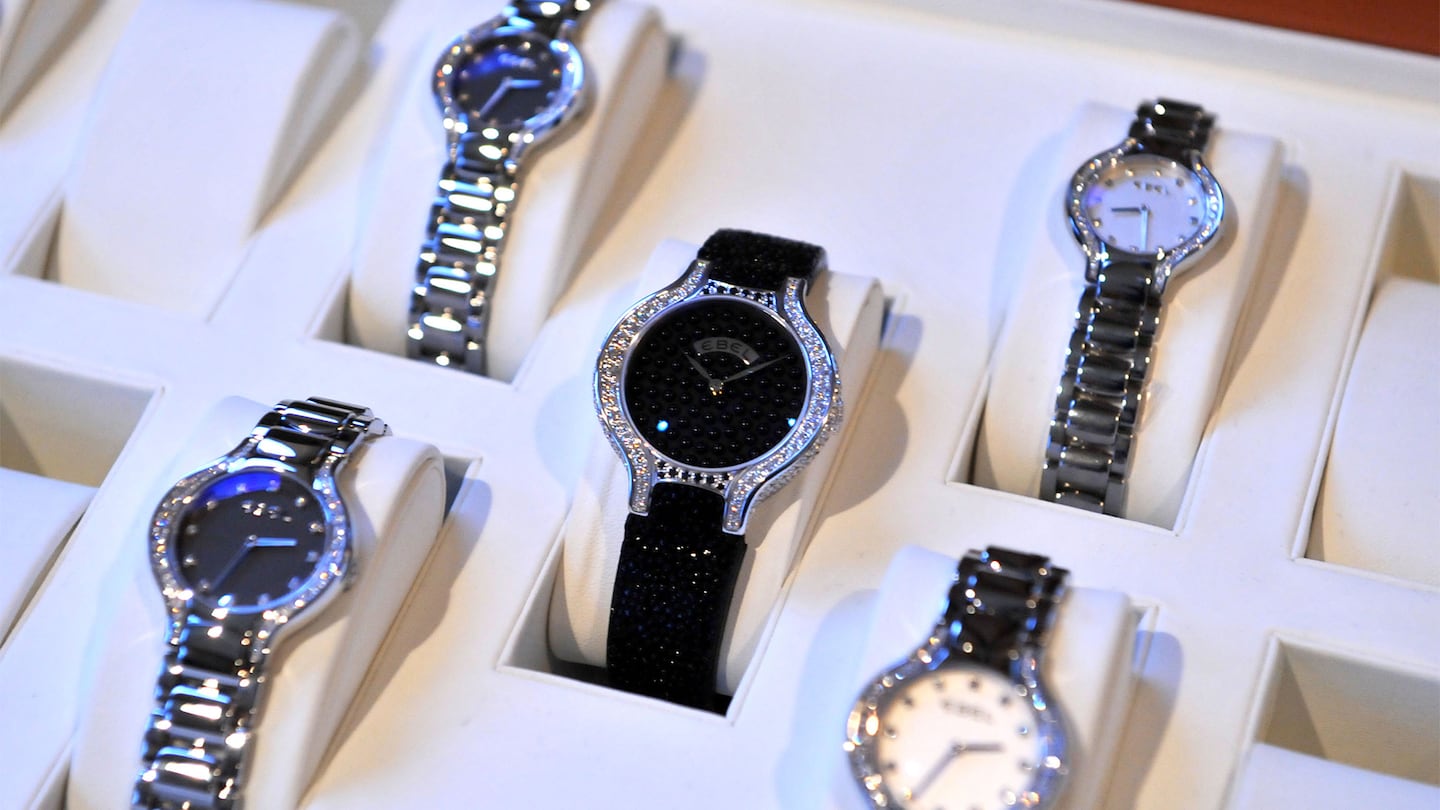
Chanel’s recent investment in flagging watch company Ebel has baffled some luxury insiders.
“I wonder whether there is anything in the company worth paying for,” said Bernstein analyst Luca Solca of the 115-year-old Swiss brand.
The watchmaker, which was a big name in the 1980s and 1990s — at the time, associated with Miami Vice’s Don Johnson, tennis stars Yannick Noah and Boris Becker and even Madonna — has fallen into obscurity. Repositioning attempts by previous owners LVMH, followed by Movado, were largely unsuccessful.
Yet Chanel was part of a group of investors that recently purchased 95 percent of the mid-tier watch brand, alongside independent watchmaker F.P. Journe and former De Bethune chief executive Pierre Jacques, who will become Ebel’s chief executive.
ADVERTISEMENT
Chanel declined to provide details of the structure of the $66.5 million deal, which covers Ebel’s trademarks, intellectual property and inventory, and includes Villa Turque, a Le Corbusier-designed house in the Swiss watchmaking town of La Chaux-de-Fonds.
The group did not specify if other investors were involved, saying only that its acquisition of a minority stake is aimed at accompanying Ebel in “this next chapter of its history,” and reflects confidence in its long-term potential.
The purchase is seen by many as likely aimed at providing support to Chanel’s key business partner François-Paul Journe — the group purchased a 20 percent stake in his namesake brand F.P. Journe in 2018.
In addition to its own watchmaking division — known for designs such as the small, feminine, octagonal-shaped Première and the sportier signature ceramic J12 model, originally designed by Jacques Helleu — Chanel has a handful of investments in other watch brands and suppliers.
This includes a 50 percent stake in Paris-based Swiss watchmaker Bell & Ross as well as smaller shareholdings in independent labels Romain Gauthier and MB&F. Earlier this year, it took a 30 percent stake in specialist movement creator Kross Manufacture and also owns 20 percent of the Rolex and Tudor movement manufacturer Kenissi.
Luxury groups including Hermès, LVMH and Richemont have in recent years tightened their grip on supply chains, buying up suppliers to secure future production and preserve specific skill sets. Brands like Audemars Piguet and LVMH’s Bulgari have been among the most active, building their operational capacity around absorbing specialist Swiss companies.
Chanel’s watchmaking business remains smaller than that of Hermès, but bigger than Louis Vuitton’s, with Morgan Stanley estimating annual sales from the division at Chanel reaching 390 million Swiss francs ($473 million), compared with 514 million for Hermès and 165 million for Louis Vuitton.
While Chanel does not seem to be involved in the day-to-day operations of many of the watchmaking businesses it has invested in, it has drawn on the expertise of Romain Gauthier, for example, when developing its Calibre 1 movement, featured in its Monsieur de Chanel watch.
ADVERTISEMENT
When it comes to Ebel, analysts are split on the brand’s chances of revival, after efforts by LVMH and then Movado were abandoned.
It’s a story of “failed repositionings,” in the view of Oliver Müller, founder of the Swiss specialist watch consultancy LuxeConsult.
“LVMH tried to take it up the ladder, Movado took it back down,” said Müller. “Today, the 1911 Chronograph – once the hero product of the brand – sells at CHF 3,900.”
Some pointed to Ebel’s historic watch models as offering potential, with design codes like the Wave bracelet.
“It has recognisable design codes such as the Wave bracelet, and there already seems to be renewed interest around some of its vintage pieces,” said Eini Kärkkäinen, a luxury consumer insights consultant at Kark Consulting. The challenge will be drumming up interest from luxury shoppers, she added.
The involvement of high profile investors Chanel and F.P. Journe, whose watches are outperforming the market at auction this year — selling for millions — could serve to add legitimacy to the brand.
“The novelty of a brand relaunch and the involvement of big names are both key factors in its favour, and arguably more important than the brand itself,” said industry specialist Jiaxian Su, founder of the SJX Watches platform.
While the name is well known, it has not been highly collected by watch enthusiasts, said Hamish Robertson, co-founder and chief executive of the London-based The Watch Collectors’ Club. “They’ve got a lot more brand building to do to lay the ground for a re-launch,” said Robertson.
ADVERTISEMENT
Ebel’s new owners have not announced plans for new collections, or indicated where the brand will be positioned. Many luxury Swiss watchmakers have moved upmarket in recent years, turning to a value-over-volume model as buyers have turned away. The company’s current online collection retails for between $2,000 and $10,000 — a mid-market segment that has been hit hard by luxury’s three-year dip.
Illustrating the shrinking market, volumes of Swiss exports of mid-range watches — valued between 500 and 3,000 Swiss francs — were down 21 percent down by volume last year compared with 2023, according to data from the Federation of Swiss Watch Industry.
“I cannot imagine the plan is to leave Ebel there,” said Müller, referring to the price range. Given Journe’s high-end positioning, he added, it would be more likely for the new owners to push the brand upmarket — potentially drawing on Chanel’s manufacturing capacity at G&F Châtelain, known for its expertise in ceramic, a modern material for watchmakers.
A move upmarket could bring Ebel closer to the positioning of Universal Genève, which was revived earlier this year by Breitling’s parent company House of Brands, but distance it from Gallet, the group’s other defunct dial name that returned in September, with watches priced in the $2,000 and $6,000 mid-market segment. Corum has also been reintroduced this year, sitting between the two.
“We’ve now had Universal Genève, Corum and Gallet revived with huge amounts of capital behind them,” said Robertson. “It’s not clear yet how any of those are doing. Will adding Ebel simply crowd the field further in a declining segment of the market?”
“Ebel’s DNA is worth keeping,” said Müller, while Solca cautioned there were not many market signals that would give Ebel’s new owners reasons for optimism.
Following a runway collaboration with Matthieu Blazy, Chanel has bought France’s oldest shirtmaker as longtime owner-operators Anne-Marie and Jean-Claude Colban seek a succession plan. ‘Charvet is a beautiful jewel. Now there’s work to be done to set it up for its next steps,’ said Chanel fashion president Bruno Pavlovsky.
A group of investors is reviving has 'resurrected' the Danish watch company Urban Jürgensen, a 250-year-old name revered by connoisseurs but largely unknown outside that bubble.
The market is on pace to contract 2 percent to 5 percent in 2025 as consumption remains soft across key categories — particularly leather goods, makeup and watches — according to the latest forecast from Bain & Company.
Robin Swithinbank is a contributing writer at The Business of Fashion. Swithinbank is a London based journalist, editor, and speaker who specialises in luxury watches.
Loading recommended reads…
The Denim Tears founder’s new collaboration with Adidas is one of the most overtly political sneakers of the last few years. Could it be a sign of what’s to come?
The company’s share price notched its biggest weekly rise since 2020 as investors bet on softer gold prices to bring customers back to stores.
Workers staged fresh demonstrations in Dhaka Thursday, forcing factories to suspend operations despite government promises to raise wages before the end of the year.
The cult menswear designer and former Demna collaborator is returning to Balenciaga as owner Kering seeks to revive sales at the French house.