Agenda-setting intelligence, analysis and advice for the global fashion community.
Agenda-setting intelligence, analysis and advice for the global fashion community.

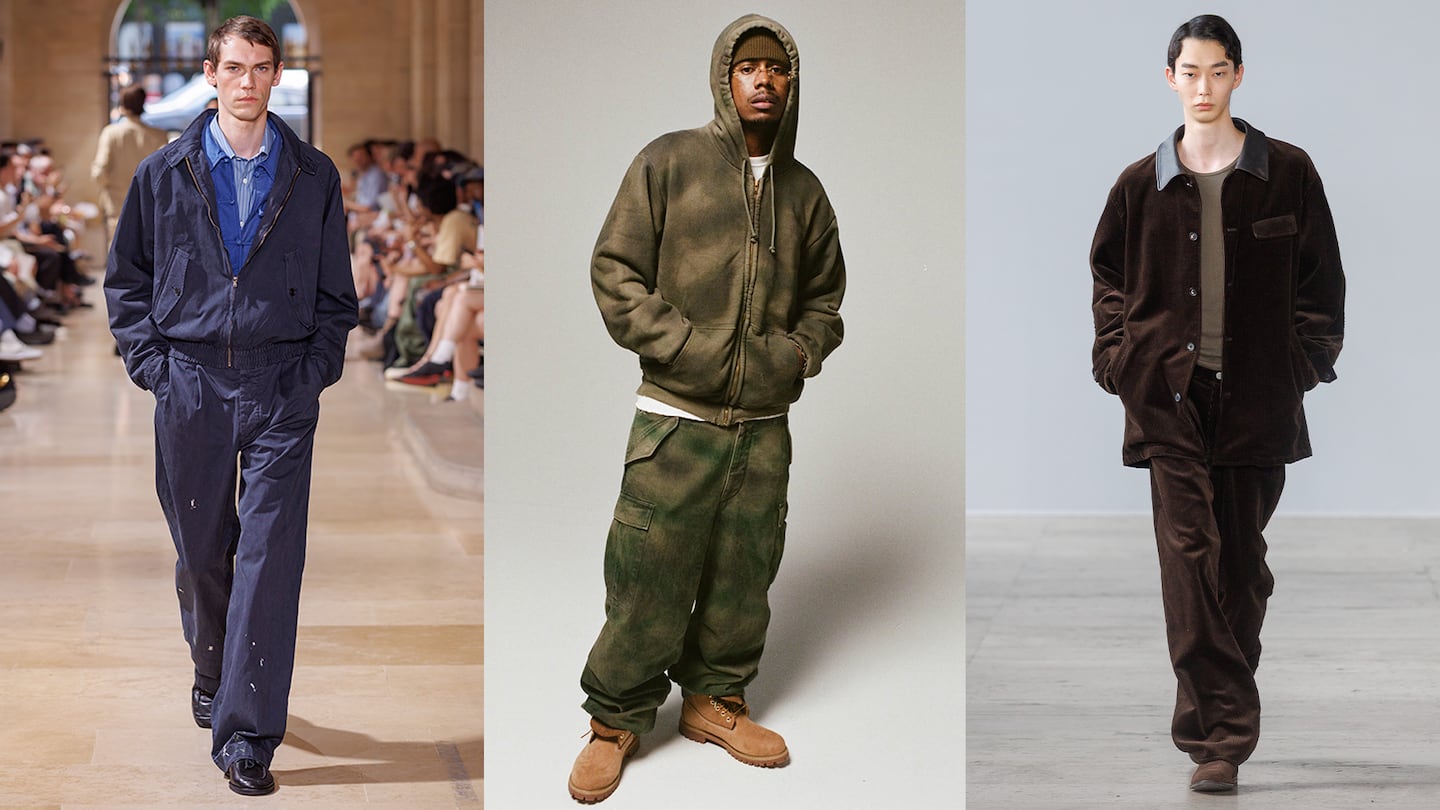
When Jake Silbert stumbled across the newly launched Japanese label Auralee on a trip to Tokyo in 2015, he was instantly drawn to its clothing — seemingly simple products that somehow piqued all five of his senses.
“I got a sweater from them not even thinking this brand will be huge one day. It was just a nice thing,” said the New York-based news director for youth culture magazine Highsnobiety. His first purchase of many from the now 11-year-old label was a soft speckled cashmere sweater. “It also smelled like puppies, unbelievably beautiful,” Silbert said.
Since then, he has continued to fill his wardrobe with luxury menswear brands from the country. He’s not alone.
Auralee is among a cohort of Japanese menswear labels experiencing robust growth internationally, even as the broader luxury market struggles to emerge from a multi-year downturn. Their appeal lies in a skilful blend of understated style, highly competitive pricing and exquisite craft — long a hallmark of Japanese fashion.
ADVERTISEMENT
As streetwear-inflected logomania has given way to a more “quiet luxury” approach for stylish men, brands like Auralee, A. Presse and Ssstein are looking to build international businesses with staying power beyond the current moment.
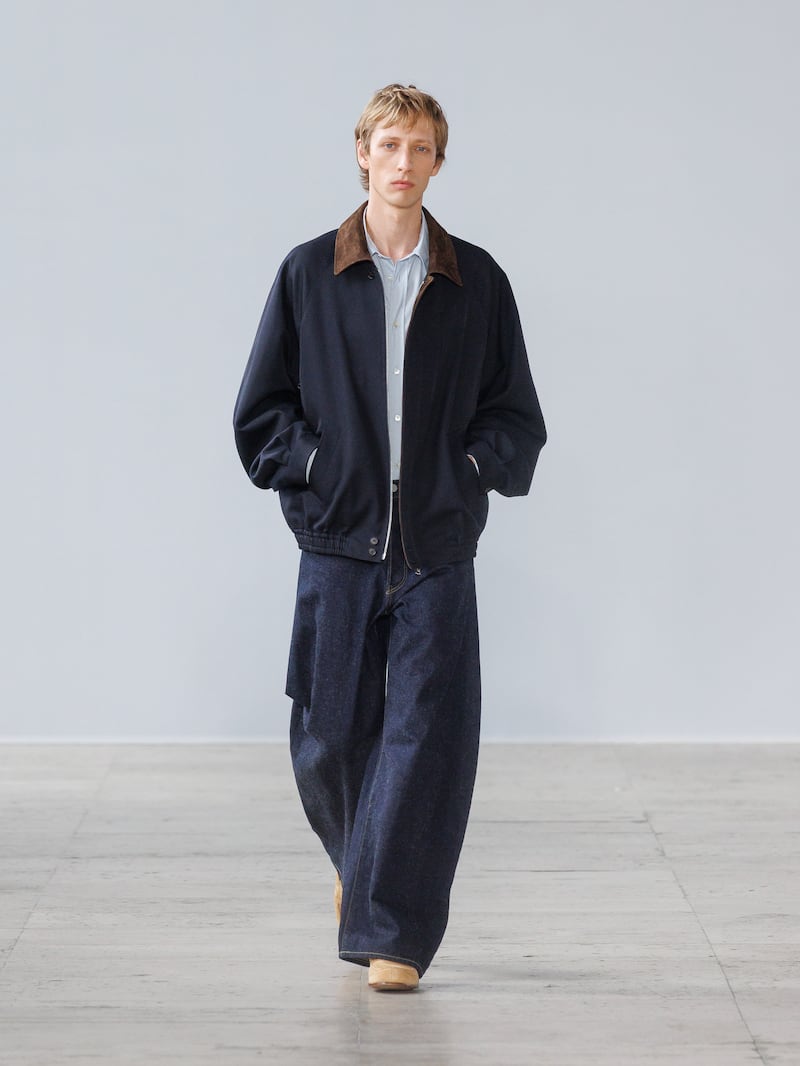
For now, their appeal appears to only be growing. According to retail intelligence platform Edited, sell-outs across all three brands at US retailers more than tripled over the past year while purchases of new assortments nearly doubled. Global wholesale platform Joor has seen an 11 percent uptick in sales volumes for Japanese brands over the last 12 months. Menswear styles accounted for nearly a third of those purchases, an outsized share for the category. Menswear buys make up 12 percent of sales across the platform overall, Joor said.
“Japanese brands have always worked really well for us, but at the moment, we’re seeing really strong performance from all of them,” said Daniel Todd, a buying director at the menswear retailer Mr. Porter. “You’ve got this cohort of Japanese brands that aren’t as expensive as European luxury — combine that with interesting fabrics, interesting manufacturing processes, and a good price point, and that’s what the consumer is looking for.”
Menswear customers are gravitating towards this current wave of Japanese designers because they offer easily wearable, yet luxurious, versions of classic wardrobe staples at a superior price-to-value ratio, retailers said. Especially when compared to increasingly expensive European luxury houses.
It’s not the first time Japanese brands have made it internationally, but unlike the radical avant-garde designs offered by legacy Japanese fashion houses such as Comme des Garçons or Yohji Yamamoto, this new generation leans into a much more accessible design language.
“This stuff isn’t crazy; Auralee makes jeans, T-shirts, and sweaters,” said Silbert. That accessibility means Auralee and its peers can be just as attractive to a customer who only knows J. Crew as a true style nerd, he added. “You’ve seen and worn this stuff before, but it’s never been this nice or interesting,” Silbert said.
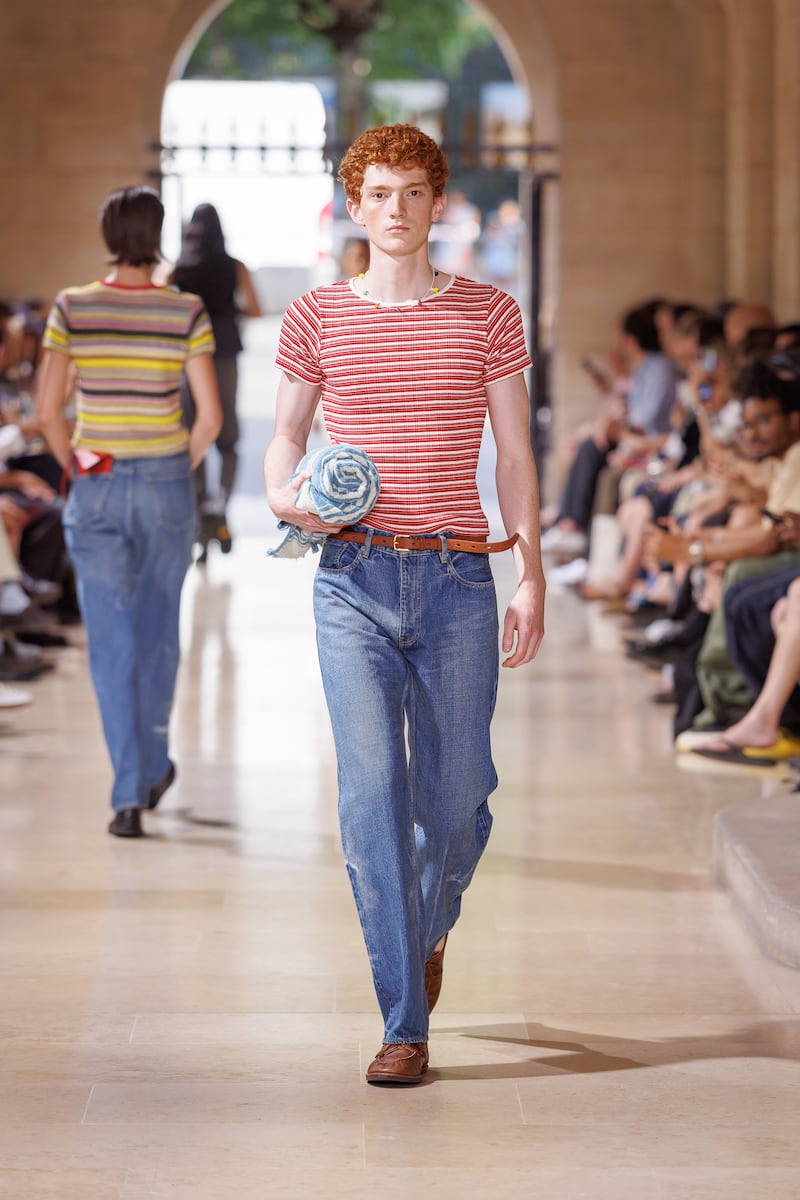
On the other hand, these are not your average basics. For tastemakers like Silbert, it’s the holistic attention to detail right down to the raw material level that sets these brands apart.
Ssstein’s sales director, Yuta Tanahashi, said the brand carefully considers how the material, silhouette, colours and details of its products work together instead of focusing on one core design element — such as simply reproducing the look of a vintage garment or focusing solely on material — to create diverse points of attraction for the brand beyond just one key detail.
ADVERTISEMENT
Auralee, a brand founded by a former pattern maker, is known for building garments from the yarn up and closely partnering with Japanese mills to develop its own unique fabrics, such as a “wool max canvas” — a proprietary fabric that emulates the look of canvas workwear but maintains the soft hand-feel of luxury wool.
“The designs remain understated, capturing a comfortable sense of ease. By pairing high quality with a subtle charm, our clothes naturally enhance the wearer’s own elegance, rather than taking centre stage,” said Auralee’s founder Ryota Iwai.
The result is tactile clothing that resonates well with the modern menswear customer. While buyers say that the logo-driven styles once fuelled by the rise of streetwear have run their course, male shoppers are still seeking newness, quality and a compelling story.
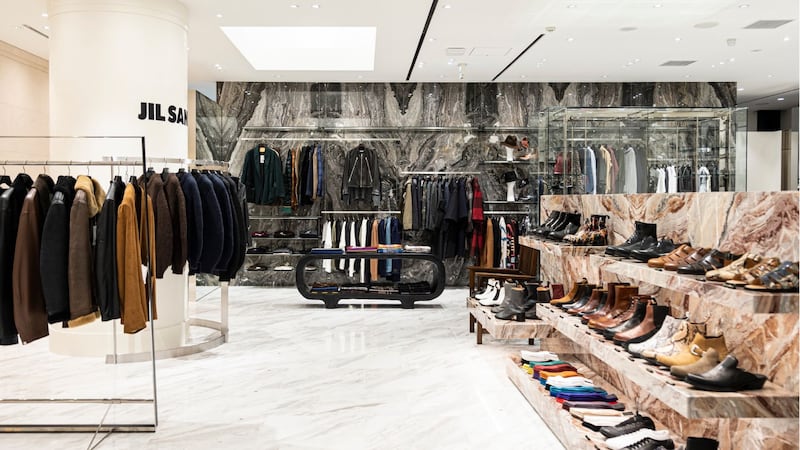
“Instead of making a bold design statement, today’s brands build their individuality through an accumulation of small differences in materials, colour, pattern, silhouette and details,” said Hiroya Suzuki, menswear director at the Japanese high-concept fashion retailer International Gallery Beams. “Of course, some customers buy because they value the brand name itself… But once you put them on, learn about the materials, or look into the people behind them, the depth of the brand gradually reveals itself.”
To be sure, this cohort of menswear labels emerging on the global stage is still far from mainstream, but with menswear as a category also on the rise, retailers see strong growth potential.
“The most sophisticated designers and consumers are all in the same place and it’s found in craft that’s not overdoing the ‘heritage’ story,” said W. David Marx, the cultural historian behind Ametora: How Japan Saved American Style. “Instead, it is minimal and about silhouette and textiles rather than easy to understand signifiers.”
While the current crop of Japanese brands seem designed for a fashion moment that’s also propelled the rise of indie menswear labels in the West, such as Evan Kinori and Mfpen, they are determined to build businesses that can outlast any trends.
To do so, they’ll have to navigate a series of challenges, from domestic production bottlenecks to market saturation.
ADVERTISEMENT
“There’s so much good clothing around these days, especially from Japan, so it’s easy to get lost,” said Hampus von Hauswolff, the head buyer for the indie Stockholm retailer Nitty Gritty.
To retain their distinctive edge and avoid drowning in a sea of elevated menswear labels, many Japanese brands are taking a careful approach to growth.
For Auralee, where wholesale currently makes up 80 percent of its entire business, Iwai said that maintaining high full-price sell-through rates is a “top priority.” The brand achieves this by working closely with buyers and carefully balancing its regional door counts to prevent market saturation.
Although the brand declined to share current figures, The Financial Times reported in 2025 that its sales reached around 3.6 billion yen ($23.8 million) in 2024. It’s also looking to gradually increase its direct-to-consumer business, Iwai said — part of a strategy to not only maintain a healthy sales balance, but also to increase the brand’s visibility through flagship stores.
Auralee’s contemporaries are taking a similarly careful approach to distribution. Ssstein, which has grown to generate over 1 billion yen ($6.3 million) in annual revenue with distribution across 100 stores globally, said increasing stockists is not its goal. Instead, it’s developing long-term relationships with strong retail partners.
“We want each partner to be able to properly introduce Ssstein to their customers and maintain an appropriate level of inventory,” said Tanahashi, who added that the brand prioritises and is careful about expanding doors to avoid oversaturating key markets. The brand also said it does not try to push for large minimum orders, but instead tailors the amount of inventory it wholesales based on the amount its partners believe they could realistically sell at full price.
“We have really close relationships and try to grow our businesses together so they can maintain that tight distribution,” said Kris Kim, the founder and creative/buying director of the luxury New York City fashion retailer La Garçonne, who also stocks Ssstein alongside labels such as A.Presse and Auralee. “We are seeing steady growth and the times of [brands] opening as many doors as you can are gone.”
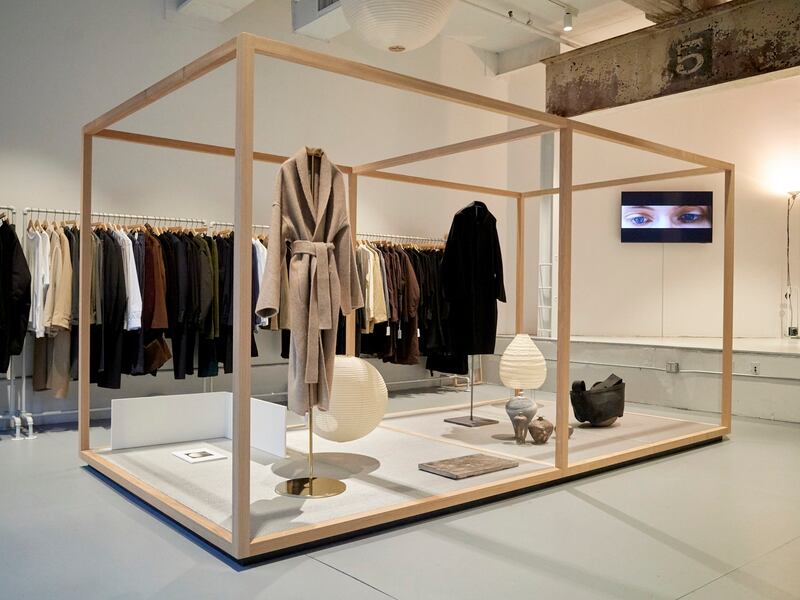
Retailers are also betting that the brands’ timeless aesthetics will resonate for years to come and build strong customer loyalty.
“Men are responding to it because it’s the best version of something familiar,” said Kim, as several men walked into the store to browse an installation the shop was holding for the Japanese designer Taiga Takahashi. “Guys really care about that because it’s got to be long-lasting and something they can wear every single day.”
Still, Japanese brands face steep domestic hurdles. Production costs are rising as conflict in the Middle East pushes up energy prices and Japan’s garment manufacturing workforce continues to contract due to strict immigration policies and an ageing generation of master artisans.
But unlike publicly traded luxury houses driven by pressure to grow every quarter, many Japanese designers deliberately prioritise slower growth to survive.
“One of the superpowers in Japan is the degree to which people see themselves as craftspeople, not business people,” said Marx. “Because of that they’re willing to have a lower profit margin in a smaller business and not become fabulously rich. If they don’t care about that, they can do this forever as long as a certain core consumer stays.”
With customers having moved away from logo-heavy looks, indie retailers are finding ways to highlight subtle details like unique fabrics and treatments, while training staff to communicate about the craft that makes garments special.
Combining centuries-old craftsmanship with pioneering materials and creative surface design, Japanese mills supply some of the world’s biggest fashion brands, from Levi’s to Chanel.
A new transatlantic approach to minimalist tailoring and workwear has swept menswear, buoyed by the rise of buzzy upstarts from Japan, Scandinavia and the US. To outlast a current fixation on a sophisticated, pared-back look, labels are searching for ways to make their clothes stand out.

Lei Takanashi is a Correspondent at The Business of Fashion (BoF). He is based in New York City and covers menswear, streetwear, young consumer trends, and the intersection between fashion and culture.
Loading recommended reads…
The designer leaned into the glamour and sex appeal of the storied Parisian fashion house. Sales nearly tripled during his tenure before sliding in recent years.
BoF’s editors pick the best shows from the Spring/Summer 2027 fashion season.
Brands may be racing to invest in new technology, but the biggest barrier to online sales is far more basic, finds BoF Insights and Amazon Fashion & Sports’ latest report ‘Inside Fashion & Sports E-Commerce.’
Every photographer is telling their own tale, says Walker, but his new exhibition also offers an emotional document of the triumphs and challenges of queer culture.