Agenda-setting intelligence, analysis and advice for the global fashion community.
Agenda-setting intelligence, analysis and advice for the global fashion community.

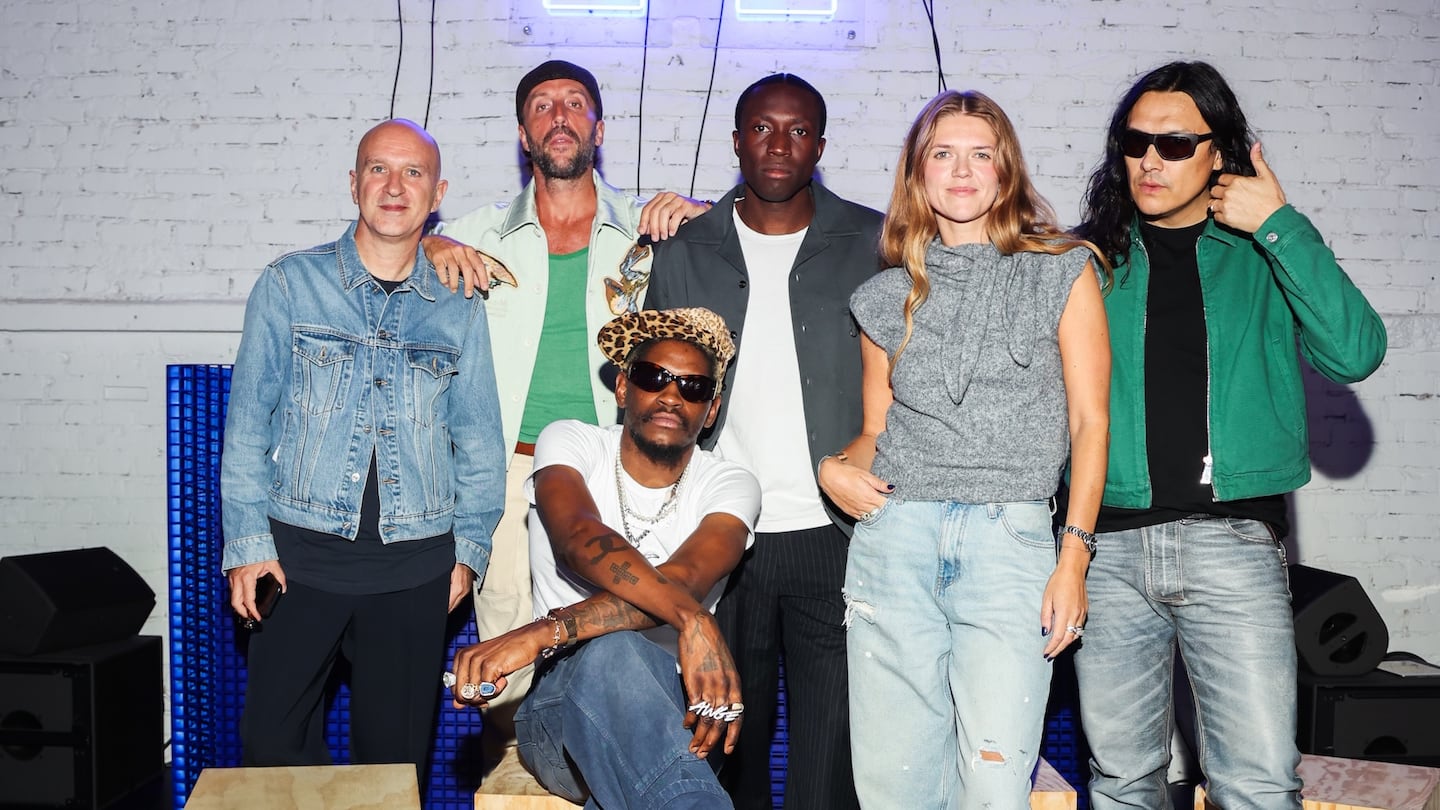

MILAN — With Milan Fashion Week in full swing, luxury streetwear label Off-White staged Imaginary Palace, a multi-day activation at Via Orobia 13 spanning installations, workshops and live programming across fashion, art, music and culture.
The activation is part of 10x10, a year-long project running through April 2027 in which 10 global creatives with long-standing ties to the brand reinterpret 10 icons from its archive. They include musicians Kid Cudi and A$AP Nast; designers Ava Nirui, Raul Lopez, Guillermo Andrade and Yuta Hosokawa; and multidisciplinary creatives Stéphane Ashpool, Bafic, Renell Medrano and Veneda Carter.
The project reflects late founder Virgil Abloh’s view of fashion as a space for exchange, where references from art, music, sport and street culture are recontextualised for new audiences.
Founded in 2013, Off-White began “as an open-source platform and incubator of ideas, cross-pollinating fashion, design, music and architecture to shape a new cultural playbook,” according to the brand. Today, its 10x10 project brings that legacy forward by placing Off-White codes in the hands of a new generation of creatives.
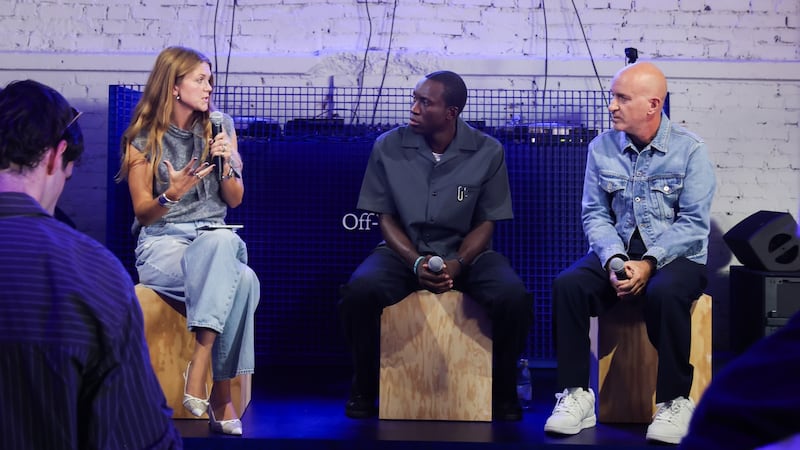
The Business of Fashion hosted two conversations with participating creatives at the activation – both moderated by BoF’s Alice Gividen – exploring the art of the remix, the future of the icon and how creative ideas and cultural codes evolve over time.
The first conversation, “The Art of the Remix,” paired photographer, filmmaker and artist Bafic with Off-White CEO Cristiano Fagnani to explore how ideas move between disciplines and communities, and how familiar codes take on a new meaning in new contexts.
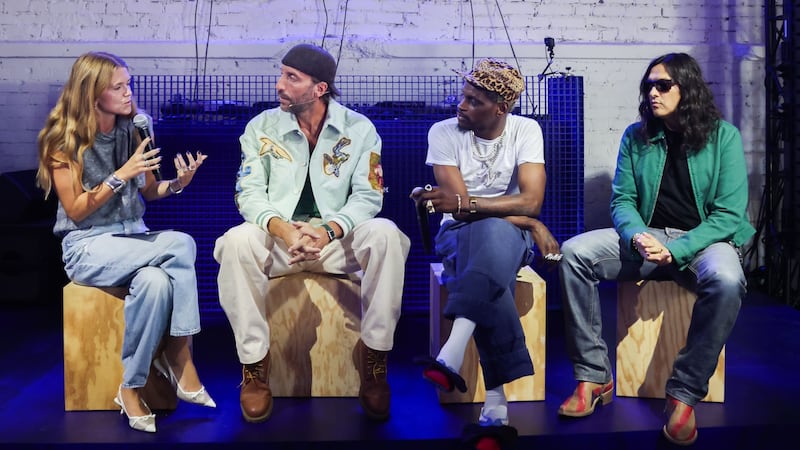
The second, “The Future of the Icon,” brought together rapper and multidisciplinary creative A$AP Nast, 424 founder Guillermo Andrade and Pigalle founder Stéphane Ashpool to examine what makes an icon, and what allows one to endure, as digital feeds increasingly flatten culture and taste.
Below are key takeaways for brands from both conversations.
The role of the creative director is shifting from sole author to orchestrator, drawing on collaborators’ expertise rather than steering every part of a brand’s narrative alone.
“Sometimes, the people who you think are the sole person doing [the work], in isolation, can be a bottleneck. When you externalise it to people on the team, through conversation, they fill the gap that’s missing and give you something you weren’t even thinking about from another perspective. That’s what makes things that much richer,” said Bafic.
“The brand itself was imagined as a platform — a product to be used by [creative] talents,” said Off-White CEO Fagnani. “A creative director is the person who [opens up] the main dimension, setting the story for the moment.”
A clear vision matters, but holding too tightly to a fixed concept can stop an idea from reaching its best form. “There’s an intention behind what we do, a vision, an idea of how things could go, and that’s important,” said Fagnani. “But honestly, we need to accept that during the journey and during the process things may change because things change just around us.”
Bafic agreed, explaining how the strongest work emerges through dialogue: leaders set the direction and let the final product “crystallise” through collaboration and execution.
“You have a perspective — a North Star — but with specialists in every department, briefing people, talking to people, having conversations, an idea crystallises over time,” said Bafic.
“If you start with a fixed idea and want it to stay that way the whole time, you’re not taking advantage of how something evolves. I really learned to stay open through communication with teams, while still knowing when to say, ‘No, that’s not quite right.’”
In many fashion businesses, approval cycles and testing means an idea can take months to reach execution. Ashpool, A$AP Nast and Andrade, by contrast, move quickly from idea to action.
“I think people look at me like I’m this crazy mastermind, but I just know what works for me by trying. Just try things — whatever works for you, works. You know when it doesn’t work because it doesn’t work, and when it works, it works. I pretty much live my life that way,” said A$AP Nast.
“I’m usually very intuitive and I trust my instincts... It’s about taking something and using it in a different way than it’s supposed to be used. You see how things speak, whether they say more or say less, and you move with that energy,” said Ashpool.
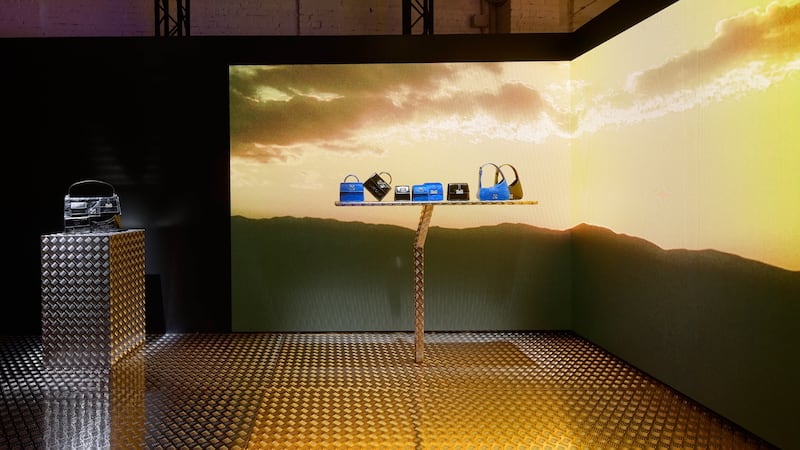
As Gividen remarked, digital feeds tend to “flatten” culture, making it feel uniform and two-dimensional. To break through screens, 424 founder Andrade argues creators should pour their “personal energy and passion into something [as] you can feel the difference.”
A personal story embedded in a physical product can cut through screen fatigue, and “give it that extra edge,” he said.
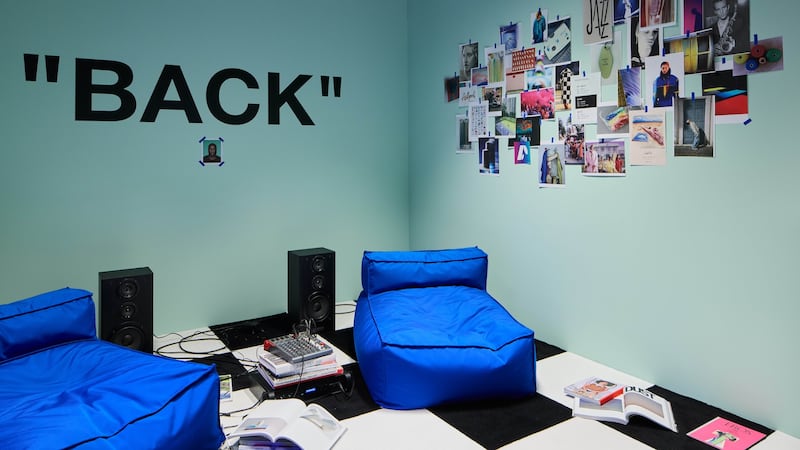
Bafic also stressed the value of physical space. “I think in a day and age where everything is moving so fast, we need to freeze in printed worlds,” he said.
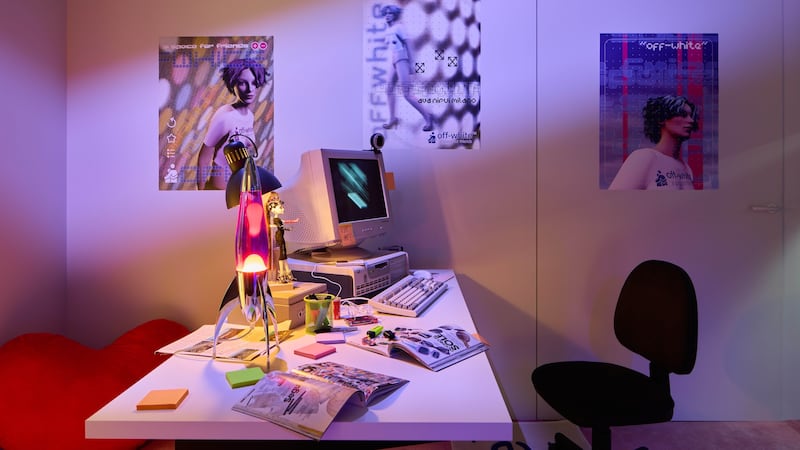
This is reflected in Bafic’s work for Off-White’s 10x10 project, complete with a room where visitors write messages to their younger selves, prompting them to consider whether what they put out reflects who they are.
Luxury brands have traditionally kept tight control over how their products are presented and perceived. Off-White takes the opposite approach.
Bafic and Fagnani argue that cultural resonance comes when audiences adopt a product into their own lives. The creator provides the canvas; the wearer gives it meaning.
“We chose to accept that our consumers decide what to do with the product and define what it is. It’s not about what you wanted it to be, but how people actually use your product to define what it becomes in real time,” said Fagnani.
“Once you start and finish something and put it out there, it is that realisation that it’s not yours anymore. How scary that [can be] if you define yourself by the things you make,” said Bafic.
“But the beautiful thing we can do is to make something and share it and allow people to use it in their own way. And seeing how people use it tells you what it is as well. Just because you’ve made it doesn’t make you the sole owner of it,” he added.
It can be argued that the concept of “community” is overused in fashion, and requires grounding in a shared “sense of camaraderie and purpose,” according to BoF’s case study “How Brands Build Genuine Communities.” Ashpool agreed that community cannot be manufactured.
For him, that means investing in the young people growing up around his brand, Pigalle. Sustained presence and long-term advocacy, he argues, build deeper loyalty and create space for innovation.
“Community is a long journey — not just a word for the marketing world. It takes a lot of my time to see how I can be the best role model for the people around me, helping them achieve their dreams. When people call me ‘the mayor,’ one day I want to be the real mayor of my city and keep helping people. It’s doable.”
For Andrade, bringing different communities together has been central to building 424 over the past decade. “What I was focused on is rounding up as many people, like-minded or not, and just mixing them together as much as possible,” he said.
For A$AP Nast, community has been integral to his evolution and is something to “appreciate and give back to.”
For brands seeking cultural relevance, community cannot be built around a product or campaign. It requires sustained participation in and exchange between the people, places and cultures a brand wants to be part of.
Off-White will host further 10x10 events globally through April 2027, with exclusive products released throughout.
Learn more about the 10 creatives in the 10x10 project defining what makes an icon.
This is a sponsored feature paid for by Off-White as part of a BoF partnership.
Loading recommended reads…
BoF’s editors pick the best shows from the Spring/Summer 2027 fashion season.
Brands may be racing to invest in new technology, but the biggest barrier to online sales is far more basic, finds BoF Insights and Amazon Fashion & Sports’ latest report ‘Inside Fashion & Sports E-Commerce.’
Every photographer is telling their own tale, says Walker, but his new exhibition also offers an emotional document of the triumphs and challenges of queer culture.
Opening in Q4 2026 on Saadiyat Island — at the heart of Abu Dhabi’s cultural district — Saadiyat Grove brings together luxury retail, hospitality, residential living and culture in one of the emirate’s most ambitious new developments. BoF speaks to Jonathan Emery, chief executive officer of Aldar Development, about the strategic vision behind the project.