Agenda-setting intelligence, analysis and advice for the global fashion community.
Agenda-setting intelligence, analysis and advice for the global fashion community.
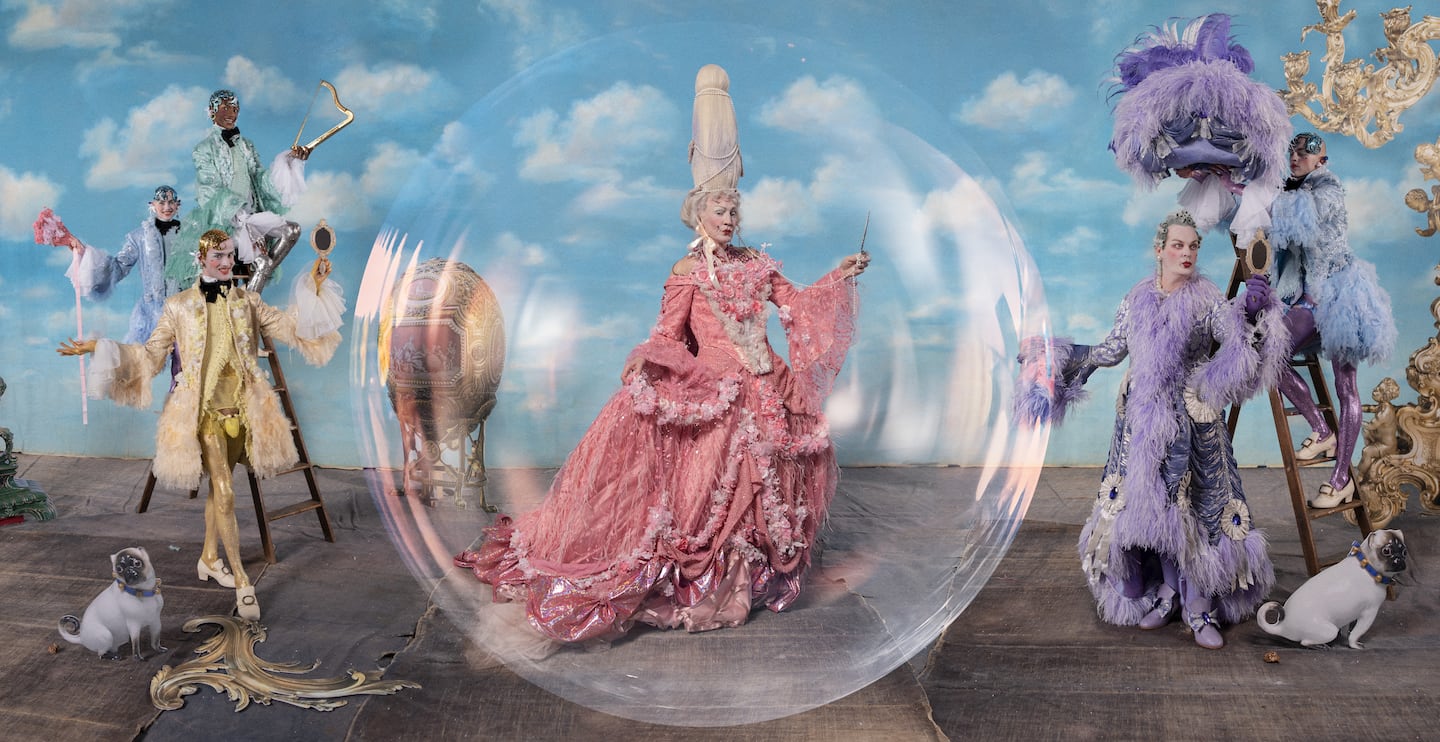
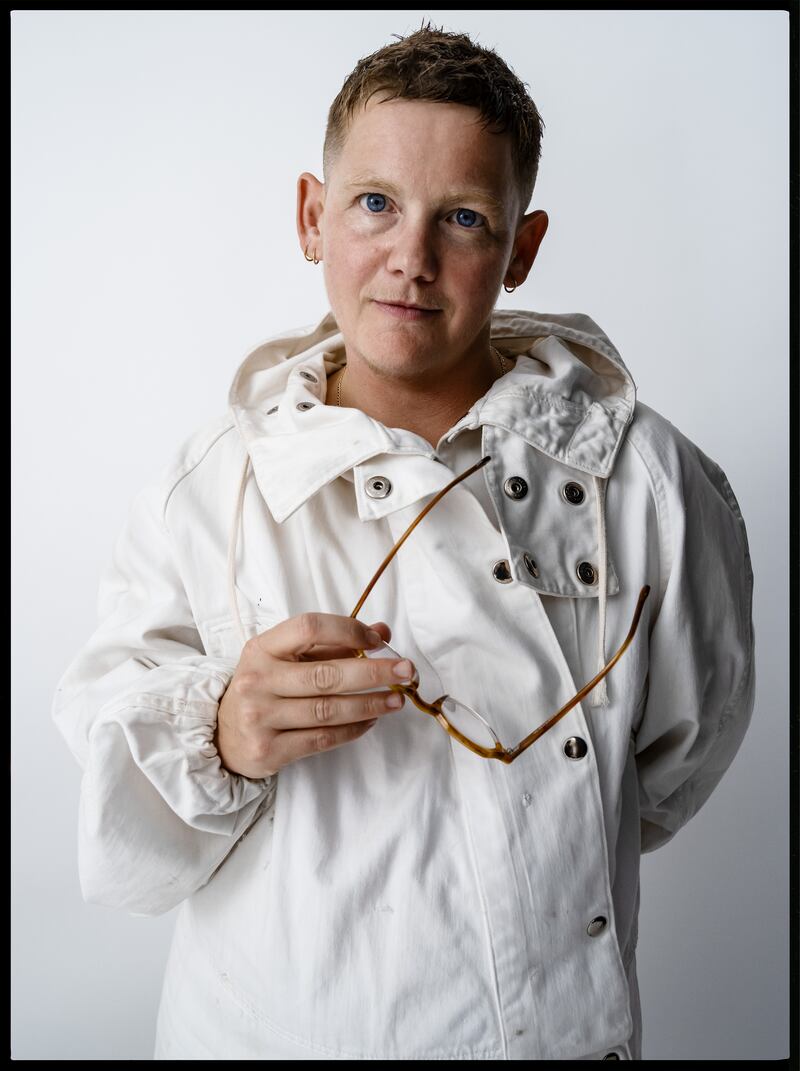
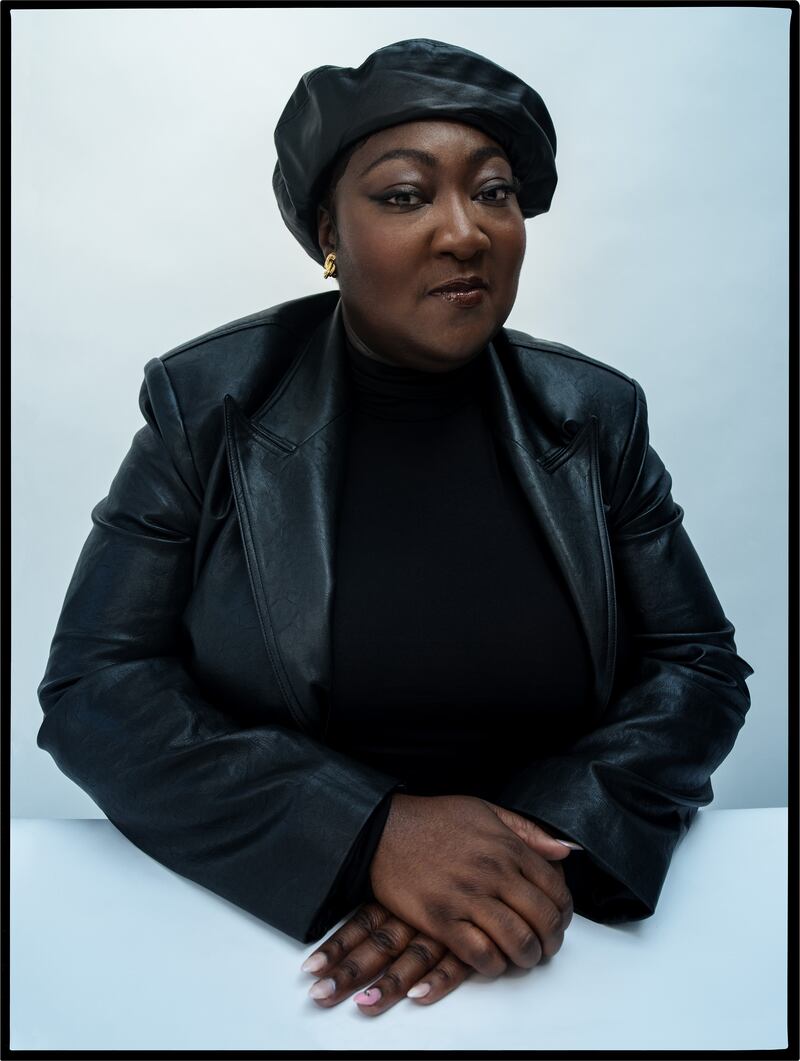
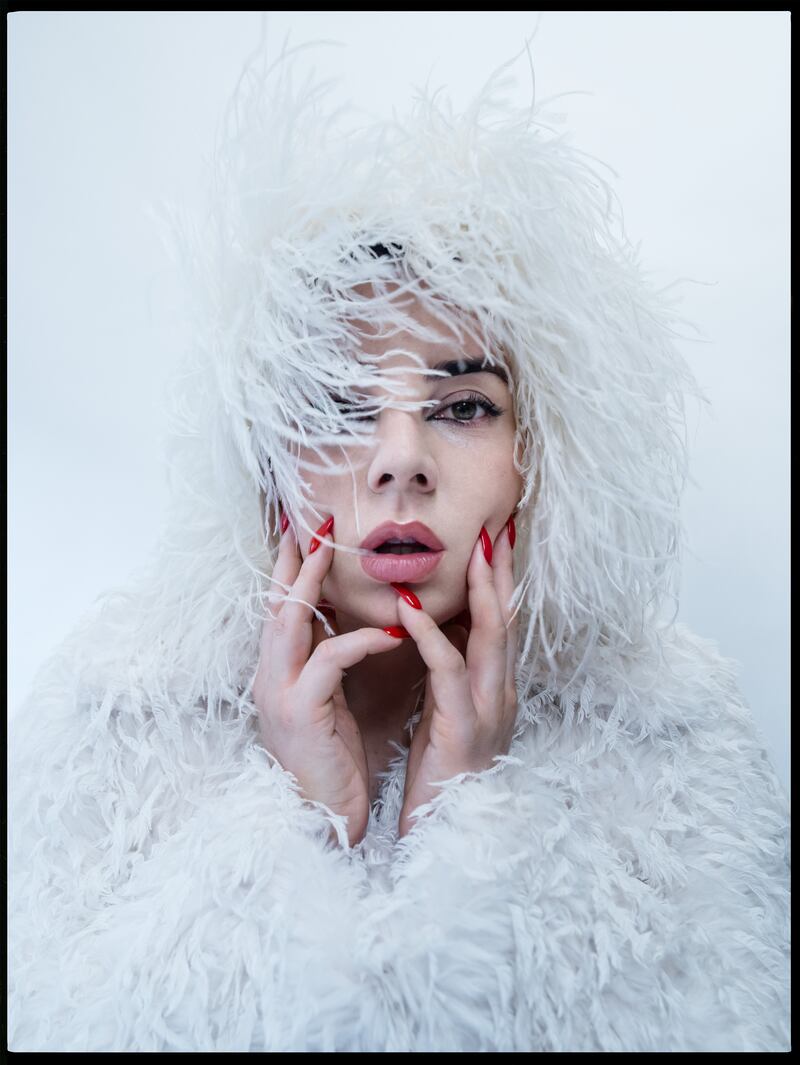
Tim Walker is worn to a frazzle. He has spent the past six years working on an exhibition celebrating queer culture. “I’d say we’ve done 300 shoots, four to five in one day sometimes, on a working budget of £800,000″ ($1,057,000). All that work sees the light on Friday at the National Portrait Gallery in London, where the show will run until February next year. Tim Walker’s “Fairyland: Love and Legends” is really a life’s work for the photographer. His story meets history.
Alice’s adventures were childhood roadmaps for Walker. An early photo shows him in a pink playsuit and wings, like one of the notorious Cottingley Fairies, captured in 19th-century photographs that a whole world thought were real. People wanted to believe. Walker’s work has been similarly magical. The rococo fashion fairytales that made his reputation have been celebrated in a stack of lavish monographs.
But fashion photography wasn’t originally anything he ever wanted. It took him a while to get it. When he was at school, a friend showed him a story Peter Lindbergh photographed for Vogue Italia, the fabulously peculiar shoot of Helena Christensen interacting with a little alien. “And I was like, ‘Oh my God! I can’t believe you can make a world with a heroine and an alien, and it looks like that.’ That’s what I wanted to do. I didn’t understand that the raison d’être of those pictures was Helena Christensen wearing a dress by Marc Jacobs or whoever. I was so into the fantasy. That’s what I was following. I didn’t get into photography because I loved the clothes. I got into photography because I loved the fantasy.”
“People had an appetite for impossibility that isn’t there anymore,” he continues. “It was more about what I couldn’t see that I wanted to manifest than what I could see. And fashion was the perfect place at the time to be financed by magazines to explore that. We were all young and we’d be up all night painting sets and making giant eggs or whatever. But now everyone’s got older, and the playground isn’t there anymore. So I think ‘Fairyland’ was something in me. It’s just being a gay man. Of course, photography is autobiographical as well, isn’t it? Any sort of creative output is, and I think that I just needed to explore it. But it happened for a reason, and that reason just grew and grew and grew. And this is how it ended.”
ADVERTISEMENT
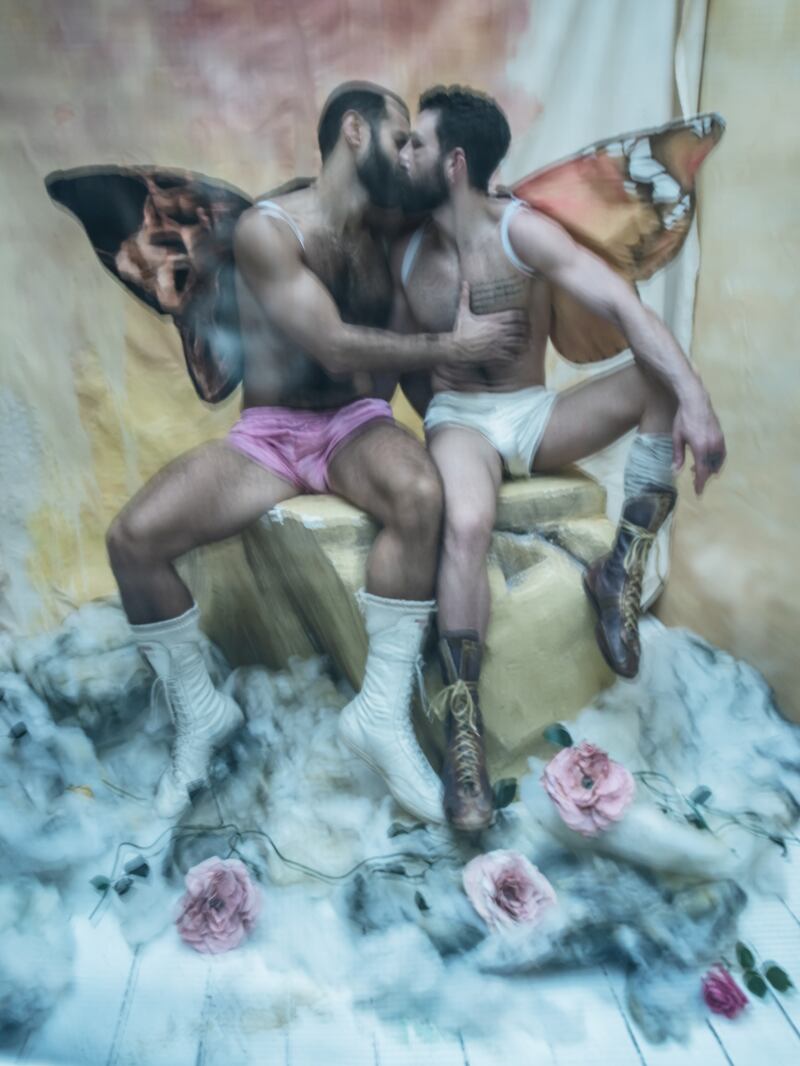
This is a gorgeous, emotional celebration of the heroes and heroines of queer culture past, present and future, all of it couched, to a remarkably intimate degree, in Walker’s own experience as a gay man. Six years ago, Nicholas Cullinan, then director of the NPG, commissioned a show from the photographer after he’d seen a series of particularly rococo queer fantasies Walker had been conjuring up as a private project. But he suggested that he marry those images with portraiture — everyone from a gay liberationist from the 1970s to Elton John — to create an entire landscape. By some surreally fortuitous turn of events, Walker had just come across a plaque in a London park that commemorated one of the UK’s first demonstrations for gay rights. Its date — Nov. 27, 1970 — was the day he was born. “I was born at 10:00 p.m., but that afternoon, men and women were out marching for society to accept who I was going to grow up to be.”
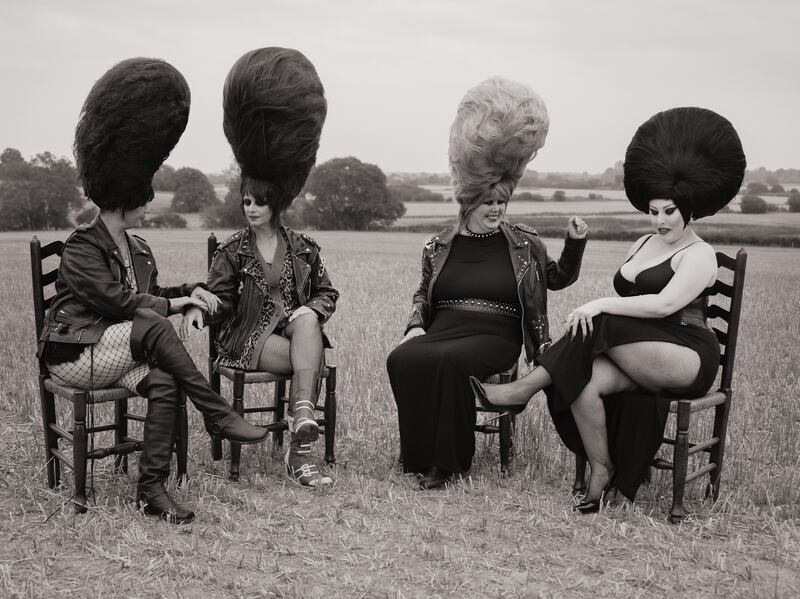
Portraits of those early activists fill the first room in the exhibition. They’re photographed in the style of the Holbeins in the NPG’s Tudor floor because they’re part of British history. “There’s a thin red line to my life story as well,” says Walker. “What it felt like to be born gay. I always wanted to call it ‘Fairyland,’ just for my own personal journey as a gay man. I was always into fairies. Fairyland is paradise.” Maureen Duffy, the elderly woman with the giant egg in the show, who was 95 when her picture was taken (she died in May this year), gave Walker a copy of her book “The Erotic World of Faery,” which recorded the ways in which fairies were coded in culture as metaphors for queerness. True, when I was growing up in New Zealand, before there was “queer” or “fag,” there was “fairy.”
The cliché makes Walker blanch but he accepts that his new show is his life’s journey. “I think when I look back at my life as a fashion photographer, it was so gay what I did, but I never realised. Probably more camp actually. I mean, in a way, it’s a beautiful thing. They were very naïve, those pictures. I didn’t know what I was doing. I just was reacting to what I thought was beautiful. But what I thought was beautiful was camp Beaton. I was really into the flowers and pastel colours and animals and Lord Berners, who dyed his doves pastel colours. He brought his horse inside the house for tea with his children. All that kind of storytelling was something that resonated with me.”
“Wonderful Things,” his 2019 exhibition at the Victoria and Albert Museum (and the largest in the museum’s history) was enveloped in a 25-year retrospective of his work which tracked an evolution from his extraordinary photographic fictions — “making the impossible possible,” he called them — to something simpler, more spontaneous. The same process is evident in “Fairyland.”
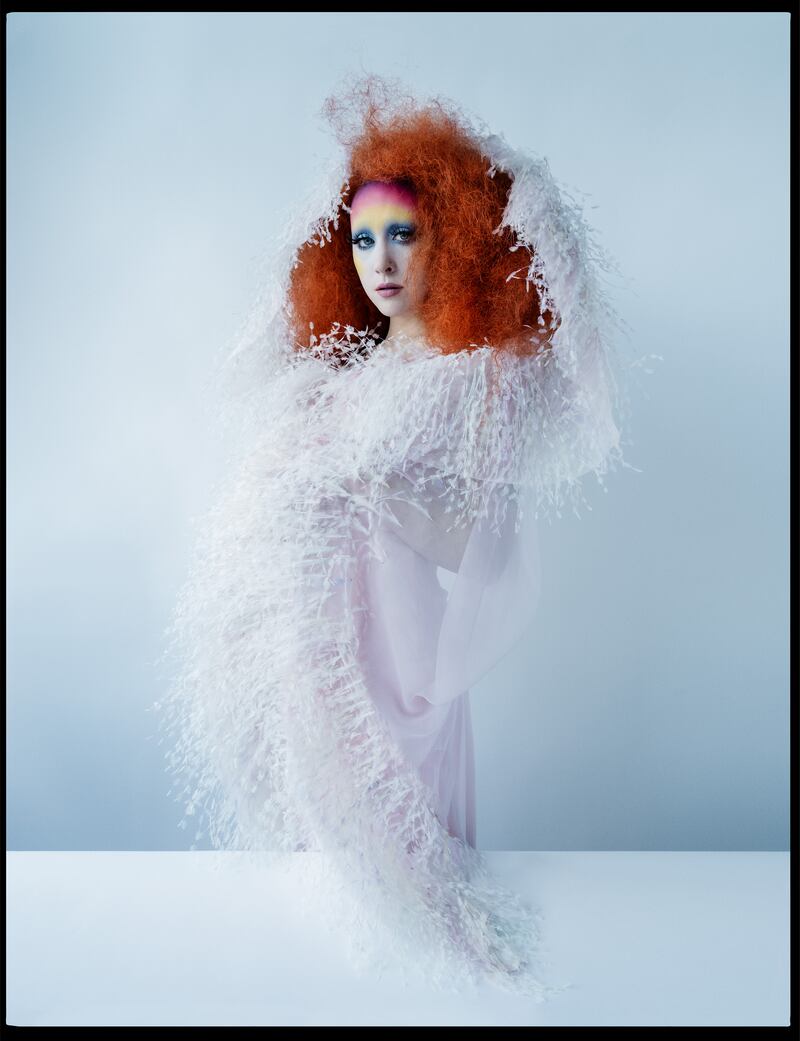
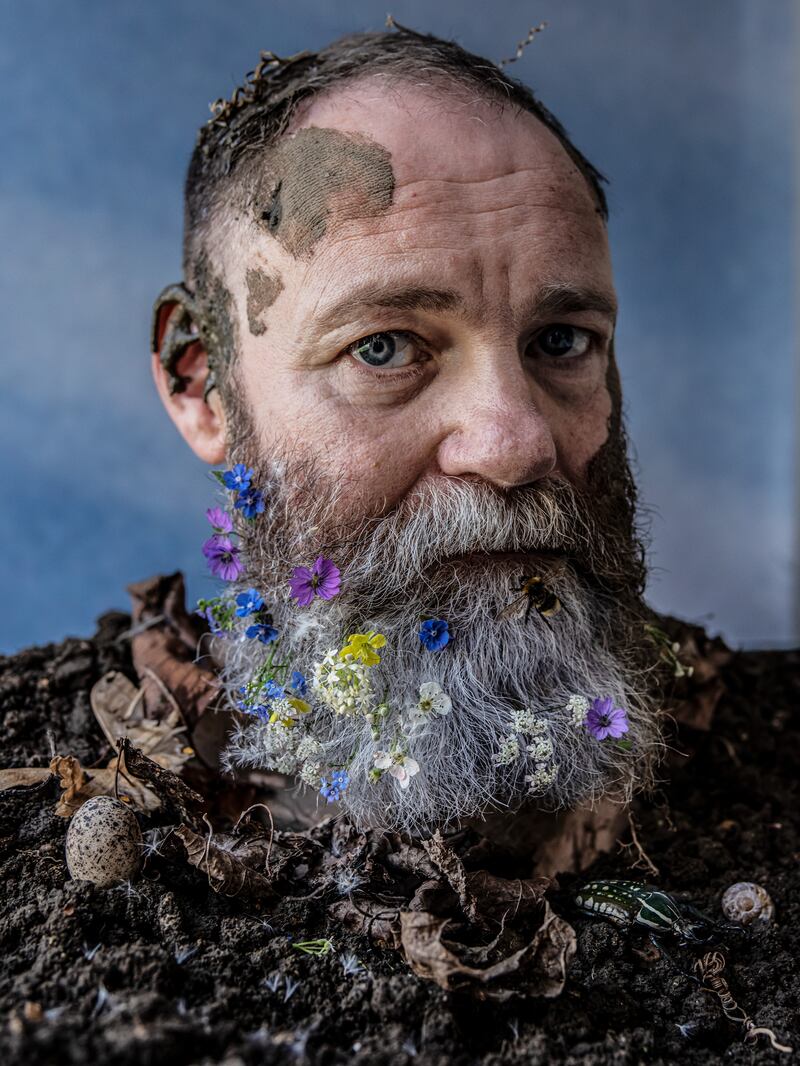
“I definitely started out on the more fantastical set-heavy pictures,” Walker agrees, “and then as we ran out of money and time, we were like, fuck, we’re just gonna have to do a portrait on white.” The press release delightfully describes the results as “deceptively simple,” acknowledging that necessity is the mother of invention and ingenious creative solutions to straitened circumstances enhance rather than diminish. Howard Sooley, who documented Derek Jarman’s cottage in Dungeness, simply stepped out of Walker’s studio, picked his favourite autumn leaves off the street, and dressed himself in them for his picture. Costume designer Sandy Powell, another Jarman acolyte, arrived in the studio with the can-do attitude that’s won her Oscars, no need for money or location or anything. She photocopied Jarman’s diaries on the Xerox machine upstairs and made a suit from the pages, all in a couple of hours.
“When I think of Sandy and Derek, I think a lot of Tilda being there,” Walker says. “I think of ‘Orlando.’ My God, watching that on telly when I was a kid, the excitement of it. You know that bit where she’s sitting under the oak tree and she’s reading poetry, and then she turns and she looks right at the camera?” He claims his image of Tilda as Ophelia was sheer serendipity. “We were up at her house in Scotland, and there’s a planter, and she got under the planter, and it started to pour with rain, and then the water on the glass made it all very Ophelia.”
Getting back to those other photos, the white background suggests Richard Avedon, whom Walker assisted in New York in the early 1990s. “A surefire way of photographing people is just to put them in front of nothing,” he acknowledges. “That was done before Avedon did it, but I think definitely he was that kind of guarantee.” Avedon meant still more to him. “How I communicate with subjects is so informed by my journey as a photo assistant for everyone I worked for, but Avedon particularly, because he was so great at communication, which is an art that I learned from him.” The maestro taught Walker that the subject comes first in a shoot. Amplify the persona. He mentions Avedon’s famous image of the Duke and Duchess of Windsor, faces riven with grief, a reaction the photographer triggered before he clicked by telling them he’d just seen a dog hit by a car. (They were famously pug lovers.)
Nudity helps too. “I go to Earl’s Court to meet Nicky Haslam,” Walker recalls. “I look at his apartment and all his amazing suits that he’s had since the 1930s and then he arrives, and he’s like, ‘I don’t want to wear those suits. I don’t want to put anything on.’ So in the end, we photograph him naked in a club chair. Nicky Haslam naked against a white background is everything, because nothing’s getting in the way of him. There’s something about seeing his picture that is very touching, vulnerable, and funny all at the same time.” Haslam shares wallspace in the show with the equally naked trans DJ Honey Dijon, slouched in a deck chair, who brings shaded, heeled Helmut Newton attitude to her picture.
ADVERTISEMENT
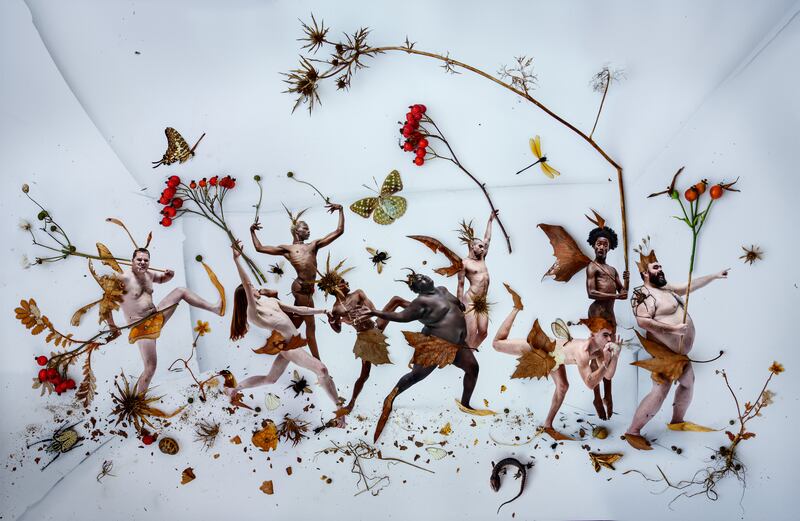
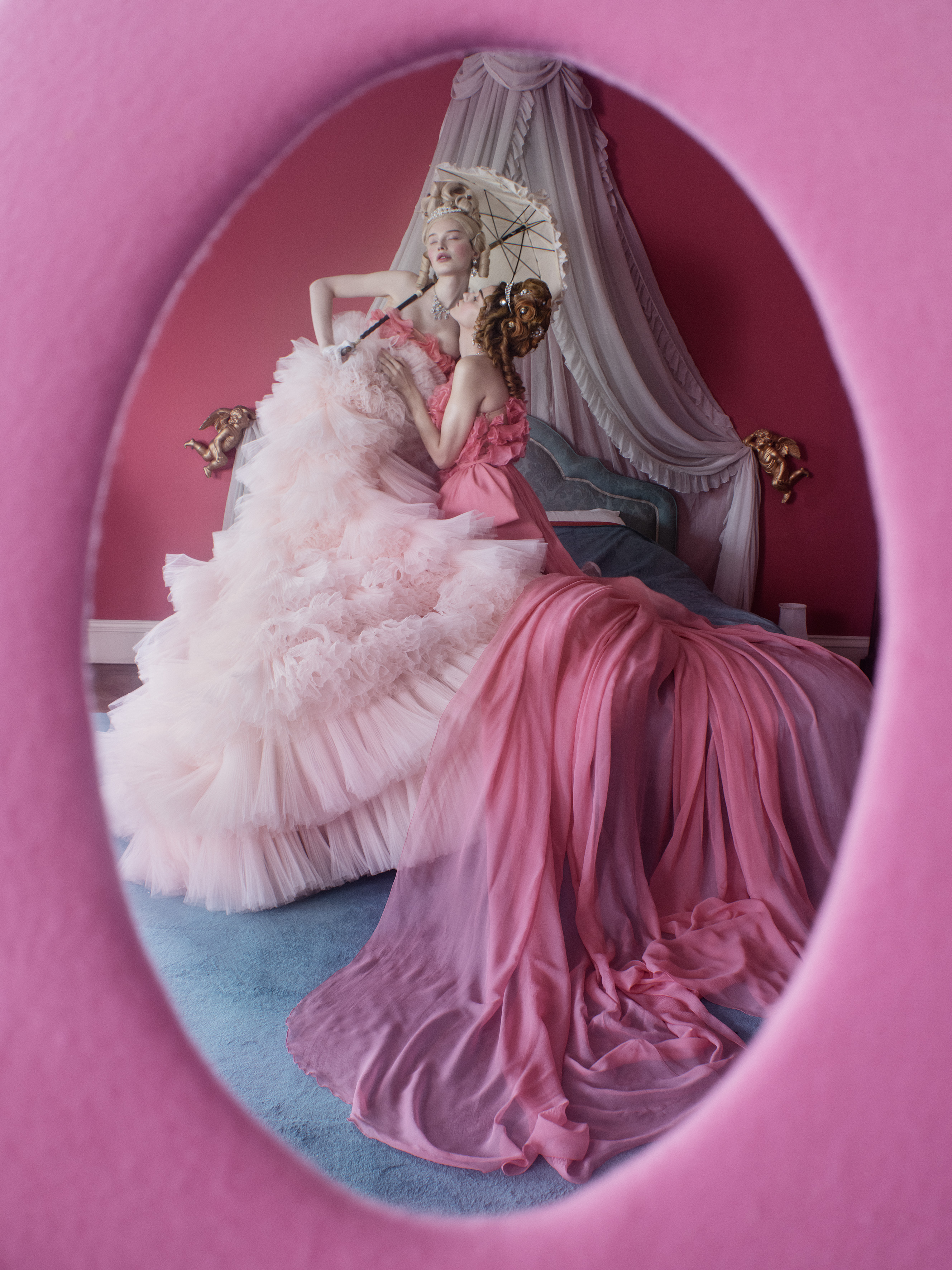
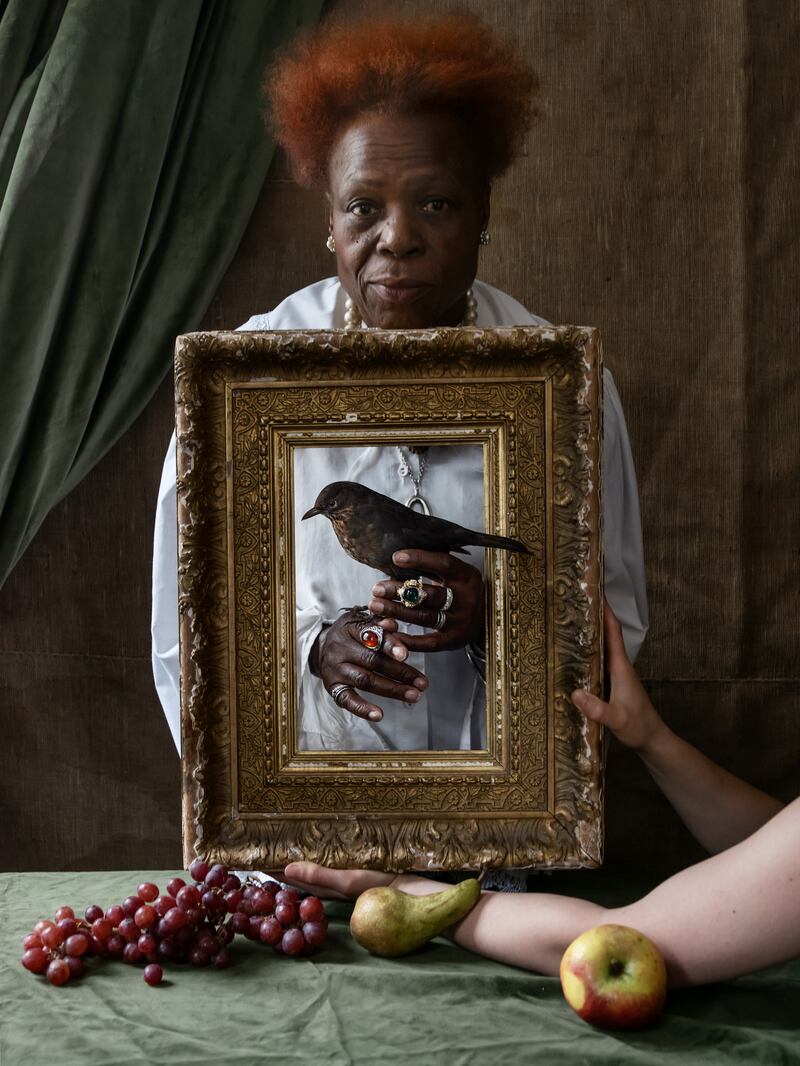
Since the show was first mooted, the Trump-dogged world has cooled on minority rights, gays included. Walker thinks back to the genesis of the whole thing. “When Nick first came in and said, ‘Should we make this an exhibition at the National Portrait Gallery?’, I was like, I don’t really think that the world needs to see a queer celebration, because they’re giving away rainbow flags for Pride in Sainsbury’s. It was so domestic, so normalised, it kind of irritated me. I think I went into it very lightly. I didn’t think about it historically. I didn’t think about the weight or the importance of it. Amazing, right? Imagine the journey that we’ve all been on. It’s been incredible. But now, the pendulum has swung. I don’t know what Nick knew, but I get why I was commissioned to do this show. It’s even more important to see it.”
Consider the way that trans rights have become a touchpaper issue for the surging right wing around the world. “Fairyland” noticeably celebrates that community, as it celebrates everything which is different from the majority. Walker’s ardour is intense. “Having worked on this exhibition when it was LGB and then T and then Q and then IA+, as the alphabet expanded, it told me that the nuances of the human experience are so rich and varied that the queer experience is almost impossible to categorise. A lot of people have a problem with the word, but since I was born, so many more colours have shown up to the flower show that ‘queer’ just seems to encapsulate everything under the marquee. It is just an umbrella term. Anything that isn’t binary, straight, is queer. Also it marries with what I personally feel, the whole idea of fluidity, that every human being has this stream of masculinity and femininity which ebbs and flows within each person. So it’s all just queer.”
“I do believe that terminologies like gay and lesbian are very useful because they clarify,” Walker adds. “But ultimately, reflecting on my journey with this project, I understand that there’s a lot of beautiful experience of life that changes people, and I think that’s where the gold is. It’s in the change.”
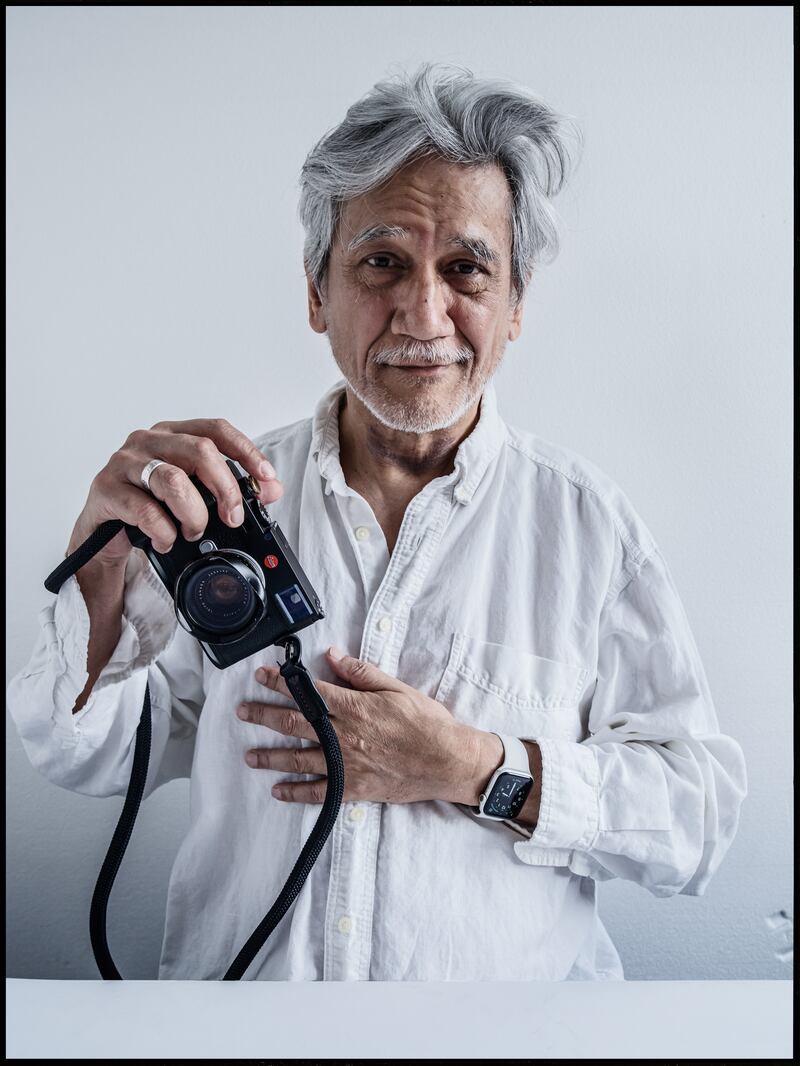
He once told me that photography’s emphasis on transience also makes it a reflection on mortality. The static image is “an inescapable memento mori,” he said then. He still believes that. “What I very much know now is ultimately the most important thing about photography is that it’s a memory. You’re capturing time. I have always thought, ‘Oh, it’s about fantasy and it’s about something that didn’t happen.’ But of course, the pictures that Peter Lindbergh did of Helena Christensen, even if he didn’t know, were somehow so much a mirror of people’s desires at that time. I remember my girlfriends loved Helena Christensen. She was so exotic and gorgeous. That is, in a way, like photographing Duane Michals. When I took that picture of him, I didn’t know he was going to die the next year. He was just a hero of mine. But then that picture becomes pertinent because that’s a picture of him as a 94-year-old man who I encountered, and then it’s also a picture of someone who’s now dead. That’s what photography is, above all. It’s a record of something.”
How much more pointed is that in the context of a show celebrating queer culture? AIDS is the shadow cast over “Fairyland.” It’s a stunningly well-staged presentation, riding from room to room on waves of emotion, but there is one space Walker refers to as “the chapel.” If the queer contribution to the culture is obvious elsewhere in the exhibition, here is the moment to reflect on the contribution that was lost, the hundreds, the thousands of people who would have shaped the story that Walker is telling. Instead, he introduces us to the AIDS activists, the doctors, the nurses, the survivors. “I remember when we photographed Nick Partridge, the former CEO of the Terence Higgins Trust, he said, ‘I think ‘Fairyland’ is such a good title because it also talks about the darkness.’ It’s so important to have it marked out separately so you know this was a dark time. And it came barely 10 years after that march in 1970.” In his portrait, Graham McKerrow, founder of the newspaper Capital Gay, is holding the 1981 issue in which he sounded the AIDS alarm, possibly the first journalist in the world to do so.
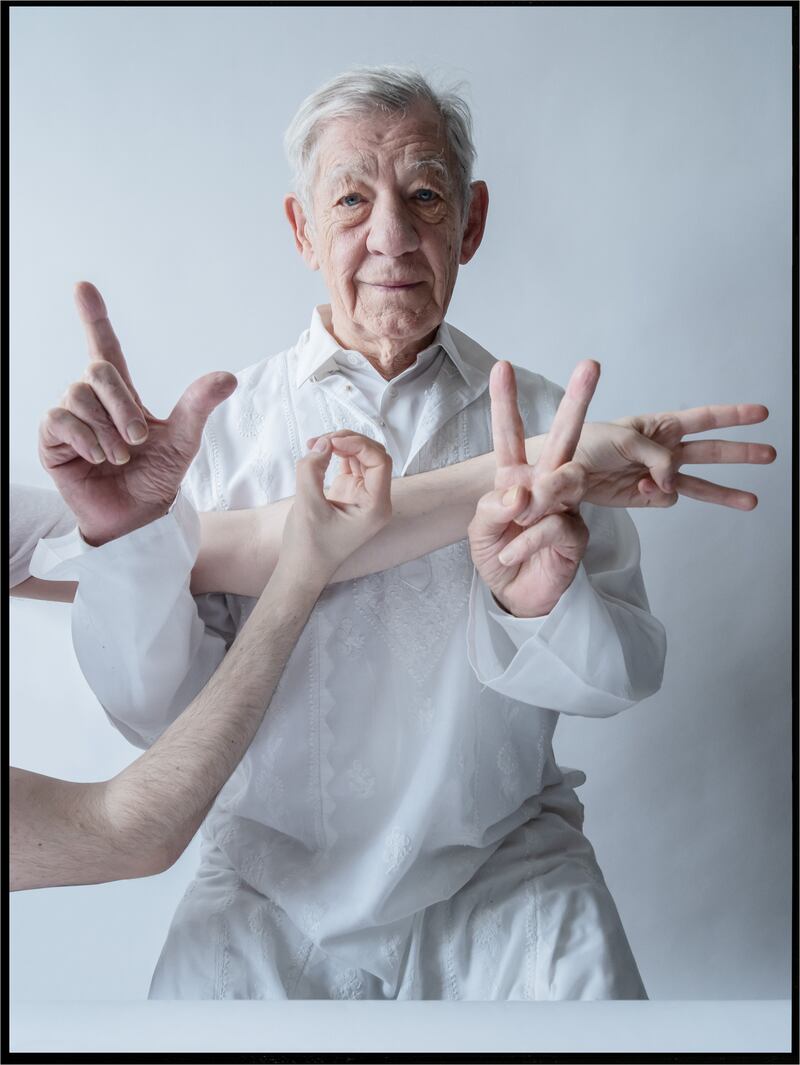
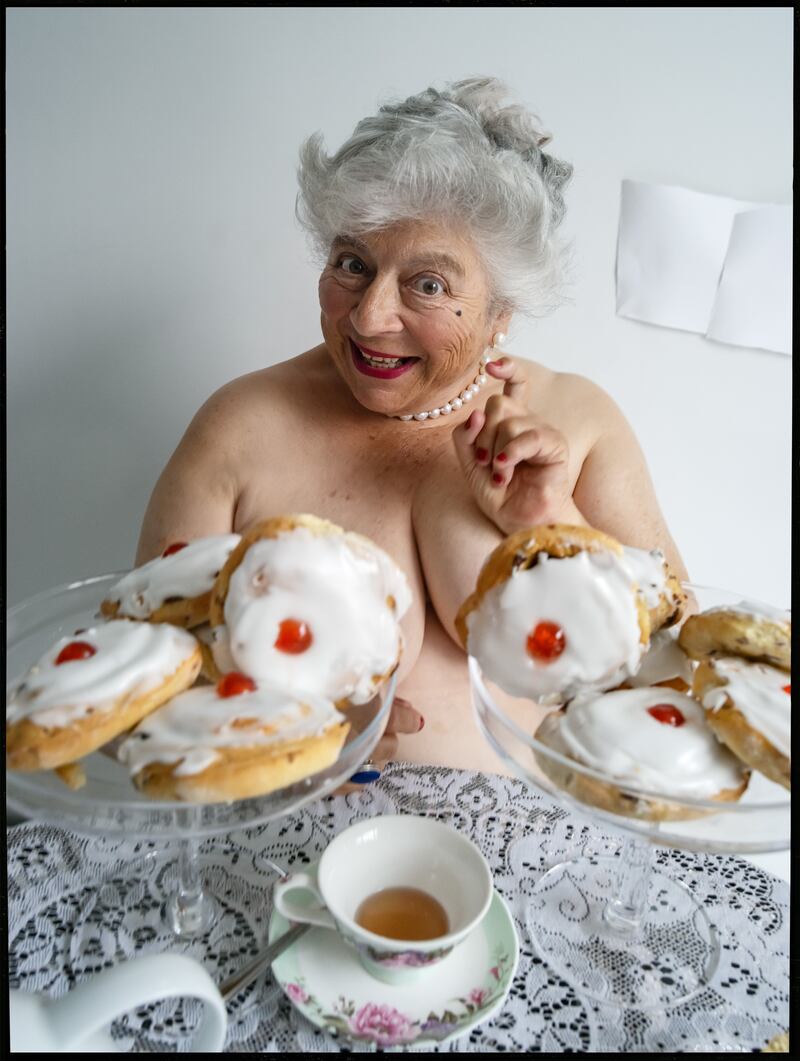
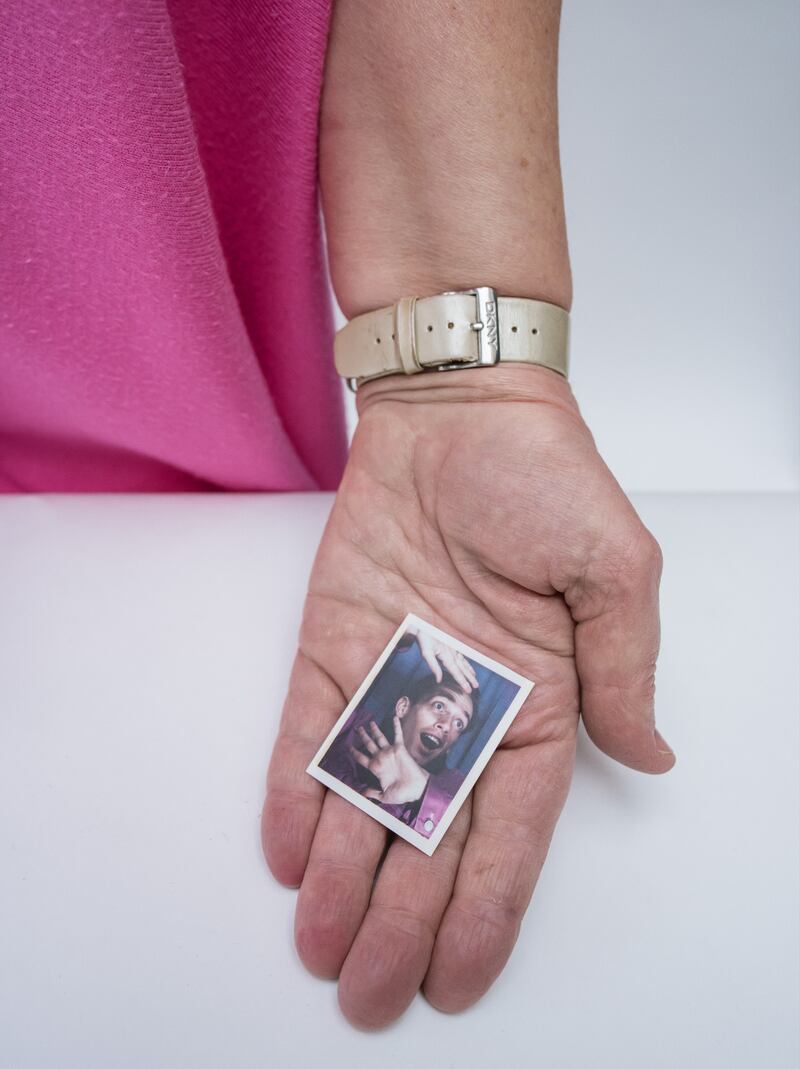
The show’s enthralling range came about organically, according to Walker. “Every time we took a picture of someone, we were, like, ‘Who do you want to see in this exhibition?’ It’s not comprehensive at all. I don’t think you can comprehensively capture the queer community because there’s such a crossover. Someone like John Waters, for example, has been so influential. It’s like queerness is so international.” So here are the UK’s wondrous Rebel Dykes, practically presented as characters from Waters’ unholy classic “Female Trouble.” But there are also the refined Apichatpong Weerasethakul, the Thai director of “Uncle Boonmee Who Can Recall His Past Lives,” and the artist Paul Mpagi Sepuya in his LA studio. “Do you know what I mean?” Walker asks. “Queerness is just something rootless, it transcends borders. If you meet a gay Thai guy, you’re gonna have a lot in common with them if you’re from Cornwall and you’re gay. Also, a lot of the communication is done without verbal communication. It’s how you walk, how you gesture, and that is universal.”
He claims a lot of the pictures were how people wanted to be photographed. It was important for him that the process was collaborative. That yields some of the most striking images in the show: Holly Johnson in a balaclava, Jimmy Somerville as a cherub, Harry Styles perched naked on a stile, a nature boy with a floral sprig in his teeth. “No one’s seen that picture,” says Walker. “I worked with Harry on an album cover he did, and got to know him. It was a beautiful day, that is what we were feeling and that is what we did. I think what he offers to young kids is a way to be masculine now.”
The last room in the show has an Over-18 rating. “You can’t have an exhibition where one of the pivotal themes is sexuality without having sex,” Walker says. His images make an argument for queerness being as old as humanity. The Warren Cup’s depictions of same-sex acts date back 2000 years old, after all. The photographer co-opts the Warren Cup, as he co-opts the erotic coquettishness of Fragonard for queer tableaux, and Greek classicist Yannis Tsarouchis for something hornier.
ADVERTISEMENT
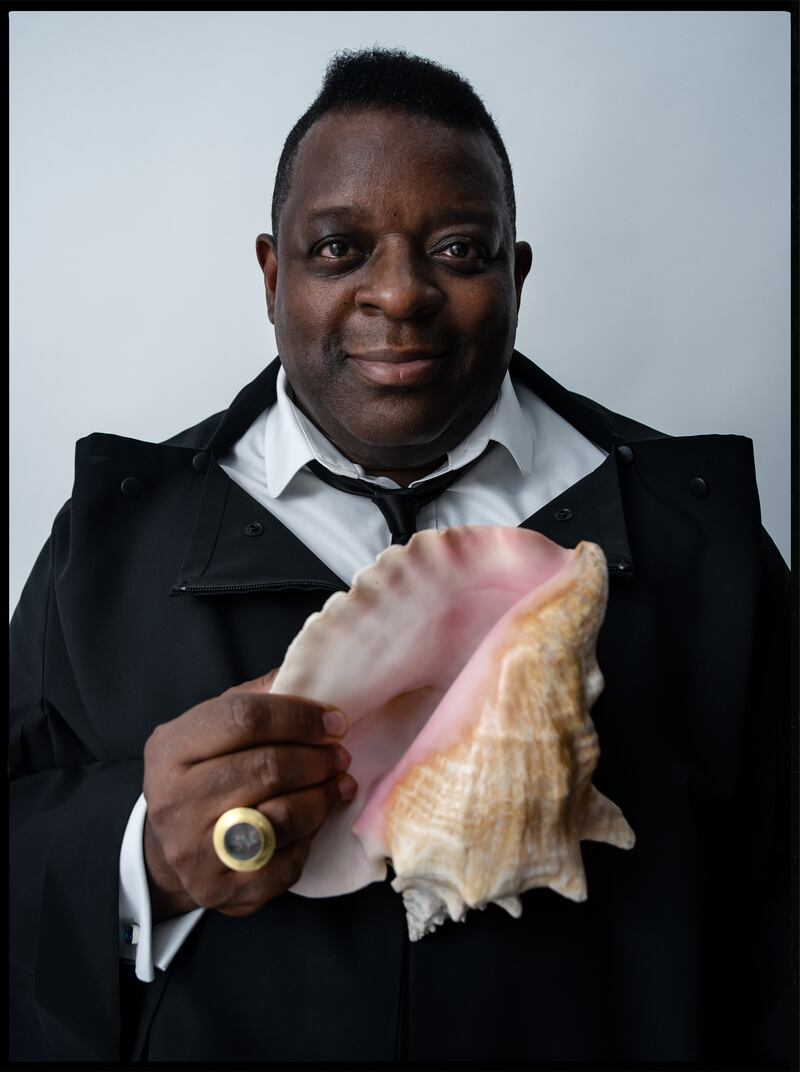
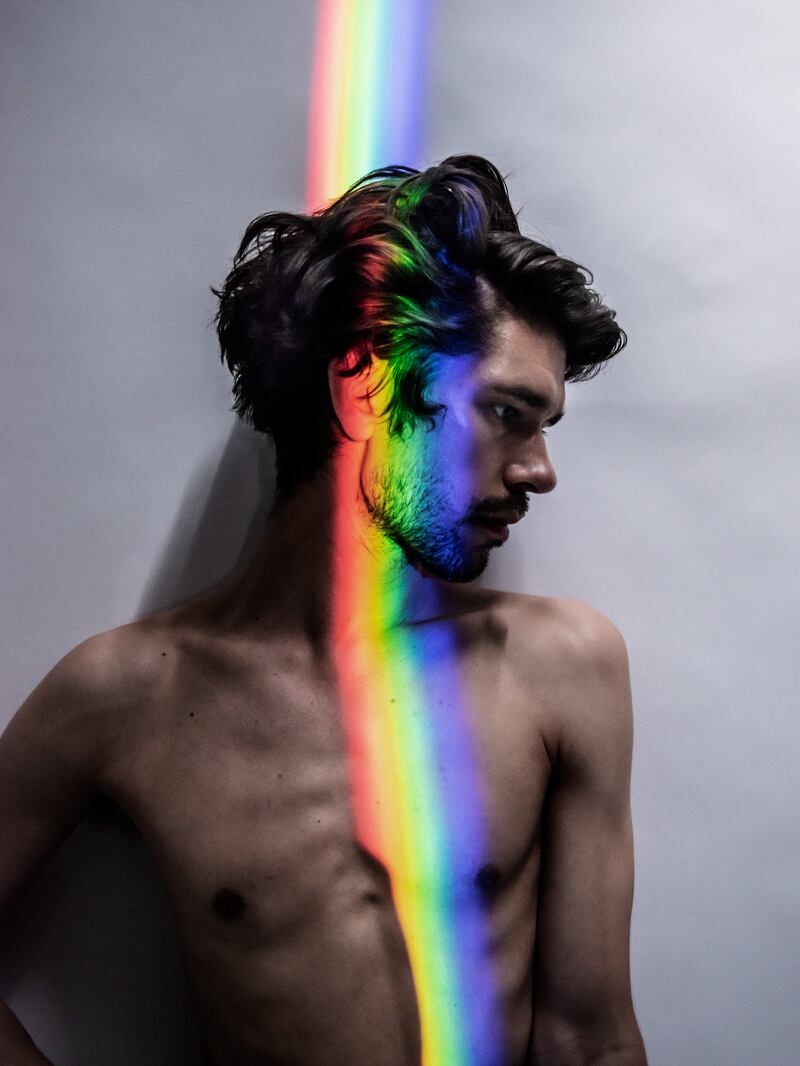
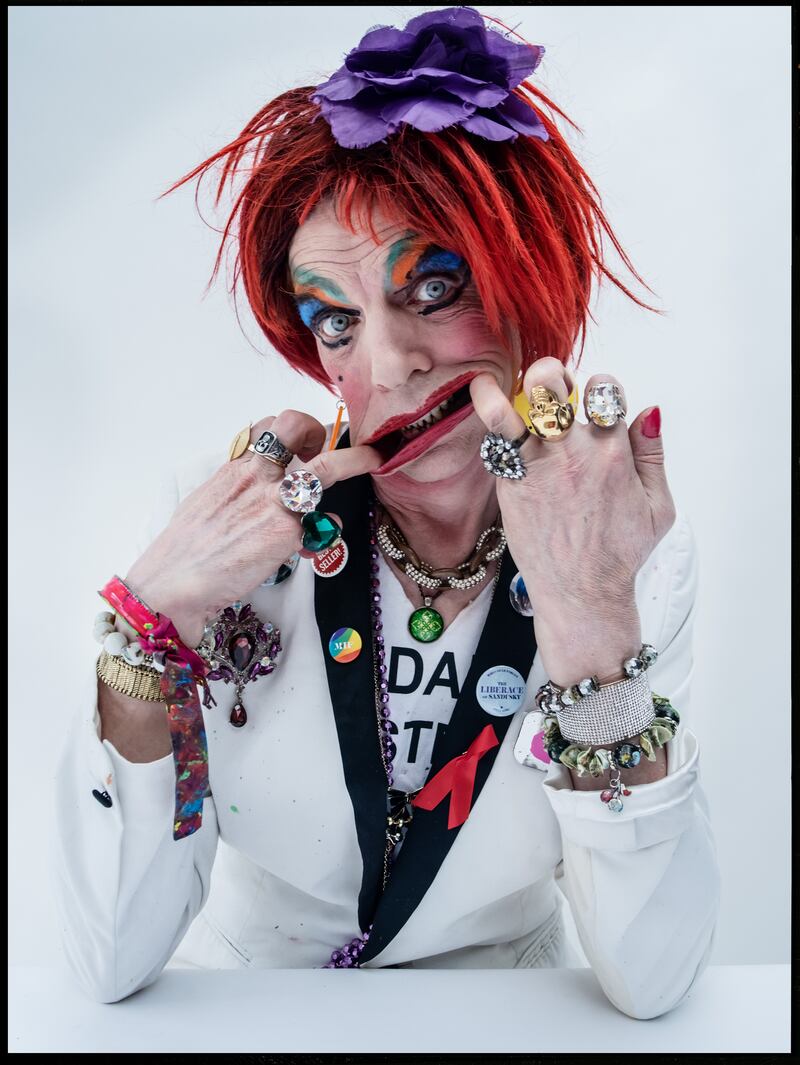
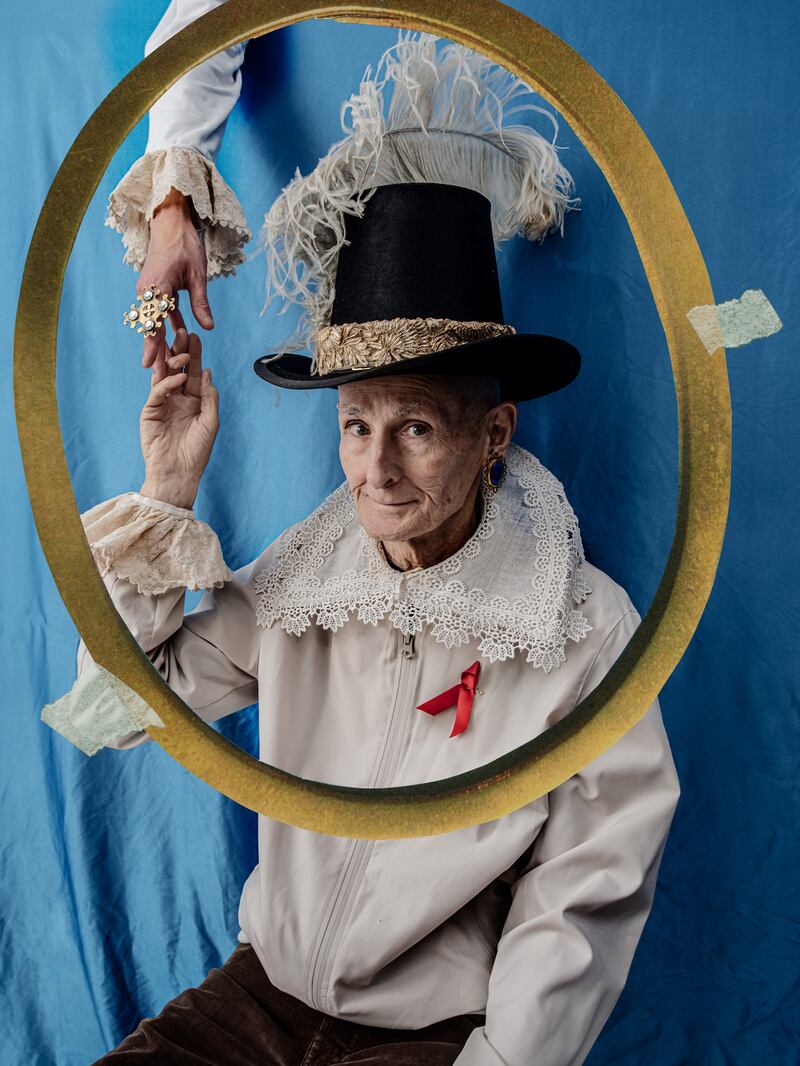
He knows “Fairyland” marks a watershed in his career. What was can never be again. “It’s just reached a point where there’s so much expectation. It’s kind of out of control. People expect you to pull a big white rabbit out of a hat every time, but it’s not sustainable to do these great big productions. Commercial photography doesn’t really want them. They just want to see the clothes. So I feel that run has come to its end.”
Walker was part of a golden era, when Vogue Italia’s Franca Sozzani would give photographers whatever budget they needed to realise their visions. He compared it to making a film. Those editorial budgets no longer exist, but film budgets do. So why not make one of those? Walker did try with “The Lost Explorer” in 2010, but all that did was prove to him he wasn’t very good at it. “Great filmmakers actually see the film play out in their head, and I can’t do that because I always see a still. When I’ve talked to filmmakers, they’re saying, ‘Oh yeah, I’m actually cutting the film in my head as I’m making it.’”
I always sling a line of Bruce Weber’s at every photographer I interview: You photograph what you wish you could be. Given the glorious profligacy of “Fairyland,” I wonder how that applies to Walker. “I like the story of Arthur Lett-Haines and Cedric Morris,” he answers. “They were a gay couple who had the East Anglian School of Painting at Benton End in Suffolk. Students would come and live and paint. They taught Freud and Maggie Hambling when they were students, so that would have been the 1950s, I guess. That life and community was really appealing to me.” And now, just as Avedon taught him, Walker imagines passing on his own experience in a similar kind of “informational exorcism.”
He insists he has no choice. “I feel I just need a break from actually making a picture. But I still want to talk about it. I love the camaraderie of photography, being with the set designers, the stylists, the hair, the makeup.” So he is realising a dream, a photo school, where all those collaborators will be invited as guest lecturers. “I’m 55 now, but when I was in my early 30s, I used to do these week-long workshops as a visiting lecturer in Lausanne in Switzerland, where they have a really good photography school. Then I stopped teaching when I got too busy. But a lot of the people I’ve met along the way on this project were so inspiring about the way they lived their lives as older queers that it’s kind of inspired me to teach again.”
At the end of October, he, his boyfriend and their dog are going to walk from the East End to their new home on the South Coast. The pilgrimage will be leisurely. They’ll overnight in pubs that allow canine guests. He says the house is nearly finished. “We’ll probably move in in the spring, and maybe in two years I’ll open the photo school.” Walker’s version of Benton End is his happy ending, at least for now.
But Fairyland will always be there, calling.
The acclaimed photographer sat down with Tim Blanks to discuss the ‘infinite objects of beauty’ that inspired his new V&A exhibition.
‘Your style is not a technique, your style is your soul,’ Roversi tells Tim Blanks.
The celebrated American photographer Annie Leibovitz opens up to Tim Blanks about taking pictures, life and death, Susan Sontag, that Timothée Chamalet Vogue cover and her upcoming exhibition in Spain, a kind of swansong for her life in fashion.
Tim Blanks is Editor-at-Large at The Business of Fashion. He is based in London and covers designers, fashion weeks and fashion’s creative class.
Loading recommended reads…
In this week’s High Margin, a search for images that cut through our visual fatigue — with leads from M/M Paris, Ferdinando Verderi and stylist Emilie Kareh. Plus: Tod’s designer exit; Burberry’s resilient sales.
The producer price index rose 6.5% from October 2025, an acceleration from the prior month, according to Bureau of Labor Statistics data out Friday. On a monthly basis, the PPI increased 0.3%.
The creative director and strategist joins Imran Amed on The BoF Podcast to discuss the evolution of his career, the realities of shaping artist narratives and why long-term collaboration outperforms short-term marketing.
The former Nvidia CEO was central to an AI boom that has propelled the US stock market and fueled the country’s unmatched luxury spending. After his exit, nobody is sure what happens next.