Agenda-setting intelligence, analysis and advice for the global fashion community.
Agenda-setting intelligence, analysis and advice for the global fashion community.

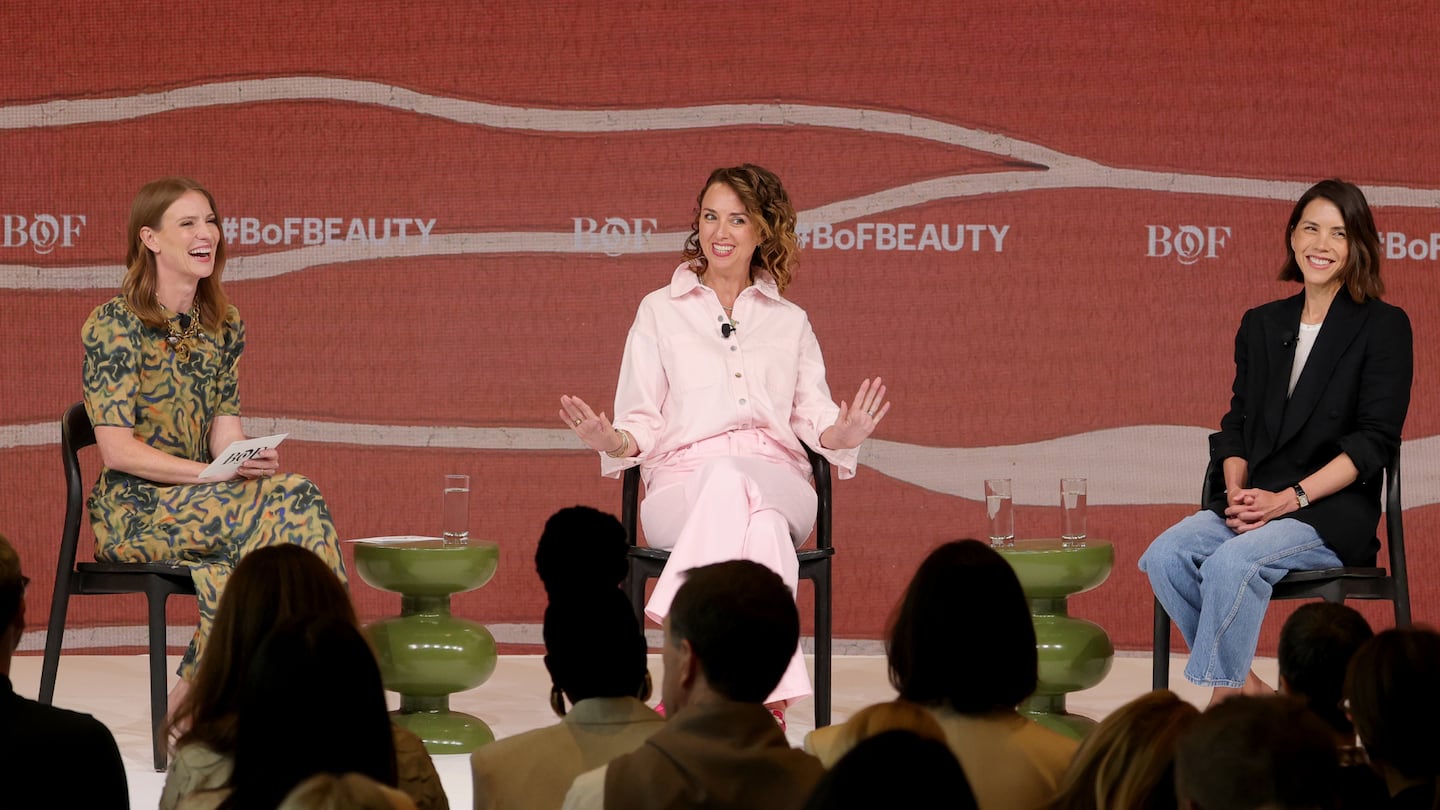

NAPA, California — The fourth annual edition of The Business of Beauty’s Global Forum 2026 brought together industry leaders to dissect beauty’s most pertinent challenges and the strategic moves brands should consider to remain competitive.
The second day at Napa’s Stanly Ranch, on Thursday, June 25, saw the likes of Guillaume Motte, chief executive of Sephora, speak to the creation of demand and desire, while Laurence Semichon, CEO of Diptyque and Jane Hertzmark Hudis, CEO of La Mer, shared what it takes to become a “forever brand.”
That same morning, Jamie Domenici, chief marketing officer of Klaviyo and Liz Cebron, chief marketing officer of Ilia, joined Johanna Stout, chief business officer and head of beauty at The Business of Fashion, for a pivotal conversation exploring how beauty brands can keep customers coming back when their attention is so divided.
With online beauty sales accounting for 26 percent of global beauty revenue in 2024 and forecast to exceed 30 percent by 2030, according to BoF’s The State of Fashion: Beauty 2025 report, brands are adapting their loyalty strategy amid a saturated online beauty market.
From shade matching and replenishment reminders to cross-channel recommendations, consumers now expect brands to understand who they are, which products they use, what they seek and how they shop. Yet meeting those expectations consistently and at scale remains a challenge.
As a customer relationship management (CRM) platform built for B2C brands, Klaviyo consolidates marketing, service, data and agents into a single interface. Globally, Klaviyo helps deliver personalised experiences for nearly 200,000 brands.
With beauty closely linked to identity and routine, CRM in this space plays a uniquely intimate role — yet loyalty remains fragile. Klaviyo’s benchmark data suggests that the brands best equipped to meet personalisation expectations are those investing in sophisticated segmentation techniques, behavioural triggers and automated customer journeys.
Below, BoF distills key insights from the conversation.
The conversation opened with a reflection on the evolution of personalisation — and its shift from a differentiating tactic to a baseline expectation. In this landscape, Domenici stressed the importance of data.
“We have to capture every piece of data, every interaction. At Klaviyo, we say you need to know your customers for a lifetime,” she said. “And now people can interact in new places, whether it’s a large language model (LLM) in your store or on your own channels. The biggest mistake is that if you are not capturing all the data, you’re not truly knowing your customer; everything that you build on top of that is going to be really hard.”
Domenici also emphasised the importance of unifying collected data to better inform how to serve customers across a multitude of touchpoints: “Two years ago, CRM was very siloed. You would send an email here, send a text here and interact in your store. [Now], bringing all those conversations into one place is not optional. It’s a necessity.”
“We have customers who want to go online and give us all the data — skin type, skin tone, age, skin concerns — and what they expect in return is for us to give them the right recommendation at the right point in their journey,” said Cebron, drawing on Ilia’s “Find My Shade” quiz as an example.
AI can send [an email] to every single person based on when they are most likely to open it. That exists. That is live. Everyone should be doing that already.
— Jamie Domenici, CMO of Klaviyo
Both Domenici and Cebron highlighted AI’s potential to transform how brands harness customer data. Domenici made a distinction between internal and external AI opportunities.
“AI is now making personalisation way more tangible and way more real,” she said. “Even simple things like personalised send time — instead of sending an email to everyone at once, AI can send it to every single person based on when they are most likely to open. That exists. That is live. Everyone should be doing that already.”
She also said that, as marketing teams increasingly adopt new AI tools, their structure will soon begin to change. “They will have different skill sets in the next six to nine months. Some will be managing agents, while others will lean more into brand marketing, which is probably where you want them. But the organisational structure you have today will 100 percent be different. You need to start thinking and planning today, or you’ll be behind,” she added.
When it comes to the external use of AI, she argued that the next frontier is not just using AI to optimise marketing, but deploying AI agents as a brand’s next customer touchpoint.
Allowing the technology to talk to clients on the brand’s behalf is an opportunity that companies should approach with caution. “If an agent doesn’t know you, doesn’t listen to your colour test or gives you a poor recommendation, it can become a very negative experience with your brand,” she said.
At Ilia, the customer experience (CX) team is “excited” about the implementation of AI agents, according to Cebron.
“They’re able to take the more logistical, operational tickets off the team’s plates, such as ‘Where’s my order?’ or ‘What’s my tracking information?’ Our CX team is made up of makeup artists, so they really love spending time with customers and helping them find the right product and shade. AI has enabled them to spend more time doing that.”
Both speakers emphasised the importance of human connection and relationships, arguing that, despite concerns among brands and consumers alike about AI’s impact, the human touch will remain critical to conversion in beauty.
“Technology should be a way to add efficiency and ease, but we really believe that humans are what create the personal connection,” said Cebron onstage. “It’s about how to use the technology and what filters you’re applying. Are you using technology for the sake of technology, or to better the customer experience?”
She added, “We have customers who don’t want to go online and take a quiz. They want to talk to a real human expert. We have a team of trained makeup artists that clients can book a Zoom call with and just talk to like a human.”
She shared an example of how those human-to-human relationships can translate into loyalty. After helping a customer rebuild her beauty routine following a personal loss, one of Ilia’s customer experience advisors sent flowers — an act the customer described as genuinely meaningful. She has since returned to make five further purchases.
“That’s not something you’re going to get from AI — but AI is creating the time and the space to allow our team to do those kinds of things,” she shared.
If the product doesn’t work, no matter how many points I give the client, no matter how many rewards I give them, they’re not going to come back.
— Liz Cebron, CMO of Ilia
In beauty, product efficacy is the foundation of loyalty. Cebron said, “At Ilia, we really think about it in two ways. First, the product has to work; second, you have to keep the relationship interesting in between. If the product doesn’t work, no matter how many points I give the client, no matter how many rewards I give them, they’re not going to come back.”
She pointed to Ilia’s decision to delay the launch of its Eye Stylus Shadow Stick after early feedback revealed a quality issue, despite having secured a prominent Sephora launch. Prioritising customer trust over short-term sales, the brand relaunched the product 18 months later. It has since become one of Ilia’s top-performing products and is a leading driver of customer retention at Sephora.
Beyond product efficacy, building and sustaining a community of loyal customers is key to long-term growth in beauty.
“A big shift we’re seeing now is many players building more services around their products. So, no longer just offering a product, but offering entrance into a community,” said Domenici.
Taking this one step further, she went to consider how to celebrate brand fans in order to drive retention — “How you bring people into the community, how you form it, and how you measure it are what are driving more long-term customer lifetime value and loyalty,” she added.
To keep customers returning and attract new ones into the community, Ilia’s secret weapon is “a good story,” according to Cebron. A recent partnership with artisan tile brand Clé, inspired by the launch of Ilia’s Overglaze lip gloss, proved the value of unexpected brand collaborations.
Despite initial concerns and the campaign’s departure from conventional email marketing rules by linking to the partner’s website, it became the company’s highest-revenue-driving email. “It really reinforced for us how important storytelling, creation and special small things are — and how vital it is not to lose that as you scale,” she said.
This is a sponsored feature paid for by Klaviyo as part of a BoF partnership.
Guillaume Motte, Jane Hertzmark Hudis and Cassandra Grey were among the speakers unpacking the most pressing topics for the industry in the second session of The Business of Beauty Global Forum 2026.
Loading recommended reads…
The New York Times photographer and style columnist joins Imran Amed on The BoF Podcast to discuss why practice makes permanent, the blind spot he had to admit to himself and why the style he looks for is meant to feel within reach.
In Panipat, 1 million tons of used clothing a year are turned into products for global brands, but dangerous machinery and few safeguards mean life-changing injuries are common
The struggles of Nanushka and Coperni expose the challenges of turning a promising label into a sustainable business, even after successfully building a global customer base and distinctive visual identity.
What to keep and what to change when a brand changes designers? Pierpaolo Piccioli’s brief stint at Balenciaga and Kering’s effort to course correct by bringing in Martine Rose offers learnings for houses seeking creative renewal.