Agenda-setting intelligence, analysis and advice for the global fashion community.
Agenda-setting intelligence, analysis and advice for the global fashion community.

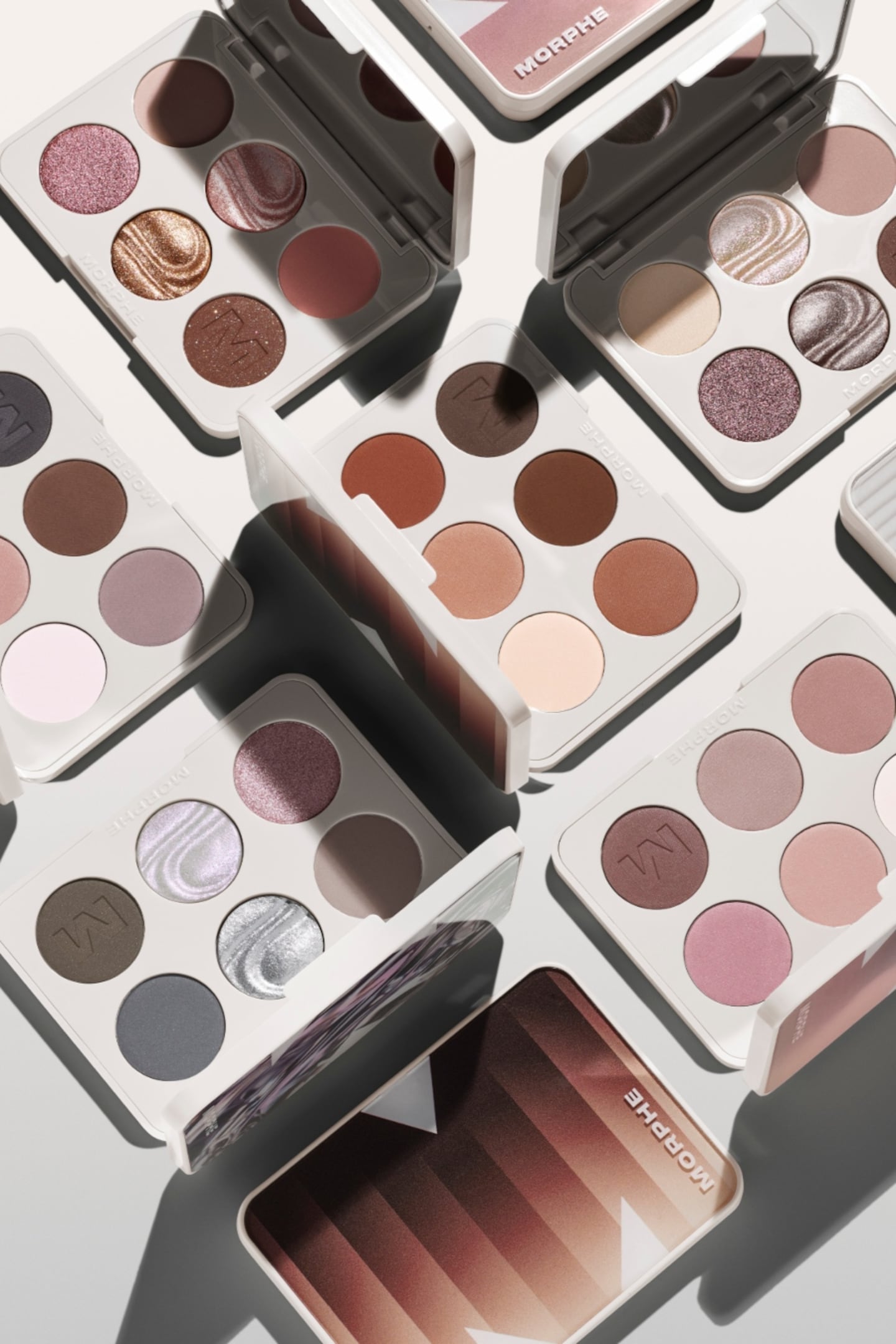
For most of the 2010s, there was one word, two syllables, on influencers’ overlined lips: Morphe.
“I remember posting a [YouTube] video in 2012, saying, ‘You guys, these eyeshadows, they’re so much like MAC Cosmetics, but they’re only $2,” said Jaclyn Hill, a veteran beauty creator who boasts over 13 million followers. “I could not get over the price.”
Long before Glossier, Rhode and Rare Beauty, there was Morphe, founded in 2008 by siblings Linda and Chris Tawil. An early Millennial sensation, its affordable, slab-sized palettes of eyeshadows, contouring creams and brushes gained the blessings of YouTube’s high priestesses, including Hill, Tati Westbrook and Nikkie de Jaguer.
The Morphe look, alongside other trending lines of the moment like Colourpop and Anastasia Beverly Hills, was unadulterated excess: shimmering highlighter, defined contour, eyeshadows in vibrant shades perfect for a selfie. On the success of Morphe, the company launched Forma Brands, which incubated brands for influencers like Hill and celebrities like Ariana Grande. At its height, Morphe had around 55 standalone stores and reached a $2 billion valuation when General Atlantic took a majority stake in 2019. But as time wore on, the look changed and so did the company’s fortunes: customers began to prefer a more natural aesthetic, and high-profile influencers intrinsic to the brand like James Charles and Jeffree Star were hit with controversies.
ADVERTISEMENT
Forma Brands filed for bankruptcy in Jan. 2023 with some $868 million in debt, after which Morphe emerged with new owners: Jefferies, Cerberus and Mass Mutual, who were amongst its largest creditors, as well as &Vest, the investment and consultancy firm that relaunched and now operates it.
It came back with a new look, and a new mandate. The made-over Morphe has shed the big influencer tie-ups and DTC model, focussing its affordable cosmetics in broad wholesale distribution like Target and Ulta. According to Doug Jacob, &Vest’s co-founder, the brand is profitable, and is approaching $500 million in global retail sales, a surge of around 60 percent year-to-date. Jacob compared the turnaround to E.l.f.’s recovery, which hit a low when stock slid below $10 in 2019.
“They took a struggling situation and created a powerhouse brand out of it,” said Jacob. “We’re further ahead in the turnaround, but that’s the path we’re on.”
In a 2017 video revealing her limited-edition palette with Morphe, a visibly emotional Hill holds up the 35-pan palette to the camera, detailing the payoff and pigment of every hue from a soft taupe to a denim blue. One of its 4 million viewers left a comment saying, “I want somebody to look at me the way Jaclyn looks at that.”
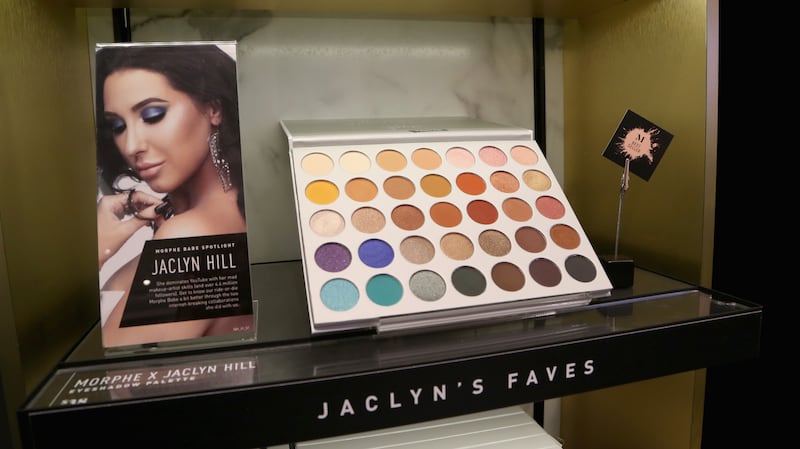
The relationship was mutual. Like other disruptors of the indie beauty wave, Morphe owed much of its success to the influencers it cosied up to, who in turn helped them take over social media feeds. Hill recalled that the brand did not pay influencers for their posts, but the Tawils treated them like family, lavishing them with gifts, texting with them regularly or hosting them for “pizza and charcuterie” in Linda Tawil’s home.
“They were different from every other brand. They took a chance on [influencers],” she said.
In the 2010s, indies had the upper hand: with their scrappy, agile direct-to-consumer models, they could quickly innovate on products, create viral moments and have a closer relationship with their customers. Now, as legacy brands have become more digitally savvy, and in-person shopping and specialty retailers have regained fresh importance, it’s a murkier picture.
Morphe has dropped the extra-large eyeshadow palettes, the stores and large-scale influencer partnerships. After all, that model no longer exists: influencers simply launch their own lines rather than co-sign on limited edition products. TikTok Stars like Alix Earle and Mikayla Nogueira, would likely have had a Morphe collaboration in the 2010s: today, they have their own brands. While influencer marketing is still a key tentpole for any brand, Morphe’s previous lofty growth ambitions and valuation would only have been supported if the look it offered and the creators it worked with also continued to grow in popularity — both faltered.
ADVERTISEMENT
Simon Cowell, the line’s chief executive said its core mission is unchanged since its founding: “It’s prestige-quality artistry products at an accessible price,” he said, adding “Flying first class, not at first-class price.” The brand still has a ready audience, boasting over 9 million followers on Instagram — more than some of its closest competitors like Milani and Kiko Milano. Its new success is thanks to it offering accessibly priced, trending products that still have the endorsement of creators, even if they’re no longer co-creating products. Jacob said influencers receive monthly drops of new product, and that part of &Vest’s advantage is proprietary technology and software that helps it identify valuable creators and maximise its social media investments.
In an email, Jefferies chief executive Rich Handler said while many investors have pulled back from beauty, the consumer demand had not disappeared, creating compelling opportunities for leaders who could execute. Morphe’s outcome, he said, is very different to most distressed businesses. “This was not a demand problem,” he said.
Good cosmetics still lift shoppers’ moods, even if the trends change quickly, and as many customers become more choiceful with their spending, Morphe’s lower price point remains a boon. With such a large digital presence and audience, it’s been able to respond quickly to micro-trends and move with more agility.
Hill praised the new formulas quality and affordability, calling out the lip liners with particular fondness. “But I’m unsure of what the brand messaging is now,” she said, referencing the dissolution of the co-creation with influencers and the softening of its look.
“It used to be very clear. I would give it a revamp by going back to the original storytelling. Bring back the magic.”
Morphe has a new face, too, according to its Instagram. The feed is populated with dewy complexions, faux freckles and glossy pouts, somewhere in between the vibrant hues of Made by Mitchell or the barely-there beauty of K-Cosmetics lines like Fwee and Tirtir. It’s an evolution to meet the modern moment: currently, the first few rows of its Instagram are dedicated to blendable lip liners, a white-hot category led by the likes of Rhode.
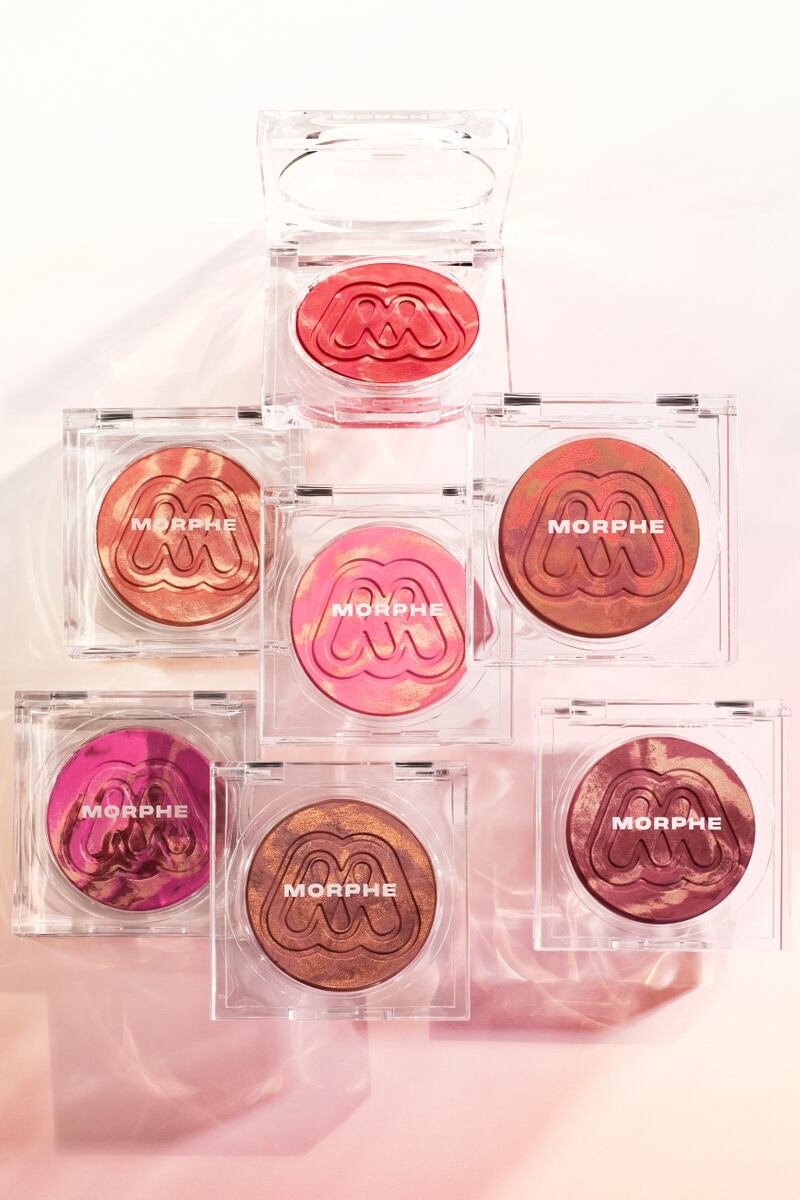
The goal is a premium appearance at an accessible price, said Cowell, offering the apparel brand Zara as an example. “[Zara’s] campaigns almost look like a luxury brand, and then you see the price, and there’s incredible tension.” Cowell, who formerly worked at Bareminerals and The Body Shop, said the makeup focus was a clear differentiator. While other labels are diversifying into skincare, hair and fragrance, he said, “that’s not our customer. Our customer loves makeup.”
Its number-one best seller is a makeup fixing mist for $13, and while brushes still make up 40 percent of sales, it also offers blushes and petite eyeshadow compacts. A complexion launch is planned for 2028; its focus now is sculpting, setting and colour.
ADVERTISEMENT
Cowell added that said “95 percent” of its business is now wholesale — the line is carried in Target and Ulta Beauty in the US and Middle East, and premium stores like Australia’s Mecca and the UK’s Selfridge’s department store. The brand is also planning to widen its presence on Amazon and TikTok Shop.
Allison Collins, co-founder of insights firm The Consumer Collective, said customers have their choice of product, from mass mainstays like Maybelline and L’Oréal Paris as well as K-beauty lines.
“For Morphe, it will come down to, ‘Are they making stuff that’s good enough, and can they get enough people to pay attention?’” she said.
Morphe will continue as a standalone with its own ownership, but &Vest is open to acquiring and operating other lines in the future. Jacob said the leadership and processes which have helped Morphe could be applied to other brands in the future. While he declined to provide specifics about brands that could be of interest, he described himself as category agnostic. “I like to fish where others aren’t,” he said. A serial entrepreneur, Jacob has had ventures as disparate as a New York nightclub as well as pizza chain, and founded the advertising agency Jwalk, which he sold to Shiseido Americas in 2017.
But he is well aware that he can’t become complacent.
“No matter how good things are going, we’re constantly paranoid about what’s coming around the corner,” said Jacob. “We’re trying to… stay ahead of the curve.”
Sign up to The Business of Beauty newsletter, your complimentary, must-read source for the day’s most important beauty and wellness news and analysis.
Forma Brands, the bankrupt owner of the Morphe makeup brand, reached an agreement with lenders Jefferies Finance LLC and Cerberus Capital Management to be acquired in exchange for $690 million in debt relief, according to a court filing.
On Thursday, the company listed about twenty locations on its website.
The cosmetic brand’s parent company is facing an uncertain future after a series of troubled attempts to launch new makeup and skin care lines around influencers and pop stars.

Daniela Morosini is Senior Beauty Correspondent and Special Projects Editor at The Business of Beauty at BoF. She covers the global beauty industry, with an interest in how companies go to market and overcome hurdles.
Loading recommended reads…
The department store’s Leeds and Bristol outlets will be converted to the Flannels brand in a shake-up under Mike Ashley’s Frasers Group, which purchased the chain when it was put into administration in mid-August.
Jack Tobin is joining Diane von Furstenberg artistic director Henry Zankov’s namesake label as CEO and part owner.
Nearly a decade since the luxury groups first published a charter of model protections, they are introducing new measures to protect those working in the industry.
As the platform matures as a media channel, a slew of beauty brands are turning to its most trusted writers for a more intimate form of audience engagement.