Agenda-setting intelligence, analysis and advice for the global fashion community.
Agenda-setting intelligence, analysis and advice for the global fashion community.


NAPA, California — In 2026, beauty brands are competing for fragmented consumer attention across an increasingly complex mix of platforms, touchpoints and digital environments. Indeed, the average US consumer spends 13 hours per day consuming media and technology, according to Activate Consulting.
A defining force within that channel mix is undeniably agentic AI, with large language models (LLMs) like ChatGPT, Claude and Gemini revolutionising the path to purchase. Indeed, 53 percent of consumers who used generative AI for search also used it to help them shop, according to BoF and McKinsey & Co’s The State of Fashion 2026 report.
As discovery becomes increasingly decentralised — spanning AI recommendations, content creators, online communities and commerce-enabled social platforms like TikTok Shop — brands must rethink how they build relevance and connection in customers’ everyday routines.
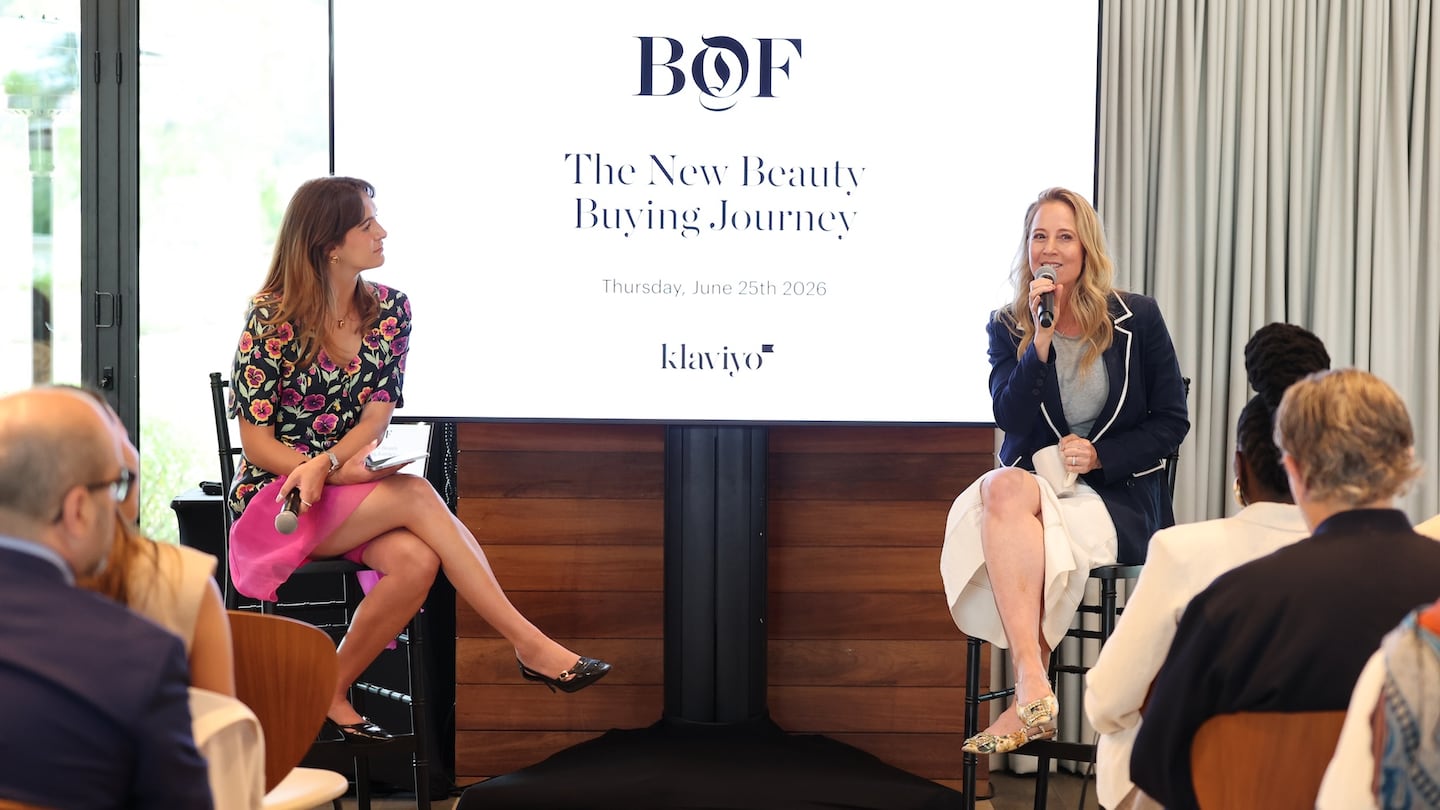
Against this backdrop, The Business of Beauty Global Forum 2026 — the fourth annual flagship event held at Stanly Ranch in Napa Valley — hosted a knowledge breakfast entitled “The New Beauty Buying Journey,” in partnership with global CRM platform Klaviyo.
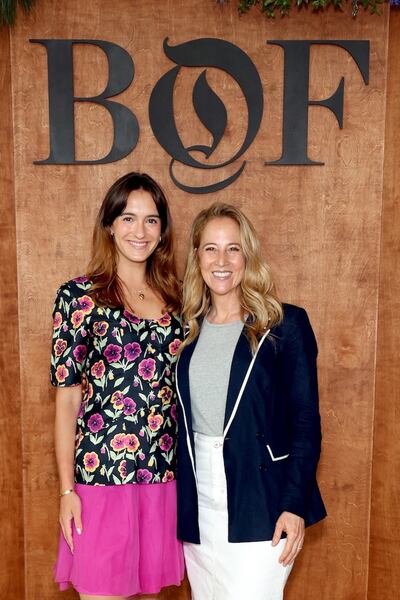
The morning saw The Business of Fashion’s (BoF) content strategy and features manager Annabel Bolton sit down with Klaviyo’s vice president of product marketing Kelly Thacker for a fireside conversation exploring how beauty brands can future-proof their retail strategies — from discovery and decision-making to trust, loyalty and long-term affinity.
“In this environment, the brands that will pull ahead will be those able to balance emotional connection and brand affinity with a seamless, intuitive customer journey from an operational standpoint,” shared Bolton in her opening remarks.
The benefits of offering a frictionless cross-channel shopping journey are clear: 80 percent of customers say the experience a company provides is as important as its products or services, according to Salesforce’s The State of the Connected Consumer 2025 report.
Ultimately, in an on-demand culture, consumers want convenience without friction, personalisation without intrusion and discovery that feels inspiring rather than overwhelming. They increasingly expect brands to anticipate their needs, reflect their values and meet them wherever they are.
Below, BoF shares key insights from the discussion.
Thacker opened by sharing the importance of a strong first-party data infrastructure.
“AI is totally changing how we discover and how we grow [as businesses],” she said. “In today’s current landscape, with technology and the evolution of channels — the number one thing you must have in order is your data. You cannot use AI and get any good output if you do not have good data.”
She said Klaviyo is regularly in conversations with brand CEOs and founders eager to deploy the latest AI tools, but argued that organising data should come first.
However, strong data is about more than improving AI outputs. It also enables brands to deliver consistent, personalised customer experiences across every touchpoint. Without a unified view of the customer, fragmented channels and disconnected marketing and customer experience (CX) teams create inconsistent interactions that undermine loyalty.
“The two major friction points are channel fragmentation and having two different departments deliver different experiences,” shared Thacker. “Consolidating experiences across marketing and CX drives much more happiness and delight across your customer base.”
Thacker argued that true loyalty is enabled by genuine personalisation — challenging the common misconception from brand partners that the latter is the same as customer segmentation.
While many brands consider broad audience groups to be personalised marketing, she argued that true personalisation starts with a genuine understanding of each individual customer and delivering experiences tailored to their preferences.
“Brands all the time claim they are really personalised. They say they have three segments: VIPs, past customers and new customers. That is customisation, not personalisation.”
Instead, she encouraged brands to become genuinely curious about their customers — using reviews, interviews and behavioural data to understand not only what people buy, but how, when and where they want to engage.
She pointed to Dermalogica — a Klaviyo customer — as one example of this approach. The skincare brand introduced an AI-powered skin assessment tool that segments customers based on their individual skin concerns, enabling it to tailor communications to each person’s unique profile rather than sending generic marketing messages.
The brands showing up the most are those that have strong communities on Reddit or their own communities and are pulling in educational content.
Understanding customer preferences also extends beyond product recommendations to the channels through and times at which people want to hear from brands. She highlighted Anthropologie as a brand she admires for consistently delivering relevant SMS messages at the time she is most likely to engage — an example of how seemingly small adjustments can create a more intuitive customer experience.
“One brand increased their flow revenue by 78 percent, just by a small tweak — knowing that the channel and time make a difference,” Thacker said.
Thacker argued that while traditional points-based loyalty programmes still have a place, they are no longer enough on their own. Instead, she believes the brands building the strongest customer relationships are those that make shoppers feel recognised through personalised experiences across every interaction.
“Loyalty isn’t just the number of points — it’s about getting communications centred on who that customer is and what they are looking for,” she shared. “Expanding beyond points and delivering personalisation is at the core of what makes people feel known. They want to be treated as the best VIP customers, with every single message personalised to who they are.”
Consumer research reinforces this approach. According to Thacker, customers increasingly value recognition over financial incentives, expecting brands to understand their preferences and communicate accordingly — with 68 percent of consumers “just wanting to be known.”
For brands, this means extending loyalty beyond the programme itself and into every customer touchpoint. Thacker referenced lingerie brand ThirdLove as an example. By connecting its loyalty programme and website experience, customers who click through from an email are greeted with a personalised homepage displaying their points balance, favourite products and purchase history.
She also highlighted brands that deepen loyalty through exclusive experiences, including private communities, early access to products and VIP events.
“It is not a massive overhaul to your loyalty programme — you can do small things that drive delight with customers and better loyalty,” Thacker said.
Thacker went on to share how, amid AI investments, keeping the human touch will be critical to building brand affinity. She shared how strong community touchpoints — home to vocal and engaged brand advocates — are a key way of ensuring that AI surfaces your brand.
“LLMs care a lot about the rich signals from your customers,” she said. “The brands showing up the most are those that have strong communities on Reddit or their own communities and are pulling in educational content.”
One example cited was Patrick Ta, which used customer reviews to rethink both its storytelling and customer experience. By analysing feedback in partnership with Klaviyo, the brand discovered that one of its best-selling eyeliners was also its most-returned product. The issue wasn’t the formula, but rather that customers didn’t realise the product required water to activate.
Loyalty isn’t just the number of points — it’s about getting communications centred on who that customer is and what they are looking for.
The brand responded with an educational campaign — introducing post-purchase emails and WhatsApp messages that explain how to use the eyeliner, along with tips from makeup artists and other customers. Return rates fell and customers began sharing more positive experiences.
“Storytelling needs to be grounded in your consumer, making sure they are the loudest and most important storytellers for your brand,” added Thacker. “Anytime an LLM picks up someone talking about the brand who is not you, it gets ranked higher than traditional discovery methods.”
Looking ahead, Thacker suggested that brands need to prepare for a future where AI actively shops on behalf of consumers. Rather than browsing social platforms or search engines, AI agents will increasingly understand individual preferences, purchasing habits and brand affinities — fundamentally changing how consumers discover products.
“Every consumer will have an agent shopping on their behalf, knowing who they are, what they purchase, what brands they love, what experiences they want and what size they are,” said Thacker. “Brands are considering how to build an agent that markets to AI, not just humans.”
This shift means discoverability will rely less on traditional SEO and more on validation. Listicles, for instance — articles with titles such as “The Best Moisturiser for Ageing Skin” — can be structured to respond to an LLM query and surface prominently in AI search results. For brand-owned listicles, back-end technology can be leveraged to ensure these articles are discoverable by LLMs, but invisible to consumers, reducing the risk of scepticism around brands ranking themselves above competitors.
However, Thacker also stressed that technological change shouldn’t come at the expense of brand identity, with a clear purpose and authentic voice remaining the greatest competitive advantage.
“You must know who you are, who you are building for, what you care about and how you differentiate. Ensure you stay ahead of the technology and build a journey for both humans and AI,” she said.
Finally, she noted that AI adoption is far from uniform across markets. Consumer trust, regulation and usage habits vary significantly by region, meaning brands should resist applying a single global AI strategy and instead tailor their approach to local consumer behaviours and expectations.
This is a sponsored feature paid for by Klaviyo as part of a BoF partnership.
Loading recommended reads…
In this week’s High Margin, a search for images that cut through our visual fatigue — with leads from M/M Paris, Ferdinando Verderi and stylist Emilie Kareh. Plus: Tod’s designer exit; Burberry’s resilient sales.
The producer price index rose 6.5% from October 2025, an acceleration from the prior month, according to Bureau of Labor Statistics data out Friday. On a monthly basis, the PPI increased 0.3%.
The creative director and strategist joins Imran Amed on The BoF Podcast to discuss the evolution of his career, the realities of shaping artist narratives and why long-term collaboration outperforms short-term marketing.
The former Nvidia CEO was central to an AI boom that has propelled the US stock market and fueled the country’s unmatched luxury spending. After his exit, nobody is sure what happens next.