Agenda-setting intelligence, analysis and advice for the global fashion community.
Agenda-setting intelligence, analysis and advice for the global fashion community.

In beauty, the adage that everything old is new again has never felt more apt.
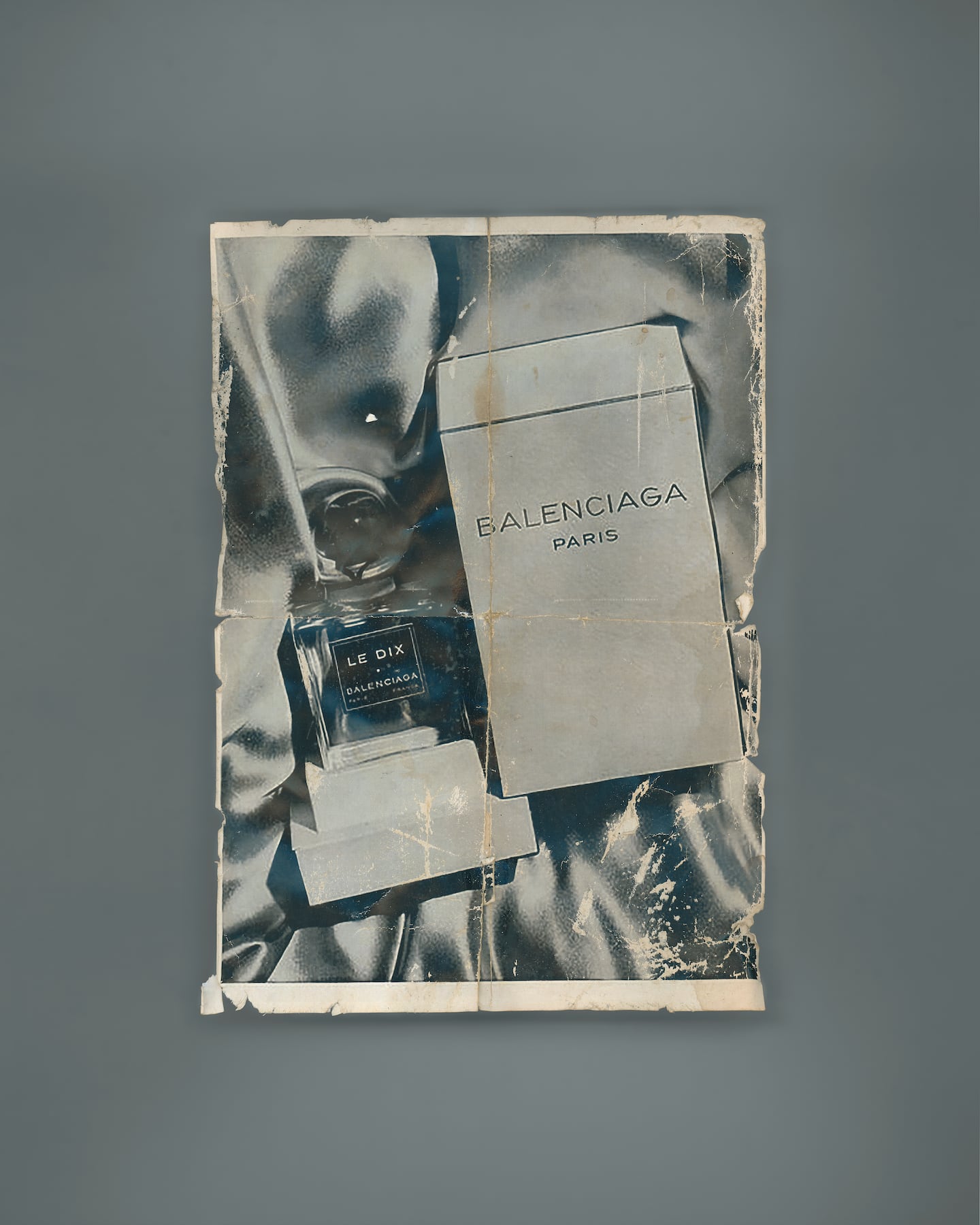
In the last 12 months, brands including Dior, Guerlain and Balenciaga have all released so-called “archival” perfumes, scents that either take inspiration from or are recreations of historic fragrances. The anchor of Balenciaga’s September 2025 launch was Le Dix, a reinterpretation of a 1940s perfume of the same name, rich with powdery iris, housed in an ornate bottle designed to replicate the original, while Dior’s “Dioriginals” collection features 13 scents restored from its archives dating back some 80 years. The trend is not limited to exclusive labels: Gap’s August fragrance launch was a reboot of discontinued 1990s scents.
The most apparent reason for luxury labels to use heritage inspiration is self-mythologising: Fashion houses centre their brand identities on craftsmanship, legacy and a rich oeuvre of style authority cultivated over decades. This can be a foil against knockoff product “dupes” and reinforce their high prices.
Such history “reminds people that they’re a luxury brand,” said Sable Yong, a beauty writer and co-host of the fragrance podcast “Smell Ya Later.” Labels are especially keen to spotlight their artisan credentials in the AI age, as shoppers continually demonstrate a preference for human-made goods.
ADVERTISEMENT
It’s also a means for prestige brands to keep up with competitors. Beauty is a heavily launch-driven industry, with thousands of new products released each year. Prestige labels usually rely on extensions to core franchises, known as flankers, to meet demand for newness without needing to debut an entirely new product, as evidenced by recent big launches from Chanel, YSL and Prada: Coco Mademoiselle Crush Absolu, Black Opium Pink Glaze and Paradoxe Sweet Chemistry respectively are all new expressions of existing franchises.
“[Fashion houses] are very scared of launching a new fragrance,” said Vincent Jeanniard, a luxury brand advisor, citing the high costs involved, which could siphon investment from core collections.
Archival rereleases allow premium brands to provide newness to the market, without the overhead of an entirely new creation. Some are close recreations, like Dior’s, while others are loosely connected: Valentino Vendetta is a new scent, but shares a name with a 1990s release.
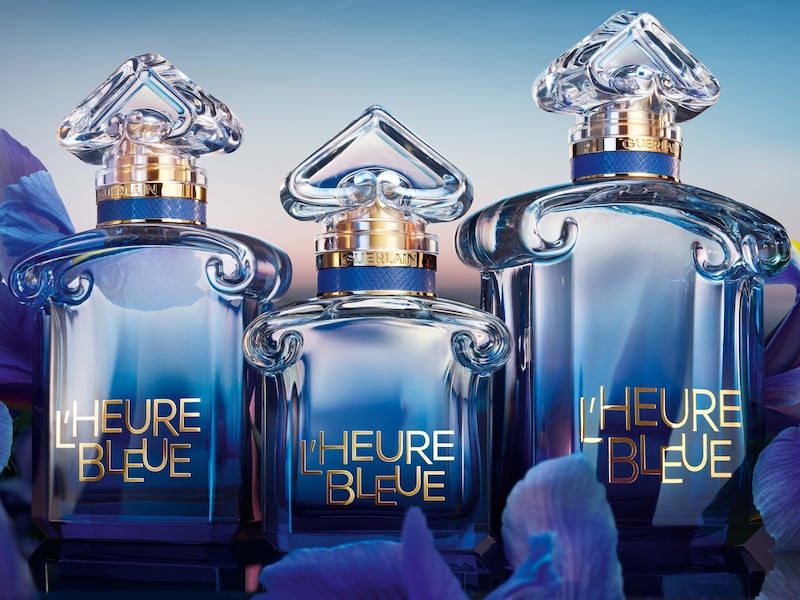
But customers have higher expectations of perfumes that claim to be historic, and archival scents, however esoteric, still have to find a way to stand out in a crowded market. Guerlain’s August launch of L’Heure Bleu, a new version of a perfume with iris and orange blossom it has offered since 1912, was met with a mixed reception online: While some praised the juice, comments on its Instagram include customers calling it a “disappointment” and a “perfume without any emotion,” characterising it as a money-grab. Some commenters felt similarly about Gap’s offering, which didn’t revive the cult-classic scents as much as remix them.
“It’s not enough to signal that you have heritage that cheaper brands don’t,” said Alexandre Helwani, a scent historian and perfumer who works for the Turkish brand Nishane. “If you don’t go further, the customer won’t buy it.”
Beauty’s archive fever is also about resources.
As more brands have begun offering fragrances, like cosmetics makers Gisou, Summer Fridays and Jones Road, and perfume labels have also stepped up their launch intensity, the perfumers that create the scents are under pressure. It’s not just designer and mass perfumes, and their flankers; even household cleaning products and laundry brands are using elevated perfume accords.
There’s not enough manpower to create entirely new scents for every prestige at such a clip, nor enough budget for their conception, formulation and marketing. It’s an unsustainable cadence, said Helwani. From a resource point of view, “it’s easier to relaunch a fragrance that has attracted a lot of appeal over several decades than to launch something new,” he said.
ADVERTISEMENT

Reaching into the archives allows brands to draw upon not only the scent itself, but also an already-established visual identity, tagline and atmosphere. Yong likened it to Hollywood’s predilection for extending movie franchises indefinitely. It also dovetails with a trend in fashion, popularised by stylists like Law Roach, of celebrities dressing in archival garb.
Such caution makes short-term financial sense, but so-called “archival” scents open brands up to fresh scrutiny. If it’s an aroma that customers have some memory of — like Gap’s original scents, or Guerlain’s original L’Heure Bleu 1912 — comparisons are all too easy, and usually unfavourable. The negative chatter online that surrounded both launches, amidst excitement from other shoppers, was that the new versions are poor imitations of the original, rather than a fresh edition. (As regulatory bodies worldwide crack down on cosmetics ingredients, especially the widely-used perfume ingredient heliotropin, customers will have to get used to reformulations.)
When perfume revivals work, it’s because the brand is able to tap into the original mythic value of the product, and still make it feel contemporary. Tynan Sinks, Yong’s co-host, said Guerlain 2025’s reboot of Shalimar had been a success, as the perfume had been modernised.
“The original was very heavy and spicy, but the new version has that heaviness taken out,” he said. “It’s much better for a contemporary wearer.”
In many ways, archival scents are the new flankers, and their legacy appeal can also help justify a higher price. (Balenciaga’s Le Dix is $320.) Blockbuster perfumes like Dior Sauvage and Chanel No 5 keep the lights on for big brands, but ultra-premium archival lines are a way to double down on their brand narrative and storytelling. As new entrants into fragrance generate attention, fashion houses and premium lines have to defend their market share.
Archival scents could also be seen as a hedge against dupes, both literally and figuratively. Helwani said that many scents made earlier in the 20th century used fragrance “bases,” supplier-created accords that were often proprietary to a brand. These are harder for chemists to duplicate, as they will usually only be able to detect the molecules and not the composition.
To make an archival launch work, the storytelling must be considered — and of course, the perfume must be exemplary. The Dioriginals collection is being marketed more as an act of historic preservation: The press release reads, “Only those in the know understand that a perfume is a living creation, a precious gem to be preserved.” Dior’s perfume creation director and nose, Francis Kurkdjian, has worked painstakingly to recreate these legacy scents as closely as possible without banned or archaic ingredients.
Launching a perfume is a gamble, said Sinks. “But any launch is today, be it new or old.” What’s more, customers want innovation and the unexpected: Some of the most popular modern perfumes include Carolina Herrera’s Good Girl, packaged in a stiletto-shaped bottle, esoteric foodie scents like Kayali’s dessert-laced fragrances or Middle Eastern extra-strong parfum extraits.
ADVERTISEMENT
But there’s no better way to demonstrate a brand’s creative muscle than by creating something new. When poorly executed, archival scents frustrate and confuse customers. If it’s close to the original but not close enough, it’s a disappointment; if it’s very different, it can dilute a line’s decades-old image.
“Sometimes it’s better to let things stay in the past,” said Helwani. “Or create something new.”
Sign up to The Business of Beauty newsletter, your complimentary, must-read source for the day’s most important beauty and wellness news and analysis.
Loading recommended reads…
Opening in Q4 2026 on Saadiyat Island — at the heart of Abu Dhabi’s cultural district — Saadiyat Grove brings together luxury retail, hospitality, residential living and culture in one of the emirate’s most ambitious new developments. BoF speaks to Jonathan Emery, chief executive officer of Aldar Development, about the strategic vision behind the project.
The designer leaned into the glamour and sex appeal of the storied Parisian fashion house. Sales nearly tripled during his tenure before sliding in recent years.
BoF’s editors pick the best shows from the Spring/Summer 2027 fashion season.
Brands may be racing to invest in new technology, but the biggest barrier to online sales is far more basic, finds BoF Insights and Amazon Fashion & Sports’ latest report ‘Inside Fashion & Sports E-Commerce.’