Agenda-setting intelligence, analysis and advice for the global fashion community.
Agenda-setting intelligence, analysis and advice for the global fashion community.
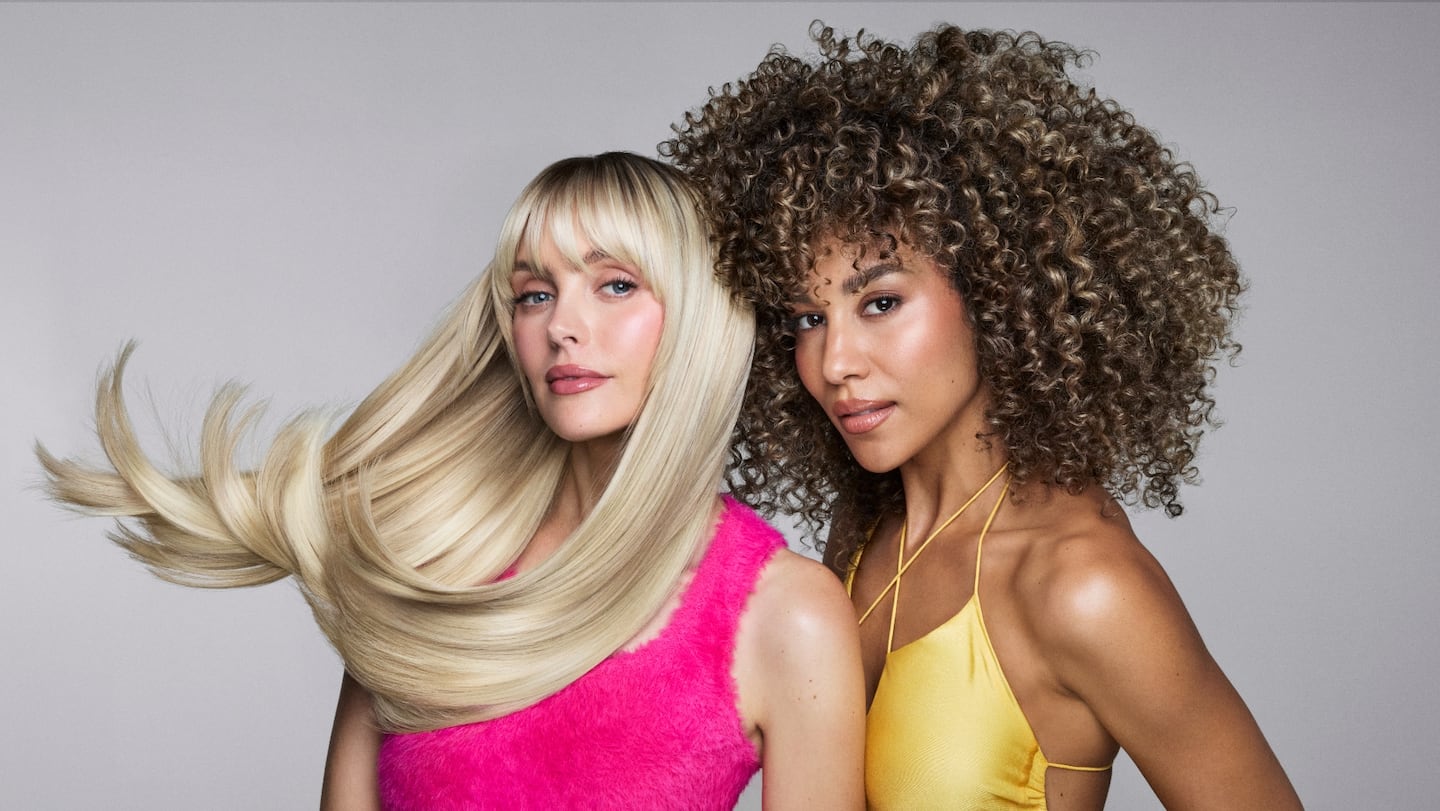
In a world where so much is available at the touch of a button, there is one universal human desire that many still find elusive: a good hair day.
“Everybody wants to look like they just left the salon,” said Lauren Lieberman, a managing director at Barclays investment bank. “[Hair] has a big impact on how you feel about yourself.”
Despite the broad desire for better-looking, healthier locks, beauty firms have shown less enthusiasm to acquire hair companies than they have for skin, makeup and fragrance brands.
“Historically, there was a sense of, ‘It’s shampoo or conditioner, I wash it down the drain,’” said Vennette Ho, a managing director at the investment bank Raymond James. “Many years ago, it wasn’t a hotbed for M&A, because it wasn’t a hotbed of innovation,” she said.
ADVERTISEMENT
That’s changed. On Monday, German consumer goods giant Henkel announced its acquisition of mass hair brand Not Your Mother’s; on Wednesday, a private equity firm acquired a majority stake in French Afro and curly brand Les Secrets de Loly. In January, Bloomberg reported that Henkel was mulling a bid for Olaplex. Unilever and L’Oréal have expanded their reach in the category with their purchases of K18 and Color Wow in 2023 and 2025 respectively. Meanwhile, PE-backed Wella Company, which owns Briogeo, GHD and Wella Professionals, is reportedly readying to IPO.
But the landscape still has more multicategory beauty groups than hair specialists.
“There’s room for someone to come in and take all the best brands,” said Tev Finger, founder of incubator Luxury Brand Partners, and who sold the hair lines Bumble and Bumble, Pulp Riot and Oribe to Estée Lauder Companies, L’Oréal and Kao, respectively. “Someone could clean it up and become the dominant power,” he said.
But hair comes with a more complex distribution and sales structure than other beauty categories. Fifteen years ago, the only brands that were available to shoppers were drugstore lines and a handful of salon brands. Now, thanks to the rise of both specialty retail and online marketplaces, distribution is far more complicated. There’s also a price conundrum: While mass brands can struggle to convince shoppers of their efficacy, even affluent shoppers have a lower price ceiling for hair care, given how often it needs to be replenished.
“Everybody’s got a toe in the water,” said Lieberman. “But it’s hard for hair brands to scale in a material way.”
Whoever either buys the current crop of exciting indies like Gisou and Amika needs to excel at many different things. Mass brands need mastery of fast-moving big box stores; Sephora brands Roz and Briogeo require heavy marketing investments; and salon styling lines like Kérastase and Aveda entail managing countless individual accounts. Many hairstylists are freelance now, further multiplying the amount of single accounts a brand may need to manage. That’s before getting into professional-only products like hair dyes, toners and treatments.
These tensions are on full display at Luxury Brand Partners, which currently has two hair-care lines: IGK, which is stocked in Sephora, and R+Co, which is carried in salons.
“They’re fundamentally different businesses. The way I spend our money and resources [on one] is completely different than the other,” said Finger.
ADVERTISEMENT
Even if a brand is sold at Target or Whole Foods, it will need a professional endorsement to convince customers of its quality: Unilever-owned Tresemmé, which sells shampoo for $6 has long touted professional associations, while Amika released a 2025 ad campaign to remind shoppers of how beloved it is by stylists.
Currently, L’Oréal has one of the biggest slices of both the professional and consumer markets, with its L’Oréal Professionnel and Redken brands and mass labels like L’Oréal Paris and Garnier, which sell everything from box dye to hair masks. Its dominance of the professional channel is underpinned by its owning of Saloncentric, a huge distributor of products to salons in the US. Wella Professionals, Schwarzkopf and Aveda, which all have different owners, also have large swathes of the professional market; P&G has many top consumer brands.
This fragmentation makes it hard for a single company to gain an overall critical mass. Prospective owners need to understand who is driving their business, be that specialty retail or salons, and know how to drive customers to them.
When Francisco Gimenez sold the customised hair colour company, eSalon, he and his co-founders chose Henkel because they had proven capabilities in both professional and consumer markets.
“[Henkel] was a significant player in both categories,” he said. (Gimenez went on to found the hair colour mixing system Yuv in 2021.)
Having proven expertise in both markets is a prerequisite for success. But Finger said as companies get bigger or are absorbed into larger conglomerates, staffing becomes compromised. A small team or single person might be responsible for many salon accounts at once. “Even if your brand is great, if you have a weak territory manager or a salesperson, you’ll lose because they couldn’t explain [the brand] well,” he said.
It can be a tough code to crack. When Olaplex installed a new chief executive in 2023 after two years of declines, the company spoke about how losing touch with professionals had contributed to its slippage. But thanks to Amazon, many of these formerly salon-only brands now have a more direct pipeline to consumers, further complicating the distribution puzzle.
Conglomerates playing in haircare also need strong research and development capabilities to support innovation-driven brands as customers seek out further improvements in hair repair, and top-notch marketing to grow lifestyle labels which focus on sensoriality and experience.
ADVERTISEMENT
There’s a tightrope between letting acquired businesses retain their unique differences, while also leveraging larger economies of scale. When Unilever acquired K18, it did not have a professional hair business at all, noted Ho, who brokered the deal. Instead, Unilever has allowed K18 to operate more independently, learning from the brand about how best to engage its professional network.
“[Unilever] was not claiming to know how to run that business [immediately]. They said, ‘Okay, we want to expand. How can we support you?’” she said.
The likes of Amika and Gisou are generating hundreds of millions of dollars in sales, and continuing to resonate with shoppers. Snapping up the top brands could be a huge money maker for the right firm.
“There’s a lot of room for improvement that people feel in their hair-care routine,” said Lieberman. “The industry hasn’t done a great job of going after that opportunity.”
Sign up to The Business of Beauty newsletter, your complimentary, must-read source for the day’s most important beauty and wellness news and analysis.
Want to dive deeper into an insight from this article? Check out The Brain of Fashion, BoF’s new generative AI tool where you can unlock BoF’s beauty archive with a single question.
Over the last decade, a slew of Latino-founded indie brands have tapped into underserved consumer demand in the US and Latin America. But growing means scaling brand awareness and securing investment to take on the big players.
In recent years, prestige hair care has begun to grow at a faster rate than its mass competitors. The only problem: Shoppers still want drugstore shampoo.
Against a cooling market and a competitive online landscape, brands are doubling down on their professional credentials to stand out. Leveraging hair stylist support takes consultative work and planning.

Daniela Morosini is Senior Beauty Correspondent and Special Projects Editor at The Business of Beauty at BoF. She covers the global beauty industry, with an interest in how companies go to market and overcome hurdles.
Loading recommended reads…
The New York Times photographer and style columnist joins Imran Amed on The BoF Podcast to discuss why practice makes permanent, the blind spot he had to admit to himself and why the style he looks for is meant to feel within reach.
In Panipat, 1 million tons of used clothing a year are turned into products for global brands, but dangerous machinery and few safeguards mean life-changing injuries are common
The struggles of Nanushka and Coperni expose the challenges of turning a promising label into a sustainable business, even after successfully building a global customer base and distinctive visual identity.
What to keep and what to change when a brand changes designers? Pierpaolo Piccioli’s brief stint at Balenciaga and Kering’s effort to course correct by bringing in Martine Rose offers learnings for houses seeking creative renewal.