Agenda-setting intelligence, analysis and advice for the global fashion community.
Agenda-setting intelligence, analysis and advice for the global fashion community.

NAPA, California — From the global resurgence of K-beauty to skyrocketing demand for cosmetic procedures, the most talked-about beauty trends are being rapidly changed by economic and cultural forces worldwide.
“This year’s event takes place at a very unique moment,” said Priya Rao, executive editor of The Business of Beauty. “There is conflict all around us. Our natural world is under threat, and for young people, especially, jobs are scarce, exacerbating feelings of isolation, frustration, and anger.”
“Against all of this upheaval, people still look to beauty to improve their mood, feel a sense of belonging and reconnect with their roots,” said Imran Amed, founder and editor in chief of The Business of Fashion, kicking off the fourth annual Business of Beauty Global Forum on June 24, 2026 at Stanly Ranch in Napa, California.
The Global Forum’s opening session, “Our Place in Culture,” brought together prominent industry voices including Byunghoon Kim, founder and chief executive of Medicube parent company APR; model Paloma Elsesser and celebrity plastic surgeons. In an afternoon of talks, they gathered onstage to explore the converging factors shaping global beauty standards, and what they mean for the future of the industry.
ADVERTISEMENT

“The current ruling class scoff at the idea of nature, especially a God-given beauty, in favour of becoming Gods themselves.”
That was the provocative take of bestselling author and broadcaster Emma Dabiri, who kicked off the Global Forum with sharp analysis of the intersection of wealth, culture and beauty standards.
Dabiri, a Fellow of the Royal Society of Literature and writer of books like Don’t Touch My Hair, examined how vaulting beauty standards have become a growing signifier of wealth. She argued that the rise of advanced cosmetic procedures has allowed the ultra-wealthy to aspire to an impossible standard of perfection — and explained how one can cultivate healthier embraces of beauty.
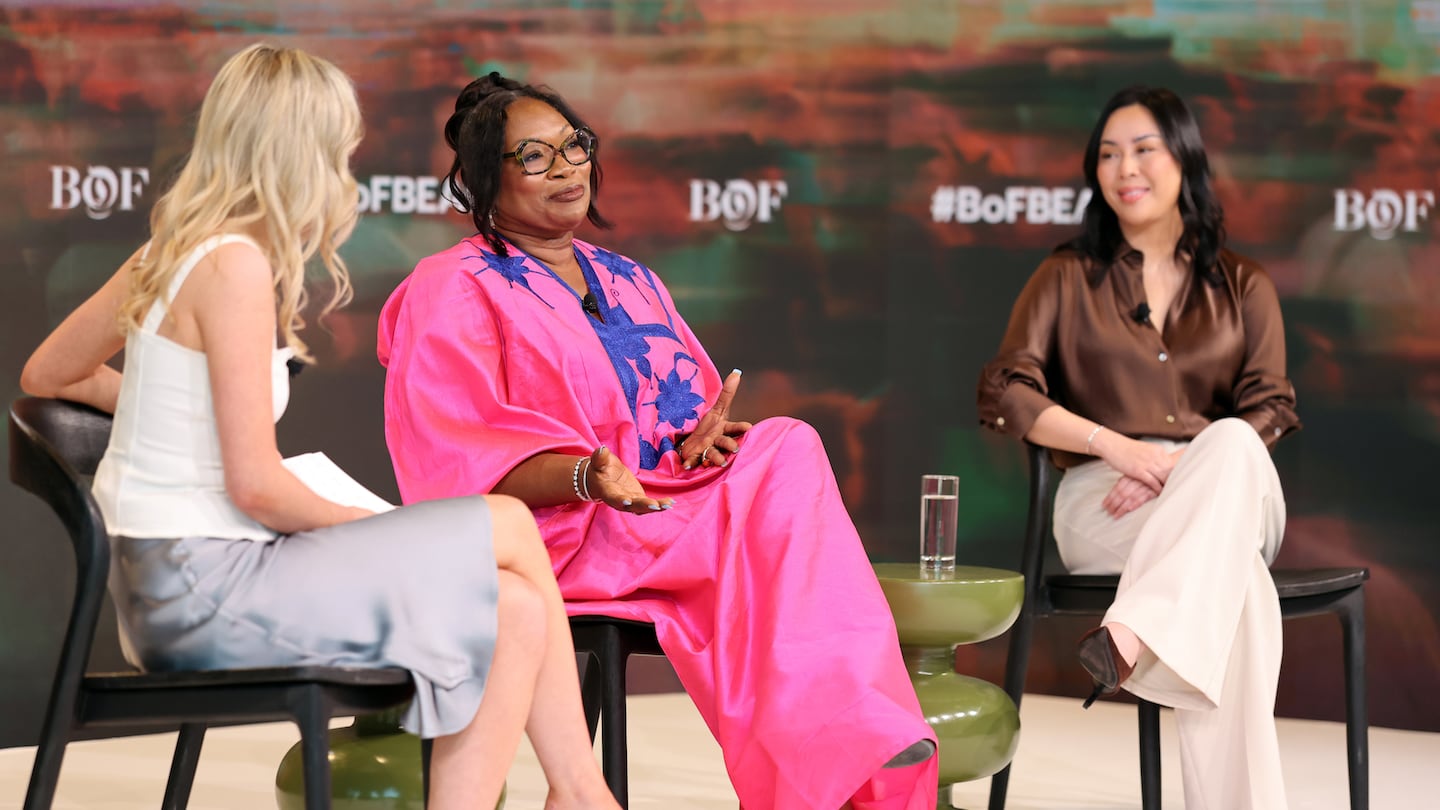
Retail executives Linda Dang, the co-founder and chief executive officer of Canada-based Asian beauty retailer Sukoshi, and Joke Bakare, the chief executive of Nigeria- and India-based health and beauty retailer Medplus, shared their thoughts on the expansion of both global and local beauty trends.
“Gone are the days that you can just be a traditional retailer,” said Dang. “We see ourselves as a brand accelerator.”
Both executives emphasised careful curation and customer education as crucial parts of crafting a unique beauty shopping experience. For Sukoshi, that means bringing first-to-market, small Asian brands to international markets as it expands throughout North America, said Dang.
K-beauty, especially TikTok-famous brands like Cosrx and Beauty of Joseon, are popular at MedPlus thanks to the influence of both K-pop culture and social media on Nigerian beauty shoppers, said Bakare. Education is especially true when it comes to the global K-beauty boom, where many young consumers get their skincare information from viral TikTok trends.
“The customers are looking for trust,” she said. “They want a product that’s efficient, that works very well.”
ADVERTISEMENT
They also want an increasingly local selection. For Bakare, that means stocking African brands catering to her shoppers’ needs.
“The consumer demand is already curating things for us,” said Bakare, who emphasised the importance of a wide array of shade ranges and natural hair products at its over 150 stores. “The conversation has just begun, especially for African beauty.”
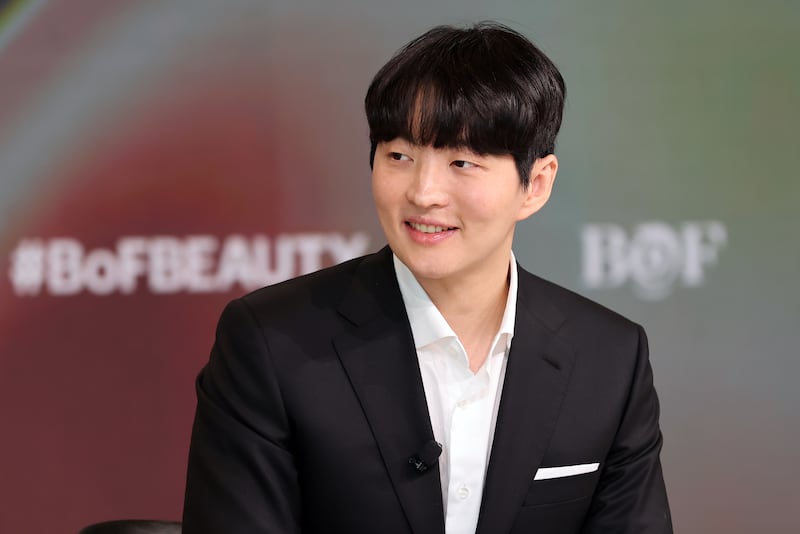
If there’s one brand that showcases the sheer power of K-beauty’s second global wave, it’s Medicube. The beauty brand’s parent company APR currently has a market cap higher than that of Shiseido and exceeded $1 billion in sales last year.
“Efficacy and measurable results have really become far more important to consumers today, and consumers [are] significantly more sophisticated,” said Byunghoon Kim, founder and chief executive of APR. “In the past, the beauty market was largely supplier-driven, where customers chose from a limited set of options, whereas today, there’s an abundance of choices available.”
Despite this competition, he’s managed to achieve staggering growth for APR, becoming one of South Korea’s youngest self-made billionaires last year. The increase is driven primarily by exports of Medicube, especially to the United States.
“I wanted to challenge the traditional way that the beauty industry really operated,” said Kim.
The company is open to possible M&A, revealed Kim, and is especially looking at the wellness-adjacent field of longevity.
“We’re certainly open to M&A opportunities if they can accelerate our vision,” he said, noting that potential acquisitions could be from any country and of any size. “We really are open to any global brand, but a real criteria that we’re looking for is how much of a breakthrough that they can provide.”
ADVERTISEMENT
While Amazon is known for quick delivery, it’s aiming to become a brand-builder when it comes to premium beauty.
Wendy Franks, general manager of health and beauty at Amazon, acknowledged the long route that consumers online take these days from product discovery to clicking “buy” in a conversation with BoF content strategist Annabel Bolton.
“The whole journey between discovering something and purchasing something, it is no longer sequential. It is part of an ongoing experience,” said Franks. “As that customer journey has evolved, we need to evolve with it.”
For the e-commerce giant’s premium beauty section, that means immersive storefronts and detailed pages with a full brand story. Franks highlighted brand partners in the premium beauty segment, including Charlotte Tilbury and sunscreen brand Supergoop, which has recently intensified its partnership with Amazon in all these areas, parting ways with a third-party agency to work directly with Amazon.
“Historically we’ve been a more transactional partner, and brands have come to view us as a place where you need to bring operational rigor and think about distribution and inventory and maybe lower funnel advertising,” said Franks. “It’s become much more than that at this stage ... really are encouraging our brand partners to think of us as a place where you can build your brand.”
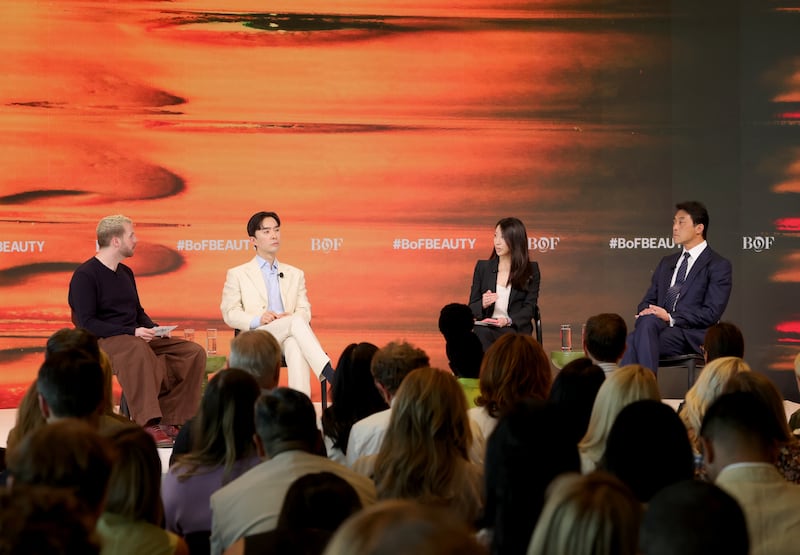
The hottest luxury status symbol these days might not be a cult handbag, but a deep plane facelift.
“Luxury aesthetics today means restraint,” said Dr. Panithaporn “Joe” Dissapong, a Thai dermatologist and co-founder of The Demis Clinic, in a talk on the latest trends and most popular procedures in plastic surgery. “Today, the true luxury is much more subtle.”
Dissapong and fellow panelists, the US plastic surgeons Dr. Shim Ching and Dr. Catherine Chang, observed that despite consumers’ stated interest in looking “natural,” the trend-driven nature of the way influencers and media talk about plastic surgery can get in the way.
“Social media is creating a real distortion problem,” said Dr. Chang, who noted that patients frequently express a desire to look “natural,” yet name trending procedures that are anything but. “It’s just so prevalent that we see people who are perfect physically, and everybody strives for that ideal. Some of that is filtered,” said Dr. Ching. “Nowadays, I get patients bringing me AI photos of people’s faces and bodies, and somehow I’m supposed to give them what they want.”
In 2021, Sid Baveja was a founder armed with a new idea and what he thought was a captive audience. He launched men’s grooming startup Humanery in 2021, combining established brands like Augustinus Bader and Dermalogica, with unknown indie brands.
But by 2023, “Humanery was over,” said Baveja. “The beauty industry does not naturally reward discovery. It rewards the margin game,” and sellers that can afford high visibility and the expensive business of customer acquisition. “We tried to upend the … traditional model,” with better incentives for brand partners than traditional retailers, he said.
Now the vice president for the UK/IE and Central Europe of Too Good To Go, a food surplus redistribution firm, he’s using his learnings to expand the social good-oriented venture into the realm of beauty, in hopes of addressing beauty’s staggering excess product and waste problem.
“Failure implies that nothing of value was created,” he said, noting that he learned valuable business lessons that he is bringing to his next venture. For hiring, he said he invested in cost-effective staff rather than more experienced, dedicated employees that would require higher pay packages. “You need missionaries, not mercenaries,” he said.
The Business of Beauty Global Forum 2026 is made possible in part by our partners Klaviyo, Unilever Prestige, Front Row Group, Amazon Beauty, TikTok Shop, Sephora, CLINUVEL, Citi, Tilt Beauty, Summer Fridays, ELEMIS and Stanly Ranch. If you are interested in learning about partnership opportunities, please contact us here.
Loading recommended reads…
The struggles of Nanushka and Coperni expose the challenges of turning a promising label into a sustainable business, even after successfully building a global customer base and distinctive visual identity.
What to keep and what to change when a brand changes designers? Pierpaolo Piccioli’s brief stint at Balenciaga and Kering’s effort to course correct by bringing in Martine Rose offers learnings for houses seeking creative renewal.
The Denim Tears founder’s new collaboration with Adidas is one of the most overtly political sneakers of the last few years. Could it be a sign of what’s to come?
The company’s share price notched its biggest weekly rise since 2020 as investors bet on softer gold prices to bring customers back to stores.