Agenda-setting intelligence, analysis and advice for the global fashion community.
Agenda-setting intelligence, analysis and advice for the global fashion community.
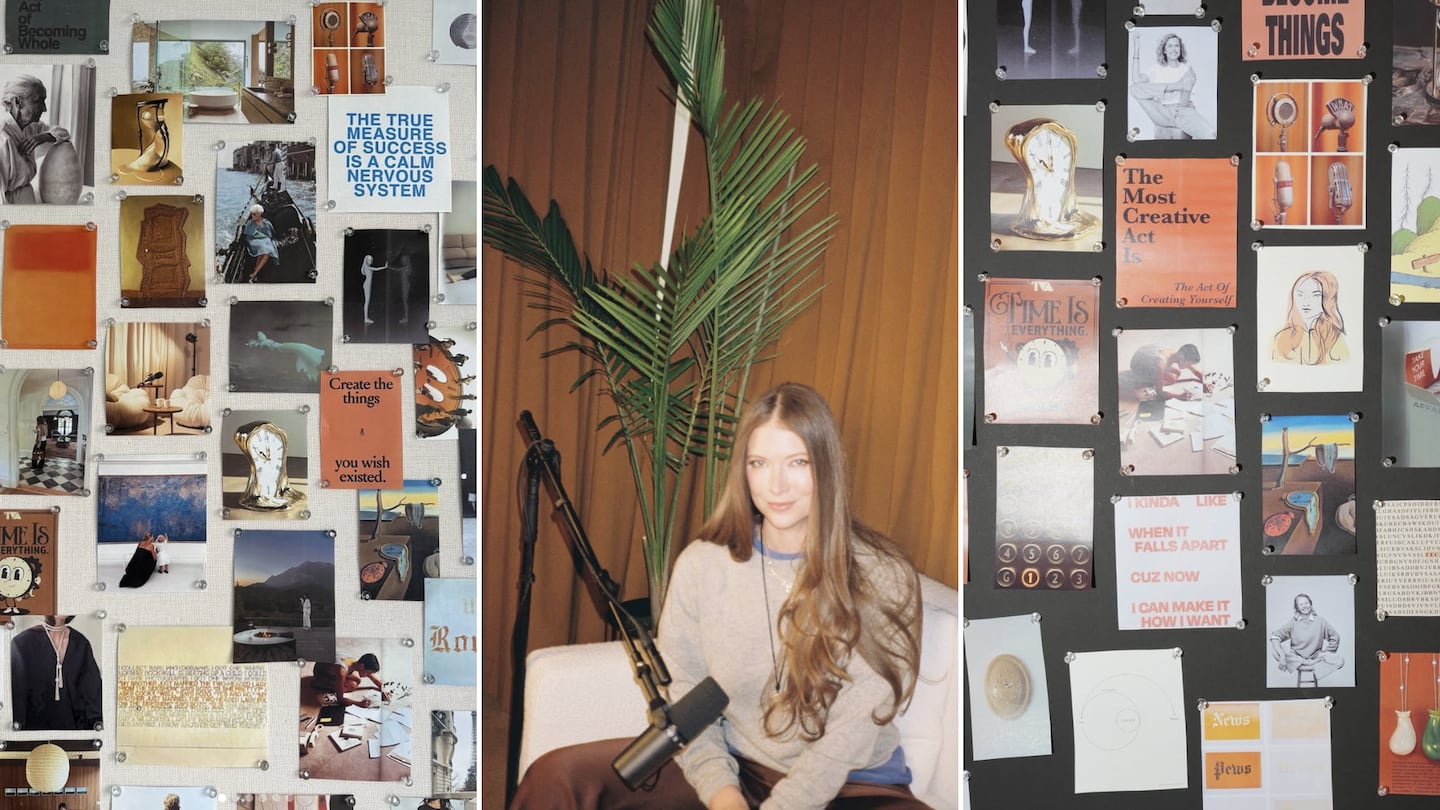
As much as she likes being an entrepreneur, Kim van Haaster observes that — unlike her old life in sales and marketing where she was a private citizen — she’s not just the founder and chief executive of her premium skincare label Bloomeffects. She also has to be its spokesperson.
Lately, “founders have to be a triple threat,” she told The Business of Beauty.
Van Haaster regularly posts on Instagram and TikTok, where has a combined 13,500 followers, to weigh in on beauty news, share snippets of her working life or unveil new products. She’s not the only one. Dianna Cohen, founder of hair label Crown Affair signed with mega-agency Digital Brand Architects in January 2026, joining bona fide influencers like Mikayla Nogueira and Chelsea Parke, while Olamide Olowe, founder of the pioneering skincare label Topicals transitioned out of being CEO in September partly to dedicate more time to making content. Cohen joked that she has “reverse-pipelined” by being a founder first.
“There’s so much I want to say, and the business’ account is no longer the place for it,” said Cohen, who has a Substack newsletter and a podcast series called “Take Your Time” for which she interviews fellow entrepreneurs like Bobbi Brown and Cassandra Grey. “People are really excited to see the other pieces of being a founder,” she said.
ADVERTISEMENT
While celebrity brands like Rare Beauty and Rhode have avoided leaning too hard on their famous founders, everyday entrepreneurs are moving in the other direction. Many shoppers crave connection to brands’ leadership, wanting to know more about their lived experiences and perhaps political affiliations, but moreover, to feel part of their world. What was once seen as a distraction from running a business has now become an integral part of 21st-century founder-led marketing.
“Investors want to see you out there, because if your brand’s so great, why aren’t you talking about it?” said James Nord, founder of influencer marketing agency Fohr.
It’s also a way for brands to generate publicity in a less promotional way. Branded content is increasingly struggling to cut through and reach viewers, as platforms like Instagram and TikTok uplift individual creator accounts over corporate ones. Posting on their own pages, founders can act as a “distribution channel” for brand information piped personally into social feeds, Nord said.
The challenge is making content that feels personal, whilst still ultimately promoting the commercial, and shoring up a brand from reputational risk if their founder missteps. Leadership’s content can also fall flat: This year, the leaders of both Nike and McDonald’s were roundly mocked after posting “unboxing” videos sampling their company’s wares.
“There’s a reason you don’t see many CEOs having their own public social media accounts,” said Nord.
Aspiring founders-turned-influencers are capitalising on the inherent — if sporadic — glamour of being a beauty entrepreneur. Videos showing a “day in the life” featuring designer outfits, boardroom meetings and mingling at exclusive events may bring in eyeballs, but many viewers are equally interested in less glittering content: Van Haaster, along with the likes of Liah Yoo, the founder of Krave Beauty, have seen considerable engagement on content explaining supply chains, packaging innovations or why it’s so costly to expand in retail. In July 2025, Yoo signed to talent management firm Underscore Talent.
Such content is a means to capture the desire for authenticity and transparency customers crave. “There is an expectation that founders will just be in the spotlight, and there’s no one better to tell your story,” said van Haaster, who has decades of experience working in marketing and sales before launching Bloomeffects. Viewers respond to her institutional knowledge about topics like campaigns and product development, she added.
There’s a ready audience for it. As more young people become interested in careers as creators or entrepreneurs, a cottage industry has sprung up: Videos and newsletters about launching a company of one’s own, creating great branding or building leadership skills are enormously popular on social media. Podcasts like “Gloss Angeles” (Tower 28’s Amy Liu and Too Faced and Polite Society’s Jerrod Blandino have guest-starred), “Hot Smart Rich” (Cyklar’s Claudia Sulewski has featured) and “Glow Journal” (Akt’s Ed Currie and Andy Coxon, as well as Liu) regularly document the brand-building process from the inside. Who better to speak about building and scaling a business than founders who have done it themselves?
ADVERTISEMENT
The phenomenon extends beyond social media. Fashion executive Jenna Lyons accepted a spot on Bravo’s “The Real of Housewives of New York” in 2023 in part to promote her newly launched false eyelash label, Loveseen. (Her tagline: “My lashes may be fake, but I definitely keep it real.”) The exposure lends itself to promotion, but simply being in front of a camera doesn’t make for a successful marketing moment.
“I don’t wake up every day, being like ‘I’m a content creator, time to sing and dance,’” said Cohen, saying she prefers to ground her content in her marketing expertise. She appointed Elaine Choi as chief executive of Crown Affair in 2025 and said she spends 50 percent of her time on her own content, and looking at the “first 10 and last 10 percent” of new launches or initiatives for the brand. She has signed brand deals for Take Your Time, including with Shopify and Salesforce.
Her own content is more about impact and immersion, she said. “It’s less about how many people I reach, and more about how deeply I reach them,” she said.
Investors may be on board with founders making content, but they still want guard rails.
Tracey Thompson, an investor who previously worked at VMG and SoGal Ventures, said the creative resources need to be protected.
“If making content really energises a founder, that’s great,” she said, especially if their content converts customers more than branded content does. But brands still need a dedicated social media manager to oversee their output. In some cases, it can become hard to decipher what counts as founder-created content that promotes the brand, and content that just promotes the founder.
Not all founders are suited for the influencer life — Thompson said those who lead more lifestyle-led brands versus clinical labels likely have more of a right to win — but even if founders succeed in building their profile, it can open the brand up to reputational risk.
Customers are hawkish when it comes to public figures, political views and professional affiliations, and quick to call out tone-deaf comments or questionable relationships. And audiences can start to feel turned off by overly promotional content, even if it comes from a popular figure: Lyons was criticised by her Bravo castmates (and by some viewers) for being too focused on her brand during her on-screen moments.
ADVERTISEMENT
Van Haaster said she’ll keep making content for as long as it serves the brand. “I’m so inherently connected to the brand,” she said, adding that her husband’s family own the tulip farm that provides the label’s signature ingredient.
“I’m a part of its authentic story,” she said.
A crop of successful founders are finding their beauty business may not be enough to keep them occupied. Many are taking their life learnings and dispensing them to the public — through books, on-demand talks and accelerator programs — for a price.
Influencer marketing is bigger than ever, but it’s also become more complex as the number of creators multiplies, consumers grow more resistant to blatant ads, platforms like Substack gain traction and new tools for tracking performance appear. Fashion brands need to update their strategies.
With many labels investing in the concept of 'community', and consumers becoming more sceptical of the brands they buy from, companies are pushing local events and initiatives that reinforce their values to maintain a grip on die-hard fans.

Daniela Morosini is Senior Beauty Correspondent and Special Projects Editor at The Business of Beauty at BoF. She covers the global beauty industry, with an interest in how companies go to market and overcome hurdles.
Loading recommended reads…
In this week’s High Margin, a search for images that cut through our visual fatigue — with leads from M/M Paris, Ferdinando Verderi and stylist Emilie Kareh. Plus: Tod’s designer exit; Burberry’s resilient sales.
The producer price index rose 6.5% from October 2025, an acceleration from the prior month, according to Bureau of Labor Statistics data out Friday. On a monthly basis, the PPI increased 0.3%.
The creative director and strategist joins Imran Amed on The BoF Podcast to discuss the evolution of his career, the realities of shaping artist narratives and why long-term collaboration outperforms short-term marketing.
The former Nvidia CEO was central to an AI boom that has propelled the US stock market and fueled the country’s unmatched luxury spending. After his exit, nobody is sure what happens next.