Agenda-setting intelligence, analysis and advice for the global fashion community.
Agenda-setting intelligence, analysis and advice for the global fashion community.

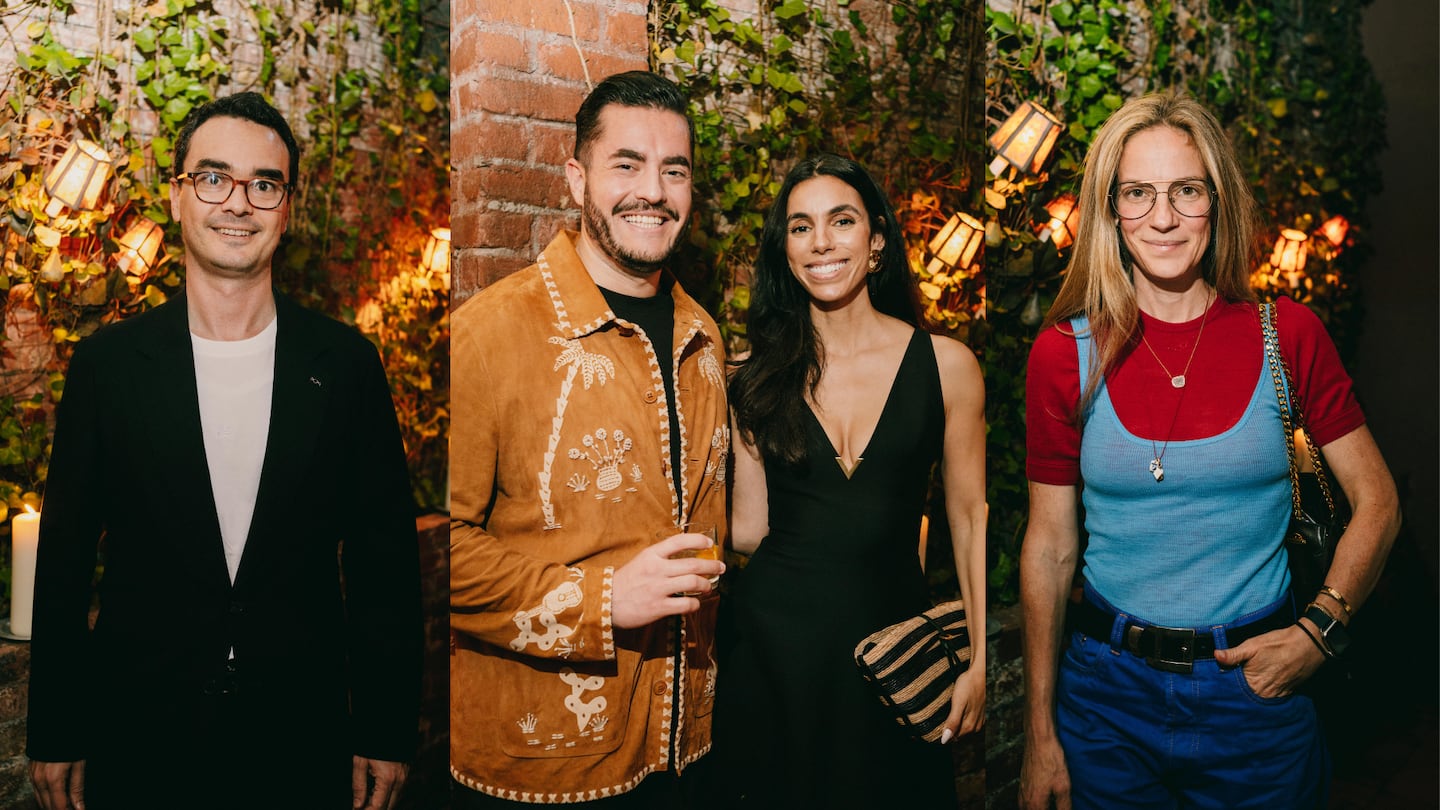

NEW YORK — On June 16, senior commerce and fashion executives gathered at the Waverly Inn in New York City for a dinner hosted by The Business of Fashion and Swap Commerce. The evening marked the launch of Swap’s agentic storefront, a new shopping infrastructure built to bring AI to the centre of the customer journey.
Fifty-three percent of US consumers who used generative AI for search in the second quarter of 2025 also used it to help them shop, according to The Business of Fashion and McKinsey and Co.’s The State of Fashion 2026 report. However, even as AI reshapes discovery, customers remain overwhelmed by choice, and brands continue to struggle to hold their attention and loyalty. Cart abandonment on e-commerce sites remains stuck around 70 percent globally, according to the Baymard Institute – a gap that has persisted through two decades of digital retail.
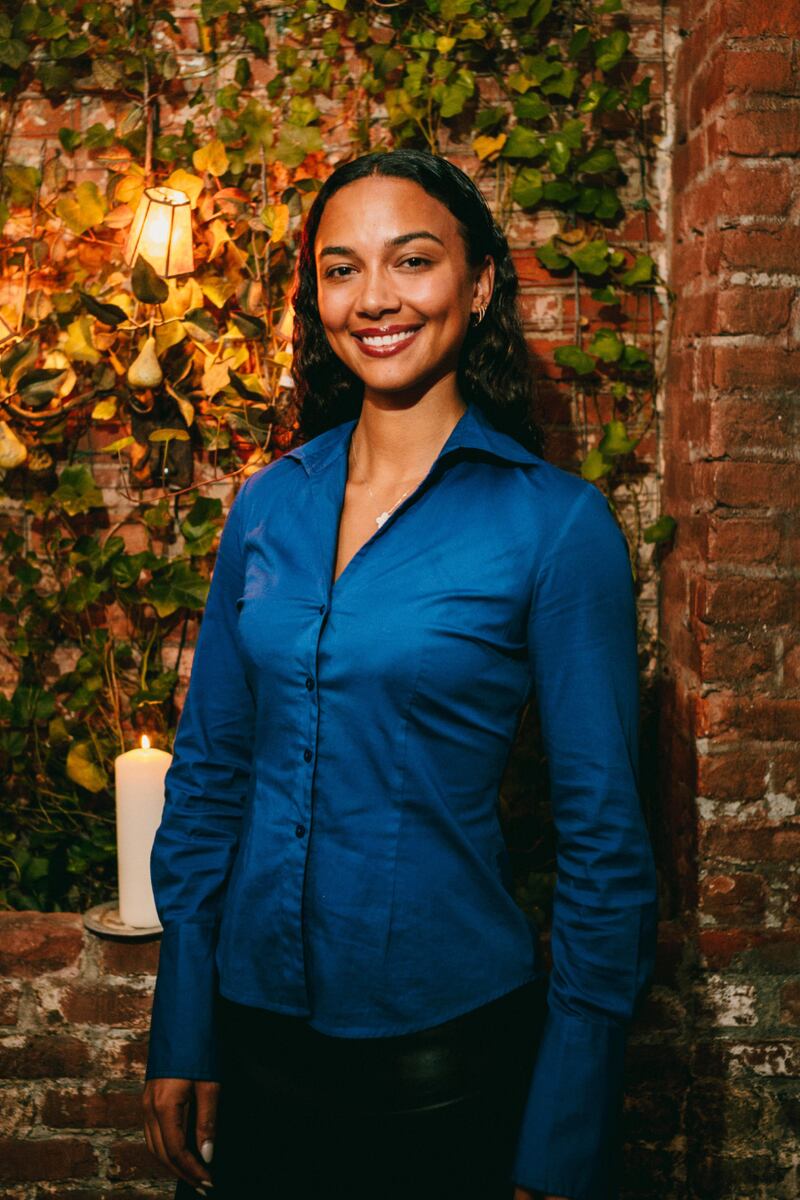
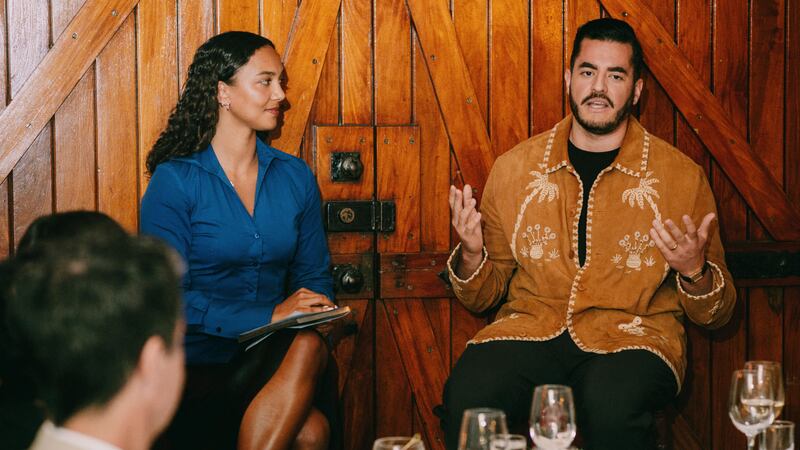
Against that backdrop, BoF’s content strategist Yasmine Dahlberg and Swap Commerce’s chief marketing officer Juan Pellerano-Rendón opened the evening with a fireside chat on where brands should focus amid the AI noise and how loyalty gets built as more of the shopping journey is mediated by it. Executives listened in before the conversation — on how to keep the human connection intact, no matter where the transaction happens — continued over dinner.
Guillaume Legangneux, senior director of omnichannel for the Americas at Givenchy, pointed to that connection as something that has to make customers “feel special.” “The customers who keep coming back have a connection with a sales advisor, or with someone within the company that they trust and like to shop with,” he said. “It’s about building the relationship beyond the brand and individual products.”
Deirdre Quinn, co-founder and chief executive of Lafayette 148, framed that same instinct as a data problem as much as an emotional one. “Our customers are very loyal to us, so we’ve invested in technology to keep up with them and to make sure we know who they are, listen to what they want and react to it,” she said.
For Marcelo Noschese, president of the Americas at Ganni, loyalty in 2026 still comes back to fundamentals. “It’s all about brand equity, aesthetics, but most importantly, upholding brand values,” he said. “Ganni is a big player in sustainability and we carry it with a lot of pride, which is not easy in our industry.” It’s a reminder that as commerce infrastructure grows more sophisticated, brands can’t lose sight of why a customer chose them in the first place.
0 of 10
The promise of agentic commerce has moved faster than the reality of it. OpenAI launched direct checkout in ChatGPT with Etsy and Shopify in September 2025, later adding Walmart as a planned partner, but by March 2026 it had deprioritised the feature and shifted towards product discovery and merchant-controlled checkout after finding the first version too inflexible and seeing limited purchase adoption.
Pellerano-Rendón addressed this gap between AI talk and AI adoption throughout the evening. “The way that people talk about agentic commerce is really jargon-focused — MCP protocols, agents talking to agents, AI buying things on your behalf,” he said.
He argued that fully autonomous, agent-to-agent buying is further off than the industry suggests, and that Swap’s own view of agentic commerce is not about replacing the relationship between customers and brands. “At Swap, we believe it will always be human-centric and human-led, because brands inherently have built these relationships with consumers over many decades. That’s not going to change,” he said.
For executives in the room, the takeaway was less about tracking every new protocol and more about where to put resources now. Rather than building for speculative agent-to-agent transactions, brands should focus on owning where search starts and who controls the experience once a shopper arrives.
ChatGPT accounted for 16 percent of Zara’s inbound referral traffic between June and August 2025, and 8 percent of H&M’s and Aritzia’s, according to The State of Fashion 2026 report – a sign of how much shopping research has migrated from a traditional Google search to a conversation with a chatbot. “A lot of what’s happening is really more so a shift of where the search is starting, with Google’s lion’s share of search being split across other AI platforms,” said Pellerano-Rendón.
He broke down what that means for brands into three categories. First, it’s about showing up in ChatGPT or Gemini, which he sees as the new baseline. Then the chatbots many brands have bolted onto their own sites —which haven’t solved the industry’s oldest problem of converting visitors into buyers. Lastly, he mentioned owned, AI-powered storefronts — where Swap is focused — that let a shopper browse, ask questions, try on an item virtually and check out, all in one brand-controlled experience.
“Conversion has not changed in e-commerce, so now is the time to really take advantage of AI and how those tools can bring you closer to the consumer,” said Pellerano-Rendón. A brand that only focuses on showing up inside someone else’s chatbot is neglecting the more valuable thing it could be building: its own AI-powered storefront.
As more commerce infrastructure becomes invisible to the shopper, the question of how brands sustain loyalty grows more pressing, particularly against WPP Media research showing that 84 percent of purchases involve consumers picking brands they’re already biased towards.
Pellerano-Rendón pointed to making the brand itself – not a generic assistant – the thing the customer interacts with, citing Swap’s work launching an agentic storefront for Paul Smith next month, where the designer’s own voice will serve as the shopping agent’s voice.
At Swap, we believe it will always be human-centric and human-led, because brands inherently have built these relationships with consumers over many decades. That’s not going to change.
— Juan Pellerano-Rendón
“These tactics bring the brand as close to the customer as you’ve ever been able to, and these immersive shopping experiences are going to become increasingly more important as the shopping journey gets more bifurcated and disconnected from the original search,” said Pellerano-Rendón.
The job for brands, in his view, is to make sure their own identity is what customers encounter at every step, rather than ceding that texture to whichever platform happens to host the interaction.
This is a sponsored feature paid for by Swap Commerce as part of a BoF partnership.
As tariff shifts and geopolitical tensions complicate international trade, Swap — an e-commerce operating system that centralises cross-border operations — is emerging as a strategic ally for DTC brands pursuing global expansion. BoF sits down with co-founder and CEO Sam Atkinson to learn about his vision for unified commerce.
Loading recommended reads…
The company is counting on demand for its AI glasses with Google and Samsung to grow in the coming years, while trying to head off concerns they can be used to record people without consent.
The suspects stole more than €1 million worth of jewellery before fleeing on motor scooters, according to reports.
This week, Priya Rao takes a closer look at why beauty is moving up-market and how a collaboration breaks through today.
Jensen Huang’s exit deepens the crisis at the chipmaker at the centre of the AI rally that’s powered new wealth creation in the US, luxury fashion’s most important market.